
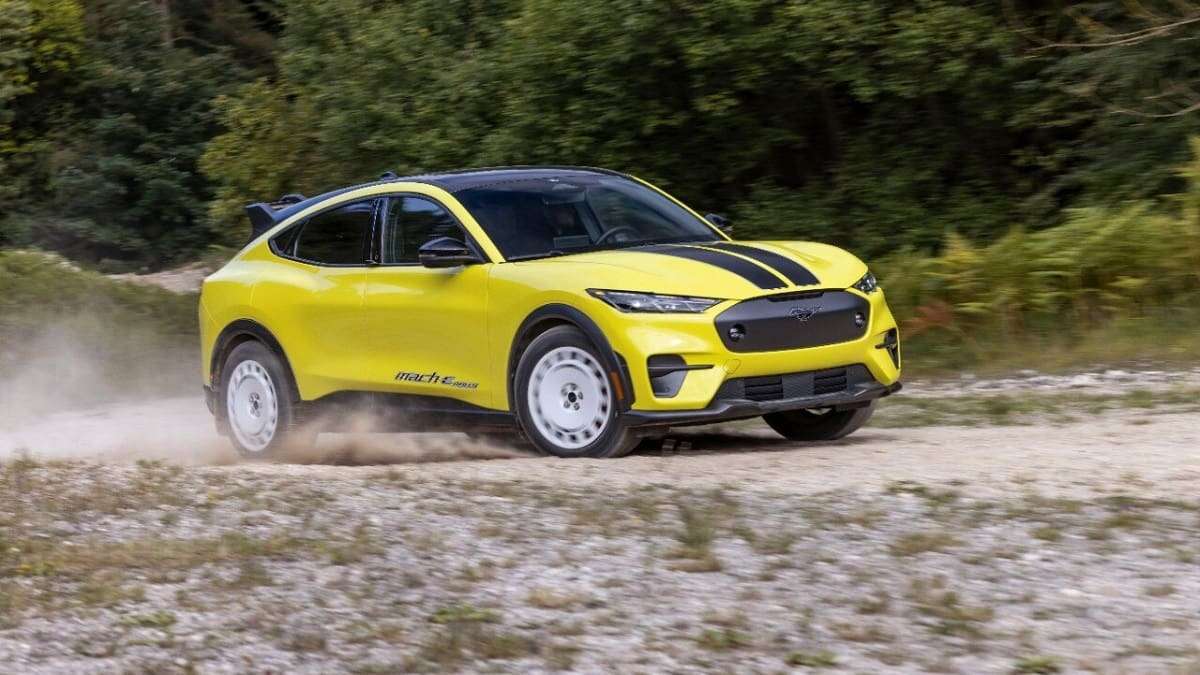

About a year after I bought my first EV, my son told me that I don’t have to punch it at every green light. Although I was probably setting a bad example, I disagreed because the rabbit starts brought a smile to my face. It turns out that my rapid accelerations (“dynamic-cycling” as the researchers call it) could be extending my battery life, or so says a recent study from Stanford. As one might imagine, the social media comments have been very positive. Here’s one on the Facebook Mustang Mach-E Owners group by Matt Bilinsky:
“Turns out aggressive acceleration is good for your battery. So, I’m just doing maintenance.”
Joel De Lamarre responded:
“Hahaha! I read that and I was SO happy!
‘Sorry officer, I was taking care of my car!’”
Jim Prego Au commented:
“Then my battery should last about 50 years!”
Let’s take this good news and run with it. The Stanford study shows that EV batteries last longer when they experience varied driving instead of a steady, unchanging load. Researchers found that dynamic cycling, which mixes acceleration, cruising, and regenerative braking, can extend battery lifespan by up to 38%. This is notable given that EVs do not burn fuel, yet driving style still matters.
Scientists at the SLAC-Stanford Battery Center tested 92 commercial EV battery cells over two years. They ran 47 different discharge patterns, ranging from gentle driving to constant highway cruising to more aggressive acceleration. The goal was to see which habits best supported long term battery health.
The results showed that mixed driving scenarios produced less degradation than constant current draw. Batteries exposed to changing loads, like city driving with frequent stops and starts, consistently outperformed those simulating long, flat highway trips. Cells under dynamic cycling reached end of life much later than those under steady conditions.
Battery health was measured using State of Health, with end of life defined at 85% capacity. Once a battery hits that level, researchers count Equivalent Full Cycles, which represent how many full charge cycles the battery effectively completed. More cycles mean better lifetime performance.
After early life aging, degradation mainly comes from two factors. High resting charge levels stress the positive electrode, while very low charge levels stress the negative electrode. This explains why keeping an EV battery near the middle of its charge range works well for daily use. Constant current draw was also shown to speed up capacity loss compared to mixed driving.
As current increased, dynamically cycled batteries achieved more full cycles. At higher draw rates, dynamically used cells reached hundreds more equivalent cycles than those under steady load. This reinforces the idea that occasional bursts of power are not harmful and can actually be beneficial.
The takeaway is not to drive aggressively all the time, but to embrace variety. Stop and go traffic, short accelerations, and normal daily driving are healthy for EV batteries. The study also highlights shortcomings in traditional battery testing, which often relies too heavily on constant discharge scenarios.
Other Ways to Extend Your Overall Battery Life
Beyond the Stanford study, there are several ways that EV owners can extend the overall life of their car’s battery. One of the most effective ways is to manage charge levels thoughtfully. Keeping the battery somewhere in the middle of its range for daily driving helps reduce long term wear. Charging to 95% is fine for road trips, but doing it every day adds unnecessary stress. Letting the battery sit at very low levels can also accelerate aging, so plugging in before it drops too far is a smart habit.
Temperature control plays a big role as well. Extreme heat is one of the fastest ways to degrade a battery, so parking in the shade or a garage when possible makes a difference. Using scheduled charging and preconditioning helps the battery stay within a comfortable temperature range before driving or fast charging.
Finally, use fast charging strategically rather than exclusively. DC fast charging is incredibly convenient, but regular Level 2 charging at home is gentler over time. Treating fast charging as a tool instead of a daily routine helps preserve capacity and keeps your EV feeling strong for years.
Bottom Line
EV batteries thrive on moderation and variety. Keeping charge levels reasonable and driving naturally, even with the occasional spirited moment, supports long term battery health. Enjoying instant torque responsibly is not just fun, it is unlikely to harm your battery and may even help it age more gracefully.
The Ford Mustang Mach‑E
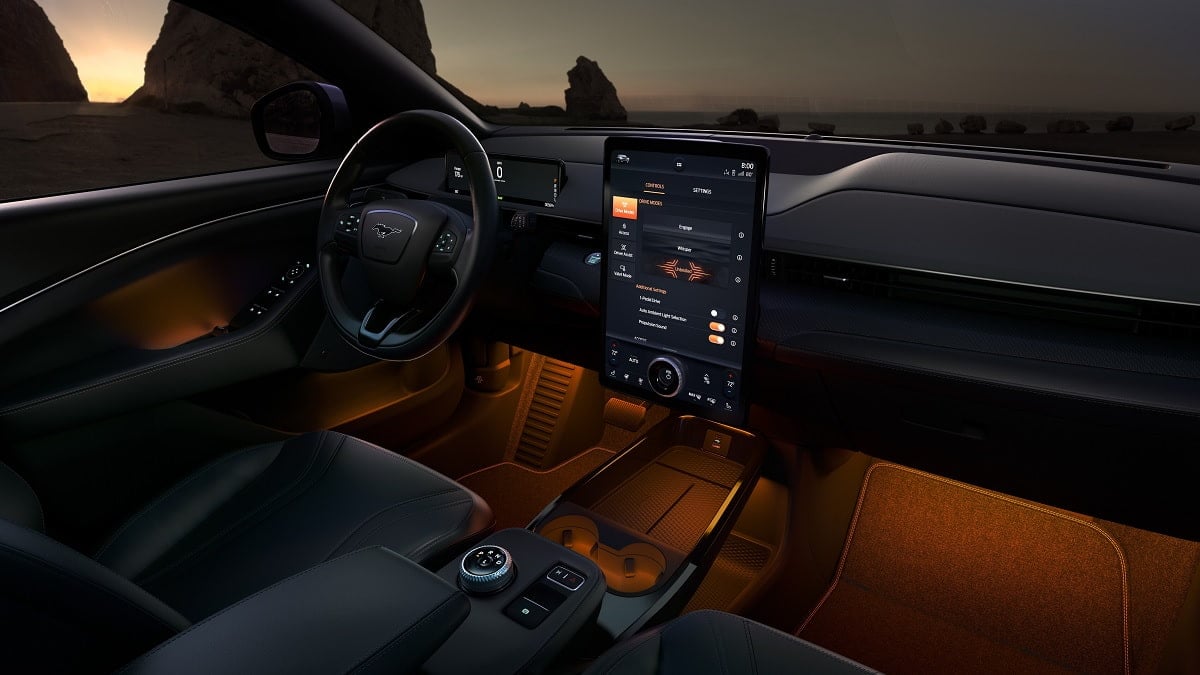
The Ford Mustang Mach‑E is an all-electric crossover that blends strong performance, modern tech, and everyday usability. It launched for the 2021 model year and quickly became one of Ford’s most important EVs, offering brisk acceleration, available all-wheel drive, and up to roughly 320 miles of EPA estimated range on select trims. Pricing generally starts in the mid $30,000 range and climbs into the low $50,000s depending on battery size and performance options. It is sold exclusively as a four-door crossover, trading the classic coupe shape for added space and practicality.
What truly sets the Mach-E apart is the Mustang badge itself. Before the Mach-E, the Mustang name had been used exclusively on gas powered sports cars for decades, making this Ford’s first major expansion of the brand beyond traditional muscle. Performance versions of the Mach-E accelerate to 60 mph in about 3.3 seconds, which is quicker than Ford’s fastest gas-powered Mustang currently on sale, underscoring how seriously Ford is treating electric performance.
What Do You Think?
Do you buy the idea that mixed driving is better for battery longevity, or does it feel like wishful thinking?
How much of your driving is steady highway cruising versus stop and go city traffic?
Chris Johnston is the author of SAE’s comprehensive book on electric vehicles, "The Arrival of The Electric Car." His coverage on Torque News focuses on electric vehicles. Chris has decades of product management experience in telematics, mobile computing, and wireless communications. Chris has a B.S. in electrical engineering from Purdue University and an MBA. He lives in Seattle. When not working, Chris enjoys restoring classic wooden boats, open water swimming, cycling and flying (as a private pilot). You can connect with Chris on LinkedIn and follow his work on X at ChrisJohnstonEV.
Photo credit: Ford media kit
Set Torque News as Preferred Source on Google
Follow us today...







Comments
But it's not really a…
Permalink
But it's not really a Mustang, is it?
Officer.....I was saving my…
Permalink
Officer.....I was saving my battery!!!
Have fun buying more tires…
Permalink
Have fun buying more tires. Tire life is just 1 of multiple reasons no EV owner is doing anything better for anything.
Not a bad article except for…
Permalink
Not a bad article except for one thing: it neglects to mention the very real differences between the battery types. My wife bought the base Mach-E in August, and we are really enjoying it so far. The thing we have learned is that the LFP batteries in the model are the cheaper kind which most Chinese EVs use, and this type does NOT suffer from the same kind of battery worries that the more sophisticated and power-dense batteries found in a lot of American EVs do. For example, there is nothing wrong with keeping this topped off at 100%, unlike the other kinds. So I wonder about the details on their study - what types of batteries were they actually using? And what were the differences in the results?
This is how I've driven my…
Permalink
This is how I've driven my MME from day one based on previous studies of Lithium batteries. After 3 1/2 years of driving my standard range Select still shows estimated total range of around 300 miles.
Nice writeup. Didn't know…
Permalink
Nice writeup. Didn't know this. Looks like I need to do more burnouts.