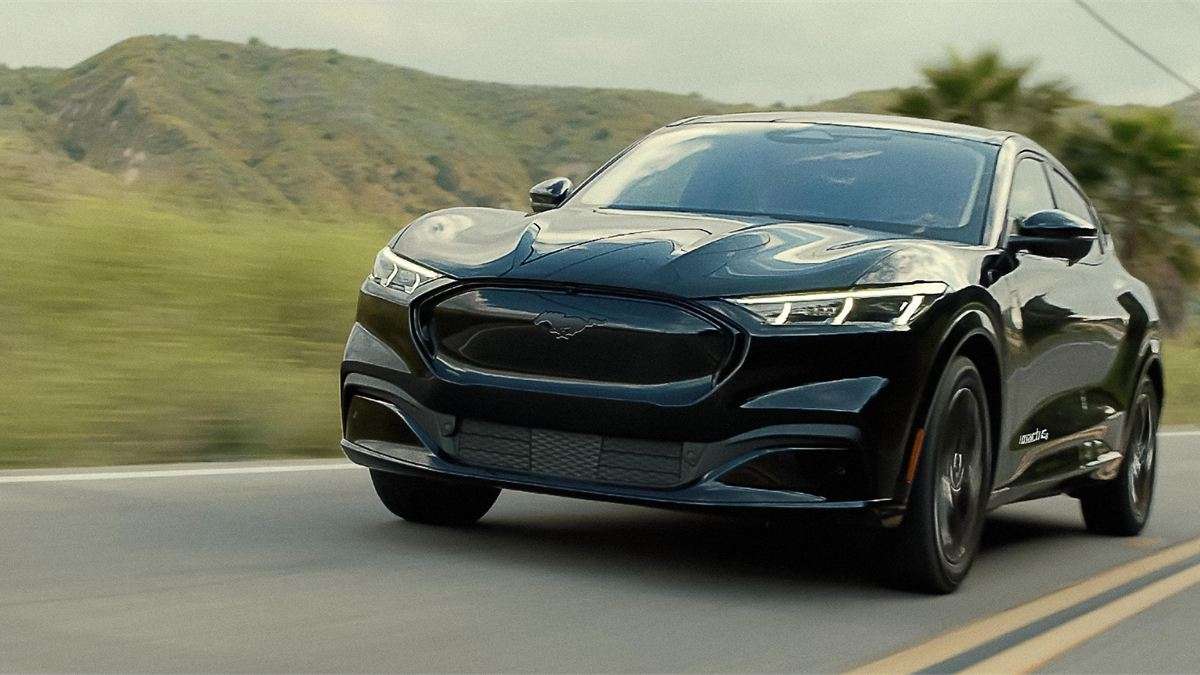

Depreciation has become the favorite cudgel in every argument about electric vehicles, wielded confidently and often without much context. According to a Mustang Mach-E owner posting in a Mustang Mach-E owners group, that narrative falls apart the moment you compare EVs to what many still assume are “safe” buys. His point was simple and disarming: pretty much everything depreciates fast, especially in the first couple of years, and singling out EVs ignores what is happening across the entire market.
The post that sparked the discussion paired two very different vehicles. On one side was a 2021 Mustang Mach-E with a recent trade-in value of about $45,000. On the other hand was a 2024 Ram 2500 Big Horn, a diesel-heavy-duty truck that cost $77,000 new and was being offered just $41,000 after only 18 months and 39,000 miles. That is roughly $36,000 gone in a year and a half, a figure that would make any EV depreciation chart blush.
“I thought this was funny. Everyone always says EVs depreciate so fast... pretty much anything within the first two years takes a big hit, then levels off. I have a similar 2021, and I got a trade value of $45,000 a few weeks ago.
Take away... Keep your cars for at least three years, maybe four for the best value.”
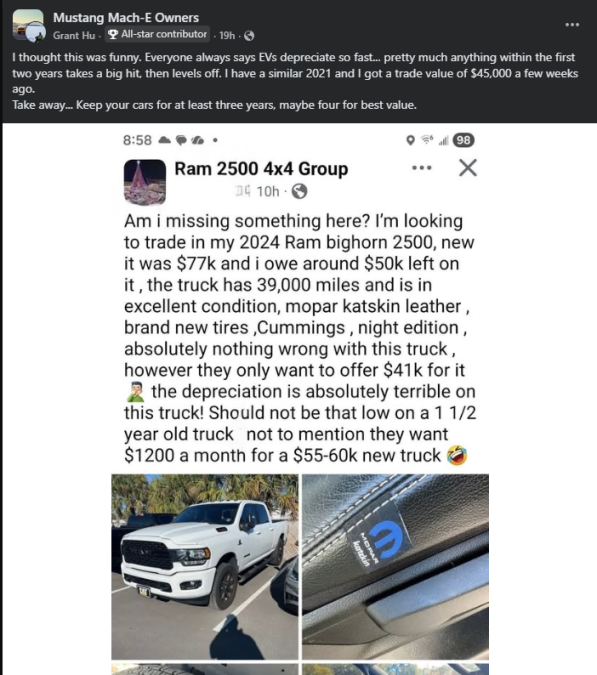
The Mach-E owner was not defending a hypothetical resale value from a spreadsheet. He was relaying an actual offer in hand and using it to illustrate a broader truth about modern vehicles. The steepest drop happens early, whether the drivetrain is electric or internal combustion. After two years, the curve flattens, and ownership starts to look far more reasonable.
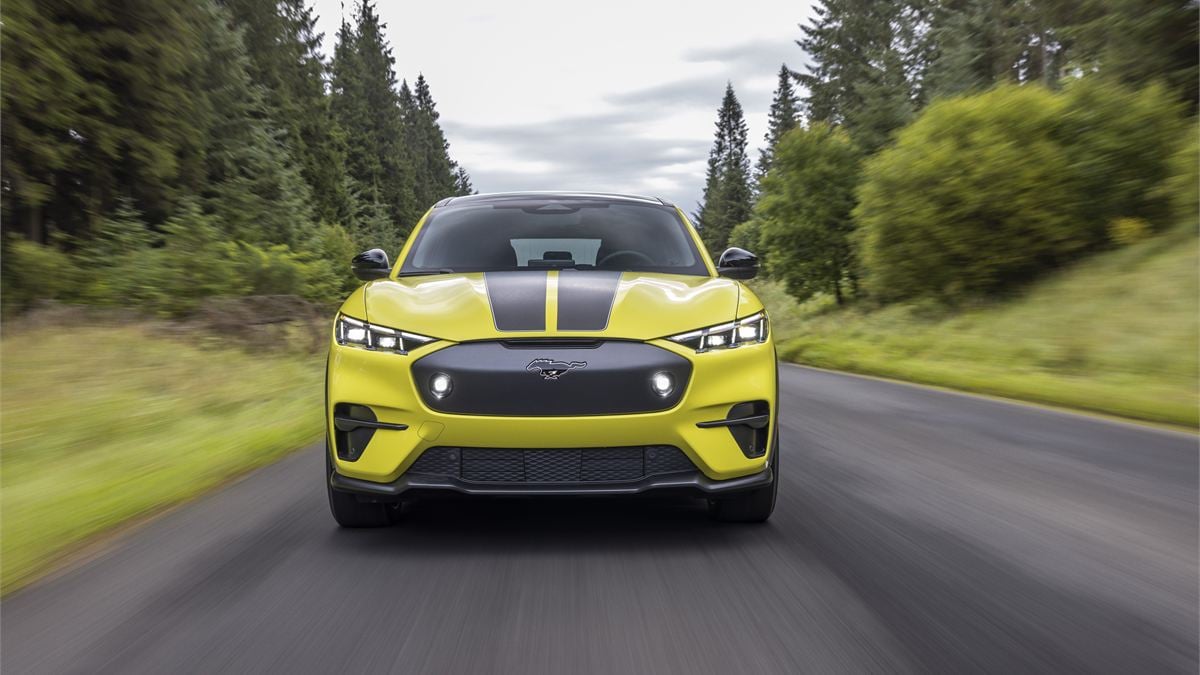
Ford Mustang Mach-E: Crossover or Sports Car?
- The Mach-E adopts crossover proportions that prioritize passenger space and ride height rather than traditional coupe styling cues.
- Electric power delivery is smooth and quiet, with selectable drive modes that noticeably alter throttle and steering response.
- Interior design centers on a large vertical touchscreen, reducing physical controls while consolidating most functions into software menus.
- Suspension tuning balances comfort with body control, providing stable highway behavior while revealing firmness over sharp road imperfections.
The Ram owner’s frustration underscores that reality. Despite desirable options, fresh tires, and a reputation for durability, the truck was still subject to the same market forces as everything else. High MSRPs, aggressive incentives on new models, and rising interest rates have all conspired to punish recent buyers. In that environment, depreciation is not a moral failing of one technology. It is a math problem affecting everyone.
Several commenters expanded on the idea with a more strategic lens. One pointed out that the lowest total cost of ownership usually comes from buying a car that is one to two years old, keeping it for another few years, then trading before warranty expiration, and financing friction sets in. In that framework, depreciation becomes something you manage, not something you fear. EVs, gas trucks, luxury sedans, and crossovers all follow the same basic curve.
The conversation also revealed how uneven expectations remain. Some commenters argued that EVs are unfairly held to a higher standard, expected to retain value perfectly, while gas vehicles are excused for similar or worse losses. Others noted that certain brands and segments, particularly heavy trucks and some European luxury cars, have been depreciation champions long before EVs entered the mainstream. In that context, blaming battery-powered cars alone feels selective at best.
What complicates the picture further is how incentives and market swings distort perception. A new truck discounted heavily today resets the resale ceiling for yesterday’s buyer. The same dynamic has hit EVs when manufacturers adjust pricing or introduce updated trims. Residual values move accordingly, and owners feel the impact regardless of propulsion type.
The Mach-E owner’s takeaway was refreshingly practical. Keep your car at least three years, maybe four, and let the initial hit pass. That advice would have served buyers well long before EVs existed, and it still does today. Depreciation has not suddenly appeared with electrification. It has simply become harder to ignore.
This comparison does not argue that EVs hold value better or worse than gas trucks. It argues something more useful. Modern vehicles are expensive, markets are volatile, and the first owner almost always pays the steepest price. Whether the badge says Mustang, Ram, or anything else, the numbers tell the same story once the emotion is stripped away.
Image Sources: Ford Media Center
Noah Washington is an automotive journalist based in Atlanta, Georgia. He enjoys covering the latest news in the automotive industry and conducting reviews on the latest cars. He has been in the automotive industry since 15 years old and has been featured in prominent automotive news sites. You can reach him on X and LinkedIn for tips and to follow his automotive coverage.
Set Torque News as Preferred Source on Google
Follow us today...