
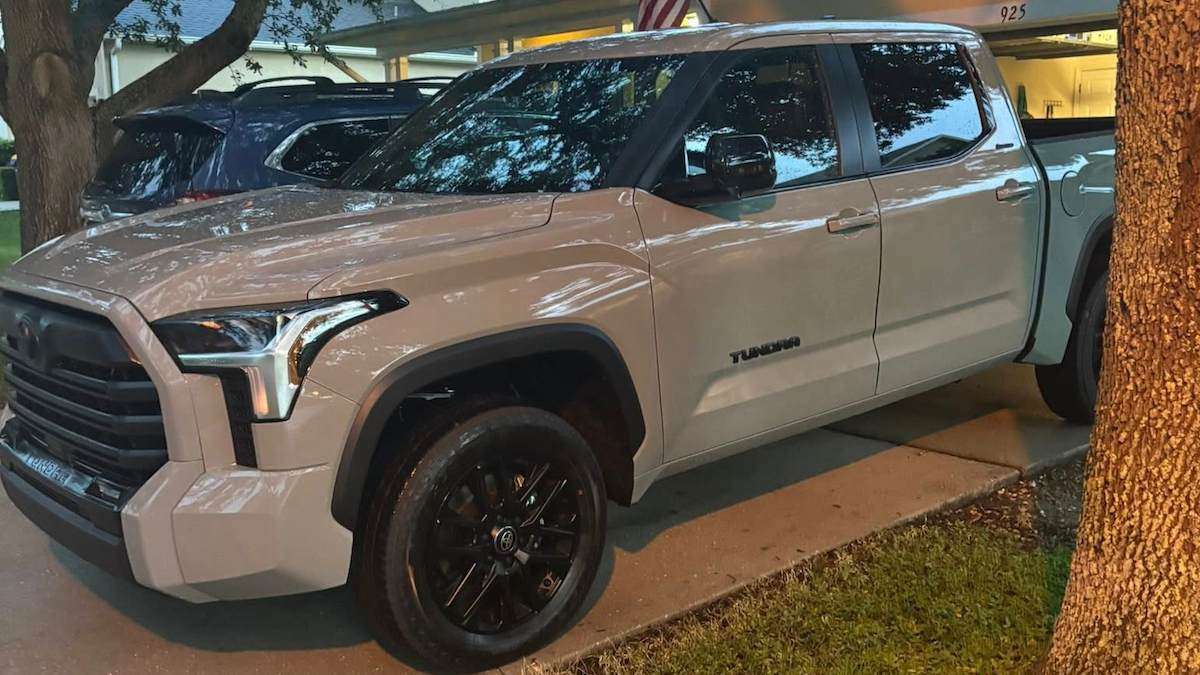

A Ford fan switches to a 2025 Toyota Tundra after his F-150 quit at 175,000 miles. BJ Neafus is all in on his "dream truck."
Did he make the right choice?
BJ Neafus on the 2023-2026 Toyota Tundra Owners Facebook page says,
"I'm a lifelong Ford fan, but my F-150 crapped out at 175,000 miles, and I decided to get my dream truck. It's a 2025 Toyota Tundra. I hope I made the right choice. Any suggestions for scoop step running boards, running boards in general, or tonneau covers would be appreciated."
BJ switching allegiance from Ford to Toyota is a huge move, but did he make the right choice? The 2025 Toyota Tundra is a great truck, and if he focuses on regular maintenance, its long-term durability should pay off handsomely.
Since he's taken the plunge and is looking at essential accessories, let's dive into his specific needs—running boards and tonneau covers—while also checking out the new Tundra platform.
2025 Tundra Reliability and Engineering
BJ's choice of the 2025 Tundra lands him in the sweet spot for reliability. The twin-turbo V6 engine (i-FORCE or i-FORCE MAX) has now matured. While there were some issues with early production models (2022-2023) related to machining debris and recalls, Toyota addressed these concerns with improved cleaning processes. By the 2025 model year, those growing pains should be in the past.
The new Tundra is built on the TNGA-F global body-on-frame platform, designed for longevity and superior rigidity. This foundation, combined with Toyota's engineering philosophy, will likely ensure low repair costs and outstanding long-term durability, which is what BJ is looking for after his F-150's retirement.
The standard i-FORCE V6 offers substantial power (389 horsepower and 479 lb-ft of torque) and is built on a proven architecture.
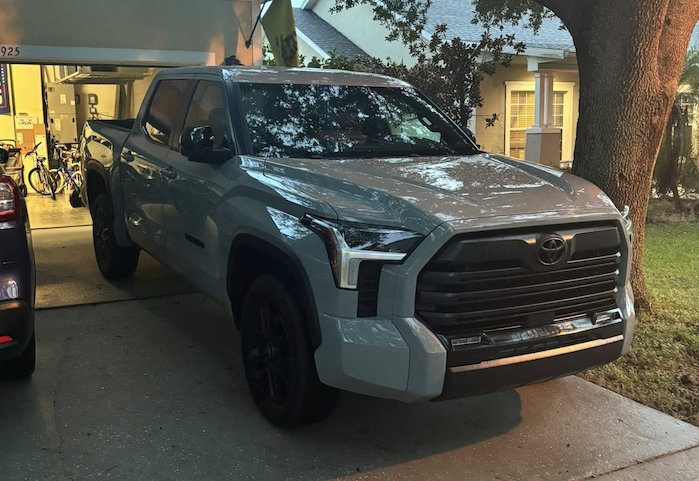
Regardless of whether buyers choose the Double Cab or the popular CrewMax, this new platform offers an immediate improvement in the daily driving experience.
Let's Move On to Running Boards
BJ specifically mentioned "scoop step running boards." This refers to fixed, tube-style steps (often called Nerf bars or N-Fab) that offer a rugged aesthetic and excellent grip. When choosing, the primary decision is between fixed protection and retractable convenience.
1. Fixed Running Boards (Scoop/Tube Style)
These are tube-style steps or traditional running boards (like Go Rhino Dominator D6 or N-Fab). They utilize factory mounting points for easy, non-drill installation.
- Pros: They are the most affordable option and offer superb rigidity and protection, especially if you venture off-road. They look aggressive and can take a hit, protecting the truck's rocker panels.
- Cons: They slightly reduce ground clearance and are often prone to collecting snow, ice, or mud, which can compromise grip. Because they stick out, they can sometimes act as "shin-bashers."
- Recommendation: If you prioritize cost efficiency, simple installation, and maximum rocker protection for light off-roading, fixed scoop steps are an excellent choice. For serious off-roading, consider a true rocker slider with an integrated step (a 2-in-1 solution).
2. Power-Retractable Steps
The ultimate solution for accessibility and aesthetics (brands like AMP Research or Boost Auto). They deploy low to the ground when the door opens and tuck away completely when closed.
- Pros: Offers the best accessibility for easier entry and exit, especially for shorter passengers. When retracted, they provide maximum ground clearance and a clean, stock look, as they are protected from road grime and debris.
- Cons: Significantly higher cost (often $1,200–$2,000+). Installation is more complex, involving wiring and potentially tapping into the vehicle's computer. In harsh, freezing weather, the mechanical components may occasionally require maintenance or temporarily freeze up.
- Recommendation: If your budget allows, power running boards are the clear winner for daily use, convenience, and maximizing comfort while driving. The Tundra's height makes the extra-low deployment a major benefit.
Tonneau Cover Security & Utility
A high-quality tonneau cover is non-negotiable for securing cargo and protecting your Tundra's composite bed. The excellent news is that the Tundra's factory Deck Rail System allows for compatibility with most modern covers, often utilizing T-slot nuts for a robust, non-drill installation.
Here are the three categories Tundra owners should consider, focusing on their main benefit:
1. Hard Folding Covers
Multi-panel covers made from durable materials like aluminum or composite (e.g., BAKFlip MX4, UnderCover ArmorFlex). They fold up toward the cab, resting against the rear window for bed access.
Security & Utility: These offer the highest level of security when combined with the Tundra's locking tailgate, essentially creating a secure, locking trunk. Owners overwhelmingly favor the ability to fold the cover all the way up for full bed access without completely removing it. Many are flush-mount, offering a sleek look.
2. Retractable Covers
These covers roll smoothly into a compact canister housed at the bulkhead (cab end) of the bed. They come in aluminum slats (hard retractable) or heavy vinyl with internal supports (hard roll-up).
Security & Utility: They are the most streamlined and cleanest option, as the cover disappears when not in use. They allow you to lock the cover in multiple open positions and look incredibly low-profile. The trade-off is that the canister does consume 8–12 inches of bed length. A hard retractable model (like the RetraxPRO XR) combines high security with the best aesthetics.
3. Soft Roll-Up or Soft Folding Covers
Typically, marine-grade vinyl or canvas is stretched over an aluminum frame (e.g., Extang Trifecta, TruXedo Lo Pro).
Security & Utility: They are the most affordable and lightweight option and provide excellent weather protection. While they deter casual theft, they are the least secure against determined criminals. These are perfect if your primary need is simply to keep your gear dry and you don't routinely store high-value items in the bed.
What the Community is Saying
On the Tundra's legendary durability:
"Welcome! You absolutely made the right choice. Ford is great, but that Tundra will outlive us both. You're trading 175,000 miles for 300,000+ easy!" — Rico_Suave_Tundra
Running Board/Step Suggestions (often "Scoop Step" style):
"Forget the 'scoop' steps. Go straight for the AMP Research PowerSteps. They tuck up completely out of sight for a clean look, but drop down with a huge step when you open the door. Best blend of style and function, hands down." — TacomaToTundra
"If you want a fixed step that's tough and has that aggressive look, check out the Go Rhino Dominator Xtreme D1. They're not exactly scoop, but they provide a huge stepping surface and good rocker panel protection for those 'remote sites'." — OffRoadDad
Tonneau Cover Suggestions:
"Security is key with a new truck. Look at the hard folding covers like the BAKFlip MX4 or the retractable ones like the RetraxPRO XR. They lock up nice and tight, and keep all your gear safe and dry, no matter the weather." — BedCoverKing
"If you just want dry and secure without the high-end price, the Extang Solid Fold 2.0 is a great, easy-off hard tri-fold option. Super simple installation and it's virtually waterproof." — BudgetTundraGuy
Here are two of my stories that shed more light on moving from a Ford F-150 and Chevy Silverado to a Toyota Tundra. Find out if they made the right choice.
Final Takeaways
BJ bought a great truck that blends Toyota's durability with a modern powerplant. The accessories he chooses will truly make it his own. Will he enjoy the quiet ride, the massive torque, and the peace of mind that comes with owning a new Toyota? Time will tell.
A Question For You
Now, for my readers, the question remains: Have you made the switch from a Ford F-150 or another truck to a Toyota Tundra? What is your experience, and would you do it again? Click the red Add New Comment link below and let us know.
I'm Denis Flierl, a Senior Torque News Reporter since 2012, bringing over 30 years of automotive expertise to every story. My career began with a consulting role for every major car brand, followed by years as a freelance journalist test-driving new vehicles—equipping me with a wealth of insider knowledge. I specialize in delivering the latest auto news, sharing compelling owner stories, and providing expert, up-to-date analysis to keep you fully informed.
Follow me on X @DenisFlierl, @WorldsCoolestRides, Facebook, and Instagram
Photo credit: Denis Flierl via BJ Neafus
Set Torque News as Preferred Source on Google
Follow us today...




Comments
My brand new F150 made it to…
Permalink
My brand new F150 made it to 36k and 6 transmissions.
My first Tundra was used with no issues. My second was new and Toyota bought it back at 50k miles. They charged me $12k for a new one with more options and now has 69k and no issues.
My last Ford was in 1999 and I’ll never buy another.
Well the only bad part of…
Permalink
In reply to My brand new F150 made it to… by Bruce Kendal (not verified)
Well the only bad part of Toyota is they got rid of the v8. So did Nissan . I was a Chevy fan until 2015 Colorado went in the shop 21 times the first year . Now I have 2023 f150 xlt 4x4 Bought it used with 30500 miles but I did buy extended warranty . So we will see
My 95 F150 and my 05 F350…
Permalink
My 95 F150 and my 05 F350 are both going strong with normal maintenance both over 200k and have never let me down. My 17 Expedition is also nearing 100k and no issues. On the Toyota side I have returned two 2021 Prius' one with under 1000 miles because of water leaking in and mold. Would never buy a Toyota again even if they were the last vehicle manufacturer on earth. I would just keep driving my Fords.
Toyota Tundra dream truck!…
Permalink
Toyota Tundra dream truck! What a joke! The Ford F150 is the dream truck. How do we know at 175,000 miles, which is allot of miles, how this truck was taken care of? My friend has one with 560,000 miles, which was well taken care of! Obviously this story was biased!
I agree. I have 150K on my…
Permalink
In reply to Toyota Tundra dream truck!… by Alan (not verified)
I agree. I have 150K on my 2016 2.7 Ecoboost. Original turbos. No issues whatsoever with it. I change my oil every 3K miles. I do preventative maintenance on it as well and I drive conservatively. Lots of issues going on with the Toyota Tundra and that used to be unheard of. Couldn't pay me to buy a new one or really any of these new trucks. To each his own.
Since when has Toyota fixed…
Permalink
Since when has Toyota fixed the bearing failure issue? 2024 and 2025 models have had the same main bearing failure that the recalled trucks had. Real, actual clown world article.
I have a 2017 F150. Bought…
Permalink
I have a 2017 F150. Bought used in 2020 with around 20k miles. Currently at 62k miles, and I'm EXTREMELY meticulous about all maintenance.
Ford Premium Care warranty was the best decision ever.
Rear glass due to defroster failure.
Steering wheel controls.
Had to self repair inner door seals due to leakage from failed goop.
Just got it back a week ago after a month and a half at the dealership. Went in for new evaporator as A/C died, newly rebuilt transmission due to poorly designed CDF drum, cam phasers replaced, leaking water pump replaced, and leaking thermostat housing replaced. Had to replace rear tail light assembly due to moisture buildup inside light, not covered by warranty.
Still has an active recall for the master brake cylinder.
All of this at 62k miles. Warranty is great, but the reliability is insane. This will be my last Ford. Will be buying a Toyota next time. Truck would have bankrupted me if not for the extended warranty.
I will never buy an American…
Permalink
In reply to I have a 2017 F150. Bought… by TJ (not verified)
I will never buy an American pickup truck. That body damage where the beds were rotting and the companies never compensated buyers...no way...never. I have only purchased Toyota and Lexus with minimal issues. Someone said 175000 miles is alot of miles. That tells me all I need to know. Waive the flag...head straight to service...no way!
I prefer the previous Gen…
Permalink
I prefer the previous Gen. Tundra with v8. Unsure about the reliability of the 6 cylinder turbo Tundras.
I personally would have…
Permalink
I personally would have bought the older Toyota Tundra with the V8 engine in it if it was me. I've personally seen them with well over 350,000 miles original engine and transmission. Toyota has been having issues with the new Tundras and that used to be unheard of. Couldn't pay me to buy a new one or really any of these new trucks. Lots of issues, recalls going on with them now. They just don't build them like they used to. To each his own though.
I personally think 2015-2017…
Permalink
I personally think 2015-2017 was the best years for the F150. I have a 2016 2.7 XLT SuperCrew with 150K. No issues whatsoever with it. I change my oil every 3K miles and I do preventative maintenance on it. I drive conservatively as well. I run Pennzoil Ultra Platinum. I don't think these turbo charged engines can handle long oil change intervals but that's just me. Remember oil is cheap and engines, turbo chargers are very expensive. To each his own.
Not a lot of details about…
Permalink
Not a lot of details about the F-150 he's replacing. Not the year or engine type are mentioned. From what I've seen, it's not so much about the brand - it's more about which engine choice you go with and how well you maintain it. I know lots of people that got the Eco-Boost (twin turbo v-6) and always have it in the shop after 175k miles. It is the more powerful truck, but that performance comes at a cost of long term reliability. I have a 2014 F-150 with the 5.0 V8, and I've got over 316k miles on mine - original engine, original transmission. I use it as a work truck and tow my camper around the US to travel. I take good care of it and keep up with maintenance. The only "major" repair I've had to do so far was rebuild the rear differential. I had that done around 310k.
For maintenance, Oil changes are done with full synthetic 5w20 every 8k miles (dealer recommends 10k), I service the transfer case, front/rear diff and transmission every 50k miles. Flush coolant and brake lines every 75k. Brake changes are about every 40k. Spark plugs every 75k.
The only other repairs I've ever done to it was a starter at 250k and water pump at 275k. I replaced the struts and socks at 280k because I wanted to lift it a little (2").
I know Toyota makes a very reliable truck as well. But those twin turbo v-6's... I'm weary about them in any brand of truck.
I love my Ford F150. I have…
Permalink
I love my Ford F150. I have a 2015. When I park it next to any of the other trucks of similar year. Mine looks new, thanks to the aluminum body. The otherscare all showing rust and decay. 300k miles and still going.