
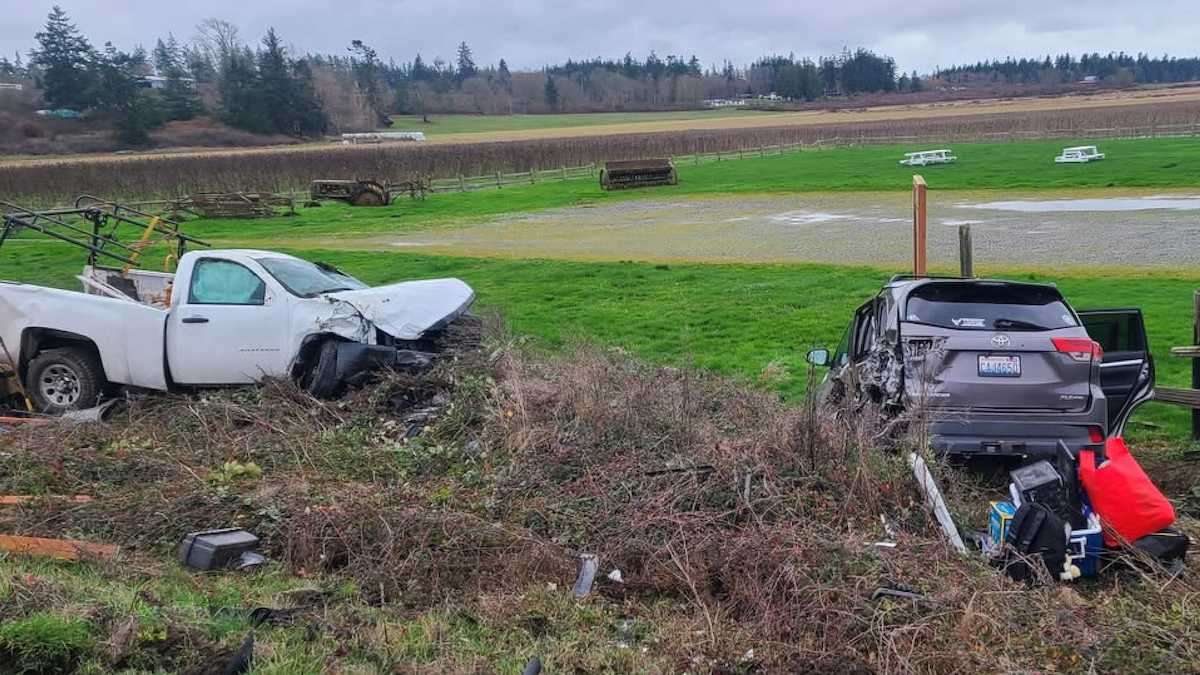

Imagine sitting parked on the roadside when a truck slams into your driver's door at 55 mph. Here is the incredible story of how one Toyota owner survived the nightmare scenario and why she says she’s already looking for her next Highlander.
You are parked in a roadside turnout, perhaps taking a moment to rest, check your phone, or simply enjoy the view. You are stationary, the engine might be off, and you feel completely safe. Suddenly, without warning, chaos strikes. A truck, traveling at highway speeds, drifts off the road and slams directly into your door.
This is the nightmare scenario that no driver wants to envision. Side-impact collisions, commonly known as "T-bones," are notoriously dangerous because there is very little "crumple zone" between the impacting vehicle and the occupants. Unlike a frontal crash, where the engine bay absorbs energy, a side impact relies almost entirely on the structural integrity of the doors, the B-pillar, and the deployment of airbags to preserve life.
For one Toyota Highlander owner, this nightmare became a reality. Yet, despite the violence of a 55-mph impact, she is here to tell the tale.
The Survivor’s Account
Gena Lont, a member of the Toyota Highlander Owners Club on Facebook, recently shared a harrowing experience that serves as a testament to modern automotive safety engineering. Her story is brief, but the image it paints is terrifying.
Here is Gena Lont’s full quote regarding the incident:
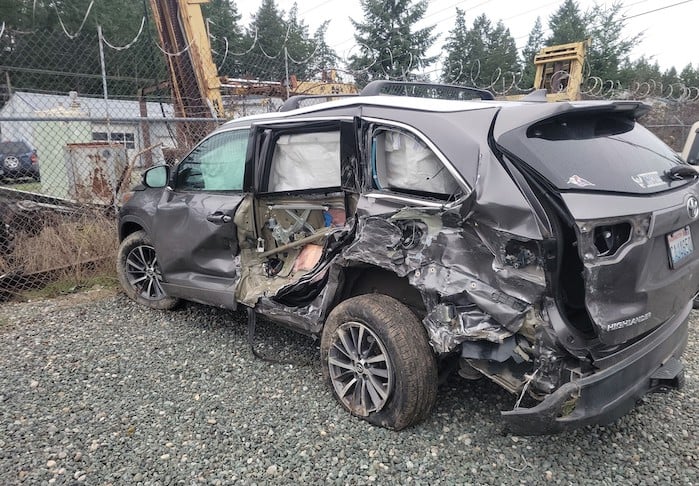
“This 2018 Toyota Highlander saved my life today. I took a full-on t-bone to the driver's side of my car by a truck while parked in a roadside turnout. The driver fell asleep and hit me at 55 mph, according to the state patrol. The side airbag deployed. My daughter and I are very bumped and bruised but fine. The car is totaled. I'm going to start looking for my next Highlander.”
Why The Highlander Saved Them
As an automotive journalist who has covered safety ratings and crash tests for over a decade, reading a report like Gena’s stops me in my tracks. A 55-mph direct impact with a stationary vehicle releases a large amount of kinetic energy. When a moving object (the truck) hits a stationary object (the Highlander), the transfer of force is violent and instantaneous.
So, how did Gena and her daughter walk away with only bumps and bruises? It comes down to three critical factors: The survival space, energy management, and the Side Curtain Airbag system.
1. The "Survival Space" and the B-Pillar. In a side-impact crash, the primary goal of the vehicle's frame is to prevent intrusion into the cabin. The 2018 Toyota Highlander was engineered with high-strength steel reinforcements in the B-pillar (the vertical post between the front and rear doors) and the door beams. In a 55-mph crash, these components must resist bending inward. If the pillar collapses too far, it strikes the driver. In Gena’s case, the Highlander’s structure held its ground, maintaining a "survival space" around her despite the massive force.
2. Side-Impact Airbags Gena noted that the side airbag deployed. In the 2018 Highlander, this includes a seat-mounted side airbag that protects the torso and pelvis, and a Roll-sensing Side Curtain Airbag (RSCA) that deploys from the roofliner. This curtain is vital. It creates a cushion between the driver's head and the intruding vehicle or the window glass. Without this curtain, head trauma is almost guaranteed in a high-speed T-bone. The fact that they are "fine" suggests these systems were deployed exactly as designed, milliseconds after the sensors detected the impact pressure.
3. Energy Absorption vs. Deflection Because Gena was parked, her car took the full brunt of the energy. In many accidents where both cars are moving, some energy is dissipated as the cars spin or deflect off one another. Being parked means the Highlander had to absorb the energy primarily through structural deformation. The car is "totaled" because it sacrificed itself, the metal crumpled so the passengers wouldn't have to.
The IIHS Safety Context
It is worth noting that the 2018 Toyota Highlander was an Insurance Institute for Highway Safety (IIHS) Top Safety Pick. It received the highest rating of "Good" in the side crashworthiness test. The testing data for that model year specifically highlight that the "driver space was maintained well" and that "measures taken from the dummy indicate a low risk of any significant injuries."
Gena’s real-world experience validates those laboratory tests. It is one thing to see a crash test dummy survive in a controlled environment; it is another to see a mother and daughter survive a sleeping truck driver on a real highway.
The Ultimate Endorsement: Brand Loyalty
Perhaps the most telling part of Gena’s statement is her conclusion: "I'm going to start looking for my next Highlander."
In the automotive industry, we often talk about horsepower, torque, infotainment screens, and fuel economy. Manufacturers spend billions marketing the lifestyle appeal of their SUVs. But for Gena Lont, those specs are likely secondary now. When a vehicle performs its most critical function, preserving life in a catastrophic failure of the environment around it, it creates a loyalty that no marketing campaign can buy.
She isn't looking for a different brand or a different model. She is looking for the machine that just saved her life.
Conclusion
This incident serves as a sobering reminder of why safety ratings matter. When you are shopping for a family hauler, it is easy to get distracted by leather stitching or panoramic sunroofs. But the engineering hidden beneath the skin, the boron steel beams, the crumple zones, and the airbag sensors are what you are truly paying for.
For Gena Lont and her daughter, the 2018 Toyota Highlander did exactly what it was built to do. It gave them a tomorrow.
Your Turn: Have you ever experienced a collision where you felt the vehicle's safety systems specifically saved you from serious injury? Are you driving a Highlander for its safety reputation? Let us know in the comments below.
Next Up: Winter driving can be a challenge, but for one Toyota Highlander owner, it became a breaking point. After moving from Florida to a snowy climate, he found his 2022 FWD Highlander struggling to make it up his own driveway in just five inches of snow. Is the front-wheel-drive system really to blame, or is he missing the one critical upgrade that matters more than AWD?
Check out the full report here: “My 2022 Toyota Highlander FWD, In 5 Inches Of Snow, Won't Even Make It Up the Driveway, It Can't Be the Tires, For the First Time I'm Thinking of Getting Rid of It”
With over 30 years of industry experience, Denis Flierl brings an insider’s perspective to Torque News, where he has been a Senior Reporter since 2012. Before picking up the pen, Denis consulted for the automotive industry's biggest brands and honed his skills as a test driver. He cuts through the noise to deliver the latest auto news, compelling owner stories, and the expert analysis necessary to navigate today's changing automotive market.
Have a tip or question? Follow me on X @DenisFlierl and @WorldsCoolestRides, or connect with me on Facebook, Instagram, and LinkedIn.
Photo credit: Denis Flierl via Gena Lont
Set Torque News as Preferred Source on Google
Follow us today...


Comments
As a commercial truck driver…
Permalink
As a commercial truck driver, our image has taken some pretty hard knocks lately. Some have been deserved. Some have not. But calling someone driving a 1/2 ton pickup a "truck driver" is baiting at best. Disingenuous and dangerous at worst. Stop it. A pickup truck in an accident is not what people think when they read trucker or truck driver in the headline.