
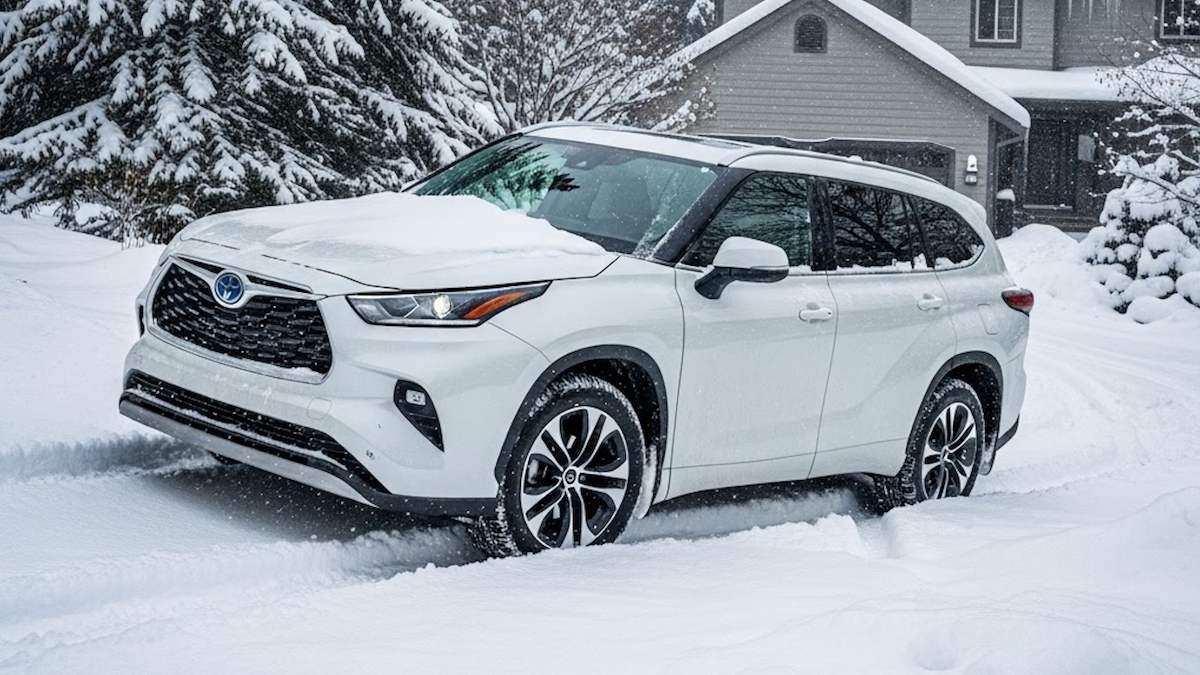

This Florida transplant is ready to trade in his 2022 Highlander after one failed attempt up a snowy driveway, but experienced drivers know that the real problem isn't the SUV; it's what's touching the road.
In my extensive research monitoring owner forums for emerging trends, I uncovered a recent dilemma posted by John Sciria on the Toyota Highlander Owners Club Facebook page that highlights a critical winter driving mistake. Sciria, who recently moved to the snow belt, is considering trading in his 2022 Highlander Hybrid FWD after failing to climb a driveway covered with 5 inches of snow.
As a Senior Reporter for Torque News, I see this scenario often: an owner blaming the vehicle's drivetrain when the real culprit, dangerously worn factory tires, is the actual point of failure.
With over three decades in the automotive industry, I have tracked Toyota's reliability trends and performance capabilities through every generation. I have seen owners face the exact dilemma John Sciria is experiencing with his 2022 Toyota Highlander Hybrid. When you move from a warm climate to the "snow belt," the learning curve can be steep, and the equipment that worked in Florida often fails in the frozen north.
John Sciria recently posted on the Toyota Highlander Owners Club Facebook page, asking a question that cuts to the heart of winter driving safety. He asks, "Hi all. I know I need tires. I'm at 4/32. But, I figured I could make it until spring. Today we had about 5" of snow."
John's scenario is a classic. You look at the tread, see a little depth left, and hope to stretch the budget until the flowers bloom. But winter has other plans. John continues, "I have a 2022 Toyota Highlander Hybrid LE FWD, and I couldn't make it up the driveway. Would this be because of the tires or the FWD?"
The Weak Link: It's Not Your SUV
It is almost certainly the tires. While All-Wheel Drive (AWD) is a superior system for launching a vehicle on slick surfaces, a Front-Wheel Drive (FWD) Highlander is surprisingly capable when equipped with the right rubber. John's current situation, driving on factory tires with only 4/32nds of tread depth in five inches of snow, is a recipe for failure.
At 4/32nds, his tires have lost the majority of their snow-biting sipes.
These small slits in the tread block are essential for gripping ice and packed snow. Without them, your tires are essentially hard rubber slicks sliding over a frozen surface. Check out my report: Today Was the Day, 301K Miles On My 2008 Toyota Highlander, But Letting This Family Member Go Is Sad. Even the most robust 4WD system cannot overcome a lack of traction at the contact patch.
Understanding the Highlander's Capability
John mentioned, "We just moved to the snow belt from Florida. I have 42k on the factory tires. For the first time, I'm considering getting rid of it." Before you trade in your vehicle, consider that the Toyota Highlander Hybrid FWD's snow performance is heavily dependent on the shoes it wears.
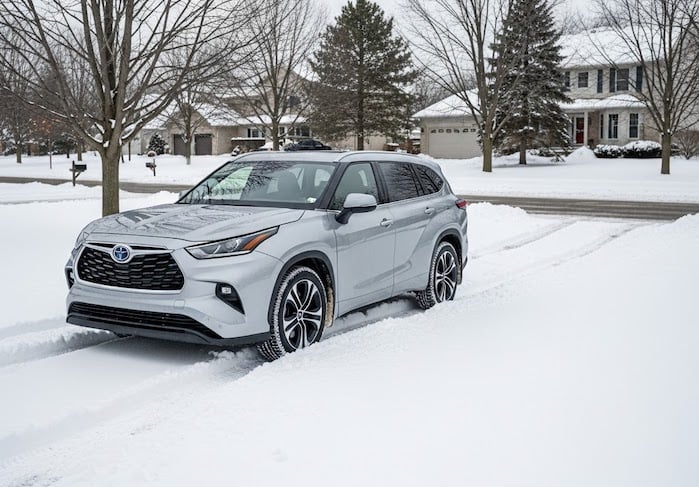
The factory-installed tires on most new vehicles are "low rolling resistance" tires designed to maximize fuel-economy test numbers, not to conquer blizzards. By 42,000 miles, they are likely past their useful life for winter conditions. A FWD vehicle pulls you through the snow, which is generally more stable than a Rear-Wheel Drive vehicle that pushes you. However, without grip, the front wheels will spin, and the traction control will cut power to prevent wheel slip, leaving you stranded halfway up your driveway.
I Got a Great Deal on a 2023 Toyota Highlander, and Then Found Out Why the Deal Was So Good Because the Dealer Sold Me a FWD Car. In that report, I discussed how owners often unknowingly compromise their winter capability by sticking with stock equipment. Your Highlander is a fantastic machine, but right now, it is handicapped.
The Solution: Better Rubber
If John wants to keep his Highlander and conquer that driveway, it needs to be upgraded. For drivers in the snow belt who do not want to swap between summer and winter sets, Michelin CrossClimate2 for the Toyota Highlander is the gold standard. These "All-Weather" tires feature the Three-Peak Mountain Snowflake symbol, indicating they meet severe snow service standards.
The Best Winter, Snow, All-Season, and Off-Road Tires For Your SUV. As I highlighted in that analysis, these tires provide a game-changing level of grip on ice and slush while maintaining excellent road manners in dry conditions. They effectively bridge the gap between all-season and dedicated winter tires.
Practical Advice for Your Situation
John asked, "Would this be because of the tires or the FWD?" It is 90% the tires and 10% the drivetrain. An AWD vehicle on bald tires will spin four wheels instead of two. A FWD vehicle on excellent winter tires will drive circles around an AWD vehicle on worn all-seasons.
Replacing factory tires on Toyota Highlander models with proper winter-rated rubber will transform your driving experience. You will find that driving a front-wheel drive SUV in winter is manageable and safe when you have traction. Additionally, ensure you are utilizing your vehicle's technology.
Check your Toyota Highlander owner's manual for the snow mode settings. If equipped, this mode dampens throttle response to prevent wheel spin upon acceleration, helping you gain momentum without breaking traction.
While AWD offers a safety advantage in specific scenarios, Highlander Hybrid maintenance and safety start with the tires. Do not let the lack of AWD scare you into selling a reliable vehicle; fix the contact patch first.
What Highlander Owners Are Saying
Owners across various platforms agree that tires make the difference.
Reddit: One owner on the r/ToyotaHighlander subreddit stated, "Simply put, tires are the largest determining factor in how a vehicle performs in the snow. Get some tires that are decent in snow, and you'll have better results."
YouTube: A review of the Highlander Hybrid's winter capabilities noted, "Trail mode is better for deep snow and mud where you have to maintain wheel spin to keep momentum... here on a slippery incline, less wheel spin as provided by normal mode proves to be the better option."
Reddit: Regarding tire choices, another owner shared, "I ended up returning those tires... and I bought a set of CrossClimate 2s... The CrossClimate 2s ride sooo much better. I am also excited to see how they perform in wet and snowy weather."
Key Takeaways
- Tires are Primary: 4/32nds of tread is insufficient for snow; replace your tires immediately.
- FWD is Capable: With proper winter tires, a FWD Highlander handles most winter conditions effectively.
- Upgrade Rubber: Consider All-Weather tires like the Michelin CrossClimate2 for year-round safety.
- Don't Sell Yet: Address the tire issue before giving up on your 2022 Hybrid.
In the End
John should not get rid of his Highlander just yet. The failure he experienced in his driveway was a maintenance issue, not a problem with the machine. The best winter tires for Toyota Highlander models can turn a slipping sled into a capable winter warrior.
Invest in a set of high-quality, snow-rated tires, and I am confident you will find your FWD Hybrid is more than up to the task of handling life in the snow belt.
Tell Us What You Think:
Have you successfully driven a FWD SUV in deep winter snow? What specific tire brands do you swear by for keeping your family safe? Let us know in the comments below.
I'm Denis Flierl, a Senior Torque News Reporter since 2012, bringing over 30 years of automotive expertise to every story. My career began with a consulting role with every major car brand, followed by years as a freelance journalist, test-driving new vehicles, which equipped me with a wealth of insider knowledge. I specialize in delivering the latest auto news, sharing compelling owner stories, and providing expert, up-to-date analysis to keep you fully informed.
Follow me on X @DenisFlierl, @WorldsCoolestRides, Facebook, Instagram and LinkedIn
Photo credit: Denis Flierl
Set Torque News as Preferred Source on Google
Follow us today...






Comments
Simple physic lesson. Place…
Permalink
Simple physic lesson. Place the weight where traction is required most. In reverse.