
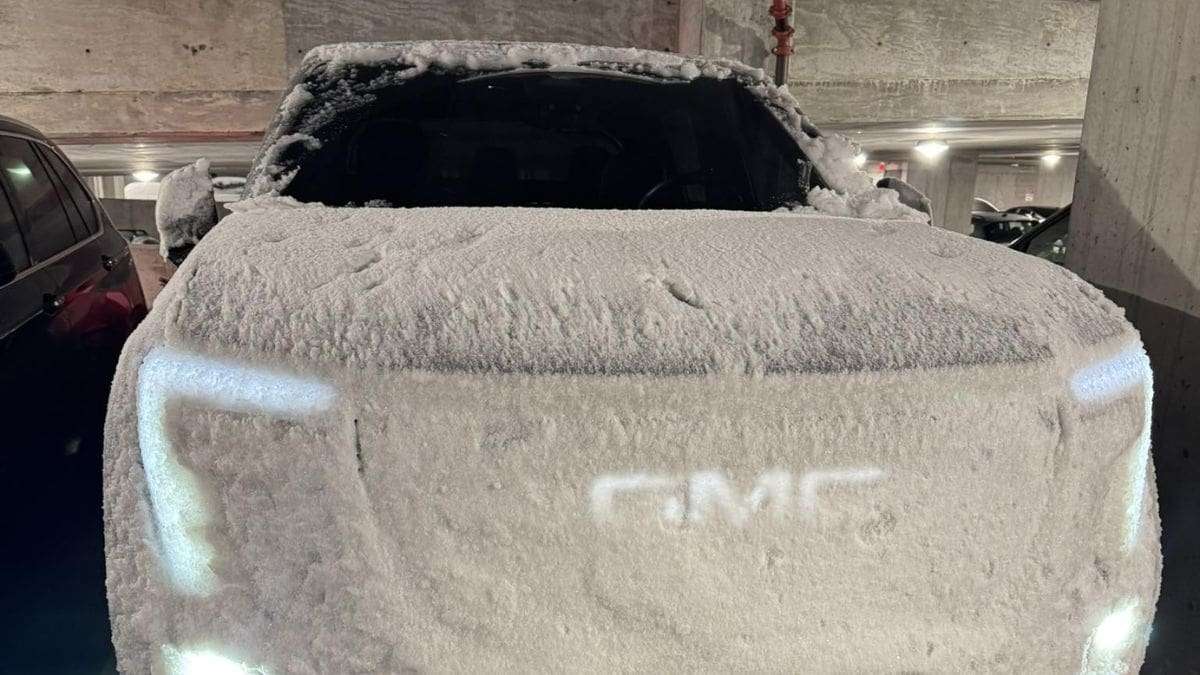

When a full scale New York City blizzard hits with heavy snow bands and damaging winds, it becomes the ultimate real world test for any vehicle. Snow piles up, visibility drops, road salt spreads everywhere, and temperatures dip into the range that exposes mechanical weaknesses fast. That is why a short Facebook post from a GMC Sierra EV owner stopped me mid scroll. After 15 years covering the auto industry and listening to owners of everything from diesel HD trucks to the latest electric pickups, I have learned one thing. The most honest reviews come after thousands of miles, not during a launch event.
In the GMC Sierra EV public group, Ulises Michelem shared a simple but powerful update.
“My GMC Sierra EV passed the blizzard test. 20k miles with zero issues!”
That is not hype. That is 20,000 miles of daily driving followed by a direct hit from a Northeast winter storm. For anyone searching how does the GMC Sierra EV perform in a blizzard after 20,000 miles, this is exactly the kind of owner feedback that matters.
GMC Sierra EV In A NYC Blizzard Is a Real-World Winter Driving Test
This real world owner experience echoes other long distance feedback from Sierra EV drivers. In a 5300‑mile coast to coast trip, a Sierra EV owner shared that Super Cruise handled 90 percent of the drive, showing that these trucks are not only capable in extreme weather but also reliable over sustained highway use. This perspective strengthens the idea that the Sierra EV is a well‑rounded everyday truck, not just a winter experiment.
The phrase blizzard test sounds dramatic, but it captures what many EV skeptics still wonder. Can an electric truck handle extreme winter weather as reliably as a gas powered pickup?
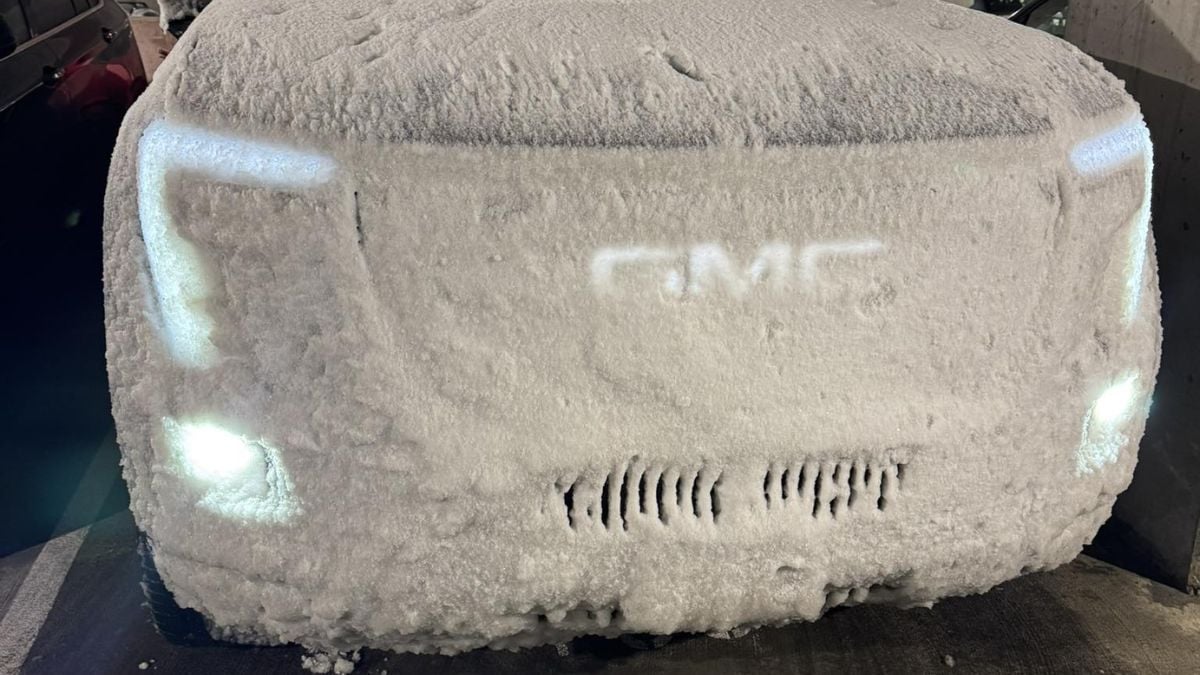
Ulises’ experience suggests yes, at least in his case. And he is not alone. Another owner, Scott Isaak, chimed in with long term perspective. He wrote, “I have put 31000 on this year. GREAT truck. THIS is my fav pic yet!!! I believe this truck is absolutely amazing. I’ve seen all the conversation about what level to charge to and what not. Simple rule I abide by is I never leave it under 20 and I never leave it sitting over 80. I have come home with it at 3%, but that I immediately plug it in. When I’m going long trips I charge when I go to bed so when I wake up at 100%. Amazing vehicle.”
That charging strategy is not random. It answers a very practical question many readers have. How do you maintain EV battery health in cold climates? Keeping daily charge levels between 20 and 80 percent reduces long term stress on lithium ion cells. Charging to 100 percent only before a road trip balances convenience with longevity.
In winter, this approach becomes even more important. Cold temperatures slow chemical reactions inside the battery. Smart charging habits, combined with preconditioning the battery while plugged in, can reduce winter range loss and improve performance in freezing weather.
Does Cold Weather Reduce GMC Sierra EV Range?
One of the most searched questions about electric trucks is simple. How much range does the GMC Sierra EV lose in cold weather?
Buddy Dalton asked Ulises directly, “How is the range when it is cold out?” Ulises replied, “pretty good, as I haven’t seen much of a difference.”
That response surprised some readers. Vi Fo offered a thoughtful counterpoint. “To be honest, I was surprised by hearing not much difference, but the more important question is to ask what the driving speeds and distances were. I can believe minimal losses if he’s driving around the city, and if one charges at home every night you’d never notice your range impact. It’s the highway speeds that’s the range killer, and it only really affects one if going on a trip where charging at home isn’t an option.”
This is where context matters. Winter EV range loss is real. Cold air is denser, increasing aerodynamic drag. Battery efficiency drops. Cabin heating consumes energy. But city driving with regenerative braking and nightly home charging can make those losses feel small. Highway driving at 70 miles per hour in sub freezing temperatures is a different story.
So how can Sierra EV owners minimize range anxiety in winter?
- First, precondition the vehicle while it is still plugged in. Warming the cabin and battery before departure reduces energy drain on the road.
- Second, moderate highway speeds when possible. The difference between 65 and 75 miles per hour can be meaningful in cold conditions.
- Third, use seat and steering wheel heaters instead of blasting cabin heat at maximum. Targeted heating uses less energy.
These are simple habits, but they answer the how to drive an electric truck in winter efficiently question in a practical way.
EV owners aren’t just impressed with winter performance. Many report overall satisfaction with their ownership experience. One driver recently stated that choosing a GMC Sierra EV Denali was “the far best decision I have made regarding vehicle purchase,” reflecting confidence that extends beyond seasonal conditions. That long‑term confidence reinforces the notion that this truck delivers value through everyday reliability and owner satisfaction.
LED Headlights, Snow Build Up, And The Blizzard Debate
Not everyone agreed that the Sierra EV “passed” the blizzard test. Craig Wedge wrote, “That's actually failing the blizzard test, but it's all EVs and Led lights that don't generate heat and just cake up with snow, unlike Ice cars that usually stay melted.”
This is a common argument. The idea is that LED headlights do not generate enough heat to melt snow, leading to ice buildup.
But Matt Knutzen responded with an important reality check. “most new ICE vehicles have LED lights too, our 2019 Buick Enclave has factory LED lights same with my boss' 2024 Silverado 3500. My brother in-law's 2016 Ram 1500 also has factory LED projector headlights. So ICE vehicles fail the blizzard test to based on this.” Jerry Knowles added, “most all new cars have LED lighting now. This isn’t an EV thing.”
They are right. LED headlights are now common across the industry. Snow buildup on lights is a design and airflow issue, not strictly an electric vehicle problem.
Brandon Franklin added a practical tip. “You need keep the front vent cleared. The battery needs air flow and if snow pact on vent and prevent airflow then can cause some issues.”
This brings us to a key how to question. How do you prepare an electric truck for a blizzard?
You clear snow from front vents, cameras, radar sensors, and headlights. You treat thermal management systems with the same respect you would give a radiator grille on a gas truck. A simple long handled snow brush or de icing tool is not a luxury. It fulfills the basic need for visibility and airflow in modern vehicles loaded with sensors and cooling systems.
There is also an ethical angle here. As EV adoption grows, some companies market winter accessories as essential survival gear, sometimes playing on fear. The better path is education. Most winter preparedness tools apply to all modern vehicles, not just EVs. Owners should understand why they are using them, not just buy them because a trend tells them to.
What About Long Term Battery Degradation After 20,000 Miles?
There is one more question readers may have. After 20,000 miles, is there noticeable battery degradation in the GMC Sierra EV?
Beyond range and battery health, real world towing performance has also impressed Sierra EV owners. One owner reported that his Sierra EV “hands down outperforms any gas or” truck they had tested in real world towing scenarios, challenging assumptions about electric truck capability under load. This adds another dimension to discussions about durability after significant mileage and in demanding conditions.
Ulises did not report any issues, and that silence is meaningful. Modern electric trucks use sophisticated battery management systems to protect long term health. While measurable degradation over tens of thousands of miles is normal, most manufacturers design packs to retain the majority of capacity for many years.
In my experience covering electric vehicles for over a decade, early catastrophic degradation stories are rare with mainstream models. More often, concerns are driven by online narratives rather than widespread data. Real world ownership reports like Ulises’ help ground the conversation.
The larger lesson here is not that every electric truck will behave identically in every storm. It is that unchecked assumptions about EV fragility in winter deserve to be questioned. Technology evolves. So should our thinking.
If you drive an electric truck, have you experienced significant range loss during highway driving in freezing temperatures? And if you live in a snow heavy region, what practical steps have helped you keep your vehicle safe and reliable during a blizzard? Share your personal experience in the comments section below.
Armen Hareyan is the founder and Editor-in-Chief of Torque News. He founded TorqueNews.com in 2010, which since then has been publishing expert news and analysis about the automotive industry. He can be reached at Torque News Twitter, Linkedin, and Youtube. He has more than a decade of expertise in the automotive industry with a special interest in Tesla and electric vehicles.
Set Torque News as Preferred Source on Google
Follow us today...



Comments
All of my 10 electric…
Permalink
All of my 10 electric vehicles handle the cold just fine . no protection needed. It can be below zero and I can go out with them not even plugged in and off we go just as if it was 60° out.