
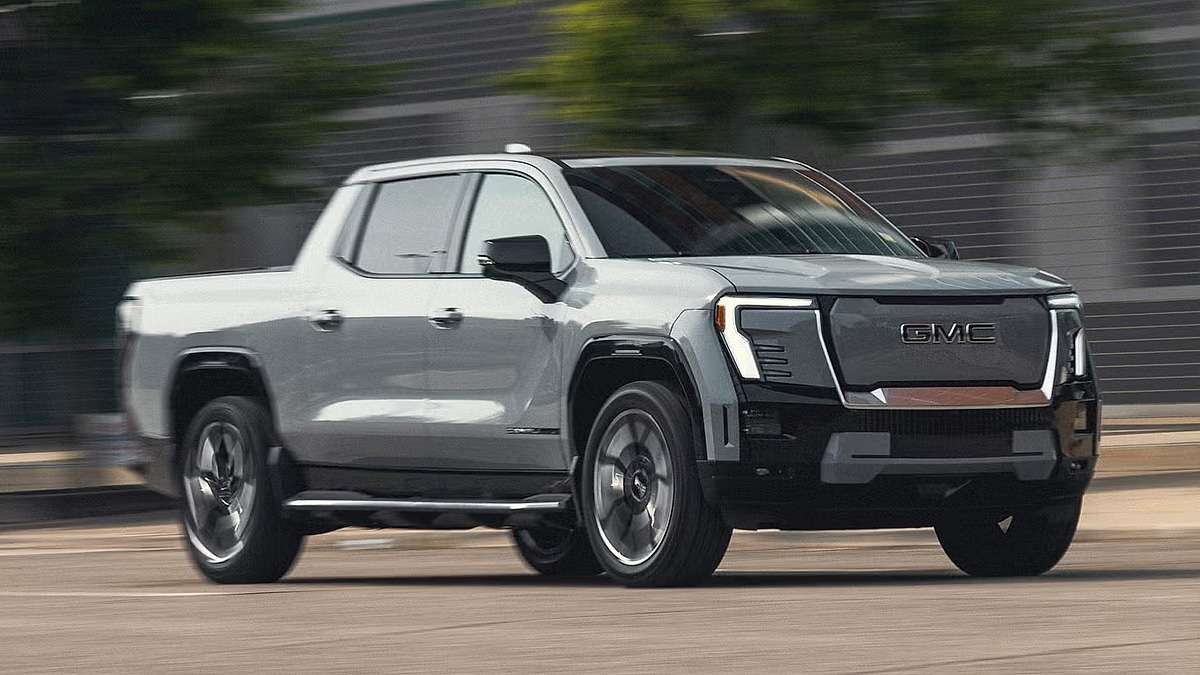

A recent over-the-air update, version 652.42, has dramatically altered the regeneration performance of the GMC Sierra EV, with owners reporting an "insane" increase in regenerative braking efficiency. One owner, Kenneth Burghardt Jr., documented his daily commute, showing regeneration miles jumping from a typical 2.5-3 miles to an unprecedented 8.6 miles. This is a fundamental shift in how the truck recovers energy, directly impacting its real-world range.
The initial calibration of these trucks and GM's transparency regarding their software updates are concerning, given this sudden, drastic improvement in a core EV metric. When a vehicle's performance characteristics can be so profoundly altered by a software push, it implies that prior iterations were either significantly under-optimized or intentionally conservative. Every Sierra EV owner who purchased their truck before this update was driving a less efficient vehicle than they could have been, and GM has offered no explanation for the discrepancy.
GM's over-the-air updates for the Sierra EV are not merely refining performance; they are fundamentally redefining it, suggesting a rushed initial deployment or a deliberate withholding of optimal efficiency.
Kenneth Burghardt Jr. posted in the GMC Sierra EV Group:
"Was wondering if anyone has noticed the drastic change in efficiency after the new OTA update 652.42? It's insane, went from my normal drive into work, regeneration of 2.5 to 3 miles, to now 8.6 miles...literally left my garage at 202 miles left, drove 11.8 miles and regened 8.6 and had 199 miles left, at one point the miles left hit 197 and gained 2 miles from regen, this has now been happening everyday so not a fluke.
Pic for proof."
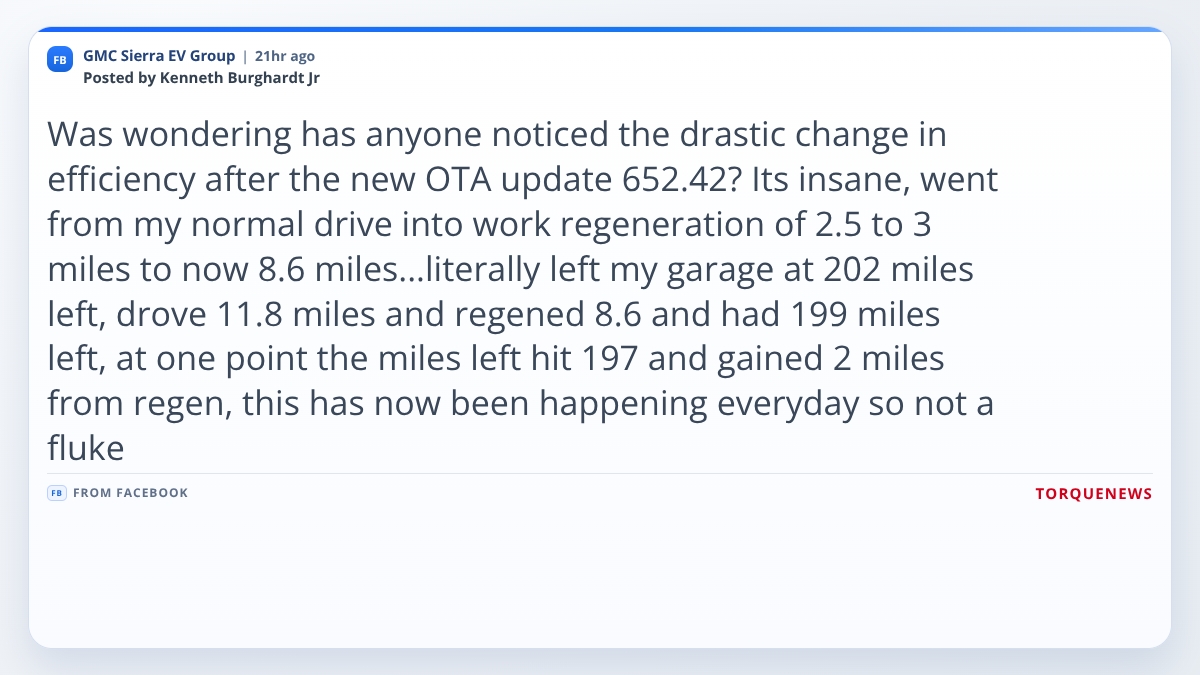
Burghardt's observation of gaining 8.6 miles of range from regeneration over an 11.8-mile drive, while only consuming 3 miles of indicated range, is not just a statistical anomaly; it's a 200% increase over his previous experience. This isn't the kind of incremental improvement one expects from a typical software patch.
GMC Sierra EV: Software-Driven Range Discrepancies
- The GMC Sierra EV, part of GM's Ultium platform, is designed for advanced over-the-air (OTA) updates, allowing for significant software-driven performance changes.
- Update 652.42 has reportedly increased regenerative braking efficiency by over 200% for some owners, turning 2.5-3 miles of regen into 8.6 miles on a typical commute.
- This improved regeneration directly translates to a lower net energy consumption per mile, effectively extending the real-world driving range of the vehicle. This is about a better truck and the expectation that a new vehicle, especially one at this price point, should arrive with its core systems optimized.
This is a recalibration that fundamentally changes the driving dynamics and the effective range of the vehicle. It suggests that GM either found a significant flaw in its original regeneration strategy or was holding back on the full potential of the system.
The question then becomes: why now? What prevented this level of efficiency from being available to owners from day one?
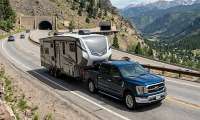
James Seeliger, a fellow member of the GMC Sierra EV Group, responded to Burghardt's post, acknowledging the dramatic change but also pointing to environmental variables. Seeliger noted, "Never seen it that high, but speed, temperature, towing, landscape, and more are huge factors. Have you tried it at highway speeds over long ranges yet? That would probably be the real test." While these factors are undeniably critical to EV efficiency, Burghardt's follow-up clarifies that his prior "normal drive" conditions were consistent, and even at highway speeds, he observed a noticeable improvement. He reports highway regeneration at 70 mph now sits at 2.1 to 2.3 miles, up from 1.6 to 1.9 miles in similar snow and wind conditions, without towing. This indicates the change transcends mere ambient conditions.
The discrepancy between pre- and post-update efficiency indicates that initial calibration strategies were flawed, and GM vehicles are not delivered with their full capabilities enabled.
Another commenter, Justin Dudek, who applied the update in January, initially claimed, "I did the update in January and didn’t really notice much difference. Just in the last week, temperatures have gone up quite a bit in my area, which has pushed efficiency way up." Dudek's comment shows a common misconception that often muddies the waters in EV discussions: the conflation of software changes with ambient temperature effects. While warmer temperatures absolutely improve battery efficiency and range, Burghardt's consistent daily results under similar conditions, and his specific comparison of "before" and "after" the update, isolate the software's impact. The update itself appears to be the primary driver of this regeneration leap, not just the changing seasons.
The update is a genuine, underlying improvement in the energy recovery system, not just a compensation for environmental factors.
The GMC Sierra EV's OTA update 652.42 has unlocked a regeneration capability that was either dormant or severely restricted in previous software versions. While owners will undoubtedly appreciate the newfound efficiency, this dramatic improvement casts a long shadow over GM's initial product delivery. It suggests that early adopters were operating a vehicle that was not performing at its full potential, a potential that was only realized months later via a software patch. This distinction removes the easy out for manufacturers to attribute performance shifts solely to external variables. GM owes its customers a clear explanation for this significant disparity between the Sierra EV's initial and post-update performance.
Image Sources: GMC Media Center
About The Author
Noah Washington is an automotive journalist based in Atlanta, Georgia, covering sports cars, luxury vehicles, and performance culture. His reporting focuses on explaining the engineering, design philosophy, and real-world ownership experience behind modern vehicles.
Noah has been immersed in the automotive world since his early teens, attending industry events and following the enthusiast communities that shape how cars are built and driven today. His work blends industry insight with enthusiastic storytelling, helping readers understand not just what a car is, but why it matters.
Noah is also a member of the Southeast Automotive Media Association (SAMA), a professional organization for automotive journalists and industry media in the Southeast.
His coverage regularly explores sports cars, luxury vehicles, and performance-driven segments of the automotive industry, including the evolving culture surrounding Formula Drift and enthusiast builds.
Read more of Noah's work on his author profile page.
You can also follow Noah here:
Set Torque News as Preferred Source on Google
Follow us today...



Comments
That's actually very nice.
Permalink
That's actually very nice.