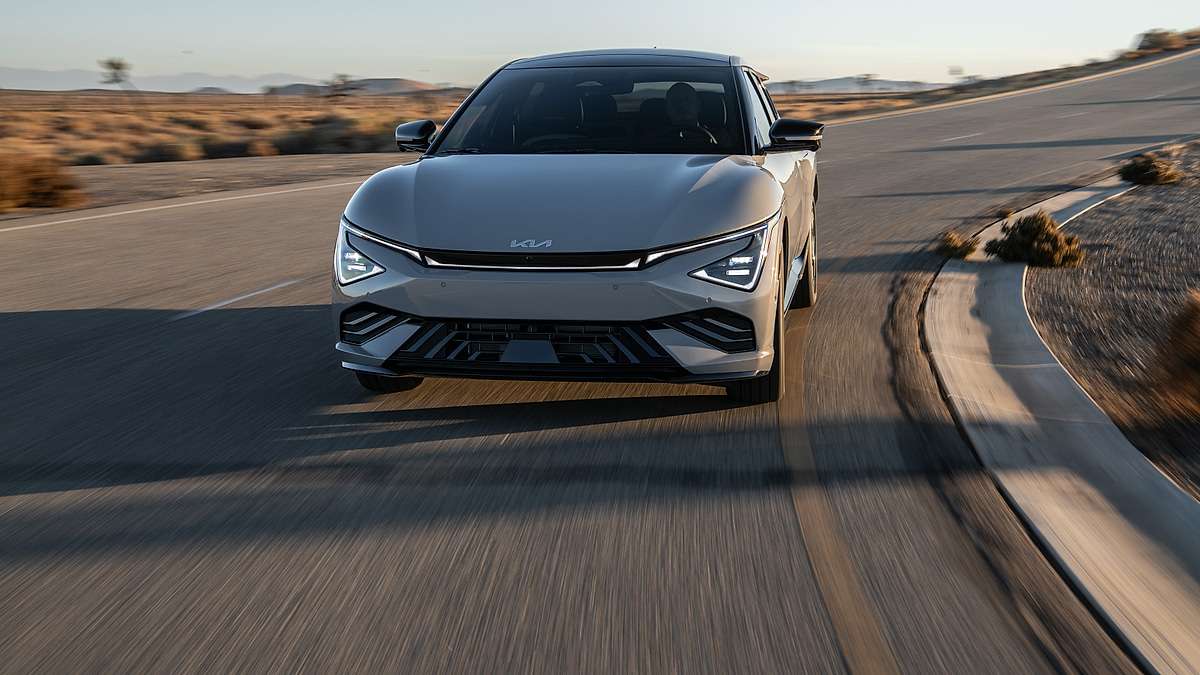

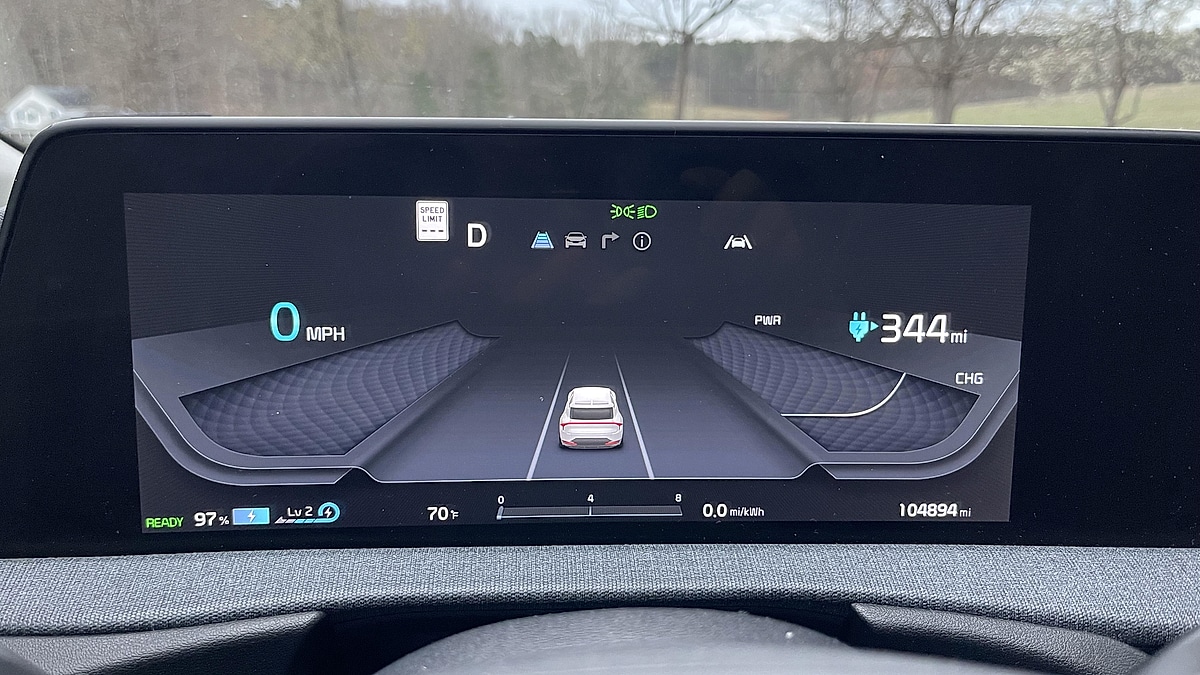
A 2022 Kia EV6 Wind RWD owner, identified as 5mok4, recently reported an "impressive range" of 344 miles at 97% charge, despite the vehicle having accumulated 105,000 miles. This figure closely aligns with the car's original EPA rating, suggesting minimal battery degradation over significant use. The owner claims the car still reports 100% State of Health (SOH), a metric often scrutinized in high-mileage electric vehicles.
This data challenges the pervasive narrative surrounding EV battery longevity and resale value. For years, manufacturers have struggled to convince buyers that electric vehicles can withstand the rigors of high mileage without significant range loss or expensive battery replacements. Kia, with this particular EV6, appears to be delivering on that promise, at least in terms of battery performance.
The Kia EV6's long-term battery performance is exceeding industry expectations, but the owner's caveat about the car "not working" reveals a deeper, unaddressed reliability concern that Kia must confront.
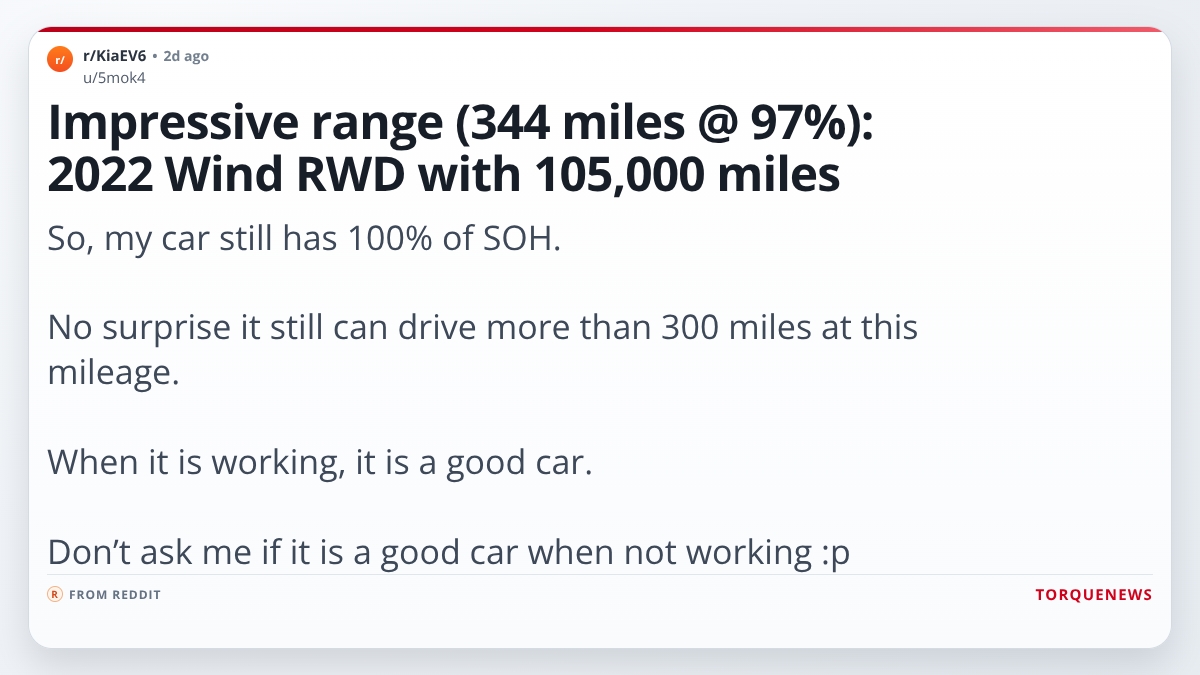
"Impressive range (344 miles @ 97%): 2022 Wind RWD with 105,000 miles. So, my car still has 100% of SOH. No surprise it can still drive more than 300 miles at this mileage. When it is working, it is a good car.
Don’t ask me if it is a good car when not working."
The 344-mile figure from 5mok4's 2022 EV6 Wind RWD is particularly striking when compared to its original EPA estimate of 310 miles. Exceeding the factory rating, even by a small margin and at 97% charge, after 105,000 miles, points to a robust battery management system and durable cell chemistry. This kind of real-world data is precisely what prospective EV buyers need to see to overcome range anxiety and concerns about long-term depreciation.
Kia EV6: High-Mileage Performance and Emerging Concerns
- The 2022 Kia EV6 Wind RWD has an EPA-estimated range of 310 miles, with the owner reporting 344 miles at 97% charge after 105,000 miles. This indicates exceptional battery longevity and minimal degradation, exceeding initial manufacturer and consumer expectations for high-mileage electric vehicles.
- The EV6 is built on Hyundai Motor Group's E-GMP platform, featuring an 800V architecture that enables rapid charging, capable of going from 10% to 80% in approximately 18 minutes on a 350 kW DC fast charger. This high-voltage system contributes to both efficiency and reduced charging times, making long-distance travel more feasible.
- The vehicle's battery and EV components are covered by a 10-year/100,000-mile warranty, meaning the owner's vehicle at 105,000 miles is now outside this primary coverage. This suggests potential out-of-warranty repair costs for any non-battery-related issues that might arise.
- The "State of Health" (SOH) metric, reported by the owner as 100%, indicates battery performance and capacity relative to its original design. Maintaining 100% SOH at such high mileage suggests that Kia's battery management system is effectively preserving the battery's usable capacity.
The owner's offhand remark, "When it is working, it is a good car. Don’t ask me if it is a good car when not working :p," is where the narrative shifts. This isn't a simple endorsement; it's a veiled warning. The implication is clear: while the battery holds up, other components or systems are prone to failure, creating a dichotomy between exceptional core EV performance and potentially frustrating peripheral reliability. This is a pattern we've seen before with new platforms, where the headline technology performs, but the integration and ancillary systems falter.
Reddit user begreen9, an owner of an AWD Wind model, echoed the sentiment of impressive range, stating, "Our AWD Wind impresses me too. We normally get around 320 miles of range without even trying, in 70º weather." This further solidifies the EV6's reputation for delivering on its range promises, even in the more power-hungry AWD configuration. The consistency across different owners and configurations suggests Kia has largely solved the fundamental challenge of EV range and battery longevity.
However, the question remains: what exactly is "not working" in 5mok4's EV6? The industry has moved past the era where battery degradation was the primary concern for high-mileage EVs. Now, the focus shifts to the myriad other components – charging systems, infotainment, HVAC, and power electronics – that can render an otherwise capable vehicle unreliable. Kia's warranty for the EV6's battery and EV components is 10 years/100,000 miles, meaning 5mok4's vehicle is now outside that primary coverage for some of its most critical parts.
The discussion then shifted to the practicalities of long-distance EV travel. Reddit user theroadcrew123 asked, "At what sort of highway speed are you travelling to get that?" This is a crucial question, as real-world highway speeds often drastically reduce advertised range, especially in colder temperatures or with aggressive driving. The reported 344 miles likely comes from a combination of careful driving, favorable conditions, or a significant portion of city driving.
The reality of long-distance EV travel, regardless of battery performance, was humorously but accurately highlighted by Reddit user Broad-Promise6954, an EV6 GT-Line AWD owner: "That kind of range is more than my bladder can handle. Seriously, I have to stop every 2 to 3 hours, even if I'm driving a gasoline car that doesn't need fuel for 6 hours, I still have to stop." This comment reveals that even with class-leading range, the human element of road trips dictates charging stops, often making extreme range figures less impactful for many drivers. The real test for EV manufacturers isn't just range, but the speed and reliability of the charging infrastructure that supports it.

Kia has delivered on the promise of battery longevity, but it must now address the broader reliability picture to ensure the EV6 is a good car, period. The 2022 Kia EV6's ability to maintain its original range after 105,000 miles is a significant technical achievement and demonstrates Kia's battery technology. However, the owner's subtle but pointed remark about the car's reliability when "not working" is a clear signal that while the core EV powertrain is robust, other areas of the vehicle may not be. It should alleviate concerns about EV battery degradation and long-term viability.
Image Sources: Kia Media Center
About The Author
Noah Washington is an automotive journalist based in Atlanta, Georgia, covering sports cars, luxury vehicles, and performance culture. His reporting focuses on explaining the engineering, design philosophy, and real-world ownership experience behind modern vehicles.
Noah has been immersed in the automotive world since his early teens, attending industry events and following the enthusiast communities that shape how cars are built and driven today. His work blends industry insight with enthusiastic storytelling, helping readers understand not just what a car is, but why it matters.
Noah is also a member of the Southeast Automotive Media Association (SAMA), a professional organization for automotive journalists and industry media in the Southeast.
His coverage regularly explores sports cars, luxury vehicles, and performance-driven segments of the automotive industry, including the evolving culture surrounding Formula Drift and enthusiast builds.
Read more of Noah's work on his author profile page.
You can also follow Noah here:
Set Torque News as Preferred Source on Google
Follow us today...