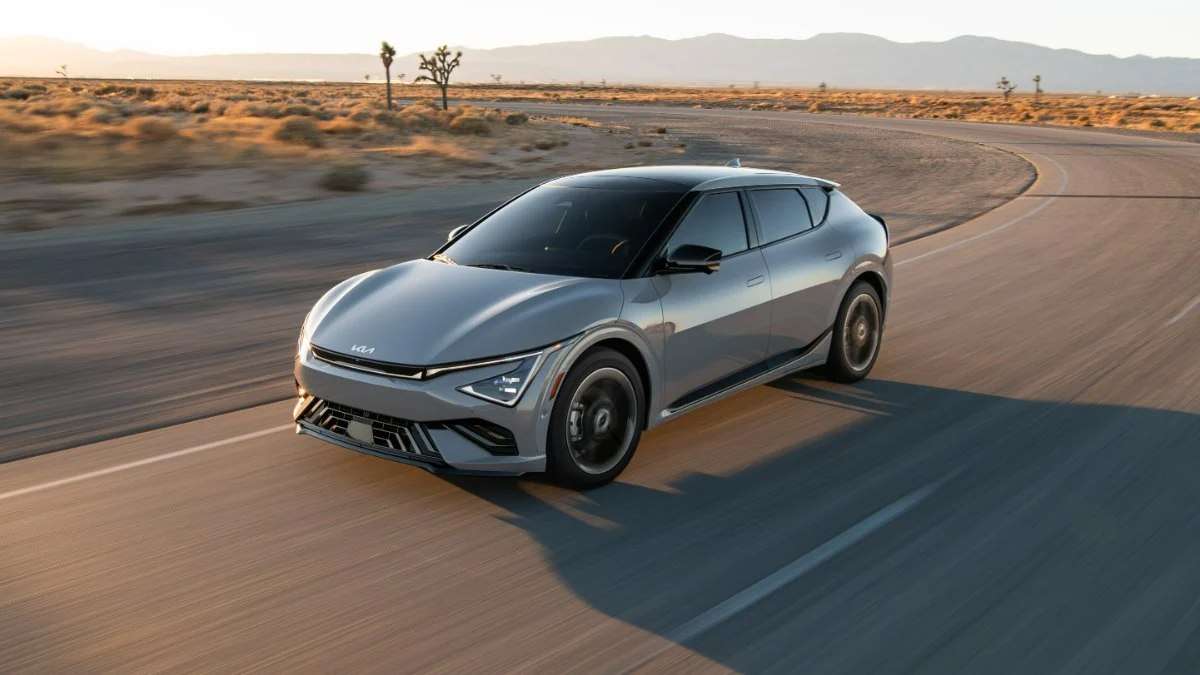

The promise of free charging with a new electric vehicle often comes with hidden complexities, as one Kia EV6 owner recently discovered. Navigating Electrify America's (EA) charging ecosystem, particularly when transitioning between multiple EVs or plans, can lead to unexpected charges and significant frustration. This owner's experience shows a critical flaw in EA's system that could be costing drivers extra money without their knowledge, undermining the perceived value of their charging benefits.
The owner, posting under the handle Opus2011, shared their ordeal:
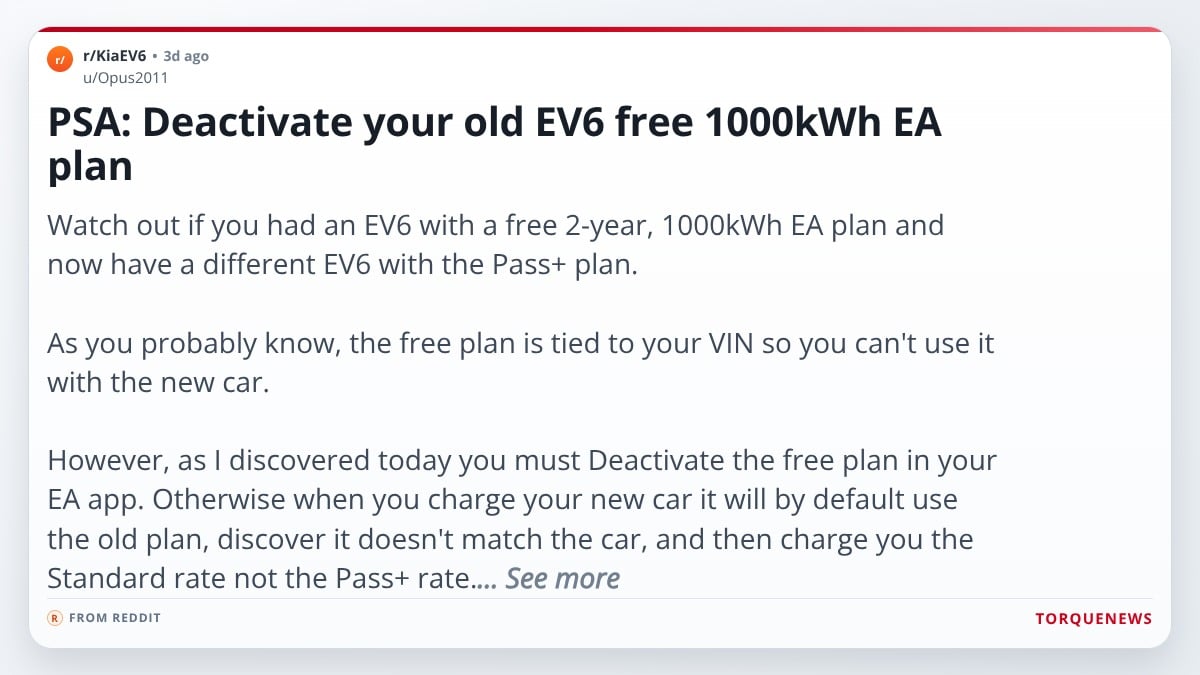
"Watch out if you had an EV6 with a free 2-year, 1000kWh EA plan and now have a different EV6 with the Pass+ plan.
As you probably know, the free plan is tied to your VIN, so you can't use it with the new car.
However, as I discovered today, you must deactivate the free plan in your EA app. Otherwise, when you charge your new car, it will by default use the old plan, discover it doesn't match the car, and then charge you the Standard rate, not the Pass+ rate.
I couldn't find a way of selecting which plan to use (if somebody knows, do tell). Obviously, if you have both a car with free charging and one with Pass+, this will fail on the one with Pass+.
Advertising
I just spent 20 minutes on the phone with two different EA support reps. The first one was an idiot; the second promised an adjustment, but we'll see."
This account reveals a fundamental design flaw within the Electrify America application itself, not with the Kia EV6. The expectation that a user must proactively "deactivate" a VIN-specific plan, rather than the system intelligently defaulting to an active, VIN-matched plan, is an unacceptable burden on the consumer. It is a digital equivalent of a gas pump defaulting to premium fuel and charging you for it because you forgot to tell it your car takes regular, despite having a "regular" subscription active.
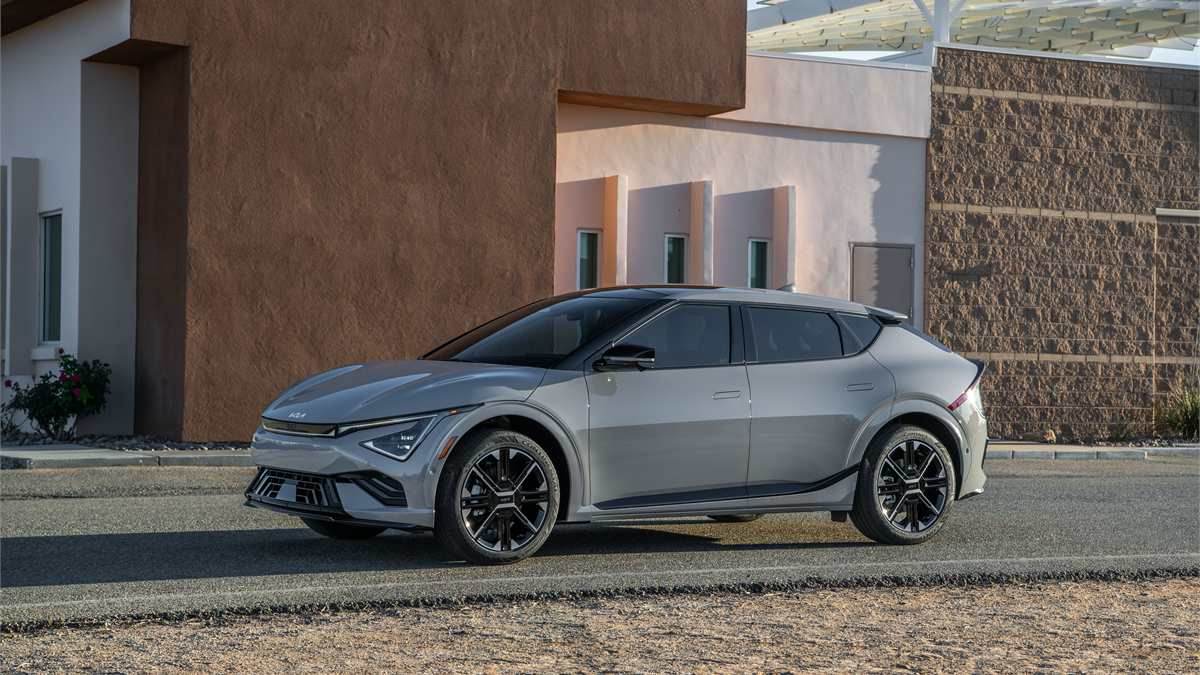
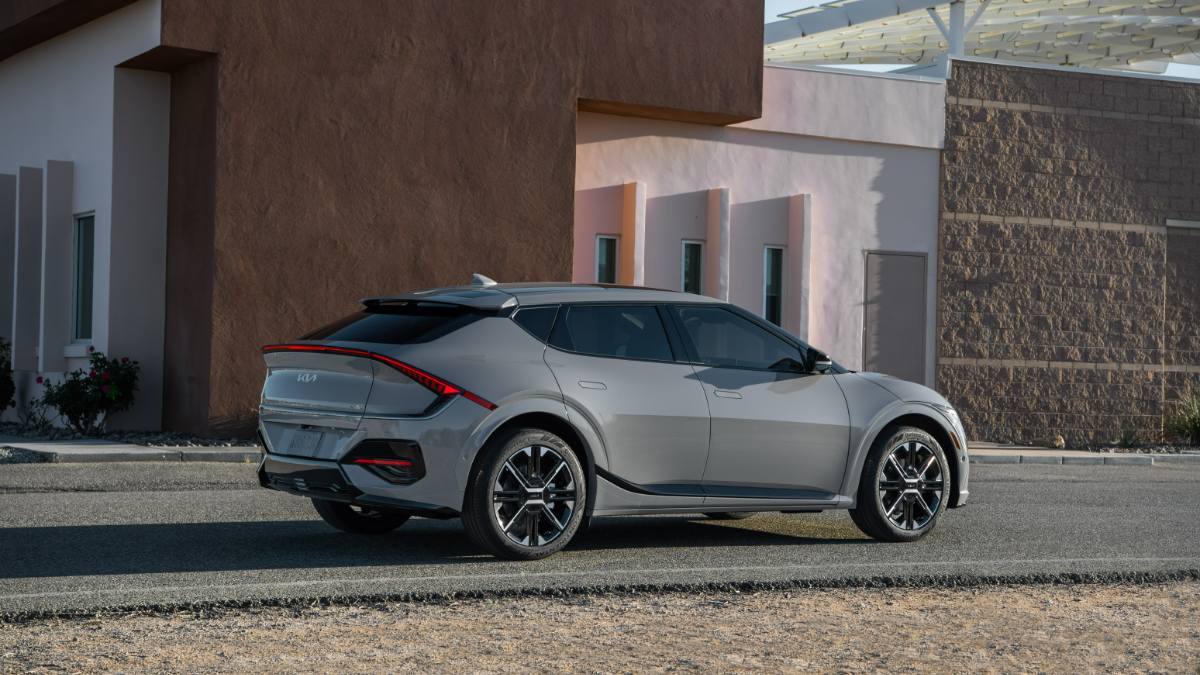
Kia EV6: Understanding Its Charging Ecosystem
- The Kia EV6, built on the E-GMP platform, supports 800V architecture, enabling ultra-fast charging speeds of up to 239 kW. This allows for a 10-80% charge in approximately 18 minutes under ideal conditions.
- Electrify America offers various charging plans, including a "Pass+" subscription that provides discounted rates for frequent users. Many EV purchases, like the EV6, include promotional free charging credits, typically for a set kWh amount or duration.
- The free charging plans are often tied to the vehicle's VIN, meaning they are specific to the car originally purchased. This prevents the transfer of free charging benefits to other vehicles or resale.
- Despite the advanced charging capabilities of the EV6, the user experience with charging network apps can be a significant pain point. Issues like plan selection, default settings, and customer support responsiveness can undermine the convenience of EV ownership.
One commenter, FusionNeo, offered a potential workaround, stating: "Account -> Plans and Subscriptions allows you to pick a default plan. Also, once you select a plug, it allows you to choose which plan to use." While this information might be technically correct, the fact that Opus2011, an active user, couldn't readily find these options points to a user interface that is anything but intuitive. A charging network's primary goal for the EV6 should be seamless operation, not requiring users to hunt through menus to avoid being overcharged.
Opus2011's response, "I could see that there is a Default but couldn't find how to set it. As for the second part, that may be possible but is completely confusing," further reveals the issue. This is a critical usability failure that directly impacts a customer's wallet. Electrify America, as a major charging provider, has a responsibility to design its app with clarity and user protection as paramount, not as an afterthought. The current system appears designed to trip up users, leading to higher revenue through default standard rates.
The situation is further complicated by conflicting experiences among users. Outside_Jackfruit781, an EV6 GT owner, claimed a different experience: "Sucks that you've had issues. Most people don't. Two EV6s. I can use either's free credits on either car. Never had an issue." This discrepancy suggests either a regional variation in EA's system, a recent software update that changed functionality, or a lack of consistent enforcement of VIN-matching protocols. Such inconsistencies erode user trust and make it impossible for consumers to predict their charging costs accurately.
Another commenter, djames4242, added to the confusion by stating: "My free plan was good for three years or 1000kWh. It wasn’t tied to my VIN. I had a rental EV that I needed to charge, and I didn’t pay for those electrons either, so it clearly didn’t match the VIN." This directly contradicts the premise of VIN-locked plans, indicating a serious lack of clarity from Electrify America regarding their own policies. If VIN-matching is inconsistently applied, then the entire system of free charging incentives becomes a lottery, rather than a reliable benefit.
The core problem here is not merely a bug, but a systemic failure in customer-centric design and communication from Electrify America. For a company that aims to be the backbone of EV adoption, creating an environment where customers are unexpectedly charged due to opaque app functionality and inconsistent policy enforcement is a significant misstep. It adds unnecessary friction to the EV ownership experience, which should be as simple and transparent as possible.
This incident serves as a stark reminder that the "free" aspect of EV charging often comes with an asterisk. Manufacturers and charging networks must prioritize clear communication and intuitive interfaces to ensure that benefits like 1000kWh free charging are genuinely beneficial, not a source of frustration and unexpected expense. Until then, EV owners are left to navigate a labyrinth of apps and policies, often paying more than they should.
Image Sources: Kia Media Center
Noah Washington is an automotive journalist based in Atlanta, Georgia. He enjoys covering the latest news in the automotive industry and conducting reviews on the latest cars. He has been in the automotive industry since 15 years old and has been featured in prominent automotive news sites. You can reach him on X and LinkedIn for tips and to follow his automotive coverage.
Set Torque News as Preferred Source on Google
Follow us today...