
A 2023 Ford F-150 Lightning XLT Extended Range owner reports the truck's assisted driving system "almost CAUSES accidents" by aggressively braking on the highway when passing other vehicles. This critical safety concern is compounded by an in-car software experience described as "coded in HTML from the 90s," forcing reliance on Android Auto or CarPlay for basic functionality. The core problem here is Ford’s continued inability to deliver refined software in the F-150 Lightning and driver-assist systems that match the mechanical competence of its vehicles.
A recurring pattern across Ford's modern lineup, from the Mustang Mach-E to the Lightning, involves vehicles with promising hardware hobbled by underdeveloped software and poorly calibrated driver aids. The company consistently launches vehicles with promising hardware, only to hobble them with underdeveloped, clunky software and poorly calibrated driver aids that frustrate owners and, in this case, potentially endanger them.
“I got a used XLT Extended Range with ProPower and 37000km.
First EV. First Truck. And overall, I'd recommend it.
Including one long-haul trip (497 miles in the winter)
THE GOOD
Interior Feel: From a fit and finish point of view, it's no different than driving an ICE F150. I personally like a no-frills interior, so the 2023 XLT was perfect for me. Feels great, it works, and is more truck than EV in terms of interior design. I would go for a non-luxury workhorse EV truck with manual windows, seats, no screen, and no soft touch/fabric/fake metal/wood. I'm odd that way.
External Design: I prefer vehicles that don't scream EV DRIVER FROM THE FUTURE COMING THROUGH! The Lightning does the best job of any EV I've seen of this. Only the light bar and grill are the giveaways, but they look clean and simple.
Drive: The test drive had me laughing out loud at the acceleration. I loved it and knew I wanted it pretty much right away. After a few weeks, it's still fun to drive. Although it can feel a touch heavy (almost 7000lbs!?), It's smooth and glides on the road. Overall, it's great, but I have some additional thoughts (See THE BAD)
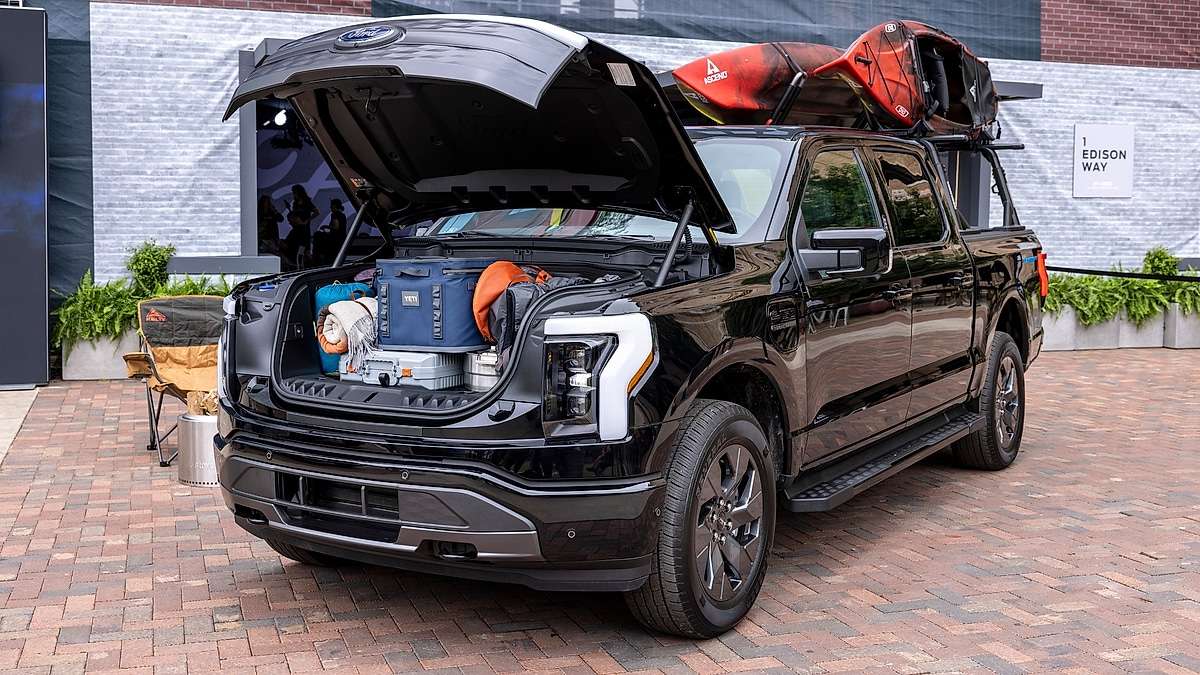
Frunk: It's great.
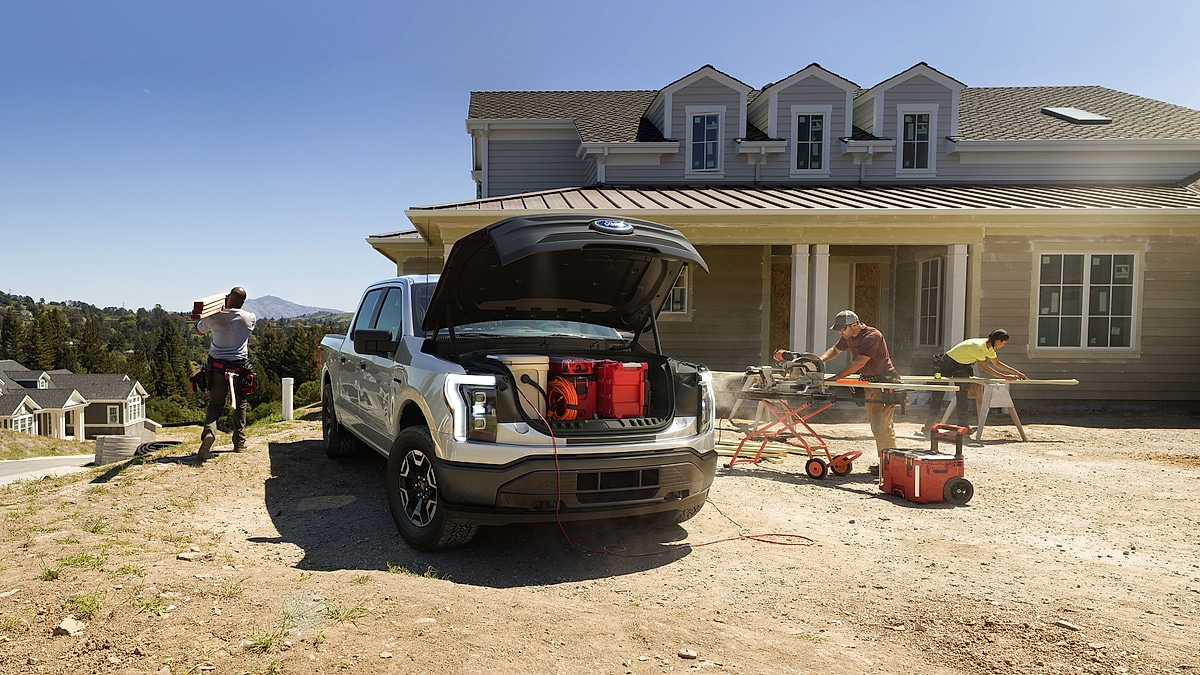
ProPower: Love the idea. Haven't used it yet. Will use for camping, tail-gaiting, and some power tools, etc. Planning to use it to power the house during the occasional power outage with the basic setup (not full sun run).
Home-Charging: Easy and smooth. There was an old welding plug (3-prong**)** in the workshop from the previous owner, so I got the right GRIZZL-E charger. Charging overnight is so easy and will be how we charge 90% of the time.
Range: I love the Extended Range. We did an 800km trip recently, and it was very doable with the right planning, even with the winter-cold power dip. I am very happy with the extended range and would recommend to everyone that this is the way to go.
Overall: It's the electric version of a best-selling truck. Feels good, drives well, and goes fast.
THE BAD
Software: In-car software and apps are pretty bad. Ford needs to spend way more time on UX/UI and Design in this category. After years of renting different cars, Big North American cars are generally the worst in the category, so it was to be expected. My Dad drives a Tesla, and it obviously makes Ford look like it was coded in HTML from the 90s.
Advertising
Android Auto is 100% necessary to drive this vehicle(or CarPlay). I would not drive this vehicle if I had to rely on the Ford in-car system alone. Even still, you'll need a few other apps to maximize planning (ABRP app, etc.)
Even basic things on the app, like self-starting, climate control planning, charge setting, etc., are all a bit clunky.
And don't get me started on the parking pawl recall that is supposed to be coming as an over-the-air software update. Still isn't available for 2023, and no info is available either. I've been putting the parking brake on manually, which again is fine, but just not great in terms of software.
Assisted Driving: It's not great and might be dangerous. Yes, lane assist reads the lines and can technically self-drive on an empty road. It can also read the speed signs and slow down if you're in cruise control. The problem is that when it slows down for speed limit adjustments, it's so aggressive that it's like you're slamming on the brakes.
Additionally, I would not use cruise control on the highway. Multiple times, the truck has freaked out while I was in the fast lane passing other vehicles. It tends to slam on the brakes in situations where other vehicles appear next to you while you (or they) are passing. Ironically, this almost CAUSES accidents instead of preventing them. I often use cruise and assisted driving in my 2021 Subaru Forester without issue, so it's annoying but not a deal breaker.
One-Pedal Drive: It's interesting, and I've gotten used to it. Ideally, you could set the intensity of the regen system to Hard, Medium, and Light, as it's pretty aggressive. You have to feather it to make it work for your comfort level. My family gets car sick when I use it, so I only use it when I'm driving solo.
THE WEIRD
The Antennae: What's the deal with that 1980s antennae?? I couldn't care less, but it's odd. Might swap out when I'm out of warranty.
Fold-down shifter: Sounds like it's gonna break every time. The motor whines like it's about 20 years old. Just for the fold-down 'faux desk' flat surface thing? Another oddity. I would much prefer a low-profile knob or steering wheel shifter. WILL swap out at some point.
Charging Adapters: Wish this were standardized, but if you want to use Tesla Superchargers and other destination chargers, you'll need adapters. Not a big deal, but something new to figure out and definitely something you'll want in the truck for emergencies. This is less about Ford and more about the industry and other variables - but as a person new to EV driving, the amount of different apps, adaptors, and planning necessary for a long trip is a tad strange.
OVERALL
I've definitely been converted to electric and would find it hard to go back.
The Lightning is fantastic in all the important ways and just lagging behind on some of the expected) details like app, software, UX/UI. But overall, I'm really loving it, and the only reason to nitpick about these details is that I think this could be one of the best vehicles/trucks ever. Hopefully, in the future, with their next crack (Ranger? Maverick? Rumoured revamped 1000Km Generator Lightning?), they'll do it.
Would love to know what others think, but of course, after reading the forum, I think most people agree.”
The owner, posting under the handle DeadBikers, details a common Ford problem: a robust mechanical platform let down by an abysmal software experience. The aggressive braking from the assisted driving system, particularly when passing on the highway, is a genuine safety hazard. A system designed to prevent accidents should not be actively inducing them. This is a defect.
Ford F-150 Lightning: Software and Assisted Driving Concerns
- The 2023 F-150 Lightning XLT Extended Range model carries a curb weight of nearly 7,000 lbs, contributing to its smooth but heavy feel on the road. Its 800km winter range capability shows strong mechanical performance, even in adverse conditions.
- The truck's assisted driving system is reported to aggressively brake when passing other vehicles or adjusting for speed limits, creating potentially dangerous situations. This behavior contradicts the intended safety function of such systems.
- Ford's in-car software and mobile app are described as outdated and clunky, forcing owners to rely on third-party solutions like Android Auto or CarPlay for essential functions. Basic features like remote start and climate control planning are reportedly difficult to use.
- A critical parking pawl recall, intended to be delivered via an over-the-air software update, remains unavailable for 2023 models, showing delays in Ford's software deployment and recall management. Owners are manually engaging the parking brake as a workaround.
Ford's insistence on pushing out half-baked software, then expecting owners to rely on third-party solutions like Android Auto for basic navigation and media, is a concession of failure. The comparison to "HTML from the 90s" against Tesla's interface is frustrating, especially when Ford is charging premium prices for these vehicles. This raises the question of whether Ford is truly investing in its software development or simply ticking a box on a feature list.
Reddit user Tricky-Bit3771, a 2023 Lariat ER owner with "at least 10 years" of Ford driving experience, offered a counterpoint to DeadBikers' software complaints:
"I am two weeks in with a 23 lariat ER. Similar views that you have, but I don’t have the complaints about the software that everyone else has. Of course, I have driven fords for at least 10 years, so I might just be used to it. Ford nav. Is junk, but I’ve always been a CarPlay guy. Never had the truck slam on the brakes, so I think you may have some adjustments to make. Good luck."
Tricky-Bit3771's comment, while seemingly dismissive, actually reinforces the problem. Being "used to" Ford's software deficiencies and immediately defaulting to CarPlay is not a defense of the system; it's an admission of its inadequacy. Suggesting "adjustments" for a safety-critical assisted driving feature that "slams on the brakes" is a dangerous oversimplification. Driver-assist systems should be intuitive and reliable out of the box, not require user calibration to prevent hazardous behavior.
The parking pawl recall, mentioned as still unavailable for 2023 models via OTA update, is another symptom of Ford's software woes. A critical safety recall, meant to be delivered seamlessly, is instead leaving owners in limbo, manually engaging parking brakes. This delay not only shows software development bottlenecks but also questions the reliability of Ford's promised over-the-air update capabilities. If they can't push a critical safety fix efficiently, what does that say about future feature enhancements?
The Ford F-150 Lightning is a mechanically impressive electric truck, but its software and driver-assist systems remain a significant Achilles' heel. Ford's continued failure to deliver polished, reliable in-car technology and safe, predictable driver aids is unacceptable for a modern vehicle, especially one positioned as a flagship EV. Until these fundamental issues are addressed, the Lightning will remain a truck with immense potential, perpetually hampered by its digital brain.
Image Sources: Ford Media Center
About The Author
Noah Washington is an automotive journalist based in Atlanta, Georgia, covering sports cars, luxury vehicles, and performance culture. His reporting focuses on explaining the engineering, design philosophy, and real-world ownership experience behind modern vehicles.
Noah has been immersed in the automotive world since his early teens, attending industry events and following the enthusiast communities that shape how cars are built and driven today. His work blends industry insight with enthusiastic storytelling, helping readers understand not just what a car is, but why it matters.
Noah is also a member of the Southeast Automotive Media Association (SAMA), a professional organization for automotive journalists and industry media in the Southeast.
His coverage regularly explores sports cars, luxury vehicles, and performance-driven segments of the automotive industry, including the evolving culture surrounding Formula Drift and enthusiast builds.
Read more of Noah's work on his author profile page or on his personal website.
You can also follow Noah here:
Set Torque News as Preferred Source on Google
Follow us today...