
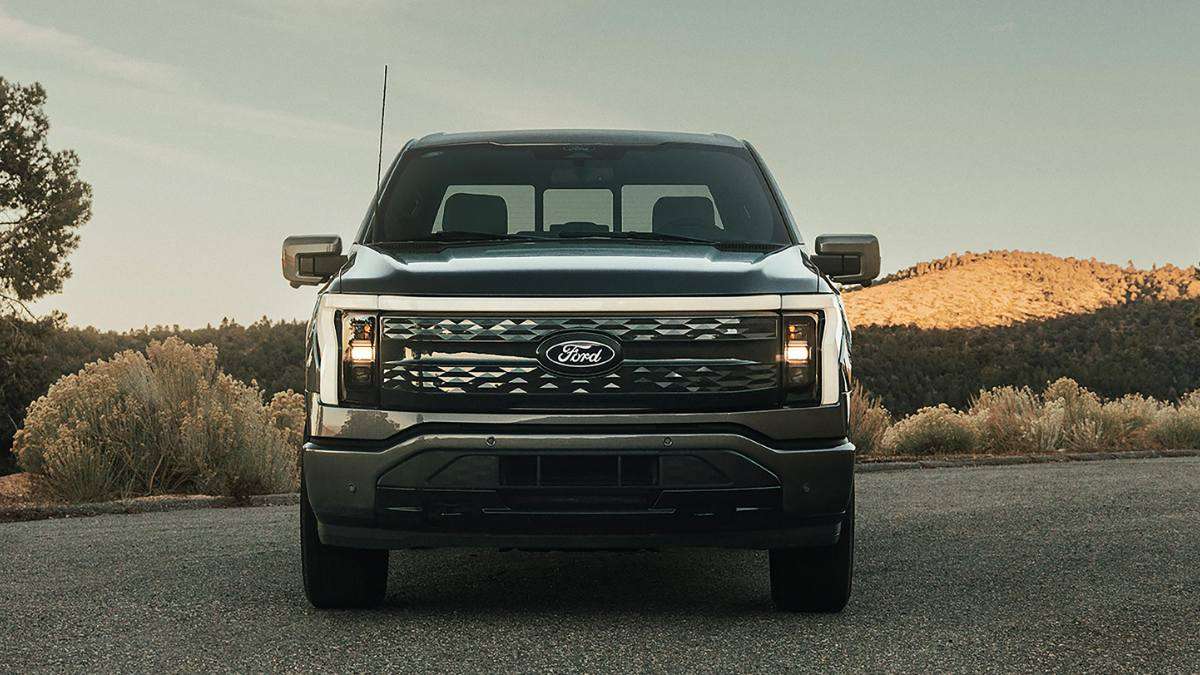

The electric truck revolution has fundamentally changed how we think about outdoor adventures and camping experiences. While traditional pickup trucks have long served as the backbone of American camping culture, the introduction of electric variants like the Ford F-150 Lightning has opened new possibilities for off-grid power generation and sustainable outdoor recreation. One owner's comprehensive six-month review demonstrates how electric trucks are redefining the camping experience through innovative power management and surprisingly practical everyday usability.
Paramedic229635's detailed assessment of his 2025 F-150 Lightning Flash provides valuable insights into the reality of living with an electric truck designed for both daily commuting and weekend adventures. His decision to purchase the vehicle specifically for camping applications, rather than traditional RV ownership, represents a growing trend among outdoor enthusiasts who value versatility and efficiency over specialized recreational vehicles.
“Review of 2025 Ford F-150 Lightning Flash
I got the truck in May and have 6,592 miles on it so far. I wanted to travel and camp more. I couldn’t justify the expense of an RV, but I could justify an electric commuter that I could also turn into a light camper as a side benefit.
Looks
I like the overall look of the truck, it looks like an F-150 unless you know what to look for (light bar, no intakes on the front grille plate, charge port cover, no exhaust, and Lightning badges on the sides and tailgate). I blend in well and don’t draw much attention if I need to take a nap in a parking lot somewhere.
I’m not a fan of the milky white light bar and am thinking about getting a dark tint placed on it. I’ve seen pictures of other Lightnings with this done, and they look pretty sharp.
Interior
There’s a lot of room in the passenger compartment. My son is 6 feet tall and can sit comfortably in the back seat. The cup holders easily hold 1-liter soda bottles and 21-ounce water bottles. The center console storage space is huge (see photo). There are also two large shelves on either side of the console.
The 2025 Flash does not have a fold-down workspace like the older models and higher trims, but unfortunately, it still has the fold-down shifter, which is prone to failure (a common issue mentioned in forums, I haven’t had a problem with mine yet).
The seats are comfortable. I’m not usually a fan of heated seats, but after getting absolutely soaked while fishing, they felt wonderful.
There’s a wireless charging pad in the front with one Type-A and one Type-C USB port next to it, plus a 12V and a 120V outlet. In the back seats, there’s a 12V outlet, a 120V outlet, and two Type-C ports. During a rainstorm and in the dark of night while camping, these were really convenient for powering my laptop and playing some games.
Frunk and Bed
The frunk is fun to open because the truck looks like a regular F-150. When you put things in or take things out of it in a parking lot, you get some very strange looks. It’s spacious, with a removable cover revealing a smaller compartment below that has water drains. This allows it to be used as a cooler (I don’t use it that way, I keep my mobile charger and Tesla Supercharger adapter in there). There are four 120V outlets, one USB-A, and one USB-C port in the frunk.
The bed is 5.5 feet, which is a dealbreaker for some people, but it’s worked fine for me. I have an ARE cap on it (one advantage of Ford using the F-150 frame is that most F-150 accessories fit perfectly). There’s a 240V outlet and four 120V outlets in the bed. I built a bed frame out of PVC and have an 8” memory foam mattress in the back for camping. It’s light, so I can easily remove it if needed.
Driving
The truck handles like a truck, no issues there. I do wish the side mirrors were larger, like on the Ford Transit, but they work fine.
The electric acceleration is amazing. I got on NY-17 in Hancock after charging, with my wife in the truck. I checked that no one was coming, then stomped on the accelerator. My wife said it felt like an airplane taking off. It’s not great for your tires or range to do full acceleration often, but I recommend trying it at least once, it’s a lot of fun.
Electronics and App
The screen is a little too big for my taste at 15.5”, but I got used to it. I wish the environmental controls were physical buttons and knobs instead of being touchscreen-based, but again, I’ve adapted.
Wireless Android Auto has worked great for me, with only one disconnect since I’ve owned it. When navigating, Google Maps provides an estimated state of charge at the destination, and it’s been pretty accurate. Besides Google Maps, I’ve used the Audible, Libby, and Musiclet apps without any problems. The interior speaker sound quality is good.
I love adaptive cruise control. Being able to set a following distance for the vehicle in front of me and having the truck adjust speed automatically has made me drive more carefully (in a good way).
If I set the cruise at 70 mph and someone in front is going 68, it’s not worth passing them. In the past, the slow overtake would have bothered me, and I’d have sped up to go around. Now, I just settle in and enjoy the ride. If someone is going slow enough to make passing worthwhile, I move over, and cruise control automatically accelerates me to my set speed.
Advertising
The only problem I’ve had is when someone in the right lane starts slowing for an exit, with the rear inch or two of their vehicle still in my lane. With regular cruise, I could coast up knowing they’d be out of the lane before I reached them. With adaptive cruise, the truck brakes as hard as they do, not ideal on the highway.
I’m not as much of a fan of BlueCruise (Ford’s self-driving feature). Mentally, I’m not comfortable sitting in the driver’s seat while the truck steers for me. I’ve experimented with it on long trips. I could get used to it, but I mostly keep it off.
The internal camera watches your eyes to make sure you’re paying attention, so it hates sunglasses and keeps shutting off in protest. It gives an audible warning before deactivating and then (the part I hate) brakes hard for a second to get your attention. When the introductory subscription expires, I definitely won’t be renewing it.
The app is mostly decent. I can lock and unlock the truck remotely and start the climate control 15 minutes before getting in. When doing this, a screen lets me set the temperature and turn on heated seats or the steering wheel.
You can also set specific departure times, though this part of the app needs improvement. When setting environmental controls for a scheduled departure, you only get vague “cabin comfort” options, Cool, Medium, Warm, or Off, with no explanation of what those mean. I’d rather have the same detailed controls as when starting climate remotely.
Also, you can’t set a one-time departure. The day you select is listed under “Repeat,” so for a one-time trip, you have to manually delete it afterward.
The service tab shows your mileage and tire pressure if you don’t want to turn the truck on to check. You can schedule maintenance from the app, and it notifies you of recalls.
There was a recall for a potentially loose bolt in the steering (affecting all F-150s, not just the Lightning). I scheduled the repair and had it completed before the mailed recall notice even arrived.
Range and Charging
I got the extended-range battery. The biggest power drain is, of course, moving a 7,000-pound vehicle. I usually charge to 80%, giving me about 208 miles of range. Charging to 100% gives me around 280 miles. I’ve only charged to 100% twice, once for a trip to Niagara Falls (290 miles, charged during lunch), and once for a camping trip to the Adirondacks.
Before arriving at the campsite, I charged to 80%. Using onboard power to charge my laptop and phone, run my BiPAP, and power an electric cooking range, I used very little energy and returned to the fast charger with 29% remaining. The main takeaway is that running basic electronics and appliances barely affects the battery.
Charging at home is much better than fast charging. I can fast charge in 45 minutes to an hour, but fast chargers near me cost about $0.43/kWh. Charging at home costs $0.09/kWh. It takes a few hours on Level 2, but I can plug in when I get home from work and always have 80% before heading out again.
Conclusion
I really love this truck. It’s been a lot of fun to drive and camp with. I would definitely buy it again.”
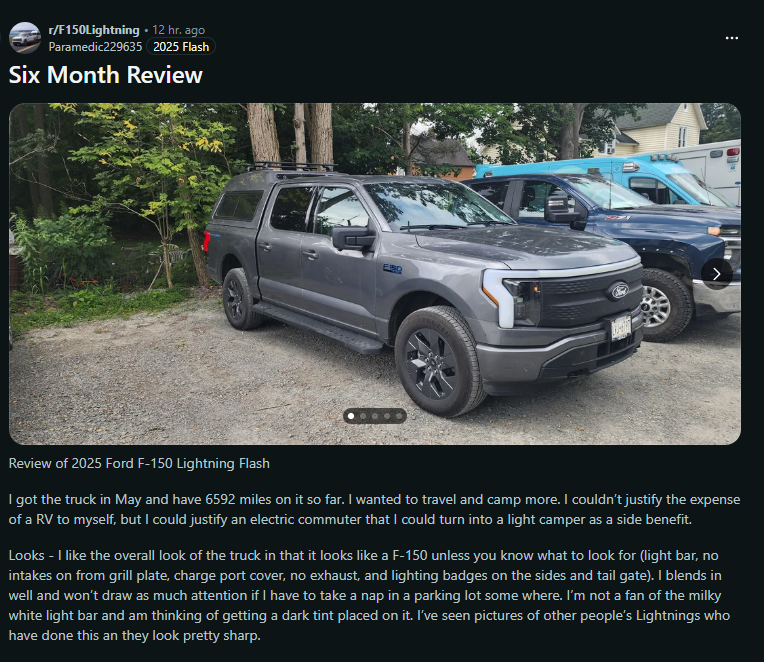
This practical approach to vehicle selection highlights how electric trucks are filling a unique niche in the recreational vehicle market. The ability to serve dual purposes as both a daily driver and a camping platform offers significant value proposition advantages over dedicated recreational vehicles that sit unused for much of the year. His accumulated mileage of over 6,500 miles in six months demonstrates a serious commitment to both daily use and recreational travel, validating the concept of multipurpose electric vehicles.
The stealth advantage of electric camping becomes apparent through his observations about the truck's discreet appearance and its ability to blend into urban environments while providing comprehensive off-grid power solutions. I like the overall look of the truck in that it looks like a F-150 unless you know what to look for (light bar, no intakes on front grill plate, charge port cover, no exhaust, and lighting badges on the sides and tail gate). It blends in well and won't draw as much attention if I have to take a nap in a parking lot somewhere. This capability represents a significant advantage for travelers who need flexibility in overnight accommodations, creating new possibilities for cost-effective travel and emergency shelter situations that traditional RVs cannot match.
Power Infrastructure Transforms Camping Experience
The Lightning's comprehensive power generation capabilities represent perhaps its most significant advantage over traditional camping setups. The distribution of electrical outlets throughout the vehicle demonstrates thoughtful engineering that anticipates diverse user needs during camping situations. There are 4 120V outlets, a USB-A, and a USB-C in the frunk. The bed is 5.5, which is a deal breaker for some people, but it has worked fine for me. There is a 240V outlet and 4 120V outlets in the bed. The combination of standard household outlets with USB charging ports provides compatibility with both traditional camping equipment and modern electronic devices, while the 240V outlet capability opens possibilities for high-power appliances that would typically require generator systems.
The real-world validation of these power capabilities came during challenging weather conditions that would typically force campers to abandon outdoor activities or endure uncomfortable conditions. During a rainstorm and in the dark of night while camping, this was really convenient for powering my laptop and playing some games. This scenario perfectly illustrates how electric trucks enable new types of recreational activities that would be impractical or impossible with traditional camping setups, providing quality-of-life improvements that extend beyond basic shelter and transportation.
When Jasonf_00 encountered the owner's setup, his initial confusion revealed how electric truck camping challenges traditional expectations about vehicle-based recreation.
Advertising
I could NOT figure out what clear/lighted plastic thing you had on your center console, then realized it's a game on your laptop.
This moment of discovery encapsulates the paradigm shift that electric trucks represent in outdoor recreation, where the boundaries between indoor and outdoor activities become blurred through reliable power availability.
The owner's response to this observation further demonstrates the adaptability that electric power systems provide for weather-related camping challenges. Yeah, it was pissing down rain that morning, so I had to postpone hiking until the afternoon. Rather than enduring boredom or discomfort during weather delays, the Lightning's power infrastructure enabled productive and entertaining indoor activities while maintaining comfortable climate conditions, transforming what would traditionally be a frustrating camping experience into a manageable delay.
Extended Off-Grid Capabilities Prove Practical Viability
The owner's detailed documentation of extended camping power usage provides crucial data for understanding the practical viability of electric truck camping for serious outdoor enthusiasts. His experience operating medical equipment, cooking appliances, and electronic devices for multiple days while retaining sufficient battery capacity for the return journey demonstrates the comprehensive nature of the Lightning's off-grid capabilities.
Using the on-board power to power and charge my laptop and phone, run my BiPAP, and power an electric cooking range, I used very little power and made it back to the fast charger on the return trip at 29% state of charge. The main takeaway there is that running basic electronics and appliances can be run for days.
This real-world power consumption data validates the theoretical capabilities with practical usage scenarios that matter to potential buyers considering the Lightning for camping applications.
The ability to operate essential medical equipment like BiPAP machines represents a critical advantage for campers with health conditions who might otherwise be limited in their outdoor recreation options. Combined with the capacity for electric cooking and comprehensive electronic device support, the Lightning enables camping experiences that maintain modern comfort standards while providing genuine outdoor recreation opportunities.
Electric Truck Camping Advantages
- Electric trucks blend into urban environments while providing comprehensive off-grid power solutions for discrete overnight parking and emergency shelter situations.
- Multiple 120V outlets, USB ports, and 240V capability throughout the vehicle enable operation of diverse appliances, medical equipment, and electronic devices.
- Real-world testing demonstrates multi-day power availability for essential electronics, medical equipment, and cooking appliances without compromising return travel capability.
- Climate control and entertainment systems provide comfort and flexibility when outdoor activities are limited by weather conditions, transforming potential frustrations into manageable delays.
Practical Implementation and Accessory Integration
The conversation about camper shell installation reveals how electric truck camping is influencing accessory preferences and setup priorities among experienced outdoor enthusiasts. When BolOfSpaghettios expressed interest in the setup, his perspective reflected broader trends in electric truck accessory development. I need that cap. Being over 40 brings out the "it's more useful" than anything else, even tonneau covers. This emphasis on utility over appearance demonstrates how electric truck adoption is attracting mature buyers who prioritize practical functionality over visual appeal, suggesting that the technology particularly resonates with experienced outdoor enthusiasts who value comfort and convenience.
The owner's identification of his specific camper shell choice provides valuable product information that demonstrates the compatibility between traditional truck accessories and electric platforms. It's an ARE MX. This compatibility represents an important advantage for electric truck adoption, as buyers can leverage existing aftermarket support and accessory ecosystems rather than starting from scratch with specialized electric vehicle equipment.
The critical question about the range impact of camping modifications received a reassuring response that addresses one of the primary concerns potential buyers have about electric truck camping. When Junkopotomus asked about range data before and after installing the camper, the owner's response provided concrete efficiency data. If I did, it wasn't a big one. I'm averaging 2.1 mi/kWh for my work commute (approx 30 miles one way over mountains), both before and after installation. This efficiency data demonstrates that practical camping modifications need not significantly compromise the vehicle's primary transportation capabilities, maintaining consistent performance for both daily driving and recreational use.
Practical Implementation Considerations
- Traditional truck accessories like camper shells integrate seamlessly with electric platforms, enabling owners to leverage existing aftermarket support and proven solutions.
- Camping modifications and accessories show negligible effect on overall vehicle efficiency and range calculations for typical driving conditions.
- Electric truck camping particularly attracts experienced outdoor enthusiasts who prioritize practical utility and comfort over aesthetic considerations.
- Real-world efficiency data confirms that camping setups maintain consistent performance across diverse driving conditions, including mountainous terrain.
The Future of Sustainable Outdoor Recreation
The owner's comprehensive six-month review demonstrates how electric trucks are successfully bridging the gap between daily transportation needs and recreational vehicle capabilities. His positive assessment and stated willingness to purchase again validate the concept of dual-purpose electric vehicles that serve both practical and recreational functions without compromise.
The detailed documentation of power capabilities, space utilization, and real-world camping experiences provides valuable guidance for other potential buyers considering electric trucks for outdoor recreation. The combination of stealth camping capabilities, comprehensive power infrastructure, and traditional truck utility creates new possibilities for sustainable outdoor recreation that were previously unavailable through any single vehicle platform.
As charging infrastructure continues to expand and electric truck camping becomes more mainstream, the experiences documented by early adopters like Paramedic229635 will become increasingly valuable for understanding the practical capabilities and limitations of electric recreational vehicles. The success of his camping-focused ownership approach demonstrates the viability of electric trucks as comprehensive outdoor recreation platforms that can replace both traditional trucks and specialized camping equipment.
The evolution of electric truck camping represents a significant shift in outdoor recreation technology, offering new possibilities for sustainable, comfortable, and versatile camping experiences. The integration of advanced power management systems with traditional truck utility creates opportunities for outdoor enthusiasts to maintain modern comfort standards while minimizing environmental impact and maximizing recreational flexibility.
The community response and practical implementation experiences shared by owners demonstrate how electric truck camping is developing its own culture and best practices. The emphasis on utility, efficiency, and adaptability reflects the values of early adopters who are pioneering new approaches to outdoor recreation that balance technological capability with environmental responsibility.
As more owners share their experiences and develop innovative camping configurations, the electric truck camping community will likely continue to grow and refine approaches for maximizing the unique capabilities these vehicles provide. The combination of environmental sustainability, practical utility, and recreational capability positions electric trucks as potentially transformative technology for the outdoor recreation industry, offering new ways to enjoy nature while minimizing environmental impact and maximizing comfort and convenience.
The success stories emerging from early electric truck camping adopters suggest that this technology will play an increasingly important role in the future of outdoor recreation, providing sustainable alternatives to traditional camping approaches while enabling new types of outdoor experiences that were previously impractical or impossible. The continued development of charging infrastructure, accessory ecosystems, and community knowledge will further enhance the appeal and practicality of electric truck camping for a broader range of outdoor enthusiasts.
Have you considered an electric truck for camping applications? What features would be most important to you in an electric camping setup, and how do you think electric vehicles will change outdoor recreation in the coming years? Share your thoughts on electric truck camping and outdoor adventure planning in the comments below.
Image Sources: Ford Media Center
Noah Washington is an automotive journalist based in Atlanta, Georgia. He enjoys covering the latest news in the automotive industry and conducting reviews on the latest cars. He has been in the automotive industry since 15 years old and has been featured in prominent automotive news sites. You can reach him on X and LinkedIn for tips and to follow his automotive coverage.
Set Torque News as Preferred Source on Google
Follow us today...







Comments
I bought a 2021 RAM 1500…
Permalink
I bought a 2021 RAM 1500 Classic Warlock and found out I have..
Proven high towing capacity.
Predictable towing distance even on cold weather.
Widespread, quick refueling stations.
Don't need cell phone to operate a vehicle.
Lower purchase cost.
Reliable in extreme conditions.
Less gadgets to break.
Easier to drive.
Mature repair network.
Less software issues.
It's amazing.
Sounds like a great vehicle.
Permalink
In reply to I bought a 2021 RAM 1500… by Db (not verified)
Sounds like a great vehicle.
It's a nice truck. BUT if…
Permalink
It's a nice truck. BUT if you're towing something, Boat, Trailer, Camper, the EV vehicles have not caught up to gas or diesel yet. The same would be if you were hauling heavy things on the regular. This has been proven several times. Gas or diesel truck versus EV truck any brand with same boat, or trailer or camper. Start at Oregon border both drive to San Diego. Due to less distance being able to be covered due to payload of EV it needs to charge more. Charging takes way more time than gassing up and you have to charge more often than you do gassing up. Petrol truck arrived 16 hours later in San Diego. You want an EV truck to drive around in city, use to move little furniture here and there it works. If more than that then stick with petrol.
Interesting thoughts.
Permalink
In reply to It's a nice truck. BUT if… by Kurt (not verified)
Interesting thoughts.