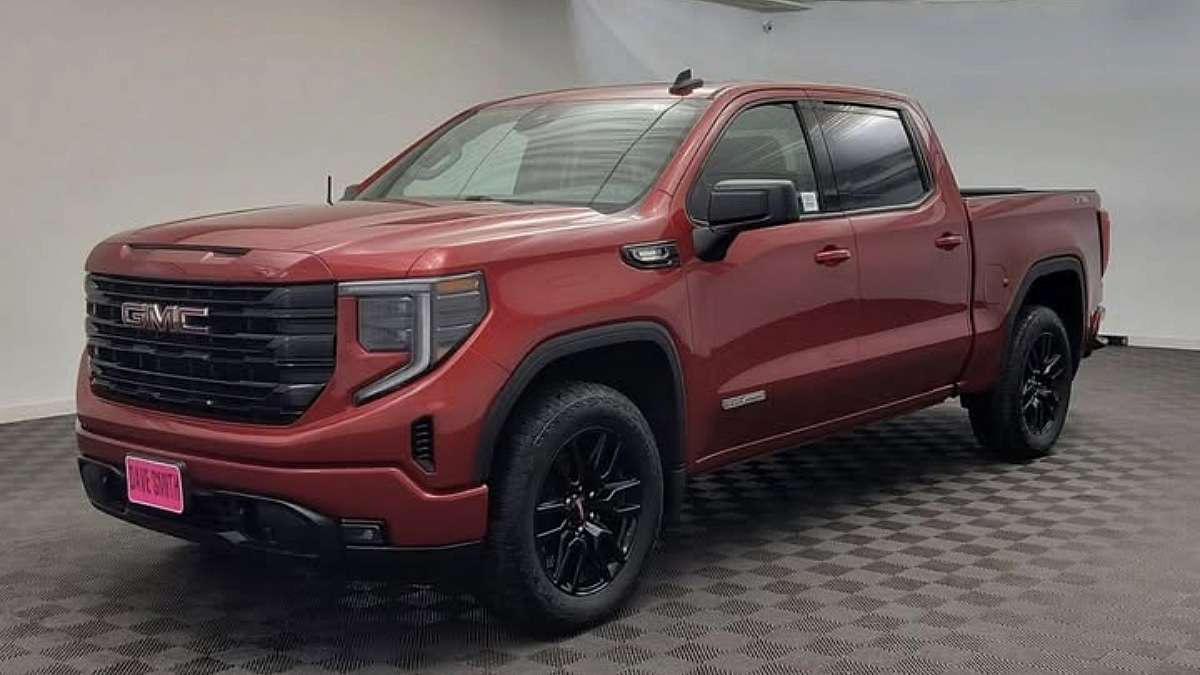

Many people think they are in the clear when buying a new vehicle with fewer than 30,000 miles, especially a modern, full-sized pick-up truck you get from the dealer as one assumes they would have it inspected and ready to go. However, for Steven Ortez, who was feeling confident as he drove his brand-new GMC Sierra 1500 down the highway, everything seemed to be going well until things changed out of nowhere.
Here's him explaining what happened: “I just bought this 2023 with 20,823 miles. An hour after taking off from the dealer on the highway, I was passing a truck and it lost power and flashed a reduced power drive with caution signal. The transmission valve body needs to be replaced. I got a 100k mile warranty, so it’s covered, but I’m worried I got a lemon. Dave Smith Motors told me this has happened before and they replaced the valve body with upgraded steel parts. Does anyone have any insight on this? I’m pissed honestly.”
When a “Nearly New” Truck Doesn’t Feel New
When you have a 2023 GMC Sierra 1500 with less than 30,000 miles on it, there's usually no reason to think that the vehicle has experienced much wear, as there will likely be many good years of reliable driving ahead. That's why issues like this are all the more surprising. The problem wasn't a little nuisance that the driver could simply overlook, it was instead an unexpected loss of engine power while driving on a highway.
Reduced power warning messages are intended to prevent further damage to your drivetrain, but it's an immediate alarm to something worse brewing. In actual highway driving and specifically while trying to pass someone, an engine loss of power such as this is not only very inconvenient but also creates hazard for everyone involved and for the cars around.
Complicating this matter further is the diagnosis. Transmission valve body failures do not occur frequently enough to typically warrant routine maintenance. It also represents one of the primary components which control both the transmission of fluid through the gears and what gear the transmission is currently engaged at. Therefore, if it does fail, the behavior of the vehicle can become quite unpredictable.
A Known Issue or an Isolated Case?
The owner said that the dealer told him this was not an unusual occurrence. They also stated that all new parts for replacement are made with stronger steel. That detail alone opens up a broader question: is this a one-off failure, or something that has appeared often enough to warrant revised parts?
In online owner communities, these kinds of patterns tend to surface quickly. One isolated failure might not mean much, but when dealerships acknowledge repeat repairs and updated parts, it suggests that engineers and service departments have already been working through a known weak point. This doesn't mean that every truck will develop this problem, but it does give the owner good reason to feel concerned about purchasing a potentially problematic vehicle.
What Other Owners Are Saying
As with many ownership stories, the comment section adds another layer of perspective.
Rick Marks commented, “I bet it was traded in due to having issues. Too coincidental.”
That perspective reflects a common fear among used vehicle buyers that a previous owner may have offloaded the truck before a known issue became their full responsibility.
Others shared their own experiences with newer GM trucks. Dean Kleysteuber added, “I have had my ‘23 with 40,000 miles towed twice. Once for a water control valve and recently for a blower control valve for the intercooler, all in the past year.”
While not directly related to the transmission, it reinforces how multiple smaller failures can shape an owner’s overall perception of reliability.
Then there are responses that reflect longer-term frustration. Mark Hooper wrote, “Let me guess, it’s going to be 3 to 8 weeks for the repair. As a lifelong GM owner, these trucks and SUVs are nothing but trouble. I just went to Ford!”
That kind of comment isn’t just about one repair because it highlights how repeated issues can eventually push owners to switch brands altogether.
The Bigger Picture Around Duramax Ownership
What makes this story especially interesting is that it involves GM’s 3.0-liter Duramax diesel, an engine that has built a mixed but evolving reputation among owners.
In fact, I've written a 3.0 Duramax reliability analysis showing one 2023 Chevy Suburban nearing 200,000 miles while others reported mixed experiences, and the reality is far from one-dimensional. Some owners report exceptional longevity and efficiency, while others encounter early issues that shape their entire perception of the vehicle.
It’s important to note that in this case, the problem appears to be transmission-related and not directly tied to the engine itself. But still, from an ownership standpoint, drivers don’t separate components that way. A failure regardless of whether it’s engine, transmission, or electronics affects the overall trust in a truck off rip.
GM’s Truck Lineup and Growing Complexity
Modern trucks have become increasingly complex, and with that complexity comes more potential points of failure. Features like advanced cooling systems, electronic controls, and multi-speed transmissions all contribute to better performance and efficiency but have also been introducing more variables.
This broader trend isn’t limited to one model. For example, my report on a 2024 GMC Sierra AT4 buyer who drove eight hours to avoid the 6.2L engine recall only to still end up with an affected truck shows how even well-informed buyers can find themselves dealing with unexpected issues.
For many drivers, this creates a balancing act because on one hand, today’s trucks offer impressive capability, refinement, and technology. On the other though, that same sophistication can sometimes lead to situations where something small has a much bigger impact than expected.
A Pattern of Frustration for Some Owners
There’s also a growing conversation among longtime truck owners about whether modern reliability is as consistent as it once was. In another one of my reports here on Torque News, a long-time owner’s reflection after decades of owning Chevrolet and GMC trucks questioning whether the brand is keeping up with expectations is the exact kind of sentiment that keeps popping up with these experiences.
That context matters when looking at stories like this. While a single repair under warranty isn’t unusual in today’s automotive landscape, having it happening immediately after purchase carries different weight.
Raising Bigger Questions About What Was Missed Before the Sale
What is most notable about this whole fiasco is the poor timing of this failure. The purchase of a vehicle as significant and expensive as a truck is based on a sense of trust. You want that initial ride from the dealership to solidify your decision, or at least make you feel confident that your choice was correct.
This situation also illustrates an important aspect of automobile ownership in today's market. A warranty may alter the cost associated with repair, but it doesn't have to change the emotional impact. Whether or not the repair costs are paid by the manufacturer through the warranty, the experience of having an immediate problem with your vehicle will influence how you think about it and the brand image over its lifetime.
And honestly, maybe it wasn't even poor timing. Maybe the owner is blessed to see what kind of headache he was going to get involved in had he kept the truck for much longer.
What Drivers Can Take Away From This
• Early issues matter more than later ones: A repair at 100,000 miles feels different than one within the first hour of ownership. Timing shapes perception.
• Warranty coverage isn’t the full story: Even when repairs are covered, inconvenience, downtime, and trust still play a major role in ownership satisfaction.
• Modern trucks are more complex than ever: Advanced transmissions and systems bring benefits, but they can also introduce new failure points.
• Community feedback provides real-world insight: Owner forums and groups often reveal patterns and experiences that go beyond official specifications.
• First impressions stick: The earliest experiences with a vehicle often define how owners feel about it for years to come.
Your Turn to Share
Have you ever experienced a major issue shortly after buying a vehicle? And did it change how you felt about keeping it long-term?
And what do you think about modern trucks? Do you think modern trucks are becoming less reliable? Or are these situations simply more visible because owners are sharing them online?
Let us know what you think in the comments below.
About The Author
Aram Krajekian is a young automotive journalist bringing a fresh and analytical perspective to the evolving automotive landscape by reporting on real-world ownership experiences and providing industry analysis. Based in North Carolina, he covers electric vehicles, trucks, and broader automotive trends with a focus on contributing a balanced evaluation. His reporting cuts through brand bias to provide readers with grounded insight into how vehicles perform for everyday drivers beyond marketing narratives.
Aram can be reached on X and LinkedIn for ongoing automotive coverage.
Image Credits
The “Duramax 3.0 owners” Facebook group and GMC’s gallery.
Set Torque News as Preferred Source on Google
Follow us today...