
California has a habit of writing automotive rules that the rest of the country eventually lives by, and its latest target is something every driver buys. The California Energy Commission released a proposed Replacement Tire Efficiency Program in April 2026 that would require replacement tires sold in the state to meet rolling resistance goals, with a first phase taking effect January 1, 2028, and a tougher second phase in 2031.
Rolling resistance is the force your tires fight every time the wheel turns. Lower it, and the engine or battery works less, which means better MPG and longer EV range. On paper, that sounds like a gift to consumers. The Commission estimates the rule could save a typical driver around $179 in fuel over the life of a set of tires. However, their real goals are environmental, not financial.
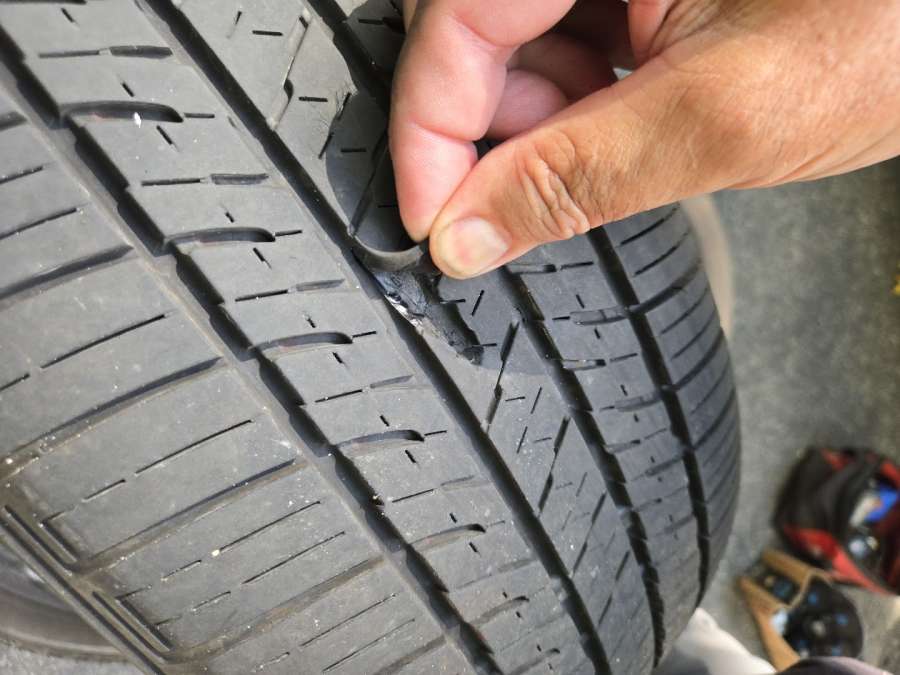
Here is where it gets messy. The tires automakers bolt onto a new vehicle, the OEM tires, are tuned for three things: The best possible MPG, low noise on a test drive, and low cost. They are built to help the automaker hit its own efficiency numbers, not to make you happy at 35,000 miles. That is why so many owners cannot wait to replace them. Factory rubber is famous for wearing fast, giving up grip in the rain, and doing nothing exceptionally well. As an example, one set of OEM tires we tested on a hybrid vehicle literally began to fall apart after only 12,000 miles, shedding rubber. Here's what that OEM tire looked like.
When originally-fitted tires finally wear out shortly after 30,000 miles, drivers demand something better. They want traction, durability, and a long tread life. Many want special talents too, like confident snow-and-ice performance or the ability to handle gravel, mud, and the occasional trail. Those are the tires that will be pushed beyond the edge of legality under a rule that prioritizes rolling resistance over almost everything else. Including safety.
That is the collision course California’s car-hating regulators and the tire-buying public are on now. The state wants every replacement tire to behave like a factory tire, while the market has spent decades proving drivers want the opposite. Silica may be the industry's only real hope.
Researchers discovered that silica was a useful ingredient in rubber compounds before the Second World War. In 1993, Michelin patented tire compounds using a high-silica content. Silica is a compound filler that does several jobs at once inside a tire. It replaces part of the carbon black that older tire recipes leaned on, and the raw material is about as common as it gets, because it comes from sand. The reason engineers are excited is simple. Silica improves wet traction, helps winter capability, lowers rolling resistance, and adds durability, all at the same time. There is very little to give up in return.
To understand why that matters, we sat down with Joni Epting, Product Development Engineer and Chemical Engineer at BFGoodrich, during a recent trail tire launch event. "Silica is a great enabler. It allows a tire compound to step up its efficiency through improved rolling resistance, adds durability, and is proven to improve wet-weather stopping distances and grip," Epting told us.
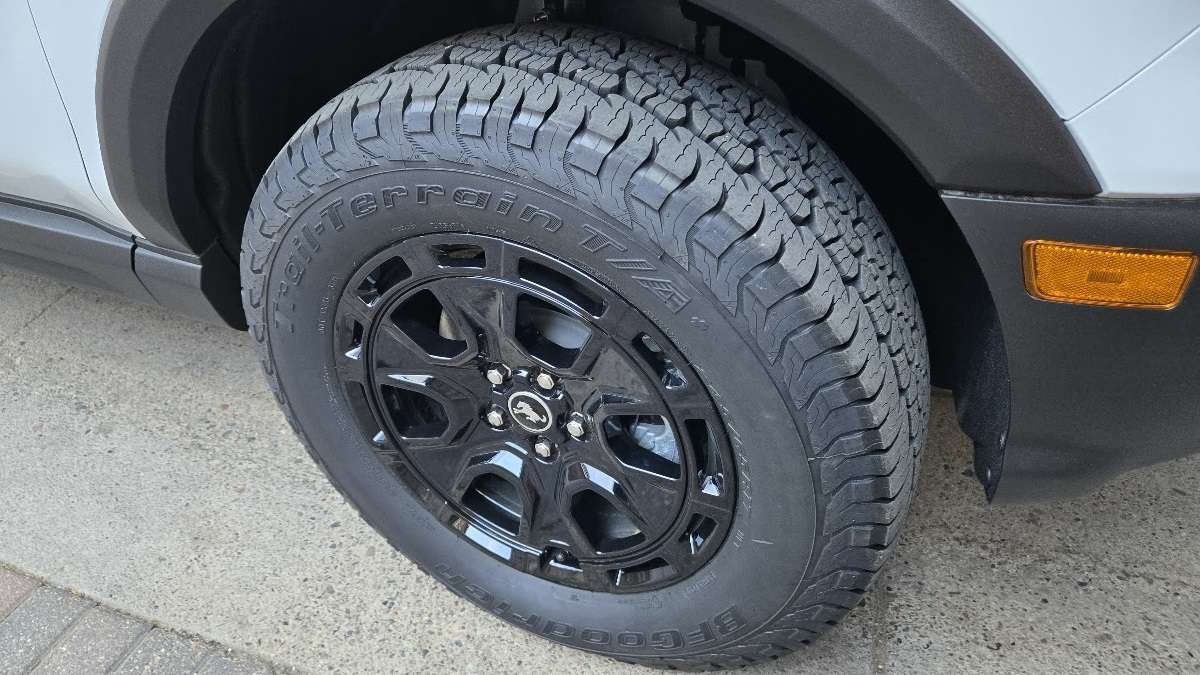
That combination is exactly what a mandate like California's demands. The proposal does not only chase efficiency. It also sets a minimum wet-grip standard intended to keep slippery, dangerous tires off the shelves. A compound that lowers rolling resistance while raising wet performance solves that challenge instead of forcing a painful tradeoff. Europe has had similar, but less onerous, tire standards for years, so tire makers have already learned a few things they can apply to help tires meet the standards. Epting pointed to a real example from her own product line. "We have recently improved our popular Trail-Terrain T/A tire by moving to a higher silica compound with excellent results," she said.
The updated road and trail tire we were testing was not designed to meet any new, specific, state-mandated standard. However, it is a meaningful signal. The new Trail-Terrain T/A+ is an everyday tire used on crossovers and SUVs, the kinds of vehicles that need all-season manners, light-duty off-pavement ability, and a tread life and thickness way beyond what typical OEM tires deliver. If a higher-silica recipe can boost efficiency without sacrificing the qualities owners actually buy the tire for, it points to a possible path the whole industry can follow. Ms. Epting told us that the approximate goal across the Trail-Terrain T/A+ line was a 5% increase in fuel efficiency compared to the outgoing version of the same tire model.
None of this makes the California proposal painless. Enthusiast tires, dedicated winter tires, and aggressive off-road designs still face real questions about whether they can hit the numbers. But silica is one tool that hands tire makers a tool to raise efficiency without turning every replacement tire into a slippery, short-lived factory clone.
California’s mandate is coming. Whether your next set of replacement tires is any good may depend on how quickly the industry leans into a material it digs out of the ground.
John Goreham is a 14-year veteran of Torque News. An accomplished writer and a long-time expert in vehicle testing, Goreham also serves as the Vice President of the New England Motor Press Association and has a growing social media presence. He’s also a 10-year staff writer and community moderator for Car Talk. Goreham holds a B.S. in Mechanical Engineering and an undergraduate Certificate in Marketing. In addition to vehicle and tire content, he offers deep dives into market trends and opinion pieces. You can follow John Goreham on X and TikTok, and connect with him on LinkedIn.
Set Torque News as Preferred Source on Google
Follow us today...