
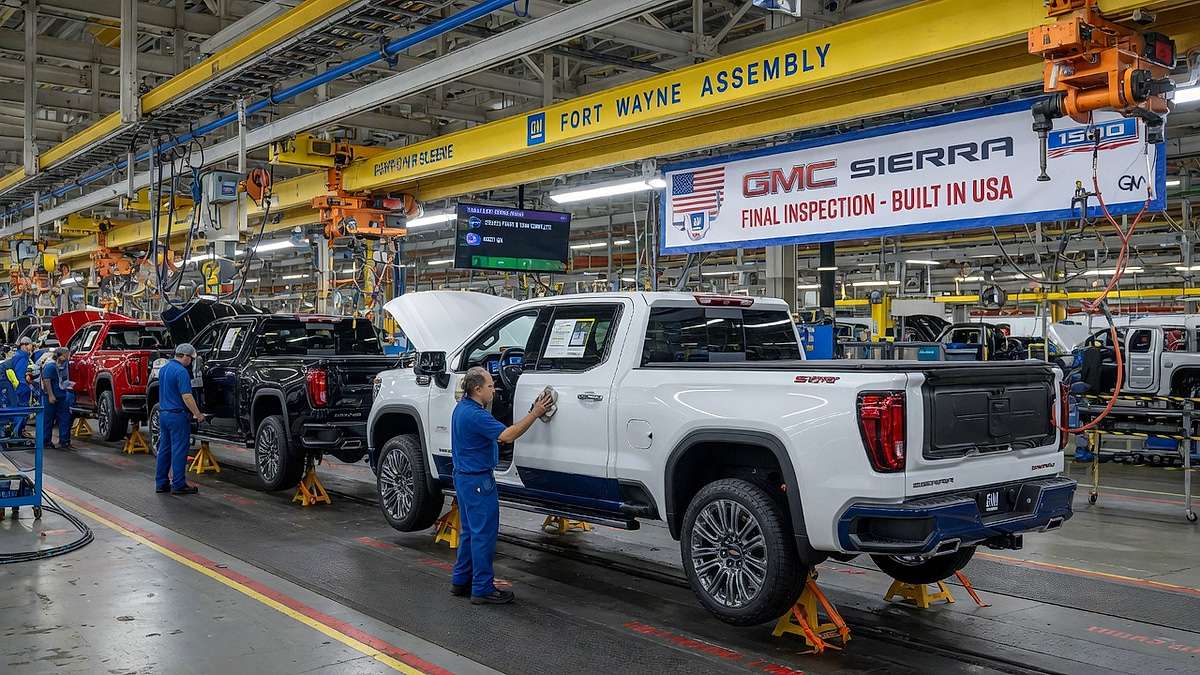

When news broke that GM is reportedly implementing tighter quality-control procedures for the next-generation Gen 6 Small Block V8, most of the attention naturally focused on reliability.
That's understandable. After years of discussions among truck owners about lifter failures, valve train concerns, and long-term durability, any effort aimed at improving engine quality is going to get noticed. We have documented many of those stories firsthand at Torque News, including the painful case of a 2019 Silverado owner who paid $13,000 for a new engine and said even that price tag was almost enough to scare him away from GM entirely.
But after reading the details of the report from GM Authority, I came away thinking the biggest story isn't actually the new quality-control measures.
It's GM's reported decision to bring some critical parts and manufacturing processes back in-house.
That may sound like a small detail buried in the report, but it could ultimately tell us more about GM's priorities for the 2027 Chevrolet Silverado and GMC Sierra than any quality-control procedure ever could.
Why Bringing Engine Production In-House Matters
In today's automotive industry, outsourcing isn't unusual.
Automakers routinely rely on suppliers to manufacture everything from electronics and braking systems to engine components and transmission parts. There are good reasons for this approach. Suppliers often specialize in specific technologies, operate at massive scale, and can sometimes produce components more efficiently than an automaker can on its own.
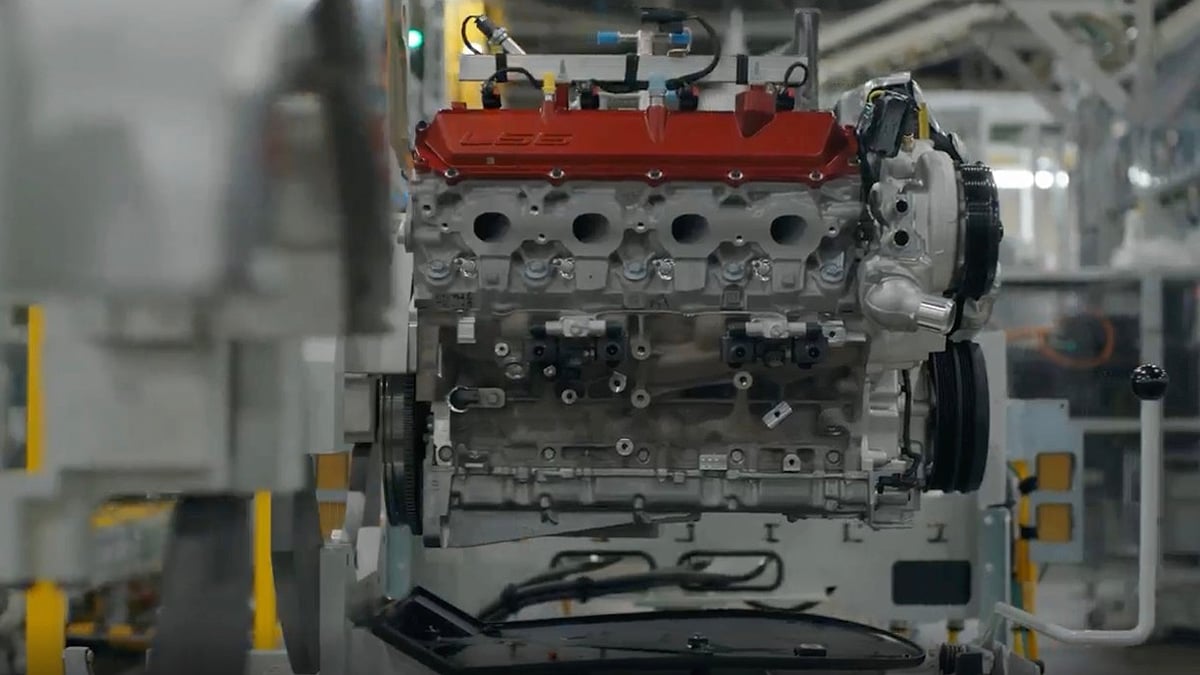
In many cases, outsourcing helps reduce costs while improving manufacturing flexibility.
That's why GM's reported move stands out.
When an automaker chooses to bring production back under its own direct control, it often signals that management believes the benefits of oversight outweigh the benefits of outsourcing. We have already seen what happens when that oversight slips, as Torque News reported when a 2026 GMC Sierra fuel module failed at just 849 miles, with tow truck drivers confirming they pick up these trucks all the time for the exact same known issue, a pattern directly tied to the structural reliance on outsourced control units.
In other words, consistency becomes more important than convenience.
The Silverado Engine Reliability Question May Be Bigger Than Individual Parts
One thing that often gets overlooked in discussions about reliability is that durability isn't always about a single component.
Sometimes it's about consistency.
A component can be well-designed on paper and still create problems if manufacturing variation creeps into the production process. Likewise, an engine can perform exceptionally well when every part is built exactly to specification but experience issues when tolerances vary from one batch to another. That is precisely what Torque News documented when GM was forced to quietly replace 92,000-mile Silverado 6.2L V8 engines out of warranty, with investigators pointing to manufacturing debris in the blocks as the root cause, not a flawed design in isolation.
This is where direct oversight can become important.
By bringing certain operations in-house, GM could potentially gain more visibility into how components are manufactured, tested, measured, and approved before they ever reach the assembly line.
The company has not publicly linked this reported decision to past reliability concerns, and there is no evidence that this move is specifically intended to address any particular issue.
However, greater oversight generally gives manufacturers more opportunities to identify potential problems before customers ever experience them.
What This Says About GM's Priorities For The 2027 Silverado And Sierra
The timing may be just as interesting as the decision itself.
The upcoming Silverado and Sierra redesigns represent one of GM's most important vehicle launches of the decade.
Full-size pickups remain among the company's most profitable and strategically important products. Every decision surrounding these trucks carries significant weight because customer loyalty in the pickup segment is often built over years, or even generations. As we reported earlier, even a seven-time Chevy Silverado leaser who had been loyal for 15 consecutive years eventually walked away and switched to a 2026 Ram 1500 when GM's trucks stopped meeting his expectations.
Truck buyers tend to have long memories.
A positive ownership experience can create a customer for life.
A negative one can send buyers looking elsewhere when it's time for their next truck.
That's why the reported move toward greater manufacturing control could be interpreted as a sign that GM views engine quality as a top-level priority heading into the launch of the next-generation trucks.
The Real Goal May Be Building Owner Confidence
The automotive industry spends billions developing new powertrains, but one of the hardest things to engineer is trust.
Trust comes from owners who put 100,000 miles on a truck without major issues. It comes from contractors who rely on their pickups every day for work. It comes from families who tow campers across the country and expect their truck to get them home. One of our senior reporters, John Goreham, has covered that side of the story too, including the remarkable account of a Silverado owner who survived a 60-mph collision and said he would never buy any other truck brand because the loyalty GM's trucks earn through real-world performance runs that deep.
For many Silverado and Sierra owners, reliability isn't just another feature. It's the feature.
That's why the most revealing part of GM Authority's report may not be the discussion about tighter quality standards. It may be the reported willingness to assume more direct responsibility for how critical engine components are produced. It is worth recalling that GM's own Global Manufacturing System already mandates that Silverados built in Indiana and Mexico meet identical standards, which makes bringing more operations in-house an even more meaningful signal that the company wants tighter control at the source, not just at the assembly line level.
If that interpretation proves correct, the move could signal a broader philosophy within GM: that quality starts long before an engine reaches the assembly line.
Will More Manufacturing Control Lead To Better Silverado Reliability?
Of course, none of this guarantees success.
The true test won't come from factory announcements or engineering reports. It will come years later when thousands of 2027 Silverado and Sierra owners have accumulated millions of miles in real-world driving conditions.
Reliability is earned, not announced.
Still, if GM is indeed bringing more critical engine operations back under its own roof, it may represent one of the strongest signals yet that the company wants tighter control over the factors that ultimately determine long-term durability. The DFM-related failures we have tracked so closely at Torque News, including the 2026 GMC Sierra that collapsed a lifter at just 6,700 miles despite GM's claims that the problem had been addressed, are exactly the kind of outcome that greater in-house manufacturing oversight is designed to prevent before a single truck leaves the plant.
And that could end up being the most important takeaway from the entire report.
What do you think, is bringing more engine production in-house a smart move for GM, or does long-term reliability depend on factors that go far beyond manufacturing control?
And if you own a Silverado or Sierra today, would greater factory oversight make you more confident about buying a next-generation GM truck? Let us know in the comments below.
About The Author
Armen Hareyan is the founder and Editor-in-Chief of Torque News and an automotive journalist with over 15 years of experience writing car reviews and industry news. Now based in the Charlotte region (Indian Land, SC, he founded Torque News in 2010, which since then has been publishing expert news and analysis about the automotive industry. He can be reached at Torque News on X, Linkedin, Facebook, and Youtube. Armen holds three Masters Degrees, including an MBA, and has become one of the known voices in the industry, specializing in the landscape of electric vehicles and real-world stories of actual car owners. Armen focuses on providing readers with transparent, data-backed analysis bridging the gap of complex engineering and car buyer practicality. Armen frequently participates in automotive events throughout the United States, national and local car reveals and personally test-drives new vehicles every week. Armen has also been published as an automotive expert in publications like the Transit Tomorrow, discussing how will autonomous vehicles reshape the supply chain, and emerging technologies in vehicle maintenance.
Set Torque News as Preferred Source on Google
Follow us today...







Comments
Revolutionary: you mean to…
Permalink
Revolutionary: you mean to tell me ‘In-House’ Will produce Higher Quality???? Who Didn’t see that outsourcing saved a buck here and there but then cost the company literally Billions?!? But better late then never…..
Armen A well written article
Permalink
Armen
A well written article
Thank you John. I appreciate…
Permalink
In reply to Armen A well written article by JohnO (not verified)
Thank you John. I appreciate it. Thanks for reading Torque News.
We have a dozen GM trucks in…
Permalink
We have a dozen GM trucks in our fleet and have had 6 transmissions replaced, one broken camshaft (6.2), a turbo and rocker bearings (4 cyl) and unexplained oil consumption in all of them. I personally lost a tranny in a Yukon (2000 miles) and a torque converter in a Tahoe at 30,000. Something needs to be done with engineering to improve reliability. Are the Fords any Better?