

This investigative report examines a verified valvetrain failure on a 2026 GMC Sierra 6.2L V8 with only 6,700 miles. Despite industry rumors that General Motors corrected its Dynamic Fuel Management (DFM) defects for the 2026 model year, new field data suggests the hardware vulnerability persists. I analyze the mechanical implications of this early-mileage collapse, incorporate community observations from Reddit, and provide actionable recommendations for current owners to mitigate long-term powertrain risks.
From My View: A 6,700-Mile Wake-Up Call
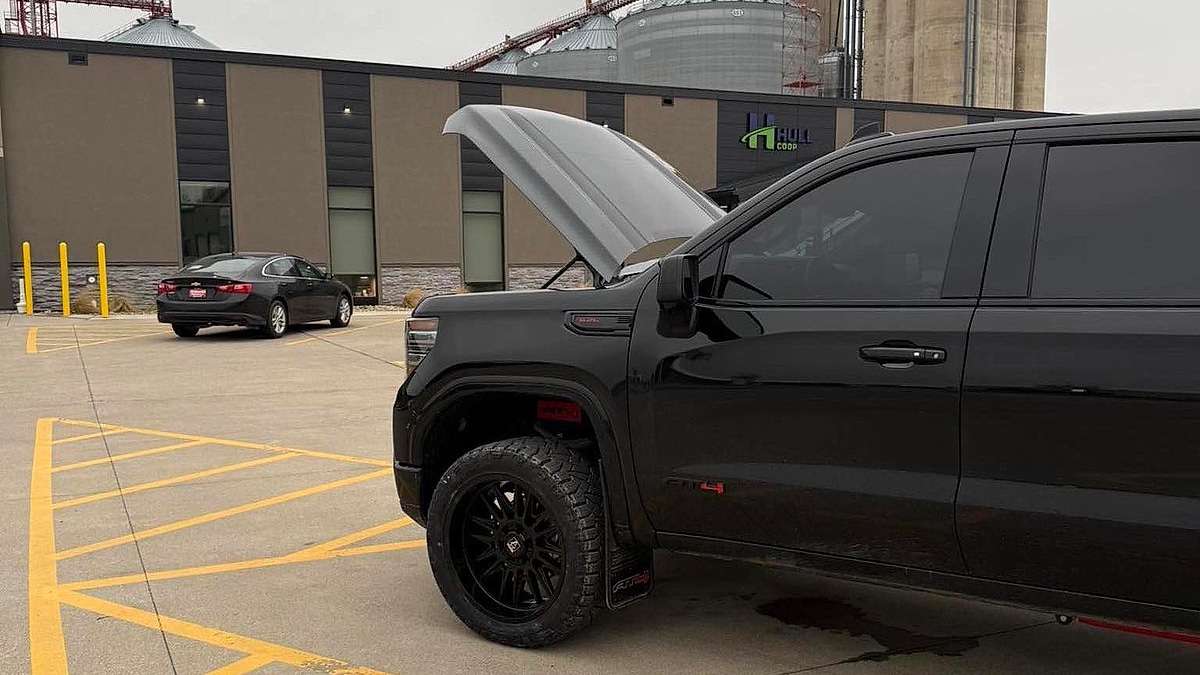
If you bought a 2026 GMC Sierra thinking the engine issues were finally behind us, I have some news that might make you rethink your next road trip. I have spent 30 years covering the automotive industry, and I’ve seen manufacturers promise "permanent fixes" many times, only for the same gremlins to return. Today, the gremlin is back in the form of a collapsed lifter on a brand-new truck. Jacob Van Den Top from Hull, Iowa, recently shared a sobering update on the 2019 through 2026 Chevy Silverado and GMC Sierra Owners Facebook page that should put every GM truck enthusiast on high alert.
Jacob’s experience is the "canary in the coal mine" for the 2026 model year. He stated: “If anyone was wondering, 6,700 miles on a 2026 6.2 and lifters went already. I thought they fixed them in 2026, evidently not. I’m getting a DFM disabler for it whenever it gets back, that’s for sure.”
Such a failure at such low mileage indicates that the mechanical geometry of the L87 engine remains susceptible to the catastrophic valvetrain issues I previously highlighted, even as certain GM engines remain prone to premature wear despite software updates.
My past investigations have shown that these failures often stem from a combination of oil pressure fluctuations and hardware tolerances that GM has yet to fully master, a trend that continues to impact reliability scores as seen in my report on why some Sierra owners are facing long wait times for replacement parts.

Who, How, and Why?
We have to look at the three pillars of this failure.
Who is affected? Currently, the risk is highest for owners of the 6.2L L87 V8 engine equipped with Dynamic Fuel Management. While the 5.3L isn't immune, the higher compression and torque profiles of the 6.2L seem to accelerate component fatigue.
How does it happen? The failure occurs when the locking pin in the high-tech deactivating lifter fails to engage or disengage correctly. This causes the lifter to "collapse," leading to a dead cylinder, a flashing Check Engine Light, and potential pushrod damage.
Why does it persist in 2026? Industry experts at GM Authority have noted that while GM has revised part numbers, the fundamental design of the solenoid-controlled oil manifold remains largely unchanged, meaning the root cause of the oil-starvation-at-idle issue may still be present in the 2026 architecture. Furthermore, technical analysis from Consumer Reports indicates that "active fuel management systems continue to be a primary driver of powertrain complaints in late-model domestic pickups," which underscores the lack of a definitive mechanical resolution.

My Take on the Hardware vs. Software Debate
In my three decades of reporting, I have learned that software is often a "band-aid" for a hardware wound. GM has tried to use various Engine Control Module recalibrations to soften the transition between cylinder deactivation modes. However, Jacob’s 6,700-mile failure proves that the physical components are still the weak link. The moment those lifters are asked to deactivate and reactivate thousands of times per hour, the margin for error is razor-thin.
From my perspective, the fact that a 2026 model failed so quickly suggests that the metallurgical quality or the oiling circuit design has not been sufficiently upgraded. It’s why so many owners are now looking at aftermarket "disablers" to keep the engine in V8 mode at all times.
What You Need To Know
To give you a clearer picture of the situation, here is the technical breakdown of what is happening under the hood of these trucks.
- Manufacturing Variance: Not every 2026 6.2L will fail, but the variance in lifter pin tolerances means some engines are "born" with a shorter fuse than others.
- The DFM Dilemma: Dynamic Fuel Management is essential for GM to meet federal fleet fuel economy standards, which is why they are hesitant to move away from the design despite the reliability headaches.
- Oil Quality is Critical: My advice has always been to ignore the "Oil Life Monitor" and change your oil every 5,000 miles maximum. Clean oil is the only defense these sensitive solenoids have.
- The Warranty Factor: While Jacob’s truck is covered under the powertrain warranty, the "cost" is downtime and the loss of confidence in a $70,000 vehicle.
Technical Observations from Owner Communities
The broader owner community is seeing similar patterns. In a recent technical discussion on r/Silverado, several owners noted that the P0606 code often appeared after a low-voltage battery event. Based on my 30 years of experience, this aligns with how sensitive GM's Powertrain Control Modules are to voltage drops during the start cycle, as detailed in the full discussion here.
Another owner highlighted the vulnerability of the new design, mentioning, "The internal oil seals in the lifter tray are the real culprit; if the pressure drops for even a millisecond during a cylinder transition, the lifter won't lock," found in this Reddit thread. These field reports confirm what I am seeing: the system is simply too complex for its own good.

The "Invisible" Recall: Why the 2026 Model Year Is Different
From my 30 years of investigating factory defects, the most dangerous mechanical failures are those that manufacturers acknowledge through "Preliminary Information" bulletins rather than official recalls. In February 2026, GM issued Service Bulletin PIP6101A, which specifically addresses a "top-end ticking noise" in the latest engines, a direct result of debris infiltrating the valve lash adjusters. This creates what technicians call a "soft" lifter that fails to maintain hydraulic pressure. While some marketing materials suggested a 2026 redesign would eliminate these issues, my research indicates that the core architecture remains vulnerable.
As I noted in my investigation into why certain GM engines are still prone to premature wear, these "mechanical tweaks" often prioritize emissions over long-term durability. This aligns with recent legal filings, such as the February 26, 2026, class-action update regarding L87 engine defects that can result in total failure with as few as 1,200 miles on the odometer. The 2026 model year hasn't "cured" the lifter issue; it has simply inherited a decade-long struggle with high-tolerance hydraulic components that require absolute oil purity to survive.
Key Takeaways for My Readers
- Low Mileage is No Shield: Do not assume your truck is "safe" just because it is new; failures occur well before the first major service interval.
- Monitor Your Gauges: A sudden change in engine sound or a slight "stutter" while cruising on the highway is your first sign of a pending lifter collapse.
- Consider a Disabler: While it may slightly impact fuel economy, keeping the engine in constant 8-cylinder mode significantly reduces the wear on deactivating lifter pins.
- Document Everything: If you experience a failure, ensure the dealer records the specific cylinder and lifter positions to help build a case for a potential future recall.
Next Question: Does a DFM Disabler Void Your Warranty?
The very next thing you are likely wondering is whether installing an aftermarket device, as Jacob mentioned, will result in your warranty claim being denied. In 2026, the answer is nuanced. While the Magnuson-Moss Warranty Act protects you, GM dealers are becoming more aggressive at scanning for "plug-in" devices that alter engine parameters. If you use a disabler, always remove it and drive the truck for several cycles before taking it in for service to ensure the computer doesn't flag "unusual" fuel management data logs.
A Stark Reminder
The 2026 GMC Sierra remains one of the most capable and luxurious trucks on the market, but the 6.2L V8’s valvetrain continues to be its Achilles' heel. Jacob’s 6,700-mile failure is a stark reminder that mechanical evolution often moves more slowly than marketing promises. I will continue to track these failures to determine whether this is an isolated batch or a widespread 2026 model-year defect.
What Would You Do? If your brand-new truck experienced an engine failure before its second oil change, would you trust the dealer to fix it, or would you consider trading it in for a different brand? Tell us what you think and leave a comment in the red "Add new comment" link below.
About The Author
Denis Flierl is a 14-year Senior Reporter at Torque News and a member of the Rocky Mountain Automotive Press (RMAP) with 30+ years of industry experience. Based in Parker, Colorado, Denis leverages the Rockies' high-altitude terrain as a rigorous testing ground to provide "boots-on-the-ground" analysis for readers across the Rocky Mountain region, California EV corridors, the Northeast, Texas truck markets, and Midwest agricultural zones. A former professional test driver and consultant for Ford, GM, Ram, Toyota, and Tesla, he delivers data-backed insights on reliability and market shifts. Denis cuts through the noise to provide national audiences with the real-world reporting today’s landscape demands. Connect with Denis: Find him on LinkedIn, X @DenisFlierl, @WorldsCoolestRides, Facebook, and Instagram.
Photo credit: Denis Flierl via Jacob Van Den Top
Set Torque News as Preferred Source on Google
Follow us today...







Comments
This persistent defect, in…
Permalink
This persistent defect, in view may need for brute strength trailering torque, 20 mpg commuting, and uber-high uptime numbers has erased GM from my radar. Diesel is a solid NO. My 3/4 ton Hemi Ram at 120K miles checks all the right boxes. Sad to see an American icon fail once again in resolving its conflicted design issues on such an expensive and attractive sled.
I believe the type of oil…
Permalink
I believe the type of oil pump used in these engines plays a part. I have had 3 l87 engines. The first two would have 60 psi hot oil pressure at speed and lasted over 150k miles each. The last one would barely see 30 psi. First the lifters failed then the engine blew later at 20k miles.
I think I just had a lifter…
Permalink
I think I just had a lifter fail on a 2021 Camaro SS 1LE with 2950 miles on it. I bought it just as we were starting to have kids so it hasn't been driven much, but this weekend while on the highway I got a flashing check engine light, heard a ticking, and then the computer cut power.
Software updates and oil…
Permalink
Software updates and oil changes don't fix mechanical flaws. If you're tired of the dealer 'band-aid,' ship it to Texas. We do full DOD/AFM deletes and back them with a 10-year warranty for less than the cost of a factory replacement including the nationwide vehicle shipping - big3engine.com