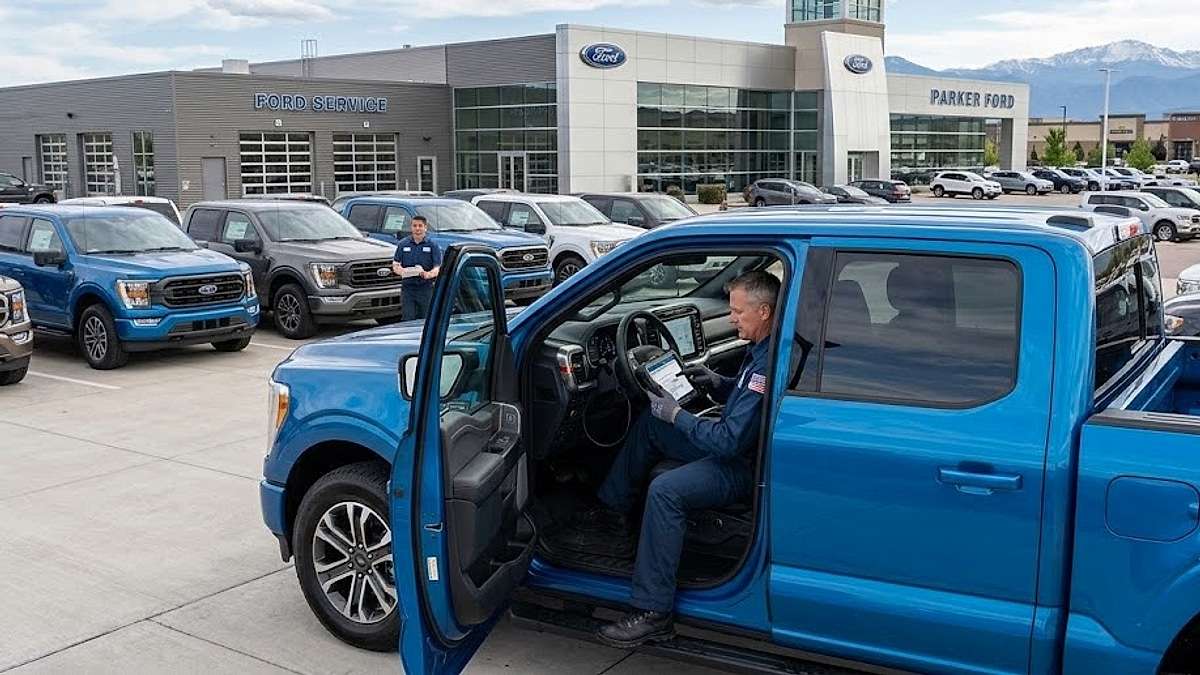

Building on my recent technical investigative analysis detailing how a Ford transmission software flash masks destructive hardware defects in 1.4 million recalled trucks, and why F-150 owners must demand physical lead frame replacements instead of dealership software recalibration, a more severe early-mileage crisis has emerged. Fresh assembly-line anomalies are now triggering absolute drivetrain shutdowns before a buyer can even finish their first tank of fuel.
The Assembly Line Micro-Defect Bypassing Dealership Diagnostics
My ongoing investigations and tracking of manufacturing defects have uncovered an immediate pattern of hardware failures that is knocking early-production 2026 model-year vehicles out of service. I have identified a critical gap between factory maintenance schedules and real-world component longevity. In my ongoing coverage of Ford reliability, I have uncovered an unresolved dispute over internal hydraulic architecture errors that leave brand-new trucks stranded on dealership service drives.
The hidden driver behind this early-mileage disaster is a structural manufacturing defect within the 10R80’s main control valve body casting. Court records from extensive multi-district litigation reveal that the 10R80 transmission exhibits severe slipping, jerking, and harsh shifting because of internal oil pressure management issues. In the newly assembled 2026 units, micro-porosities within the aluminum valve body casting allow fluid to bypass vital shift-solenoid circuits. This creates an instantaneous drop in line pressure, causing the transmission to select conflicting gear ratios simultaneously and initiating a sudden, terrifying physical lockup.
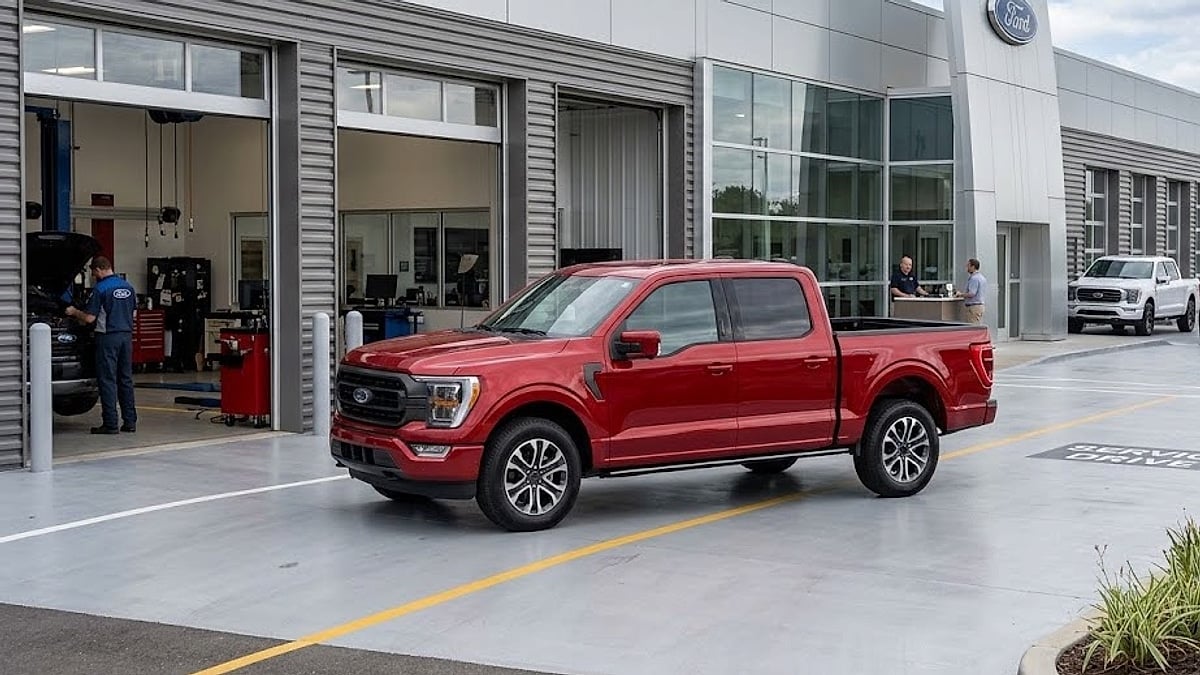
Compounding this manufacturing oversight is a critical assembly error involving the main connector assembly. According to official automotive litigation files, owners routinely experience a sudden, complete loss of propulsion while the vehicle is in motion, often accompanied by multiple dashboard warning lights. In the 2026 builds, this manifest failure is accelerated because factory technicians are misaligning the internal wiring harness retaining clips, exposing the digital lead frame to localized thermal stress under heavy load.
From My View: High-Altitude Friction - The Colorado Mountain Pass Accelerated Wear
This dynamic is especially destructive in high-altitude environments where thin air and heavy loads demand peak vehicle efficiency. My testing in high-elevation corridors such as the Eisenhower Tunnel and Rabbit Ears Pass in Colorado demonstrates that high-load, low-oxygen hill climbs amplify these internal pressure drops.
As the electronic control unit demands maximum hydraulic pressure to sustain torque on steep mountain gradients, the porous valve body bleeds line pressure rapidly. The resulting localized friction overheats the clutch packs within minutes, turning brand-new transmission fluid into a scorched, glittering slurry of friction material.
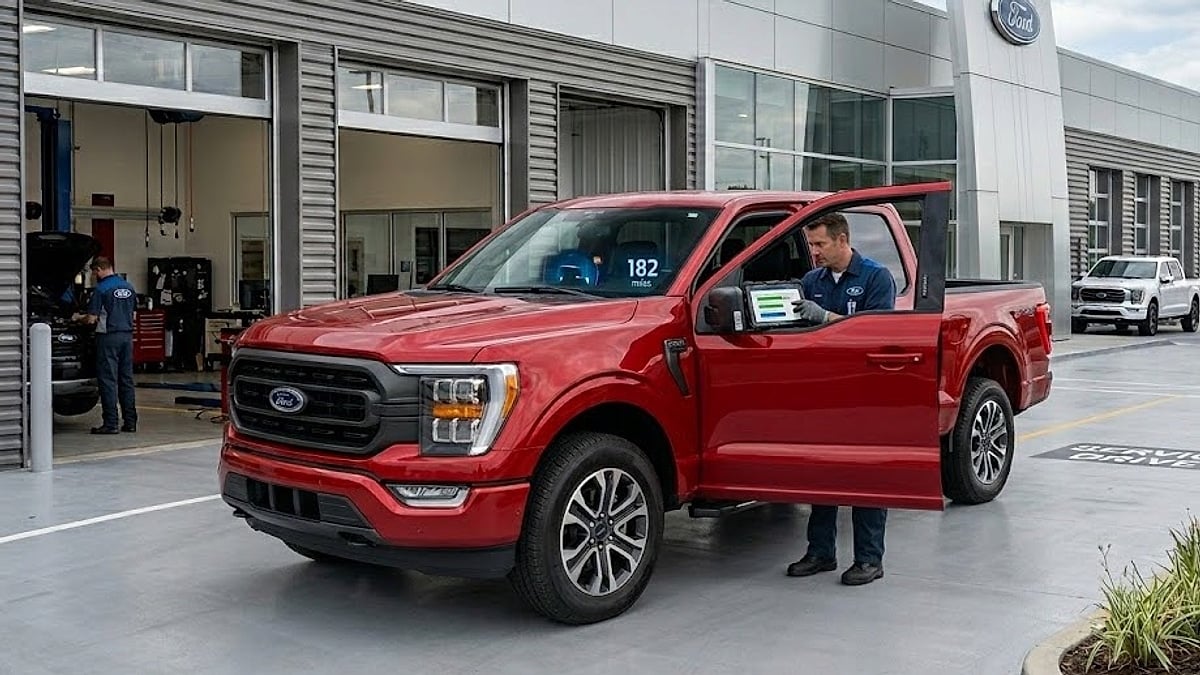
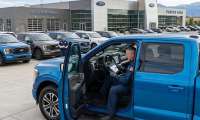
When a 2026 F-150 enters a service department with less than 200 miles on the odometer, the standard dealer protocol is to apply a quick software update or execute an adaptive learning reset. This approach does nothing to remedy a porous aluminum casting or a misaligned internal wiring harness clip. Service departments frequently leverage these software delays to push owners past the short window in which state lemon laws allow immediate vehicle replacement or full financial buybacks.
Real-World Telemetry: The 10R80 Pressure Drop Fingerprint
To bypass standard dealership stalling tactics, owners must recognize the physical and digital symptoms of an impending 10R80 hydraulic collapse. When micro-porosities leak internally, the transmission control module (TCM) attempts to compensate by raising line pressure, leading to erratic behavior before the truck throws a diagnostic trouble code (DTC).
Field data collected from independent diagnostic teardowns reveals three specific warning signs that differentiate this manufacturing defect from normal adaptive learning:
- The 3-4 Gear Flare: A sudden engine RPM spike of 300 to 500 RPM during the third-to-fourth gear upshift, indicating the intermediate clutch pack is losing hydraulic pressure.
- The Reverse Engagement Delay: A distinct two-to-three second pause accompanied by a violent clunk when shifting from Park to Reverse, signaling primary pressure bleed-off in the valve body main regulator circuit.
- Thermal Runaway on Flat Terrain: Transmission sump temperatures exceeding 225°F during unladen highway cruising under 65 mph, a direct result of continuous internal fluid bypassing.
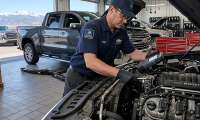
If your vehicle exhibits these symptoms, instruct your technician to pull the TCM data log and check for pending codes P0751 (Solenoid A Performance) or P0766 (Solenoid D Performance). Documenting these hydraulic deviations on your initial service invoice provides the irrefutable technical paper trail required to force a physical component replacement under warranty.
The Owner Blueprint for Pre-Failure Legal Protection
To protect your asset, do not accept a simple diagnostic code clear or an electronic control module flash if your truck experiences a harsh downshift or a sudden drop into neutral. Demand that the technician perform a physical line-pressure test and record the results directly on your repair order to document a hardware failure. If the pressure readings fall below factory specifications, compel the service manager to initiate a complete valve body replacement and a physical lead-frame inspection rather than waiting for a regional backorder on a generic replacement transmission.
The Next Question: Given that a complete mechanical teardown can sideline a brand-new truck for weeks, the next logical question an anxious owner will ask is: "Will Ford proactively replace my defective 10R80 transmission with an updated unit under warranty, or am I facing a protracted battle over backordered parts while stuck driving a dealership rental?”
The short answer is no, Ford will not proactively replace it; you are facing a strict "break-fix" policy. Because a formal safety recall has not been issued for early-production 2026 models, service departments are instructed to follow standard diagnostic trees, starting with software updates and moving to individual component swaps only after a definitive component failure is verified.
Consequently, owners should brace for a protracted battle over critical components like the main control valve body and digital lead frames. Nationwide supply chain constraints on updated 10R80 assemblies mean these components are frequently backordered, often leaving owners stranded in dealership rental vehicles for weeks while the repair undergoes regional corporate approval.
What Would You Do? If your brand-new truck suffered a total drivetrain failure on its way home from the showroom? Have you experienced harsh shifting or sudden power losses in your new 10-speed pickup? Tell us what you think and share your dealership service experiences by leaving a comment in the red “Add new comment” link below.
Come back tomorrow, or check my Torque News Home Page for more of my informative automotive news articles.
About The Author
Denis Flierl is a 14-year Senior Reporter at Torque News and a member of the Rocky Mountain Automotive Press (RMAP) with 30+ years of industry experience. Explore his full investigative reporting archives and technical guides at DenisFlierl.com. Based in Parker, Colorado, Denis leverages the Rockies' high-altitude terrain as a rigorous testing ground to provide "boots-on-the-ground" analysis for readers across the Rocky Mountain region, California EV corridors, the Northeast, Texas truck markets, and Midwest agricultural zones. A former professional test driver and consultant for Ford, GM, Ram, Toyota, and Tesla, he delivers data-backed insights on reliability and market shifts. Denis cuts through the noise to provide national audiences with the real-world reporting today’s landscape demands. Connect with Denis: Find him on LinkedIn, X @DenisFlierl, @WorldsCoolestRides, Facebook, and Instagram.
Photo credit: Denis Flierl
Set Torque News as Preferred Source on Google
Follow us today...