
General Motors is quietly planning a massive change in how it powers its future electric cars, and it could completely alter the global EV landscape. While most automakers are rushing to adopt cheaper, Chinese-style batteries to lower prices, GM is getting ready to walk away from that playbook entirely. The Detroit giant is betting its future on a single, homegrown chemical formula to solve its biggest problem: how to build long-range, affordable electric vehicles without relying on Chinese suppliers. By breaking away from the crowd, GM is trying to escape what can only be described as China’s battery gravity.
Before we dive into the fascinating science and geopolitical chess board behind this decision, consider this: Will American car buyers actually accept "good enough" budget batteries if it means losing driving range when the temperature drops, or is GM smart to gamble on a premium, domestic alternative? Keep this question in mind as we break down the strategy, and be sure to share your thoughts in the comments section below after reading.
The Secret Pivot: Walking Away From LFP
The spark for this shift comes straight from the top of GM's executive suite. According to recent comments made by GM Vice President of Batteries, Propulsion, and Sustainability Kurt Kelty during a company event in San Francisco, the automaker might drop Lithium Iron Phosphate (LFP) batteries from its long-term plans entirely. In short, Kelty told Reuters that if LFP batteries cannot prove their worth, they won't make the cut for GM's future vehicles. Instead, he labeled Lithium Manganese-Rich (LMR) technology as GM's ultimate "workhorse," revealing that this specific chemistry is where the company plans to focus its massive production volume.
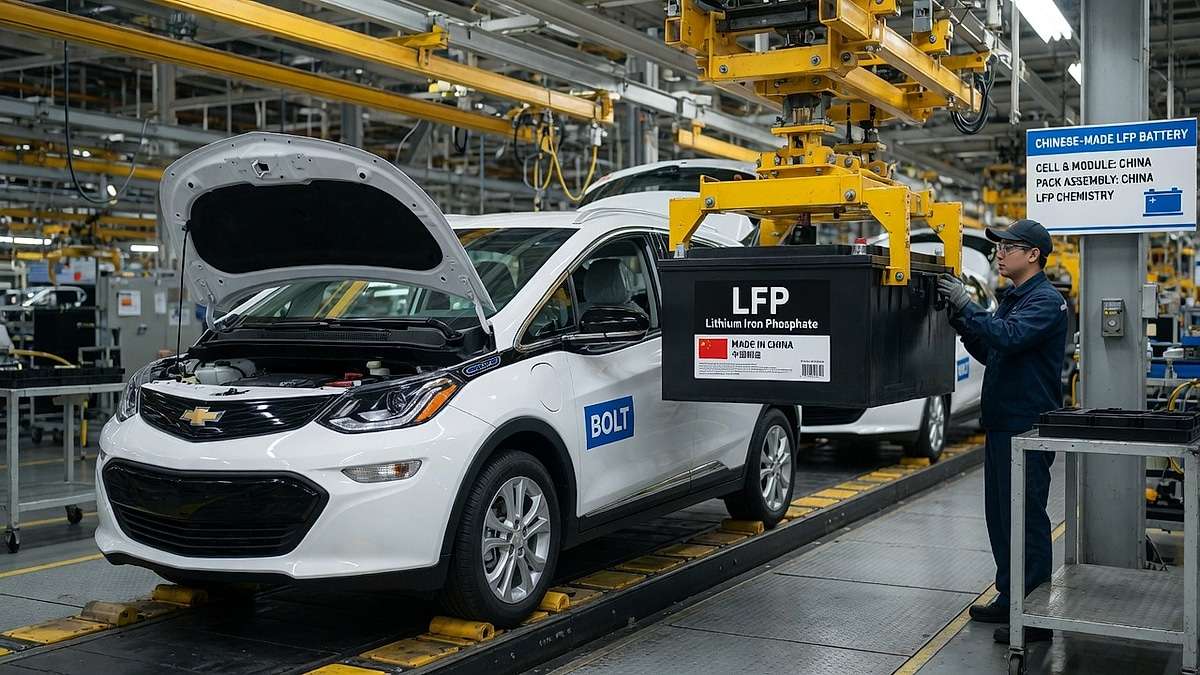
This represents an incredible tactical shift. For the past few years, the automotive world has treated LFP as the holy grail of EV affordability. It is the core reason entry-level models are becoming financially viable, which is why Chevrolet’s Ultium platform technology powering the Equinox EV and the upcoming next-generation Bolt initially integrated LFP to keep consumer costs down. But LFP comes with heavy penalties. It sacrifices energy density, robs drivers of range, and suffers from terrible performance in cold weather. By moving toward LMR, GM is declaring that "good enough cheap batteries" will not win the long-term EV war. They are choosing performance potential over proven, short-term cost stability.
GM Wants To Break Free From China's Supply Chain Control
The deepest layer of this story isn't just about chemistry; it's about geopolitical independence and long-term financial survival. Right now, the global EV battery market is heavily weighed down by China’s massive scale advantages and absolute control over the LFP supply chain. This dominance has caused serious friction for Western automakers trying to build a domestic manufacturing base. For instance, look at how the 700 Wh/kg fluorinated electrolyte breakthrough in China showcases how local EV technology continues to leapfrog Western development. GM realizes that as long as it relies on LFP, it is playing an away game on a field entirely controlled by Chinese suppliers.
By pivoting to LMR, GM is actively trying to break free from that gravity. This new strategy allows them to localize high-value battery chemistry right here in North America, leveraging local innovation instead of importing foreign manufacturing scale. This isn't just a corporate theory; it is backed by massive capital. To secure its own destiny, GM has poured massive investments into domestic raw materials, ensuring that the push for American EV independence relies on securing massive domestic raw materials like the Thacker Pass lithium project.
Why Manganese Battery Chemistry Is the Secret Weapon
So, what makes LMR the ultimate weapon for GM? Traditional high-performance batteries rely on nickel and cobalt, which are incredibly expensive, highly volatile to source, and heavily controlled by overseas entities. Manganese, on the other hand, is incredibly cheap and highly abundant in North America. By utilizing a lithium manganese-rich formulation, GM can dramatically cut material costs while maintaining the high energy density that American truck and SUV buyers demand.
This chemistry matters immensely because American buyers use their vehicles differently than drivers in dense, urban global markets. A small, low-range city car doesn't fit the American lifestyle. To see this contrast in action, consider how putting the massive GMC Hummer EV battery size beside normal EV economics reveals the extreme material demand of large American electric vehicles. To power massive trucks and family SUVs without creating a 9,000-pound brick, GM needs a battery that offers maximum energy in a minimal footprint. LMR promises exactly that: more miles per pound of battery, without the massive price tag of nickel and cobalt.
The Massive Manufacturing Advantage
The engineering brilliance of GM's LMR bet is that it doesn't require tearing down their existing factories. The new LMR cells are being meticulously designed to fit directly into the exact same structural pack architecture that GM has spent billions building over the last few years. This means they can seamlessly swap the internal chemistry on the assembly line without retooling their multi-billion-dollar joint-venture battery plants.
This manufacturing flexibility is critical because the global battery race is moving at an absolute breakneck pace. While GM is refining its domestic production, overseas competitors are moving onto entirely new formats. For example, recent developments like China's Gotion launching a solid-state battery with incredibly rapid charging times show how intense the global race for next-generation dominance has become. GM's ability to evolve its internal cell chemistry while keeping its physical factory footprint intact is its only real shield against getting left behind.
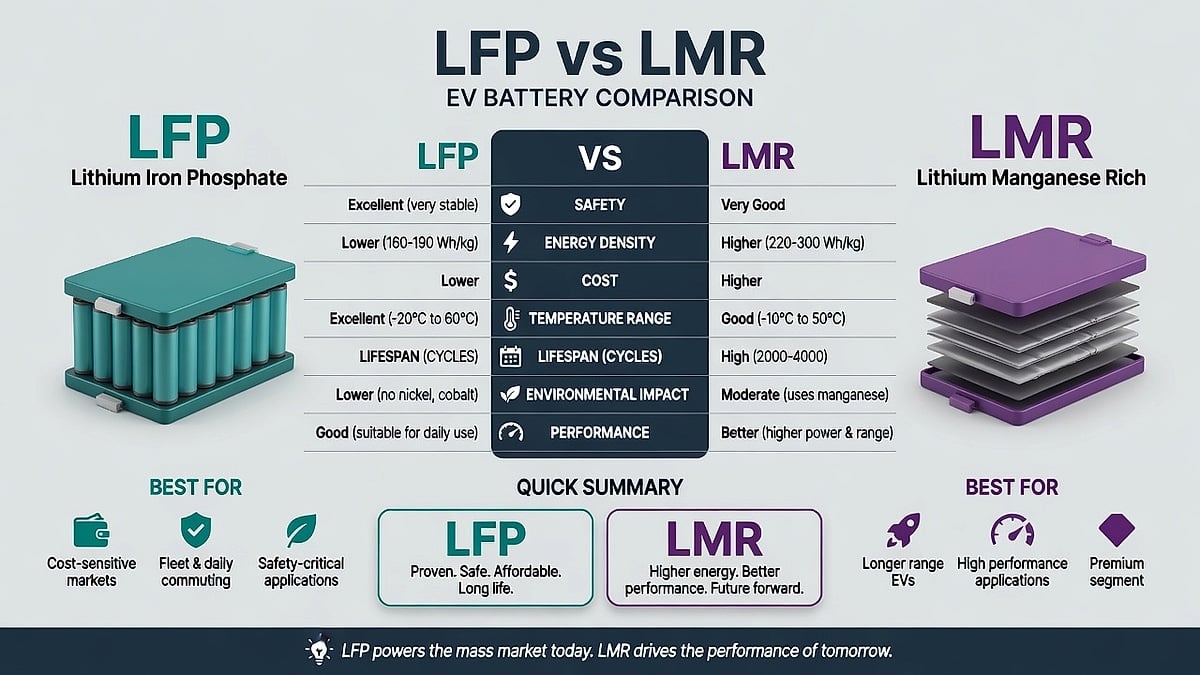
Here is LFP vs LMR graphic made by Grok.
Redefining the Vehicle as a Power Platform
As GM refines this core "workhorse" chemistry, the ultimate goal is to transform the electric car from a simple mode of transportation into a highly sophisticated home energy hub. A high-density LMR battery pack doesn't just push a car down the road; it holds enough stable, localized power to run an entire household during an emergency. This vision is already hitting the real world, as seen in recent tests where setting up a GM home energy system and running it with an Equinox EV reveals how these vehicles are evolving into bidirectional home power platforms.
This level of integration is exactly why GM is refusing to settle for the lower performance limits of LFP. To make bidirectional charging, heavy towing, and extreme cold-weather driving practical for the mass market, the energy platform underneath the floorboards has to be top-tier. As industry journals like Car and Driver have noted in their deep dives on automotive engineering, automakers who master proprietary, localized cell development will ultimately control their own pricing and vehicle capabilities, while those who rely purely on outsourced, generic cells will remain at the mercy of global supply shocks.
GM's Long-Term Game
Make no mistake: this is a high-stakes gamble for General Motors. Building an entirely new chemical supply chain from scratch while competing against China's decade-long head start is an incredibly steep hill to climb. GM has faced plenty of criticism for its slower-than-expected initial EV ramp-up, especially after making historic announcements regarding GM’s bold investment strategy to achieve a completely carbon-neutral vehicle lineup by 2035.
But by keeping their eye on LMR as the volume leader, they are playing the long game. If GM succeeds, they won't just have cheaper EVs. Instead, they will have high-performance, long-range EVs built with an entirely domestic supply chain that is totally immune to foreign tariffs and geopolitical standoffs. They will have successfully broken free from the gravity well that holds the rest of the automotive industry captive.
What do you think about GM's massive pivot? Do you think betting on a brand-new domestic LMR chemistry is the right move to beat China, or should they have stuck with the proven cost savings of LFP batteries to lower prices immediately?
Let us know your thoughts and your perspective in the comments section below!
Return tomorrow, or check our Torque News Home Page for more interesting automotive news articles.
About The Author
Armen Hareyan is the founder and Editor-in-Chief of Torque News and an automotive journalist with over 15 years of experience writing car reviews and industry news. Now based in the Charlotte region (Indian Land, SC, he founded Torque News in 2010, which since then has been publishing expert news and analysis about the automotive industry. He can be reached at Torque News on X, Linkedin, Facebook, and Youtube. Armen holds three Masters Degrees, including an MBA, and has become one of the known voices in the industry, specializing in the landscape of electric vehicles and real-world stories of actual car owners. Armen focuses on providing readers with transparent, data-backed analysis bridging the gap of complex engineering and car buyer practicality. Armen frequently participates in automotive events throughout the United States, national and local car reveals and personally test-drives new vehicles every week. Armen has also been published as an automotive expert in publications like the Transit Tomorrow, discussing how will autonomous vehicles reshape the supply chain, and emerging technologies in vehicle maintenance.
Set Torque News as Preferred Source on Google
Follow us today...