
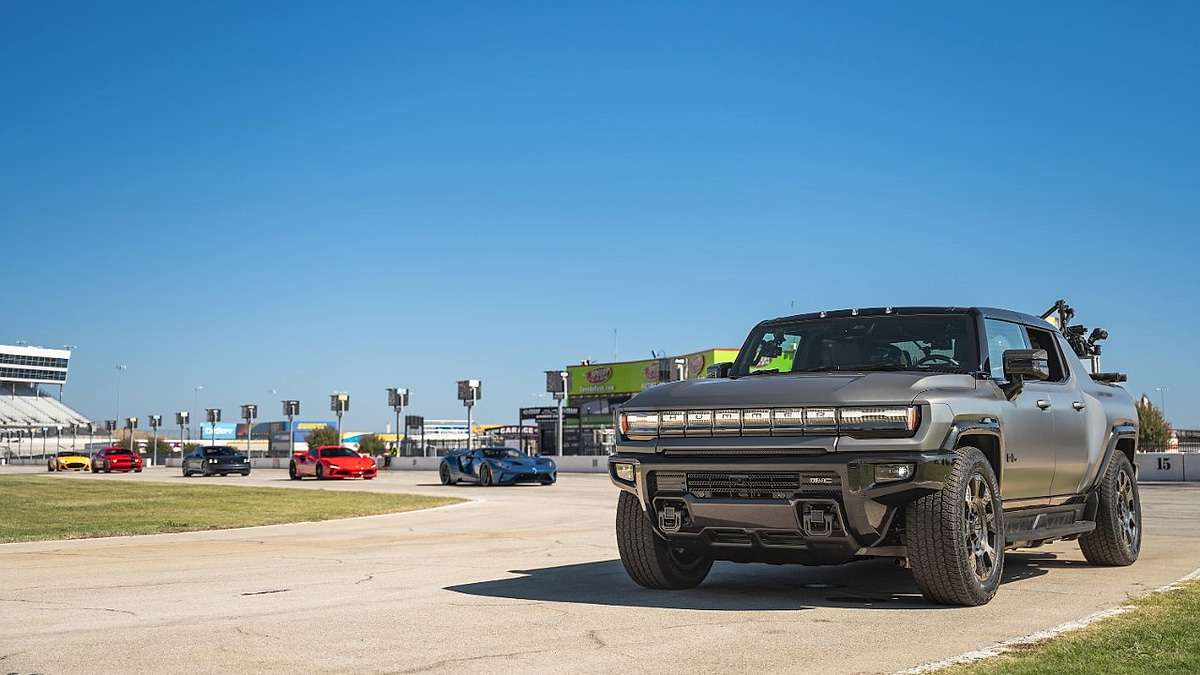

The GMC Hummer EV Edition 1 weighs more than a Ford F-150 Raptor, carries a battery larger than what powers three Hyundai Ioniq 5s combined, and returns an efficiency figure that would embarrass a 1980s diesel pickup with a hole in the tank. At roughly 9,000 pounds and over 212 kilowatt-hours of battery capacity, the Hummer is not an electric vehicle in any meaningful sense of efficiency. It is a monument to the idea that electrification does not have to change anything about how Americans build or consume trucks. The tailpipe is gone, but every other consequence of building a rolling fortress remains intact, and some of them are worse than the gasoline equivalent.
The anti-efficiency numbers nobody wants to print
A standard Hyundai Ioniq 5 carries 77 kWh of capacity, weighs about 4,600 pounds, and returns roughly 3.3 miles per kWh in mixed driving. The Hummer carries 212 kWh, weighs roughly 9,000 pounds, and returns about 1.5 miles per kWh. That means the Hummer uses more than twice the electricity per mile while requiring nearly three times the battery material to do it. The environmental math is grotesque if you believe efficiency matters.
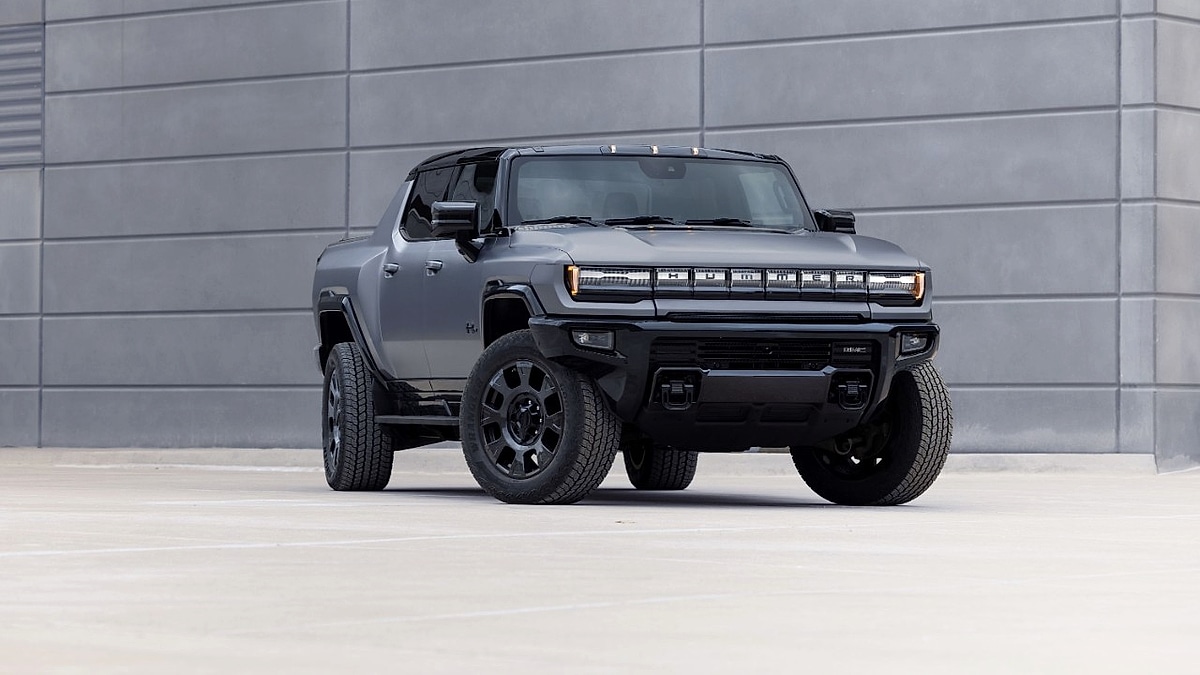
Every kWh of lithium-ion capacity requires mining, refining, and shipping materials that carry their own carbon debt, and the Hummer demands enough of that debt to build three normal EVs. The efficiency penalty compounds at the charging station, where the same renewable electron that moves an Ioniq 5 three miles moves the Hummer barely more than one. The Hummer does not save emissions. It concentrates them upstream in mines and smelters, then asks the grid to work twice as hard for the privilege of moving one person to Costco.
The weight penalty does not stop at the battery. At 9,000 pounds, the Hummer accelerates road damage at a rate that defies intuition. Road wear scales with the fourth power of axle weight, which means doubling the load on a pavement section increases damage by a factor of sixteen. The Hummer is not double the weight of a typical sedan. It is closer to triple. The particulate matter from tire wear, already a growing concern as vehicles get heavier across the board, spikes dramatically with mass. A recent emissions analysis found that tire wear from the heaviest EVs can exceed the particulate output of some modern gasoline tailpipes, which means the zero-emission truck is technically out-polluting the sedan it just silently passed at the light. The Hummer does not have a tailpipe, but it has four tires, and each one is shedding microplastics and rubber compounds into the air at a rate that a Honda Civic cannot match. The zero-emission badge on the back does not cover what the tires are doing, and it certainly does not cover what the road crews will be doing in three years.
Why electrification cannot afford to preserve truck culture unchanged
The policy framework around EVs was built on a simple premise: replace combustion miles with electric miles, and the emissions problem solves itself. That premise assumes electric miles are roughly equivalent in their secondary consequences, and the Hummer proves they are not. Federal tax credits do not discriminate by weight or efficiency. A buyer who purchases a 9,000-pound truck with 212 kWh of battery receives the same $7,500 federal incentive as a buyer who purchases a 3,000-pound hatchback with 40 kWh. The material cost to the supply chain is not equivalent. The grid load is not equivalent. The road damage is not equivalent. The tire pollution is not equivalent. Yet the policy treats them as the same virtuous choice, and that is how a climate loophole becomes a business model.

The truck market is not accidentally trending toward weight and excess. It is pursuing those qualities deliberately because electrification has removed the primary constraint that used to limit them. A gasoline engine large enough to move 9,000 pounds would have been an engineering absurdity with catastrophic fuel economy. An electric motor does not care about displacement or cylinder count. It simply draws more electrons, and if the battery is large enough, the range stays acceptable. The Hummer EV demonstrates that electric powertrains can sustain vehicle sizes that internal combustion would have rendered impractical, and that is not a victory for electrification. It is a victory for the status quo wearing a different badge.
For the EV market to scale responsibly, efficiency has to matter as much as electrification. The Hummer is the canary in the coal mine, and it is not singing. It is a 9,000-pound reminder that tailpipe elimination does not automatically erase every other consequence of building and operating a personal vehicle. Battery chemistry is not infinite. Lithium supply chains are already strained. Grid infrastructure is not prepared for a fleet of trucks that use electricity the way the Hummer does. If the electrified future looks like the Hummer, the future will need more mines, more power plants, and more road repair budgets in every state, and more tire particulate in the air than any honest accounting should allow. The tailpipe is gone. The problem is not.
About The Author
Noah Washington is an automotive journalist based in Atlanta, Georgia, covering sports cars, luxury vehicles, and performance culture. His reporting focuses on explaining the engineering, design philosophy, and real-world ownership experience behind modern vehicles.
Noah has been immersed in the automotive world since his early teens, attending industry events and following the enthusiast communities that shape how cars are built and driven today. His work blends industry insight with enthusiastic storytelling, helping readers understand not just what a car is, but why it matters.
Noah is also a member of the Southeast Automotive Media Association (SAMA), a professional organization for automotive journalists and industry media in the Southeast.
His coverage regularly explores sports cars, luxury vehicles, and performance-driven segments of the automotive industry, including the evolving culture surrounding Formula Drift and enthusiast builds.
Read more of Noah's work on his author profile page.
You can also follow Noah here:
Set Torque News as Preferred Source on Google
Follow us today...





Comments
Noah, Great insight, and not…
Permalink
Noah,
Great insight, and not something that had been on my radar, as a GMC Sierra EV Denali Max owner (which has largely the same issues as the Hummer). One small suggestion, however as you research this area: keep in mind that what is kind of really happening here is that the big car companies (so far Ford and GM) have basically been learning with these big EVs, actually selling very few of them. You can think of this as more of an R&D process than a commercial process. They learned how to make these, and also learned that this isn't (likely) the right product for most people, and they are moving on. Ford already discontinued their F150 Lightning effort, RAM cancelled their EV truck, and GM is rumored to be rethinking their future here. Instead as you know they are now focused on much smaller batteries and a diesel generator on-board for those (rarer) long-haul trips. The net effect will be to make these trucks make a lot more sense. I happen to love my Sierra EV, so I'm sad it isn't so great for the environment. It is great for towing. But I'm confident through this we will get to a place with trucks that work better and make more sense.
These big EV trucks may end…
Permalink
In reply to Noah, Great insight, and not… by Tim Rowe (not verified)
These big EV trucks may end up looking more like an R&D generation than the final answer. The capability is impressive, but the battery size, cost, weight, and efficiency penalty are hard to ignore. A smaller battery with a range extender may be where this segment starts to make more practical sense.
You are comparing a heavy…
Permalink
You are comparing a heavy lift C5A Galaxy to a Cessna. Other than flying, that is the only comparable data point. The Hyundai can’t tow 7,500 lbs. This truck is a platform of what could be, is now here. It’s like saying Mac and cheese doesn’t taste like spaghetti with tomato sauce, but hey they’re both pasta!! This is also not a mass produced vehicle. I challenge you to go to a Hyundai dealer on a Monday at 7am vs GMC. Don’t have time to pick apart weight, and big truck capabilities. So what if it is heavier and causes more road wear? At the $100k+ price point it pays more than its fair share in taxes and registration fees. It is insurable by everything major company, can’t be said about Cyber Truck.
ok
Permalink
In reply to You are comparing a heavy… by Electricwork (not verified)
ok