
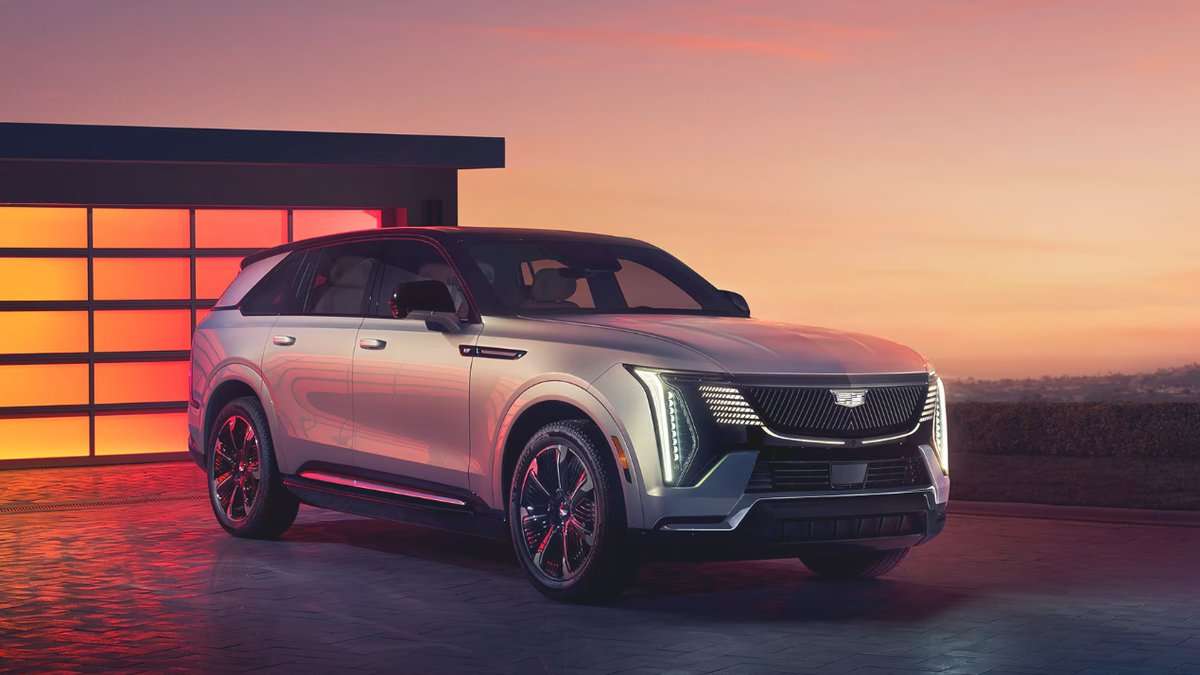

EVs promised environmental consciousness, but Cadillac threw restraint out of the window with a luxury land yacht that could make a Peterbilt blush. The automotive landscape has always been a reflection of American excess, but Cadillac's new Escalade IQ EV takes this philosophy to unprecedented heights – or should I say weights. Tipping the scales at 9,300 pounds, this rolling palace makes its gas powered predecessor look like a lightweight contender in comparison.
"So you say the Hummer EV is not heavy enough for you at 9,046 pounds?" posts Dan Henderson, head of the Apex Automotor Facebook Group. "Cadillac has beaten it with the Escalade IQ EV with 9,300 pounds of road flattening weight." Indeed they have, Dan. Indeed they have.
The numbers behind this yacht are as impressive as they are absurd.
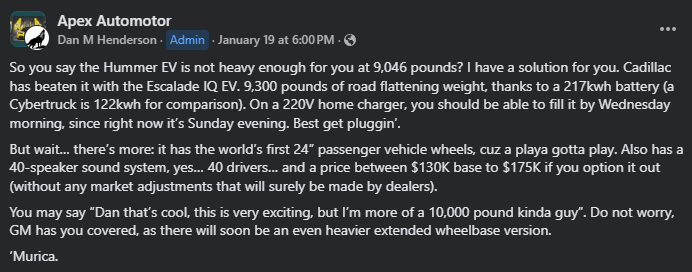
“Thanks to a 217 kwh battery (a Cybertruck is 122 kwh for comparison). On a 220V home charger, you should be able to fill it by Wednesday morning, since right now it’s Sunday evening. Best get (plugging).
But wait… there’s more: it has the world’s first 24” passenger vehicle wheels, cuz a playa (player) gotta play. (It) also has a 40-speaker sound system, yes… 40 drivers… and a price between $130K base to $175K if you option it out. (without any market adjustments that will surely be made by dealers).
You may say “Dan that’s cool, this is very exciting, but I’m more of a 10,000 pound kinda guy”. Do not worry, GM has you covered, as there will soon be an even heavier extended wheelbase version.
‘Murica.”
A Change in Infrastructure
Speaking of infrastructure, one commenter raised an interesting point, "What's potentially dangerous about this is the fact bridges and parking garages are not designed with private passenger vehicles weighing this much." It's a sobering thought in a country where bridge maintenance often takes a back seat to new construction.
- Founded in 1902 as the "Standard of the World," Cadillac pioneered automotive innovations like the electric starter.
- By the 1950s, their sedans became symbols of postwar prosperity, perfectly tailored for the era’s freshly minted interstate highways, a system born from Eisenhower’s 1956 Federal-Aid Highway Act, which laid 41,000 miles of asphalt and reshaped how (and what) Americans drove.
- Launched in 1998 as a hasty rebuttal to Lincoln’s Navigator, the Escalade transformed from a rebadged GMC Yukon into a pop-culture titan. Its third-gen (2006) design, all sharp angles and diamond cut grilles, became a hip-hop anthem on wheels, coinciding with America’s SUV boom.
A Brief History of American Luxury
Remember when a 5,000-pound SUV seemed excessive? Those were simpler times. The evolution of American luxury vehicles mirrors our national appetite for more. More space, more power, more everything. The Escalade IQ represents the logical conclusion of this trajectory, where even battery powered environmental consciousness comes supersized.
When the Ford Explorer launched in the early '90s weighing around 4,000 pounds, it was considered a substantial vehicle. By the time the civilian Hummer H1 rolled onto the scene at 7,000 pounds, it was seen as the pinnacle of excess, a military vehicle barely domesticated for civilian use. Now, we look back at those weights with almost nostalgic amusement, like flipping through old photos of what we used to consider "big" phones.
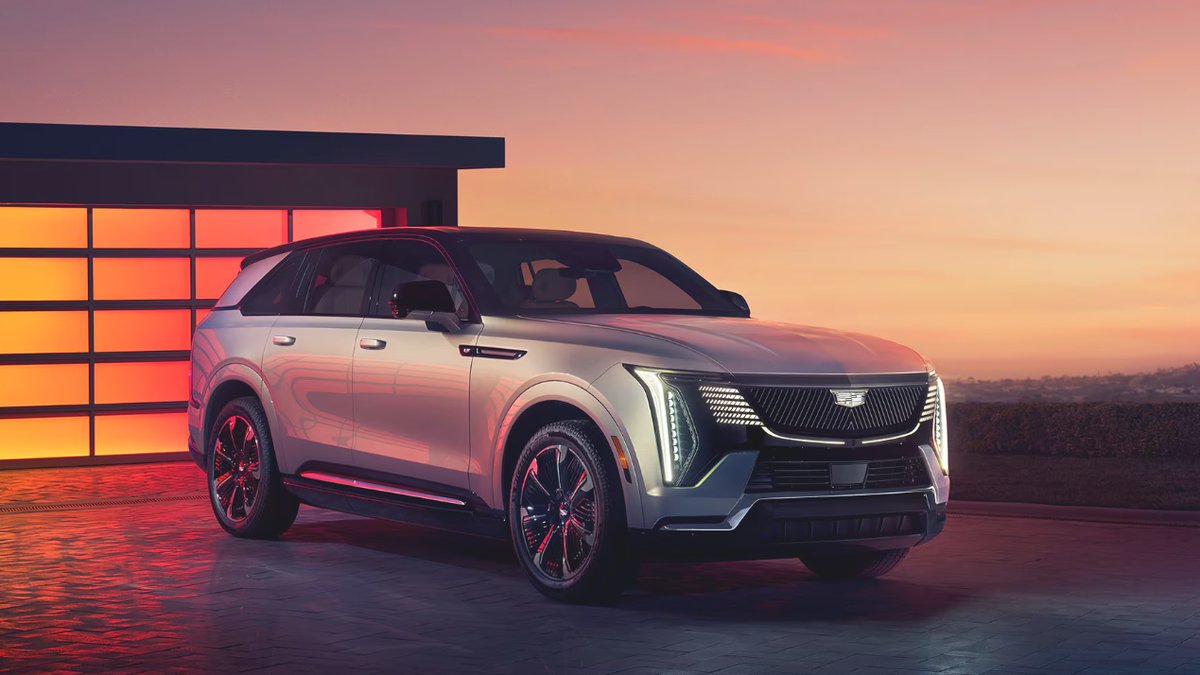
As vehicles like the Escalade IQ push the boundaries of mass, city planners and engineers face new challenges. Parking structures designed decades ago never anticipated private vehicles approaching five tons. This raises interesting questions about the future of urban development and whether our infrastructure will need to evolve to accommodate these rolling fortresses.
Pricing for this monument to excess starts at $130,000, but can quickly escalate to $175,000 with options. And let's be honest, if you're already committed to a 9,300 pound luxury EV, are you really going to skip the massage seats?
How The Escalade IQ EV Compares to the Cybertruck
While we're discussing excess, let's compare the 9,300 pound Escalade IQ next to Tesla's top-tier Cybertruck.
The Cadillac Escalade IQ features 750 horsepower and 785 lb-ft of torque when launch mode is engaged, those numbers would've seemed absurd just a decade ago. Yet Tesla's Cybertruck Beast Edition makes those figures look almost modest, wielding over 800 horsepower while somehow keeping its weight to 6,901 pounds. This weight difference shows up dramatically in performance, while Cadillac claims a "sub-5-second" 0-60 time for their rolling palace, the Cybertruck blasts to 60 in a supercar-rivaling 2.6 seconds, quick enough to leave its luxury-focused competitor wondering what just happened.
Both these giants come equipped with four-wheel steering… a necessity when you're trying to navigate vehicles this massive through Whole Foods parking lots. Cadillac flexes its luxury muscle with a battery pack north of 200 kWh , while Tesla makes do with a mere 122 kWh. It's like comparing a swimming pool to a hot tub, except both can hurtle down the highway with enough momentum to worry small aircraft. The Escalade IQ pampers with 40 speakers and gaudy 24-inch wheels, while the Cybertruck looks like something that escaped from a low-polygon-count video game… and somehow both approaches are selling for six figures.
Eco-Friendly Giants
Welcome to 2025, where our "eco-friendly" vehicles weigh as much as passenger vans from the 1970s, but at least they can beat Ferraris off the line.
The relentless march toward automotive excess are perfectly exemplified by these two vehicles. While the average American household income hovers around $74,000, we're seeing electric vehicles routinely launching with price tags that exceed most people's annual salaries.
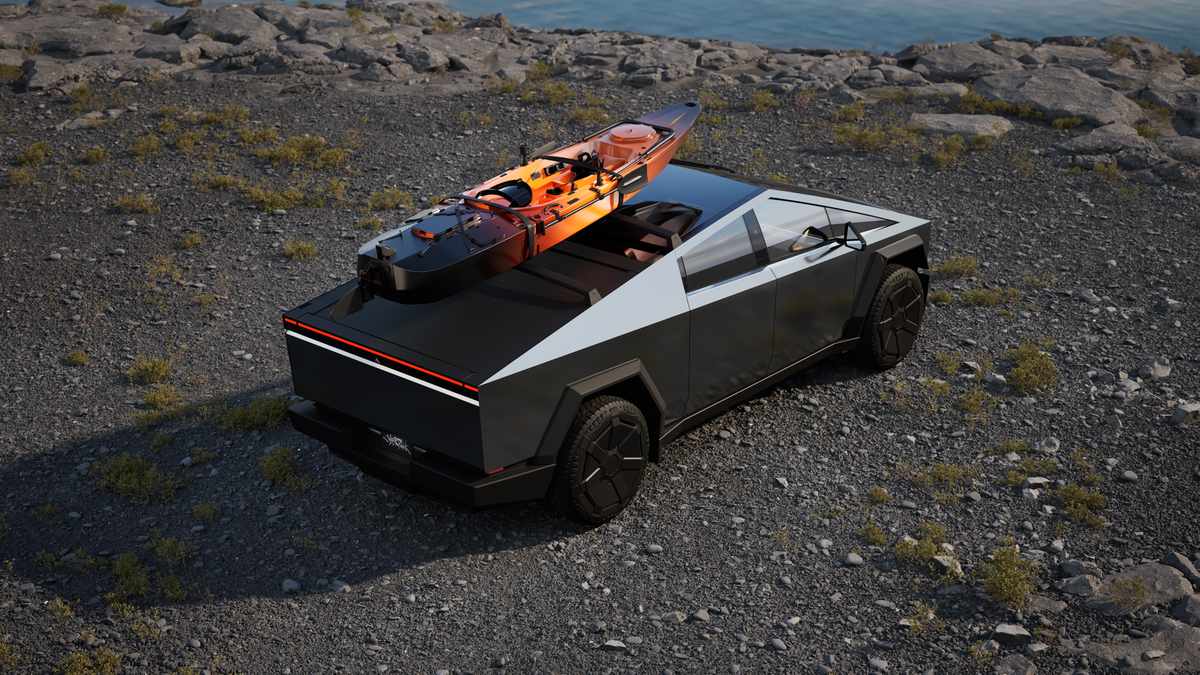
The Cybertruck Beast Edition starts at $103,490, while the Escalade IQ EV demands a minimum of $127,700, both figures that would have seemed absurd even ten years ago. Maybe the real luxury isn't having the latest and greatest, but rather appreciating that most of us already live with more than most of the world could imagine.
If you were in the market for a new electric vehicle which one would you be more interested in purchasing? The Cadillac Escalade IQ EV or the Cybertruck Beast Edition? Leave your comment down below!
Noah Washington is an automotive journalist based in Atlanta, Georgia. He enjoys covering the latest news in the automotive industry and conducting reviews on the latest cars. He has been in the automotive industry since 15 years old and has been featured in prominent automotive news sites. You can reach him on X and LinkedIn for tips and to follow his automotive coverage.
Set Torque News as Preferred Source on Google
Follow us today...






Comments
Here are some reasons why…
Permalink
Here are some reasons why truck or large SUV owners might prefer heavier vehicles:
Towing Capacity: Heavier vehicles, particularly trucks, are designed to tow heavier loads. This is crucial for those who need to transport trailers, boats, or ATVs.
Off-Road Capability: More weight can provide better traction and stability when driving on uneven terrain, such as dirt roads, mud, or snow.
Safety Perception: Some people feel safer in larger, heavier vehicles, believing they offer more protection in a collision.
Cargo Capacity: Heavier vehicles often have larger cargo beds or more interior space, allowing for the transport of larger items.
Driving Experience: Some drivers enjoy the feeling of power and control associated with driving a larger, heavier vehicle.
All valid points. But let's…
Permalink
In reply to Here are some reasons why… by Armen Hareyan
All valid points. But let's face it, other than the last point, most people hardly, if ever use any of the capacity of the size of the vehicle. On the occasional run to Ikea to buy the Offensnuzle couch, a drop by the U-Haul store for a 2 hour van, truck or trailer rental a couple of times is simple and likely less than the difference in annual fuel cost between driving a behemoth or a minimal car that actually fits 98% of one's needs.
Big vehicles are fueled not just by too much gas but mostly by big egos.
217kwh battery charging at…
Permalink
217kwh battery charging at 240v and 48a can go from 0 to 100 in 18 hours. Definitely not two days.
Also, who goes from 0 to 100?
With my Cybertruck the worst I’ve gone is like 26 percent to 100 at home.
Normally I’m like 62 to 80 percent or something.
Exactly. Unless heading out…
Permalink
In reply to 217kwh battery charging at… by David Pavel (not verified)
Exactly. Unless heading out for a road trip, I rarely use even 20% of the battery - 2 hrs charging max, overnight always brings it to 80%
2024 Chev Silverado EV
WT4 Max (212 Kw)
All you did is multiply…
Permalink
In reply to 217kwh battery charging at… by David Pavel (not verified)
All you did is multiply volts by amps to get watts, and decide 217 kWh by 11.52 kW to get 18.8 hours. That’s a theoretical estimate but not anywhere near how charging actually works. You might as well estimate this thing’s top speed and ignore air resistance and rolling friction.
It's the same exact battery…
Permalink
It's the same exact battery as the hummer. I had one for 24k miles and on a 50 amp 220 charger never took 2 days to charge.
You can get a 19.2kW/80A OBC…
Permalink
You can get a 19.2kW/80A OBC optional on the Escalade IQ (standard on new Hummers). So if you have a 100A / 240v circuit, the Escalade IQ can charge in around 12hrs from 0-100%. The 19.2kW/80A OBC should have been standard on ESC-IQ though. It’s about 19 hours w/base 11.5 kW OBC.
That’s y you have to have a…
Permalink
That’s y you have to have a 120v installed at home. I’ve installed the line for several EV owners. It’s the same for all EV’s that use a regular house outlet.
If you have to have a 120v…
Permalink
In reply to That’s y you have to have a… by Fred Brown (not verified)
If you have to have a 120v at home, you’re doing it wrong and you should probably stop installing. 240v minimum, unless you really want it to take several days. Ideally, 240v on a 100 amp breaker to take advantage of the top charging speeds these vehicles can be optioned to support.
I still do not like the body…
Permalink
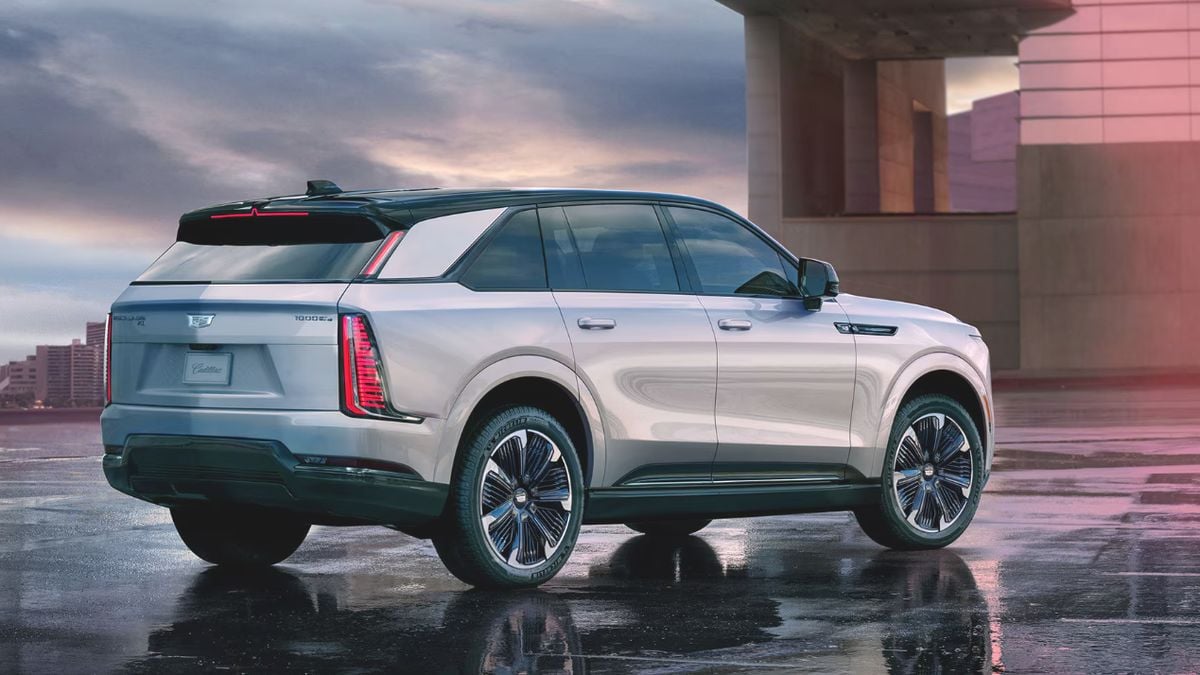
I still do not like the body style on the IQ, it looks great in the front but loses its look in the back end. Maybe just me but I'll stick with the big boy V8.
GM CEO MB is a solid…
Permalink
GM CEO MB is a solid proponent of EV though she seems to miss all its extra baggage that nullifies its virtues with this gargantuan example. As an engineer by background, she should know better.
Soooo...those folks who have…
Permalink
Soooo...those folks who have done the sensible solution of reducing their CO2 footprint by driving a small fuel efficient 3 or 4 cylinder car around town run the risk of being flattened by a botox Gucci Diva in a 9000 pound crusher that represents a huge hole in a mine somewhere on the planet and tons of fossil energy to produce and transport is the answer to climate change?
Maybe many of the people…
Permalink
In reply to Soooo...those folks who have… by Steve B (not verified)
Maybe many of the people buying electric cars do so not out of concern for the environment, but for the performance and/or not relying on gasoline.
What a way to save the world…
Permalink
What a way to save the world!?
Im looking for a lightweight…
Permalink
Im looking for a lightweight sporty ev that can charge in 5 minutes.
Could I interest you in an…
Permalink
In reply to Im looking for a lightweight… by Jay smiles (not verified)
Could I interest you in an electric bike, perhaps? While 5 minute full recharging is just not possible on any vehicle with a significant range, they do offer a different solution, a sub-1-minute battery swap on most of them. Did I mention the whole thing can cost less than 2 grand all in? Just make sure you buy your battery from a reputable dealer. Amazon is NOT a reputable source.