

Let me start with a question. Why does Toyota keep winning? Why does it consistently rank near the top in reliability surveys, resale value charts, and long term durability studies? Why do so many of us know someone with a 300,000 mile Toyota that still runs like it has something to prove?
Most people will say the answer is the Camry. Or the Corolla. Or hybrid technology. Or Japanese engineering.
But after 15 years of covering the automotive industry, test driving hundreds of vehicles, talking to engineers, dealership techs, plant workers, and owners who push their vehicles past 200,000 miles, I can tell you this.
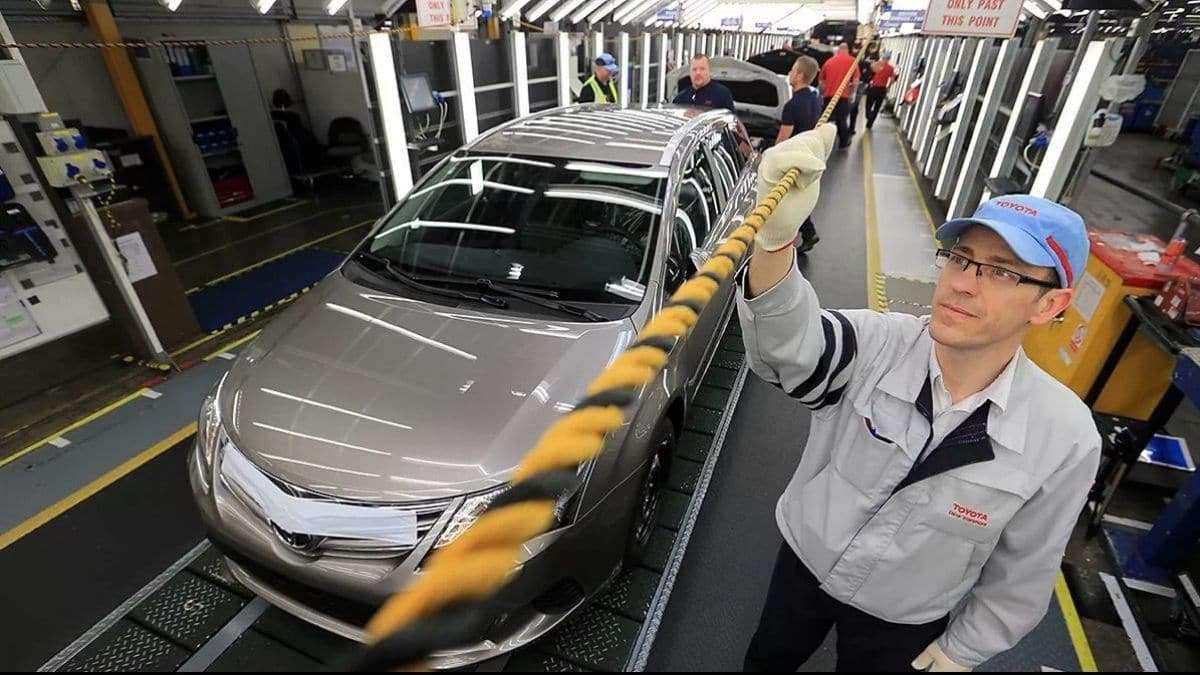
Toyota is not winning because of the Camry. Toyota is winning because of a string. And that string represents something most companies struggle to build.
Toyota's Andon Cord and What It Actually Does
You may have heard about the Andon cord in Toyota factories. It has almost mythical status in business circles. The idea sounds simple. If something is wrong on the production line, a team member can pull a cord and signal for help.
In practice, it is more structured than JJ Eromonsele, a process optimization specialist from Dallas, TX made it sound in a viral LinkedIn explainer.
"Toyota builds 10 million cars a year with fewer defects than almost anyone in the industry. Most people credit the engineers. The robots. Japanese precision. But Toyota's secret weapon isn't technology. It's a piece of string. It's called the Andon Cord. Every single worker on the assembly line, from the 22-year-old who started last month to the 30-year veteran, has permission to pull a cord and stop the entire production line," JJ wrote on LinkedIn.
Modern Toyota plants use a tiered response system. When a team member identifies a problem, pulling the Andon cord first raises an alert. It notifies the team leader and support members. A timer starts. If the issue can be corrected within the takt time, production continues. If not, the line or specific zone can stop to prevent the defect from moving forward.
This is not chaos. It is not random line stoppages. It is controlled, disciplined, and culturally reinforced.
The Torque News story on Toyota’s US operations highlights how Toyota is reviving skilled labor, busting old manufacturing myths, and inspiring changes across American factories by blending lean principles with local workforce development. It shows that Toyota’s success isn’t just about efficiency, it’s about investing in people and elevating craftsmanship in an era when skilled labor is often undervalued.
According to Toyota’s own explanation of its production philosophy, operators can stop the line, and more importantly, they are expected to engage when something is not right. That expectation is rooted in the principles developed by Taiichi Ohno, the architect of the Toyota Production System.
And here is the key point.
It is not about the cord.
It is about permission.
Why Most Carmaker Companies Fear the Cord
In many organizations, slowing down production is a sin. Missing targets is unacceptable. Raising a red flag can feel risky. The unspoken message is clear. Keep the line moving.
Toyota flipped that mindset decades ago.
The Andon system reinforces that quality is built into the process, not inspected at the end. Problems are addressed at the source, not passed to the next station, the next department, or the next customer.
That mindset shows up in the vehicles we drive.
When you look at long term reliability data from organizations like Consumer Reports and J.D. Power, Toyota consistently performs at or near the top. That is not because of a single model. It is systemic.
You do not build 10 million vehicles a year and maintain that level of consistency without a culture that empowers people to speak up.
The Nuance That Matters
Now let us clear something up.
Former Toyota employees have pointed out that the Andon system is not as dramatic as some online posts suggest. It is not a free for all where anyone stops the entire plant at will. There are structured steps, green, yellow, red alerts, team leader involvement, and zone controls.
Dave Martin from the United States, who claims to have worked in Toyota's plant for 22 years, writes, "It's all in interpretation of written material vs. actual practice; after working for Toyota for 22+ years and deeply imbedded in their manufacturing processes across North America including over 30 trips to Toyota Japan operations I understand the purpose and ACTUAL uses of the Andon system very well. In theory, yes, an operator can stop a specific process (not the total line) however, in actual practice there are several fundamental Andon driven steps before a process is stopped (green, yellow, red with team member, team leader etc. interaction) and rarely if ever does the operator (team member) by himself or herself actually does this function. Absolutely the expectation that within Toyota the Andon (among other activities) is utilized to highlight a problem, initiating rapid correction action and employees are expected to engage and support this culturally driven philosophy and activity."
In North American plants, one pull may signal an issue. If it cannot be resolved, further action escalates. The goal is rapid correction within the zone before a defect escapes.
That nuance matters.
But here is the bigger truth.
Whether the cord stops the entire line instantly or initiates a tiered response, the principle remains intact. Frontline workers are not powerless. They are accountable and supported.
And that cultural design is what makes the difference.
What This Means for Toyota’s Future
So how does a piece of string shape Toyota’s future?
We are entering an era defined by electrification, software integration, over the air updates, and increasingly complex supply chains. The modern vehicle is not just a mechanical machine. It is a rolling network of sensors, chips, and code.
That complexity increases the risk of defects.
Look at the growing number of recalls across the industry, including high profile cases involving electric vehicles and advanced driver assistance systems. Even companies known for innovation have struggled with quality control as they scale production.
Toyota’s disciplined manufacturing culture could become even more valuable in this environment.
When you build hybrids like the Prius, which has been refined over multiple generations, you see the payoff of incremental improvement. Toyota did not rush. It refined. It tested. It learned.
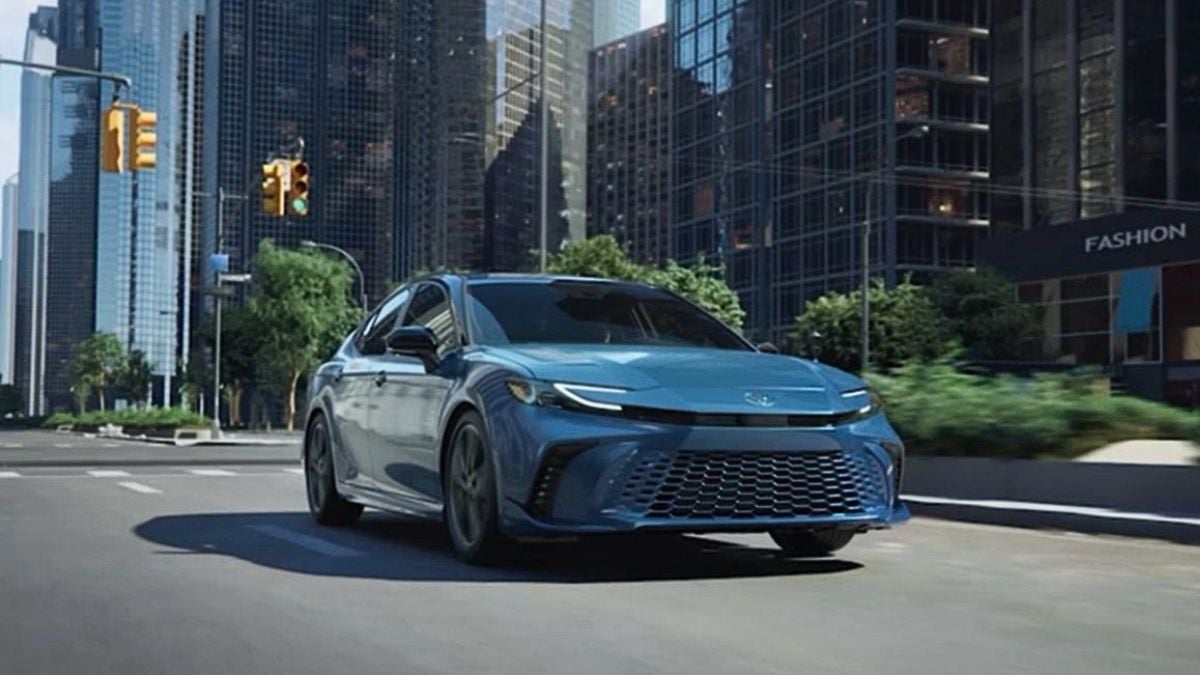
As Toyota expands into battery electric vehicles and solid state battery research, that same philosophy can provide stability in a volatile market.
A recent analysis of the upcoming 2026 Prius digs into how we might configure it around a $40,000 price point and explores three reasons why a plug‑in option may or may not matter for buyers. The piece goes beyond specs to help readers think about real world value and how Toyota balances innovation with customer needs.
And again in another recent article from Torque News covering how Toyota and Mazda teamed up to cleverly sidestep new tariffs, the piece highlights how strategic manufacturing partnerships can preserve competitiveness and value for customers. It shows that smart production decisions are not just about reducing costs, but also about maintaining quality and market presence in a changing global landscape.
Will Toyota move slower than some competitors? At times, yes.
Will that frustrate investors chasing rapid growth? Possibly.
But if the goal is long term durability and customer trust, a culture that stops problems at the source may be the safer bet.
What Car Buyers Should Take From This
You might be thinking, this is interesting, but how does it help me as a car buyer?
Here is how.
When you shop for a vehicle, you are not just buying horsepower, fuel economy, or a touchscreen. You are buying the culture of the company that built it.
A brand that empowers its workers to flag issues early is more likely to deliver consistent quality. That does not mean perfection. Every automaker has recalls. Toyota is no exception.
A recent report from a Toyota specialist documented multiple build quality concerns on late model vehicles and raised a pointed question about whether certain recent model years live up to Toyota’s historical reputation. The piece serves as a reminder that even brands celebrated for reliability must constantly protect their standards, especially as production scales and technology becomes more complex.
But the frequency and severity of issues often reflect deeper organizational habits.
If you are researching Toyota reliability, Toyota resale value, or Toyota long term ownership costs, understanding the manufacturing philosophy behind the badge adds context. It explains why so many Toyota owners report low maintenance costs over a decade or more.
It also explains why used Toyota prices often remain high. The market trusts the process.
The Human Lesson Behind Toyota's String
Now let me zoom out.
This is not just about cars.
The Andon principle applies to families, businesses, and personal decisions.
How often do we see something that is not right and stay silent because speaking up might slow things down or create tension?
How often do small issues compound because no one felt empowered to say, this needs attention now?
The moral here is simple.
Do not pass along defects, whether in products, work, or relationships.
If something is not right, address it early. Support others when they raise concerns. Create environments where honesty is rewarded, not punished.
Toyota’s string works because it is backed by culture. Without that cultural reinforcement, it would be just another tool hanging from the ceiling.
Is This Really the Secret?
So is a piece of string really why Toyota is winning?
Not literally.
The Camry matters. The Corolla matters. Hybrid leadership matters. Engineering excellence matters.
But the string represents the system behind all of it.
In my years covering the industry, I have seen flashy launches, bold claims, and dramatic product reveals. Some brands chase headlines. Others chase quarterly numbers.
Toyota quietly refines processes.
That does not always make for exciting news. It does make for durable cars.
And in an industry where trust can be lost in a single recall cycle, that discipline may be Toyota’s most powerful competitive advantage.
Now I want to hear from you.
Have you ever owned a Toyota that impressed you with its long term reliability, and do you think manufacturing culture played a role in that experience?
And in your own workplace or business, do people feel empowered to stop the line when something is not right, or is speed valued more than quality?
Share your experience in the comments below. I read them all, and your story might help someone else make a better decision.
About The Author
Armen Hareyan is the founder and Editor-in-Chief of Torque News and an automotive journalist with over 15 years of experience writing car reviews and industry news. Now based in the Charlotte region (Indian Land, SC, he founded Torque News in 2010, which since then has been publishing expert news and analysis about the automotive industry. He can be reached at Torque News on X, Linkedin, and Youtube. Armen holds three Masters Degrees, including an MBA, and has become one of the known voices in the industry, specializing in the landscape of electric vehicles and real-world stories of actual car owners. Armen focuses on providing readers with transparent, data-backed analysis bridging the gap of complex engineering and car buyer practicality. Armen frequently participates in automotive events throughout the United States, national and local car reveals and personally test-drives new vehicles every week.
Set Torque News as Preferred Source on Google
Follow us today...




Comments
The Pontiac Fiero plant used…
Permalink
The Pontiac Fiero plant used Edwards Deming's quality principals and also allowed workers to stop the line. The quality was so good that members of the Bowling Green Corvette plant toured the Pontiac plant for ideas. Since the car was a threat to the Corvette, Chevy did what they could to get the Fiero cancelled but applied the same space frame technology to the C5 in 1997. The 345 hp C5 could only match the 0-30 time of the 500 pound lighter, 140 hp Fiero GT (2.2 seconds). It is for this reason that I don't like Corvettes. It only took Chevy 32 years to come up with an answer to the 1988 Pontiac Fiero GT.
Great story, Armen. This…
Permalink
In reply to The Pontiac Fiero plant used… by Jeff Warg (not verified)
Great story, Armen. This past summer, I visited two Toyota plants and saw that quality control string in action first-hand. More impressively, I visited a local high school where vocational school students were training on auto manufacturing methods. They have the string right there in the high school classroom.
Retired Toyota Master…
Permalink
In reply to The Pontiac Fiero plant used… by Jeff Warg (not verified)
Retired Toyota Master Technician here, once at Tech update school we learned about GM setting up an assembly plant and their first attempt at "Kaizen" which means, do not send your problem to the next worker- not an exact translation but you get the idea. A GM production manager asked "Where is the lot where you store the broken cars that came off of the line?" A Toyota rep, pointed to a tiny 4 bay garage in the corner of the lot near the assembly line exit. The GM manager asks again " Where do you keep the broken cars?" The Toyota rep again points to the tiny garage and explains "Every associate has the ability to stop the line to repair any defects, but that if that little garage has more than 2 cars in it, the entire line is shut down until the defect is found and fixed." That is another reason why the products are such high quality. I won't say that Toyotas don't break, hell I wouldn't have had a job if they didn't, but when comparing to other products, they simply break less than the others, and in my opinion, they were the easiest to repair.
I have had 4 Toyotas in the…
Permalink
I have had 4 Toyotas in the last 22 years and I absolutely LOVE them. The long term reliability is Super important to me. I just purchased a 2024 Toyota Camry SE a few weeks ago. I am in awe with my purchase and probably will never drive American vehicles again. I would tell anyone to purchase Toyota because you can drive them for many many years to come. It is an excellent investment. I am glad to have read the article about the Andon string in the manufacturing plants. Good to know.