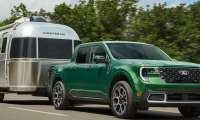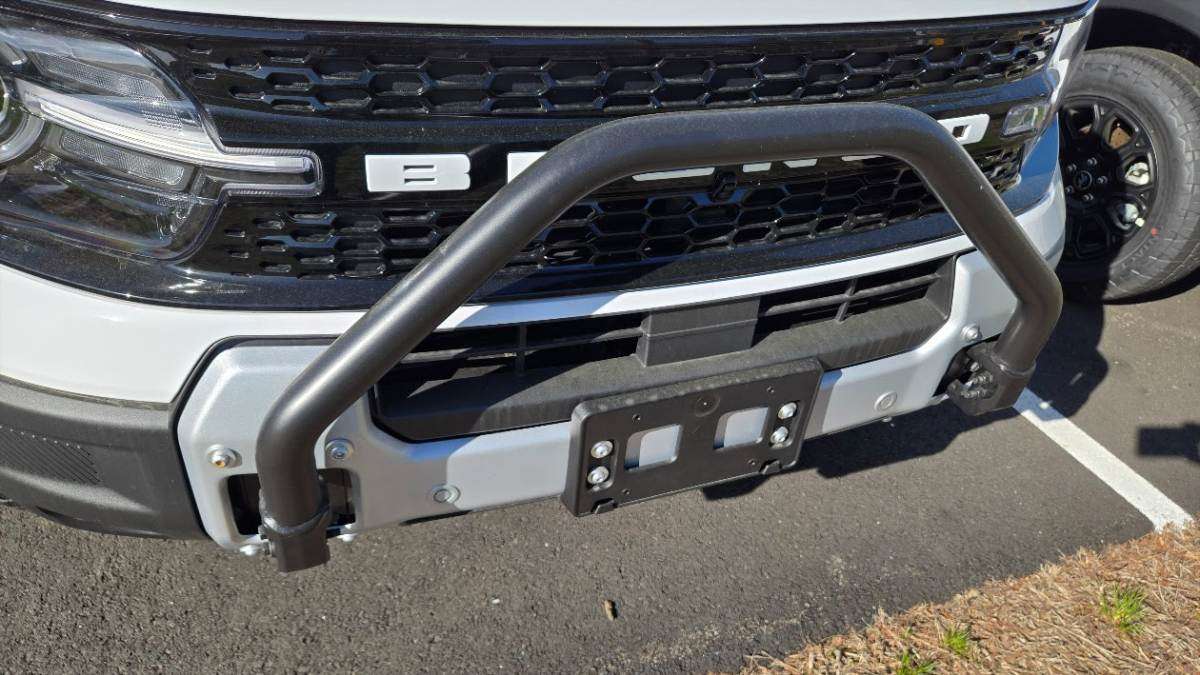

If you are a fan of vehicles like the Ford Bronco Sport and F-150, you know that they look pretty tough with front-mounted bars. These bars go by various names:
Bash Bars
Bully Bars
Brush Bars
Grille Guards
Bull Bars
Safari Bar
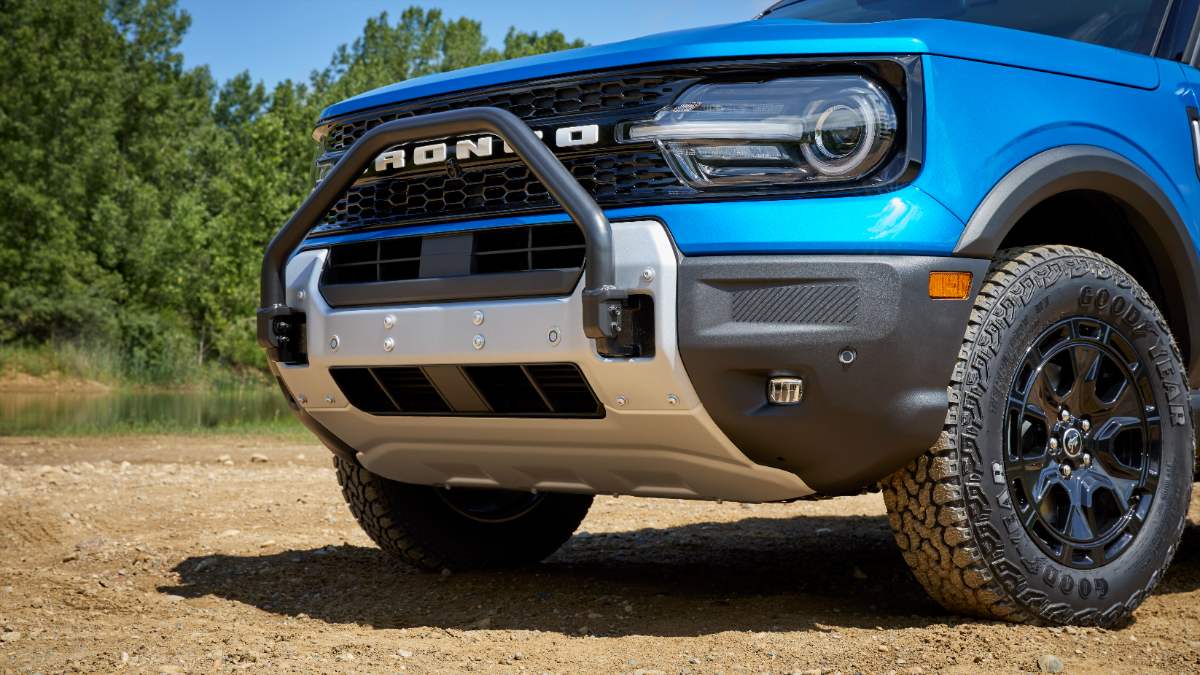
The bars serve many purposes, and nothing we will offer in this story discounts their usefulness. Even the most basic bars can prove very handy for mounting aftermarket lighting. What we want to explore in a bit more detail, and provide expert and real-world owner insights on, is whether they actually help when one hits something. Like a deer, a turkey, or some brush on an off-road trail.
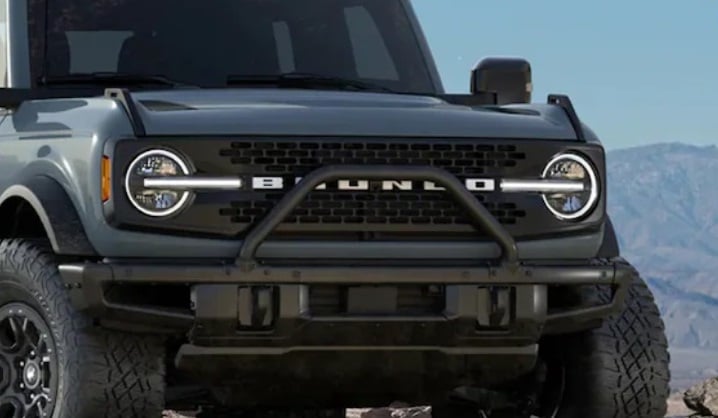
Decorative vs. Functional - Front Mounted Bars
One way to separate the various bar styles offered for SUVs and pickups is by their intended function. Bars like those offered on the Ford Bronco Sport and Bronco don’t cover the headlight areas at all. This is one of the most expensive parts of any vehicle to damage in a minor impact. With no coverage over the lighting assembly at the front corners, the bars are not intended to be fully protective.
The bars that rise up and then turn inward toward the center of the grill, leaving open much of the front fascia, are also not helpful in situations where one is forced to drive through brush that is across an off-road trail. They will not prevent scratches and possible cracking of the front fascia plastics, since they will not cover the top corners of the front of the vehicle.
Biggest Benefit - Preventing the Gentle, but Expensive Love tap
There is one way in which these bars, intended for aesthetics and possibly for mounting accessories onto, do help. Imagine parking in a lot nose-in, and your vehicle is facing another spot. If vehicles move in and out of that spot while you are parked in it, they may accidentally nudge or bump your vehicle. If they have a high-mounted bumper, they may miss yours and could damage the grill or other components. A bar like those supplied by Ford would help in this scenario by providing a tougher point of contact. Enough that the other driver would then stop and pull back a bit. Here, even a bar with minimal coverage could save the day.
Are Bars Simply Damage Multipliers?
One common nickname in the vehicle repair industry for bars on the front of a vehicle is “claim multiplier bars.” The name implies that in a real collision, the bars are just one more thing to replace. They may also transmit forces to the vehicle structure that the crumple zones were designed to absorb better. In severe crashes, they won’t help and could add to your expensive repair bill. A highway-speed impact with a large animal like a deer is not what these bars are designed to handle. Also, if they attach to stamped sheet metal, there is little likelihood that the component won't be bent and damaged as well.
Collision Repair Experts and Owners Agree On What Type of Bar Works Best
We found a lively discussion on this topic on a Facebook Ford vehicle club. In the club discussion, the general consensus was that these bars are mostly decorative. However, one member said:
The bullbar I had on an F-150 saved me thousands on repairs. I hit a deer doing 70 MPH on the interstate, and it flipped that deer 3 times. It saved my truck and probably myself from being totaled.
A professional collision repair estimator we spoke with concurred with this owner. He told Torque News that not all vehicles and not all bars are equal. On a full-frame truck like the F-150, a large, full-covering front protection bar system can help with many scenarios. This estimator, who preferred not to be quoted by name as part of his company's policy, told us that “The heavy-duty bars on trucks like Freightliners and Kenworths do sustain damage in an animal strike, but they protect the hood and the cooling system. Repairing the damage to the bars can be quite pricey, though. There is no free lunch."
What is your opinion on protective bars on SUVs and pickups? Do you think they serve any real purpose, or are they simply a useful tool in an imaginary zombie apocalypse type of situation? Tell us in the comments below.
John Goreham is the Vice President of the New England Motor Press Association and an expert vehicle tester. John completed an engineering program with a focus on electric vehicles, followed by two decades of work in high-tech, biopharma, and the automotive supply chain before becoming a news contributor. He is a member of the Society of Automotive Engineers (SAE int). In addition to his fourteen years of work at Torque News, John has published thousands of articles and reviews at American news outlets. He is known for offering unfiltered opinions on vehicle topics. You can connect with John on LinkedIn and follow his work on his personal X channel or on our X channel. John employs grammar and punctuation software when proofreading, and he sometimes uses image generation tools.
Top of page image by John Goreham. Two additional images courtesy of Ford.
Set Torque News as Preferred Source on Google
Follow us today...