
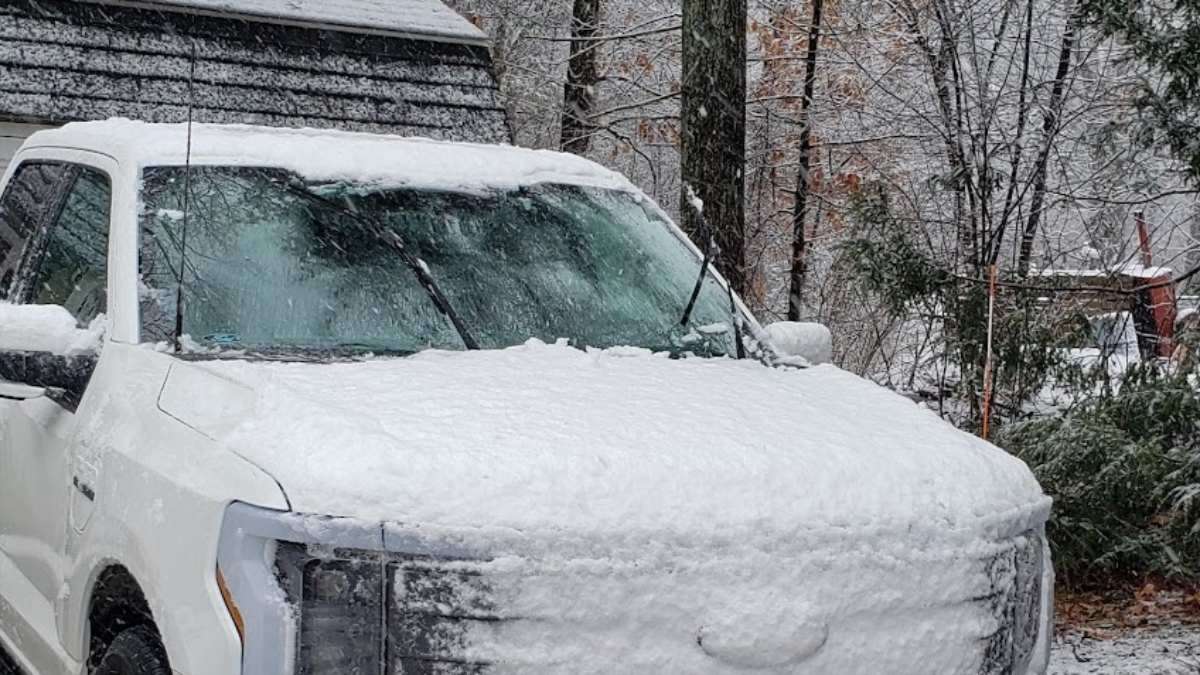

Cleaning your windshield isn’t just for a more pleasant drive; it’s a downright safety requirement in cold weather. The washer fluid is key to this process. Use the wrong fluid, and you’re up a creek without a paddle. Even with the right fluid, the washer system may not function in some situations. Let’s see what this Ford F-150 owner posted seeking help with this common challenge:
Every once in a while, my washer fluid won’t come out, even though it’s full of fluid. Could there be air in the line or something?
If you drive long enough, this will inevitably happen to you. We can jump right in and answer one of the questions this owner is asking. No, it is not air that is the problem; it is liquid water that has now turned to ice. Here is how a few fellow owners answered that part of the question:
CJ - “Lines are frozen. Happened to my 15' all the time.”
Mike - “Froze at the nozzles!”
James - “It’s frozen at the nozzle. My 2018. Does it when it's really cold. And I use the -25 purple (lowest temperature rating) washer fluid.”
Ethan - “Mine are normally frozen all winter. Makes for interesting road trips on salty roads.”
Mike - “It might be frozen in the tank.”
Justin - “Mine does this too when it gets -5⁰C and below, even when I use winter washer fluid.”
Ford F-150 Washer Fluid System Freeze Ups
These owners know from experience that the washer fluid system of a Ford F-150 is not perfect. The fluid can freeze, or water can freeze the lines in such a way that the system won’t spray. While the F-150 is certainly not alone in this, it isn’t an acceptable excuse, since Ford trucks are supposed to be tough and capable winter vehicles.
How To Prevent Frozen Washer Fluid Nozzles
There are many ways to help prevent washer fluid system freeze-ups. We will start with the most obvious and work our way down
1) Park in a carport or a garage - This prevents the nozzles from being coated in ice.
2) Avoid the car wash on very cold weeks - Washing your truck is a great idea, but do it in moderation during cold snaps. Stop washing vehicles when temperatures approach the 20F mark. This helps prevent frozen locks and doors as well.
3) If you wash your car, always squirt the windshield fluid as you exit. This purges the wash water out of the nozzles.
4) Lift your wipers before ice storms (see top of page image). This makes it easier to access the washer nozzle areas and keeps the wipers from freezing to the glass. Not all vehicles make this easy. With some, you need to use the “service position” feature in your car’s infotainment controls.
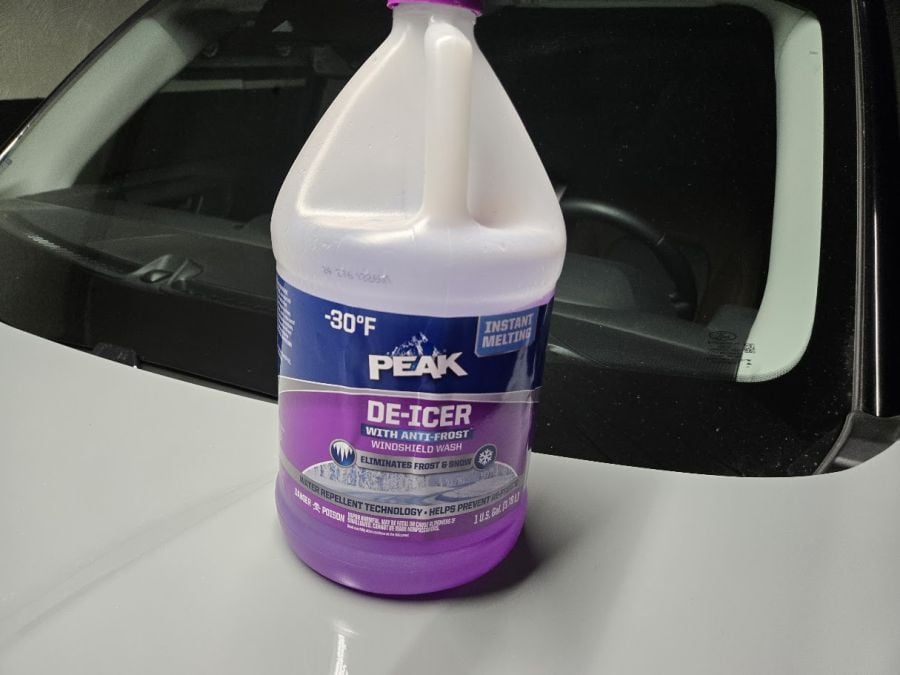
5) Only use the best washer fluid you can buy. Look for -30F rating.
6) After driving in snow or rain in winter, spray the washer fluid once before you shut the truck off. This can help purge any water in the nozzles.
7)Park facing the sun (usually South). This allows the black plastic to absorb heat and hopefully help melt the water in the nozzles.
How to Unfreeze Washer Fluid Nozzles: Dos and Don’ts
Once frozen, getting a system to deliver washer fluid is not easy. First up, do NOT pour hot water on the car’s nozzles. If you hit the windshield, you may stress crack it. You can also damage plastic parts at the base of the windshield. Use alcohol or cold washer fluid from the jug you keep instead. Pour or spray it on the two little nozzles at the rear of the hood.
If you can park inside a garage with some heat, this may help unfreeze the nozzles. In a pinch, you can try a car wash the car at an automated car wash.
A hair dryer can be used (with an extension cord) to direct warm air onto the nozzles. Be careful using a heat gun to do this. They may look alike, but heat guns get a lot hotter and can damage paint and plastics more quickly than you’d expect.
How to Unfreeze Washer Fluid Tanks and Lines
If you accidentally put water or summer-only washer fluid into your tank, your level of trouble will partly depend on the level of fluid in the tank. Obviously, parking inside a warm garage and given enough time, the fluid will thaw, and you can purge it with the washer pump.
If you’re lucky and the fluid in the tank is low, pour in warm washer fluid with a low temp rating. Give it time to thaw the tank and hope the lines can thaw, or use a hair dryer to warm them. If you live near a dealer, you can ask for help overnight. They can park inside and then purge the fluid for you in the morning.
Why Not Heated Nozzles?
Many manufacturers, including Ford, have used heated washer fluid nozzles on and off again. We love this feature, particularly if the tank is also warmed. However, with every new system comes one more possible point of trouble. If I were the designer, I’d heat trace the whole system. As soon as that was in the public though, any cracked windshield would be blamed on the warm fluid hitting the glass.
What suggestions can you offer? Tell us your ideas in the comments below.
John Goreham is the Vice President of the New England Motor Press Association and an expert vehicle tester. John completed an engineering program with a focus on electric vehicles, followed by two decades of work in high-tech, biopharma, and the automotive supply chain before becoming a news contributor. He is a member of the Society of Automotive Engineers (SAE int). In addition to his fourteen years of work at Torque News, John has published thousands of articles and reviews at American news outlets. He is known for offering unfiltered opinions on vehicle topics. You can connect with John on LinkedIn and follow his work on his personal X channel or on our X channel. John employs grammar and punctuation software when proofreading, and he sometimes uses image generation tools.
Images by John Goreham
Set Torque News as Preferred Source on Google
Follow us today...





Comments
When Temps drop below 15f, I…
Permalink
When Temps drop below 15f, I ad half a bottle of isopropyl alcohol to a gallon of washer fluid and never had them freeze
Great tip, thank you, Ryan
Permalink
In reply to When Temps drop below 15f, I… by Ryan (not verified)
Great tip, thank you, Ryan
In my '14 F150, the ww pump…
Permalink
In reply to Great tip, thank you, Ryan by John Goreham
In my '14 F150, the ww pump sprays just fine, but the internal check valve has failed to block backflow, and now allows fluid to drain back into the tank. Any water on the nozzle will get pulled into it. And then freezes, blocking spray until it thaws.
I added a separate check valve, between tank and nozzles, and all is ok again.
Is this really a story?…
Permalink
In reply to When Temps drop below 15f, I… by Ryan (not verified)
Is this really a story? Seriously
Right!? In other news,…
Permalink
In reply to Is this really a story?… by W. Tf (not verified)
Right!? In other news, reports say the sky is blue....
It's so common on the 2016 …
Permalink
In reply to When Temps drop below 15f, I… by Ryan (not verified)
It's so common on the 2016 (I'm sure other year models too) that Ford had/ TSB to replace an inline check valve. Home remedy is to drill out the check valve, I think I used 1/8. Or remove it and replace with an inline connector. So there is now is a 3 millisecond delay from when I push the stick for washer fluid. At least they now work.
I use gas line anti freeze…
Permalink
In reply to When Temps drop below 15f, I… by Ryan (not verified)
I use gas line anti freeze it's the same thing that they put it windshield wash for $4.00 a gallon, but I was wondering if a 12 volt heating pad would work, maybe with a temperature sensors
For the last 20yrs, I have…
Permalink
In reply to When Temps drop below 15f, I… by Ryan (not verified)
For the last 20yrs, I have used only *wintergreen rubbing alcohol* for my vehicles;
Once the winter temperatures are Consistently below 35degrees
Until spring....
Even when Equipped with "heated washer jets"
Never an issue, and never any damage to vehicle paint.
Any Family Dollar type store, has larger bottles for only $2.99
Each fall, I purchase bottles.
Here in michigan, the Least costly washer fluid costs $6.99 each...and does NOT last as long!
I always put 91% alcohol in…
Permalink
I always put 91% alcohol in with my washer fluid and it never freezes up.
Hey, I thought I was the…
Permalink
In reply to I always put 91% alcohol in… by Dave (not verified)
Hey, I thought I was the only 1 that does that. Lol. Not, to put anyone decisions down but I HATE EVs. My friends who are almost all doctors ( im retired surgeon) constantly asking when I buying EV. ESPECIALLY a Tesla. I specially like when they mention hideous cybertruck. I ALWAYS have same answer. Makes sense buy a truck that EVERY time I see it I vomit. I am thinking about a RAM PROMASTER. 660 miles gas and battery. LOVE IT!! EVERYONE says range doesn't matter. They lie to others and themselves UNTIL IT DOES matter. EVENTUALLY IT ALWAYS MATTERS!!!
I was skeptical about…
Permalink
In reply to Hey, I thought I was the… by Michael (not verified)
I was skeptical about electric vehicles for years, which delayed my purchase longer than it should have. After buying a 2020 Audi e-tron Q8/55 and installing a 240V Level 2 charger at home, I can confidently say the skepticism was misplaced.
I was spending roughly $200 per week on fuel between my F-150 and diesel Range Rover. While ICE vehicles still make sense for long-distance travel, EVs excel for daily driving when paired with home charging.
The financial benefit alone is undeniable—I’ll save over $6,000 in fuel costs this year. If you’re considering an EV, my advice is simple: don’t buy new. A well-maintained 2–3-year-old model with minimal battery degradation delivers the best value.
Hi Michael. We can tell from…
Permalink
In reply to Hey, I thought I was the… by Michael (not verified)
Hi Michael. We can tell from the many capital letters that you feel very strongly about EVs. One of our contributors here is Hande Tuncer, also an M.D. She shares your general feeling about EVs, and about expensive cars in general. She drives a hybrid Toyota Crossover. Prior to that, a Mazda CX-5 same size. She loves the hybrid's 450-mile range, which means only getting fuel twice a month for her needs. Thank you for commenting and for showing off your passion for the topic. Please keep up the comments in the future. They are important to us.
You have to drill out the…
Permalink
You have to drill out the check valve in the washer line. It's a common problem with these trucks. Look it up on YouTube.
If cold weather is forecast,…
Permalink
If cold weather is forecast, I’m in NC, I add rubbing alcohol to my windshield washer fluid tank.
There's a technical service…
Permalink
There's a technical service bulletin from Ford that indicated the washer fluid tubes need to be replaced. I replaced according to the TSB on my 2015 F150 and problem solved.
Thank you, John C, this is…
Permalink
In reply to There's a technical service… by John Czajka (not verified)
Thank you, John C, this is very helpful.
Hello Where did you see the…
Permalink
In reply to There's a technical service… by John Czajka (not verified)
Hello
Where did you see the service bulletin? I am battling with the dealership as I am unable to drive my F150 because the windshield fluid is not spraying, it keeps freezing up. They are unable to repair it.
Its a problem with any car…
Permalink
Its a problem with any car or truck. Had it happen on my 1981 chevy citation and mu 1991 Toyota corolla. Its not normaly that cold where I live but the few times it has gotten that cold, wiper fluid froze up and I was S.O.L. until it thawed or I added warmer fluid to help it thaw faster. Not all wiper fluid is created equal, even when it says its rated for colder weather, or if someone dilutes the fluid when it shouldn't be.
There was a service bulletin…
Permalink
There was a service bulletin from Ford concerning this exact issue. My 2016 F150 had the bulletin performed in 2018, resolved issue.
Does the bulletin cover 2018…
Permalink
In reply to There was a service bulletin… by Tom (not verified)
Does the bulletin cover 2018 F-150s?
What does this have to do…
Permalink
What does this have to do with Ford or the F150? This can happen to any vehicle regardless of who makes it.
Good point, John.
Permalink
In reply to What does this have to do… by John (not verified)
Good point, John.
Try to plan ahead and use…
Permalink
Try to plan ahead and use winter washer fluid unless you live in California🫏💩🕳, where they outlawed winter washer fluid.
Pour half a bottle of HEET…
Permalink
Pour half a bottle of HEET in washer fluid tank in late Fall.
Make sure to clear the cowl…
Permalink
Make sure to clear the cowl area at the base of the windshield. This accomplishes two things:
1. Allows the washer fluid nozzles to be clear and thaw in the sun.
2. Keeps the intake area for the hvac clear to allow the fan to move the most air through the heater core.
Very good advice. Thank you,…
Permalink
In reply to Make sure to clear the cowl… by Mark (not verified)
Very good advice. Thank you, Mark.
I keep a spray bottle of…
Permalink
I keep a spray bottle of purple deicer inside and use rv fluid in my suburban.
Thanks for the tip, Rob Mac…
Permalink
In reply to I keep a spray bottle of… by Rob mac (not verified)
Thanks for the tip, Rob Mac. I just ordered two cans from Amazon.
Try cleaning your hood off…
Permalink
Try cleaning your hood off you moron!!
And cleaning the sprayers off!! Duh!
It's really very simple.
No need for name calling.Not…
Permalink
In reply to Try cleaning your hood off… by Richard (not verified)
No need for name calling.Not everyone has the same knowledge as everyone else.
Im sure you have asked at least one question in your?
Or,are you an omniscient being?