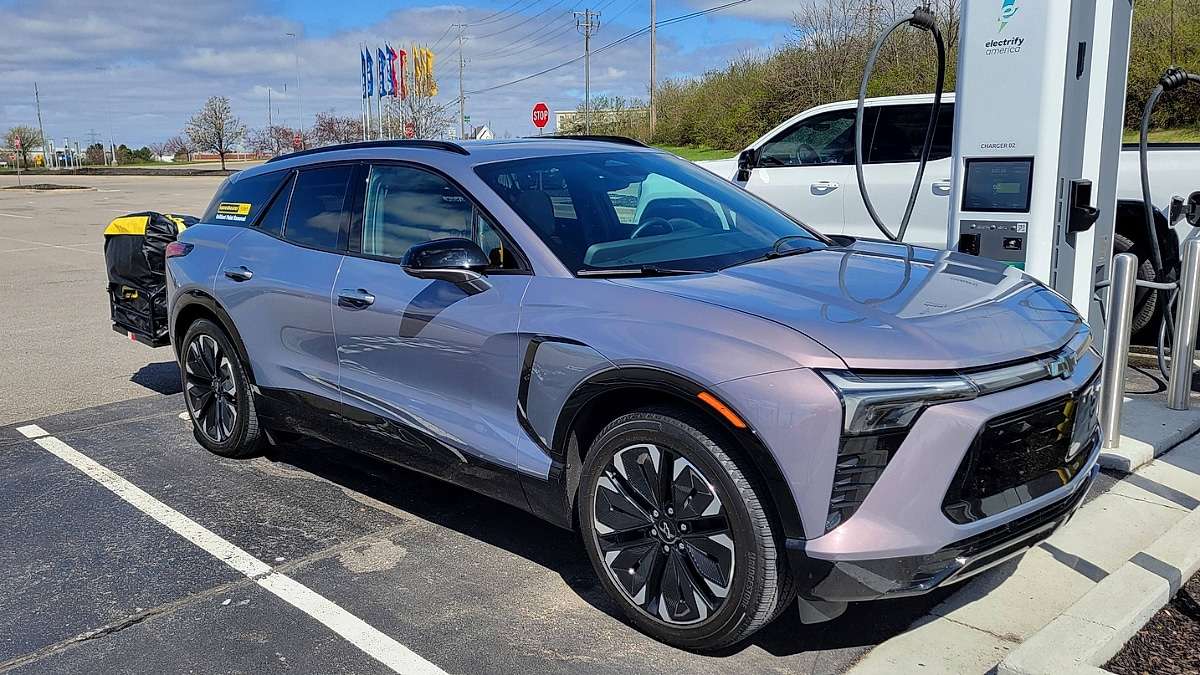

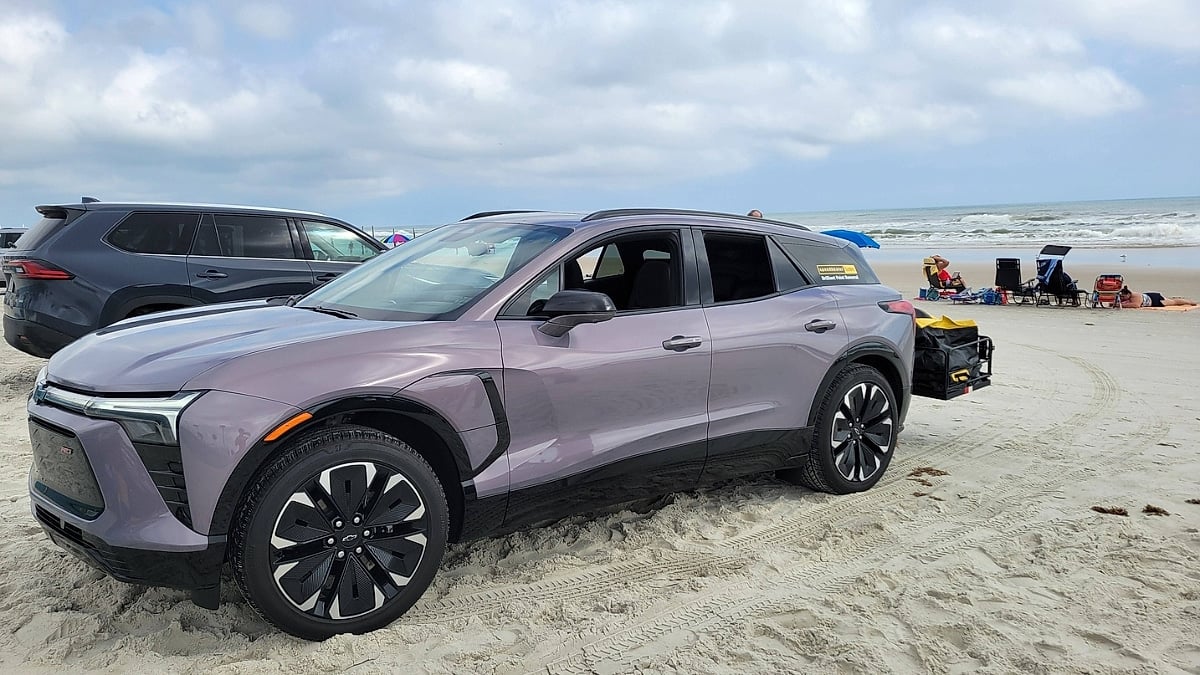
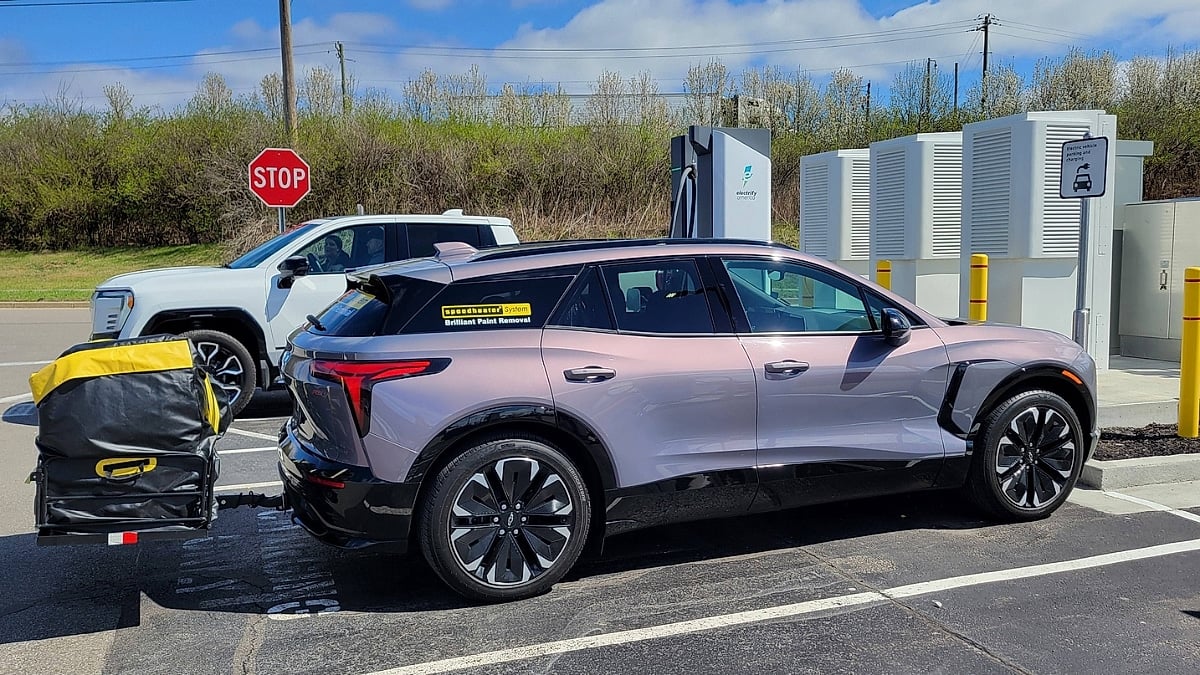
Long-distance EV travel has quietly crossed an important threshold. The question is no longer whether an electric vehicle can handle a multi-state road trip because for many owners, that part is already settled. The more interesting question today is what those trips actually cost once you rely heavily on public fast charging. Christopher Hewett recently shared his experience after completing a 2,650-mile round trip from Michigan to Orlando in his Chevrolet Blazer EV, and his story highlights just how much the conversation around EV ownership is evolving.
“Worried about long trips? Don't be. I just finished a Michigan to Orlando round trip and it was flawless. No range anxiety, no worries, no issues at all even at 75-80 mph and a cargo carrier. The 102kWh pack is perfect for long trips!
Tip: Do a monthly sub for Tesla and Electrify America and it will cover 99.9% of stops with cheaper charging rates. Also have a NACS adapter.
COST: Total Miles Driven: 2650 Charging Costs: $426 Comparable Gas Costs: $463.75 (assumes $3.50 gas and 20 MPG due to 75-80mph speeds and extra 500lbs cargo).”
At first glance, Christopher’s experience feels like a strong win for EVs. A long road trip completed at highway speeds with extra weight and no meaningful charging issues is exactly the kind of scenario that would have been seen as a limitation just a few years ago. But once you look closer at the numbers, the story becomes far more nuanced.
A Road Trip That Quietly Shows How Far EVs Have Come
There’s no way around the fact that a 2,650-mile road trip with zero range anxiety is a big deal. For years, EV skepticism centered around charging availability, long wait times, and the fear of being stranded. Christopher’s experience directly challenges that narrative.
With a 102 kWh battery pack and access to multiple charging networks, the Blazer EV handled sustained 75–80 mph driving while carrying additional cargo without issue. That alone says a lot about how capable modern EVs have become for long-distance use.
It also reinforces what I've already been reporting on, like this Chevy Blazer EV owner who completed a multi-state journey and documented how the platform handles extended driving conditions. The takeaway here is clear that EV road trips are no longer the limitation they once were. Capability is only half the story though.
The $426 Charging Bill That Changes the Conversation
Christopher spent $426 on charging over the course of his trip, and that's the number that shifts the discussion. His comparison assumes a 20 MPG gas vehicle, which puts the equivalent cost at $463.75. Under that very specific comparison, the EV barely comes out ahead.
But that comparison doesn’t reflect how most people actually road trip. Many modern gas vehicles easily exceed 20 MPG on the highway. A 30 MPG sedan drops that cost to around $309, while a 40+ MPG hybrid brings it even lower.
Once you compare this trip to those vehicles, the conclusion becomes much clearer: road tripping in an EV using public fast charging is often more expensive than driving an efficient gas car or hybrid.
The Hybrid Angle That Changes Everything
This is where the conversation becomes more complete. When hybrids enter the picture, the comparison shifts dramatically. We've previously examined scenarios at Torque News where hybrid vehicles can deliver similar real-world energy costs to EVs without relying on charging infrastructure.
That’s important because hybrids often return 40 to 50 MPG on the highway with no charging stops, no planning, and no reliance on infrastructure that isn't completely up to scale. Christopher’s trip highlights this contrast clearly because the EV performed perfectly, but the cost advantage depends heavily on what you compare it against.
Public Fast Charging Is the Real Variable
One of the biggest factors in this discussion is charging location. At home, EVs are inexpensive to run because electricity rates per kWh are lower. On road trips, that changes entirely as drivers rely on fast chargers, and those are significantly more expensive.
That’s why two EV road trips can look completely different on paper. My colleague at Torque News has even reported on a case where a driver completed a 1,200-mile EV road trip for just $134 under very specific charging conditions. That difference shows how sensitive EV costs are to charging strategy, pricing, and availability.
Not Everyone Is Convinced
Christopher’s post also drew reactions from other drivers who focused on time and convenience.
Mike Ivanyshyn pointed out the time factor:
“300 miles max range and at 80% stop and charge you're looking at 5 stops minimum multiplied by 35-40 minute stops from 5-80%. So your 1,150 mile drive takes 3.5-5 hours extra depending on soc, location, preconditions, charger location, etc . I can do that drive on one fill up in my 3 row SUV that gets almost 700 miles to the tank.”
This is a great point. Even if the cost is close, a few extra hours on a long trip changes how the whole drive feels.
Steve Murphy focused on reliability:
“I'm in the middle of a 7hr trip (in a gas car) from my home in northern AL to my beach house in the FL panhandle. I'm currently at 8 hours and have 3 hours to go, but I’ve wasted time at 3 charging stations that didn't work. I can't remember ever going to more than 1 gas station that didn't work. I'll take gas over EV for any trip over 200 miles.”
Jameson Boss brought the discussion back to cost:
“So barely cheaper than a 20 MPG car? Meaning if I’m getting 30 MPG it’s not only cheaper but I don't have to plug it in anywhere and wait. These are not travel cars, they’re daily driver charge at home cars. There’s nothing cheap about paying for fast chargers.”
This really sums it up because once you’re relying on fast chargers, the cost advantage pretty much disappears compared to efficient gas cars and hybrids.
The Blazer EV Shows Both Sides Clearly
What makes Christopher’s experience so valuable is that it shows both sides at once. The vehicle itself delivered exactly what modern EV buyers want. It handled long distances, highway speeds, and real-world conditions without issue.
At the same time, the cost advantage wasn’t as dramatic as many people expect. I've reported on countless owners being happy with their Blazer EV, but that perception can shift once you factor in money. The technology works and there's no one doubting it for the most part anymore, but the economics depend heavily on how the vehicle is used.
Finding Optimal Utility
I think this is where the EV conversation is finally becoming more honest. We’re moving past simple claims and into real-world nuance. Christopher’s trip proves EVs can handle long distances without stress. That part is settled. What’s changing is how people evaluate cost in the real world.
If you can charge at home, especially overnight on cheaper electricity, EVs can still be significantly cheaper to run day to day. For short commutes, predictable driving, and consistent access to home charging, they can make the most sense. Once you take that same vehicle on a long trip and rely on public fast chargers though, the math flips quickly.
Key Takeaways for Drivers
- EV road trips are no longer a limitation: Modern EVs can handle long distances reliably.
- Charging location matters more than anything: Home charging vs fast charging completely changes cost.
- Comparisons define the outcome: 20 MPG vs 40 MPG leads to very different conclusions.
- Hybrids deserve more attention: They offer strong efficiency without charging tradeoffs.
- Ownership decisions are becoming more personal: There’s no one-size-fits-all answer anymore.
We'd Love to Hear Your Voice
Have you taken a long road trip in an EV? Did the charging costs match what you expected?
And if you’ve compared an EV to a hybrid or efficient gas car for long-distance driving, which one actually made more sense for your situation?
Don't hesitate to add your thoughts in the comments below.
About The Author
Aram Krajekian is a young automotive journalist bringing a fresh and analytical perspective to the evolving automotive landscape by reporting on real-world ownership experiences and providing industry analysis. Based in North Carolina, he covers electric vehicles, trucks, and broader automotive trends with a focus on contributing a balanced evaluation. His reporting cuts through brand bias to provide readers with grounded insight into how vehicles perform for everyday drivers beyond marketing narratives.
Aram can be reached on X and LinkedIn for ongoing automotive coverage.
Image Credits
The “Chevy Blazer EV Group” Facebook group.
Set Torque News as Preferred Source on Google
Follow us today...