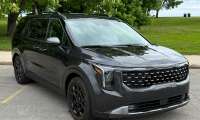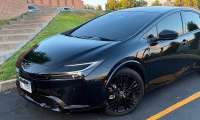

We all know that vehicle repair has skyrocketed in price over the past decade as vehicles become ever more complicated and parts ever more sensor-packed. Still, we didn't expect that a low-speed nudge of a mirror could cost more than $1,400 on our beloved Toyota hybrid. Here’s how it all went down, and why we wish now that our vehicle didn’t have so many unused features.
A Two Mile Per Hour Mistake
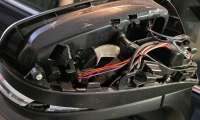
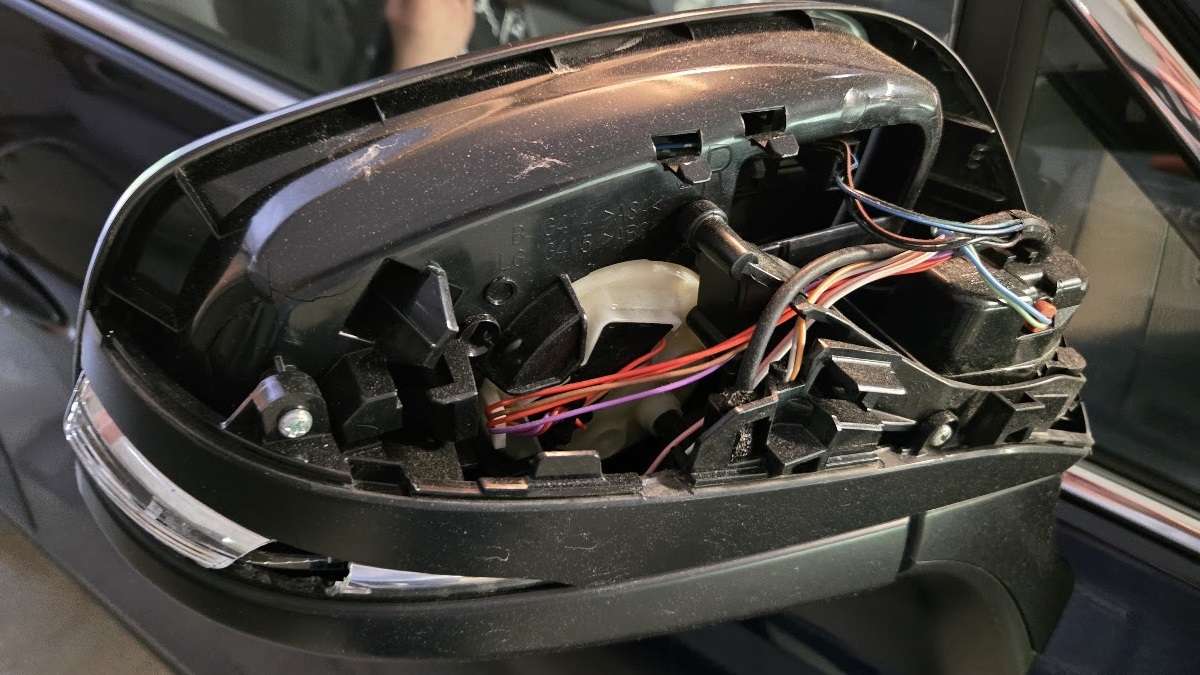
The damage happened in the least dramatic way possible. Backing out of a garage, slowly, with a little too much angle on the wheel, our Venza Hybrid’s passenger side mirror caught the door frame. There was a crack; part of the mirror flew off like a fighter jet ejection seat; we heard a clatter, and then a mirror housing looking as if it had been hit with a bat.
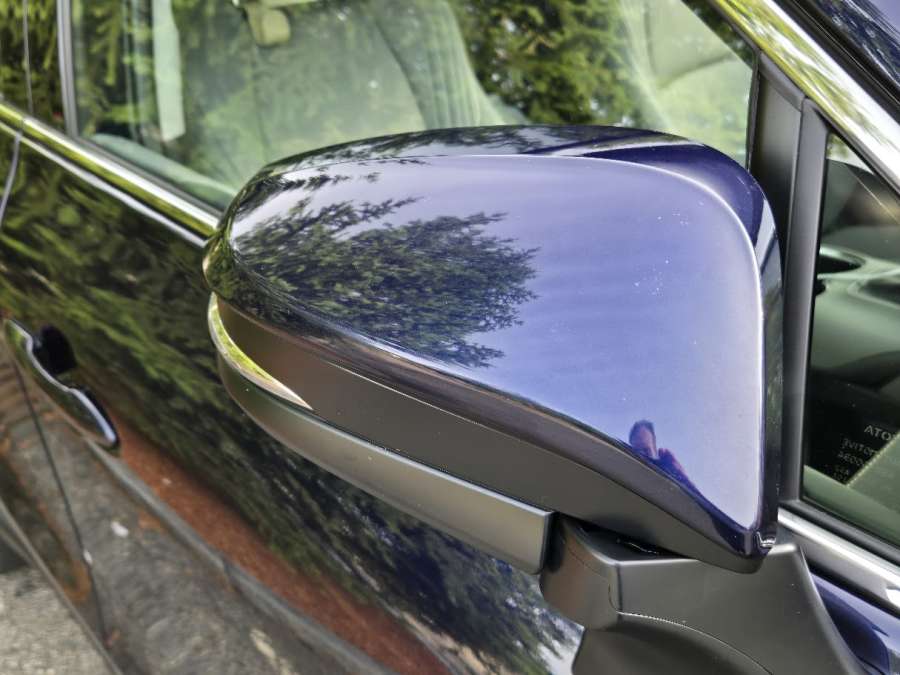
The one piece of good news showed up immediately. The painted cap, the colored shell that matches the body, popped cleanly off the assembly instead of shattering. It had a scuff on one edge and nothing more. That cap is a separate serviceable piece on most Toyota mirrors, and being able to reuse it took a paint-and-blend operation off the estimate before we ever called anyone. On a repair like this, paint work alone commonly adds hundreds of dollars, and matching a metallic or pearl finish can push that higher.
The mirror itself was done for. The glass was cracked, the housing was split, and the internal mechanism no longer held position. That part had to be replaced.
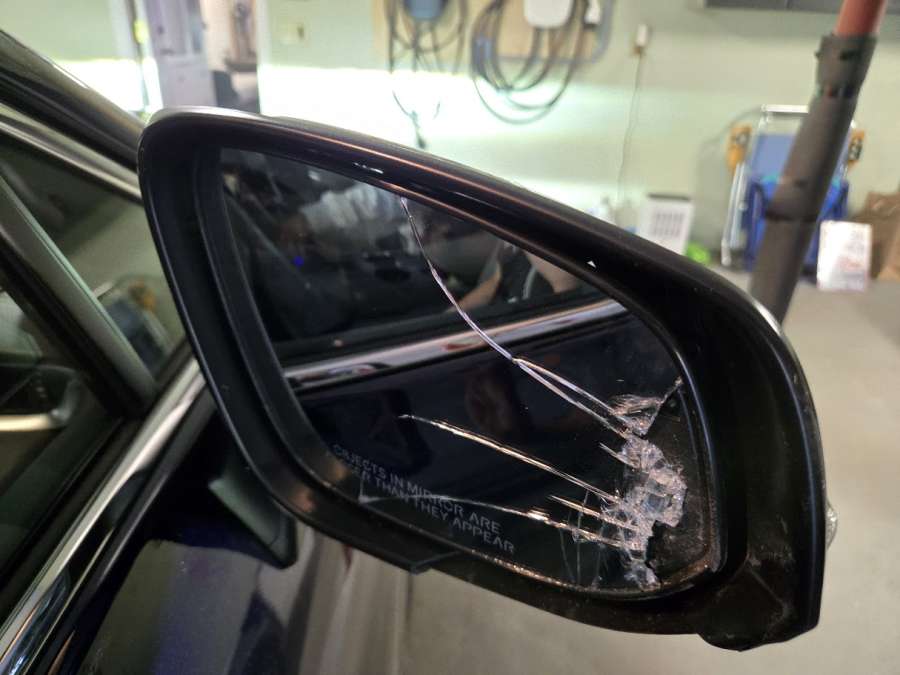
The Affordable Mirror That Did Not Work
Our first stop was a good independent shop nearby. They found a new replicant replacement assembly quickly online, and the price was only $150. At that point, we thought the whole thing will be over and forgotten by day’s end. Not.
Then we looked at what the part actually was. It powered, it heated, and it folded. What it did not have was the blind spot monitoring hardware or the lane departure indicator that lives in the mirror on this car. On modern Toyotas, that little amber triangle in the corner of the glass is not decoration. It is the driver-facing output of the Blind Spot Monitor system, and the associated hardware is packaged into the assembly. Install a mirror without it, and you have permanently deleted a safety feature from the vehicle, along with any chance of a clean scan afterward.
The hardest part for us is that we don’t use either “feature.” The Venza has no blind spot for those of us who know how to properly use our mirrors and can turn our heads. The lane departure is just a hassle on our commutes because we’re constantly swerving safely into the oncoming lane to bypass walkers, dog walkers, bikers, and monster potholes.
Our local shop was fantastic. It was Christmas Motors Metro Boston if you want to find them. We phoned ahead, and they invited us to stop by. After a quick look, they suggested that we buy the part online ourselves for $150. We did and returned with it. The visit took place entirely in the parking lot. A mechanic opened the door, pulled the interior door card off, removed four screws, and unclipped two electrical connectors. He then put the new mirror on in about the time it took you to read what I just typed. It all worked great other than the unremovable warning on the dash saying something like, “Hey, dummy, I know you went to the aftermarket for this perfectly functioning mirror and this is a Limited, so you can’t use that part.”
Christmas Motors suggested that we go to the dealer since their cost on the mirror with the two fancy bits we’ve never used in two years of ownership would cost them a whopping $1,200. They would only accept a token amount of money for the time they took to help us. Like lunch money. We are now lifelong fans and will be back whenever we need good help.
Where $1,418 Comes From
The dealer quote for the complete job came to $1,418. Nobody padded it. The number is what happens when a genuine Toyota mirror assembly containing sensing hardware meets dealer labor rates, a diagnostic scan, and the system verification that follows.
This tracks with the broader market. Industry cost guides put OEM replacements for mirrors with driver assistance content commonly in the $500 to $1,200 range and higher on luxury models, with blind spot or camera calibration running roughly $75 to $725 depending on the vehicle and the equipment the shop needs. Diagnostic scanning adds another $100 to $200 when the car stores fault codes or requires electronic verification after installation. Pile those costs together, and $1,418 is the result. For reference, my engineering program at UMass had a $500 per semester tuition rate back in the days of wooden ships and iron automobiles.
Simple Repairs Are Not Simple Anymore
Twenty years ago, this was a Saturday morning DIY job. A side mirror was replaceable glass, a plastic shell, and maybe a small motor. Parts stores stocked them, the part cost less than a C note, and two screws and a clip finished the work. Nobody scanned anything afterward because there was nothing to scan.
Sensors changed that math. Blind spot monitoring, lane change assist, cross traffic alert, and surround view cameras all needed somewhere to live, and the mirrors and bumpers were the available real estate. Those are also the exact parts of a car that meet garage door frames, shopping carts, and parking garage pillars.
AAA studied this several years ago and found that a minor front or rear collision on an ADAS-equipped vehicle could run as high as $5,300, roughly $3,000 more than the same damage on a car without the systems. Windshields tell the same story, because a forward camera behind the glass turns a routine replacement into a calibration event.
None of this is an argument against the technology. Blind spot monitoring genuinely prevents lane change crashes for those unable or unwilling to use mirrors and maintain situational awareness. This story is an argument for knowing what you own. Ask what is inside the mirror before you approve an aftermarket part, save the painted cap if it survives, and set your expectations before the estimate is handed over.
We don't begrudge our Toyota dealer any of what they charged. The dealer offers outstanding service and quality work, plus we want our Toyota to feel like-new for as long as possible. Our insurance deductible is $5K in case that question crossed your mind. We’ve played the low-deductible game in the past and found that actually using our insurance resulted in a premium spike higher than the repair would have cost us.
Remember that painted mirror cap we discussed. It’s one hero of the story. By leaping off during the accident and sticking the landing, it saved us a fistful of dollars and a delay while we waited for it to join the party. The other hero? eBay and a nice importer of replicant mirror that cost $150 new. They took the part back with a full refund minus the freight.
Are you surprised that a mirror repair that could have cost under $200 was seven times higher because the sensors were involved? Tell us in the comments below. Feel free to add your related story.
About the Author:
John Goreham is a 14-year veteran of Torque News. An accomplished writer and a long-time expert in vehicle testing, Goreham also serves as the Vice President of the New England Motor Press Association and has a growing social media presence. He’s also a 10-year staff writer and community moderator for Car Talk. Goreham holds a B.S. in Mechanical Engineering and an undergraduate Certificate in Marketing. In addition to vehicle and tire content, he offers deep dives into market trends and opinion pieces. You can follow John Goreham on X and TikTok, and connect with him on LinkedIn.
Set Torque News as Preferred Source on Google
Follow us today...