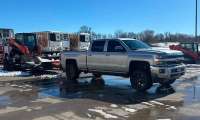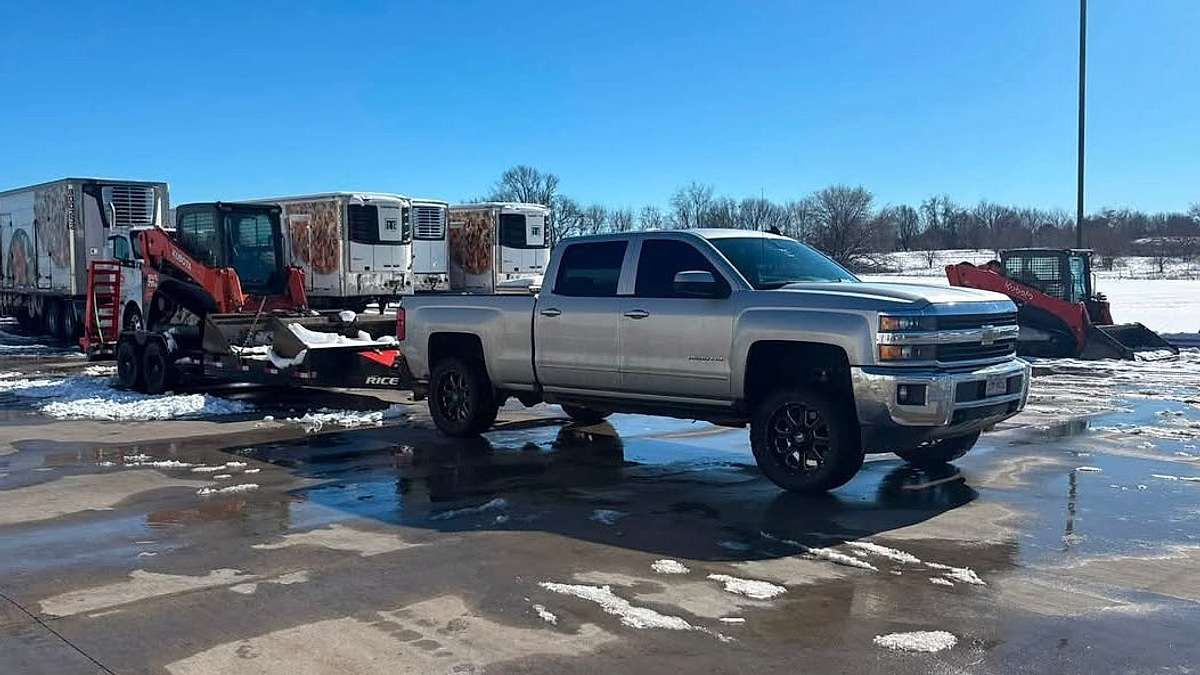

Your heavy-duty truck goes down, a critical job is waiting 20 miles away, and your half-ton daily driver is the only rig left in the driveway.
While a Chevy Silverado 1500 has the raw engine power to pull a 12,000-pound skid-steer and trailer setup, doing so directly violates General Motors’ rear Gross Axle Weight Rating (RGAWR) and tongue-weight safety margins.
Before you hook up that trailer because "you have trailer brakes," we are breaking down the mechanical reality of why this short 20-mile haul risks permanent frame damage and immediate transmission lockup.
The 20-Mile Bind That Blindsides Half-Ton Owners
This is not a hypothetical engineering scenario or a generic towing debate. The issue surfaced directly in the 2019–2026 Chevy Silverado & GMC Sierra Owners Facebook group.
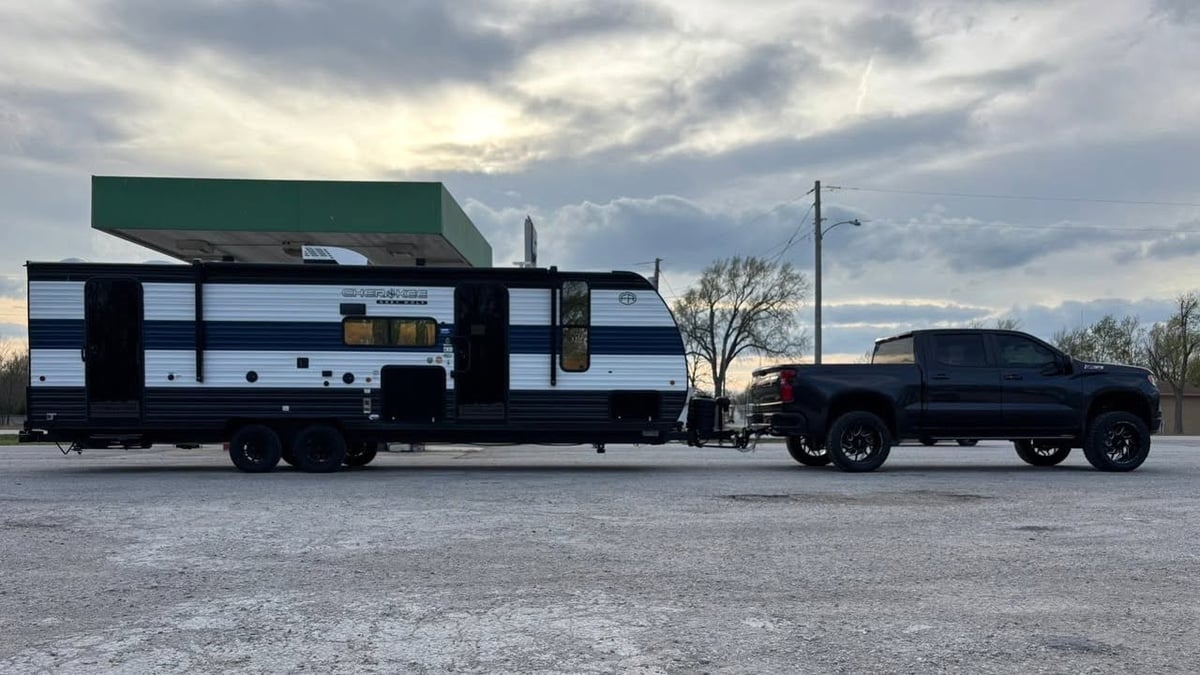
Owner Lupe Herrera Jr. detailed his exact problem: "I’m in a bind. The 2500 is down for a couple of days, but I have to move my skid steer for about 20 miles. Skid weighs about 9,500 lbs, plus trailer and two buckets. You think it’ll be ok with my 1500? I have Trailer brakes. I’m probably going to do it; just want to hear any horrible stories."
When your commercial-grade heavy-duty truck hits a scheduling wall, the pressure to maintain business continuity clouds mechanical logic. The modern half-ton segment has evolved to feel incredibly robust, creating a false sense of security for drivers who conflate engine power with structural capacity.
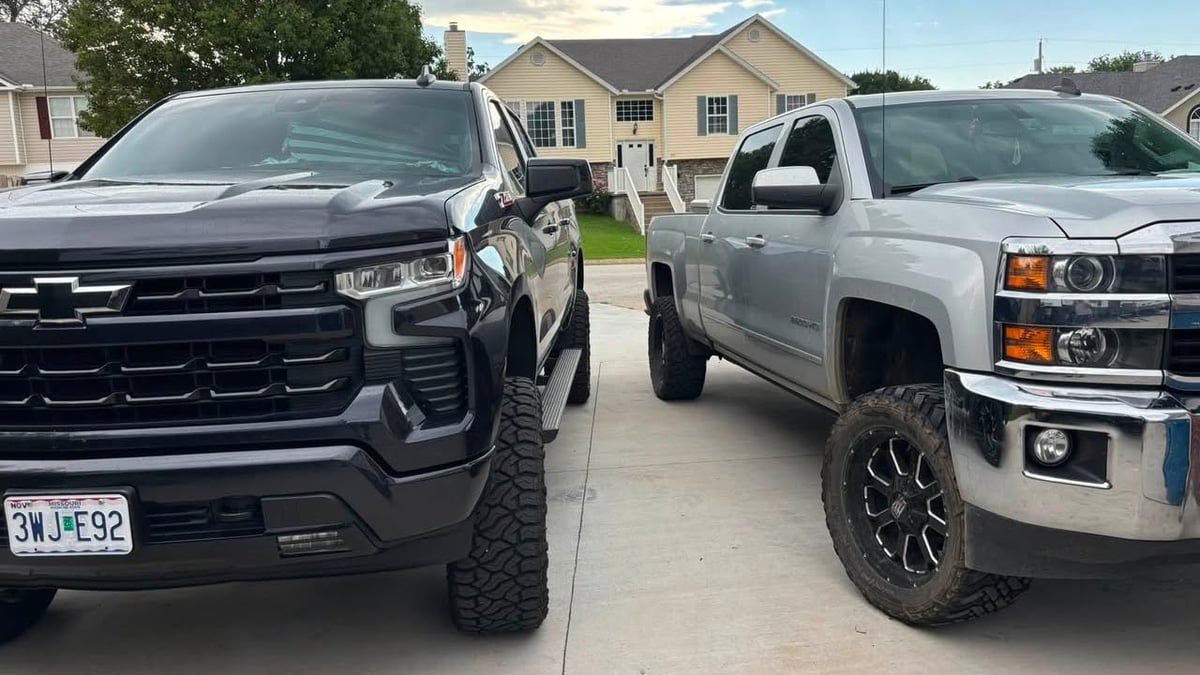
Why the Hidden Math Behind 12,000 Pounds Is Completely Flawed
A standard skid steer weighing 9,500 pounds combined with a commercial tandem-axle trailer and auxiliary attachments easily pushes the true gross trailer weight past 12,000 pounds. While Chevrolet technical literature indicates a maximum tow rating of up to 13,300 pounds for specific properly configured 1500 models, that marketing number is a specialized trailering ceiling achieved only under sterile laboratory testing conditions.
The critical flaw in this real-world scenario lies in the structural payload capacity and tongue-weight distribution, not in raw engine pull. Standard bumper-pull trailers require 10 to 15 percent of the trailer's total weight to rest squarely on the truck’s rear hitch to prevent dangerous high-speed trailer sway.
At a 12,000-pound gross weight, a standard tongue layout exerts between 1,200 and 1,500 pounds of direct downward vertical force onto the rear hitch assembly.
According to official engineering guidelines from the National Association of Trailer Manufacturers (NATM), dropping an unmanaged 1,200-plus pounds directly onto a half-ton receiver hitch without a weight-distribution system instantly overloads the rear suspension geometry.
The Structural Illusion of the Modern Truck Frame
During my three decades of technical automotive consulting, I have regularly evaluated half-ton frames under extreme high-altitude mountain strain.
The hidden story that mainstream automotive media outlets consistently miss is that modern light-duty truck frames are systematically engineered for weight savings and fuel efficiency rather than structural overload margins.
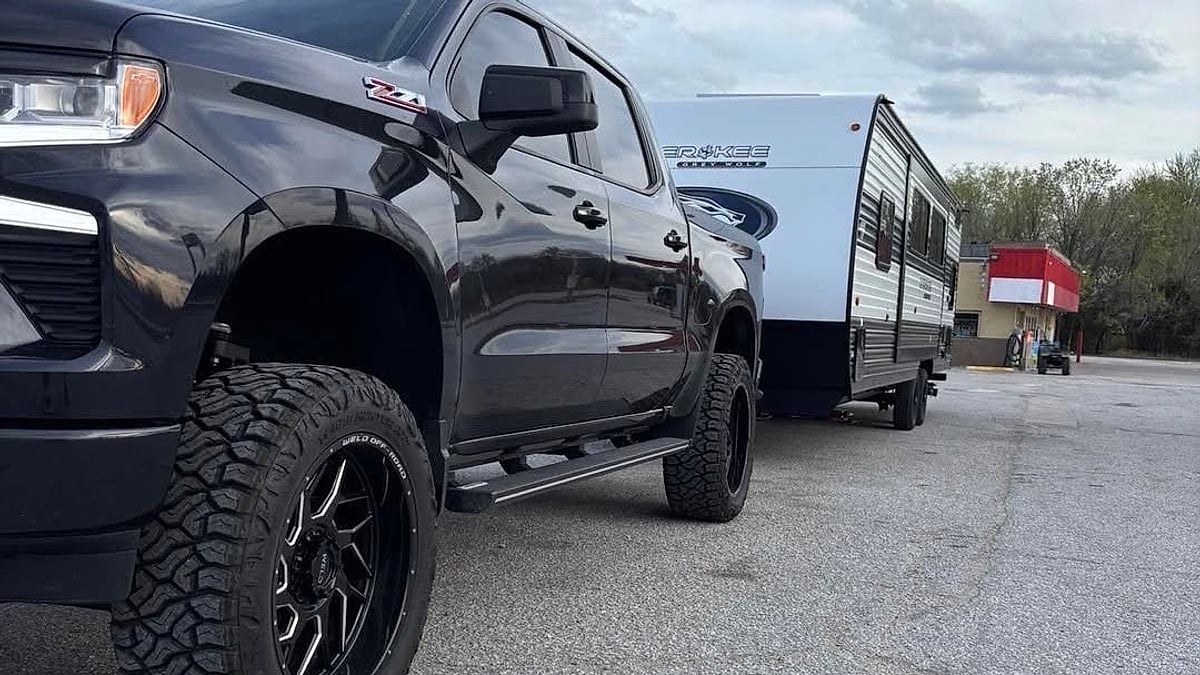
The frame of a modern Silverado 1500 uses high-strength steel tailored specifically to absorb vertical loads within predefined payload metrics. A heavy-duty Silverado 2500HD uses a completely different, thicker-gauge, fully boxed frame section designed to handle high torsional strain and extreme tongue weights without deflection.
When you load a 1500-series truck frame with double its intended real-world tongue capacity, the metal undergoes severe structural stress.
In extreme scenarios, hitting a deep pothole or expanding bridge joint under a 1,500-pound vertical tongue load can deform the frame rails directly behind the rear cab mounts, creating permanent structural damage.
Crushing the Rear Axle Inside the Component Level
The actual component-level point of failure in this scenario is not the engine block or the transmission cooling system; it is the light-duty semi-floating rear axle assembly. In a specialized industry analysis of half-ton drivetrain limits by automotive engineering group Hooniverse, technical tear-downs show that light-duty 1500 platforms traditionally feature smaller-diameter axle shafts and light-duty wheel bearings designed for daily driving comfort.
Unlike a 2500HD’s full-floating rear axle, where the truck's weight is fully supported by the heavy-duty axle housing tubes, a Silverado 1500 features a semi-floating rear axle layout.
In a semi-floating design, the outer axle shafts must simultaneously transmit engine torque and support the vertical weight of the vehicle and its cargo.
Dumping 1,200-plus pounds of tongue weight directly over a semi-floating axle shaft puts extreme bending stress on the outer wheel bearings. This sudden structural overload can cause rapid heat buildup, localized fluid breakdown, and premature bearing race pitting within a matter of miles.
High-Altitude Colorado Realities and Thermal Limits
As a third-generation Colorado resident based in Parker, I consistently use our high-elevation mountain passes such as Vail Pass and Kenosha Pass as ultimate real-world test beds for truck longevity. At high altitudes, braking and acceleration forces are drastically amplified due to steep grades and decreased engine efficiency.
If this owner attempted a short 20-mile haul across a high-altitude corridor with an overloaded half-ton, the dynamic forces would become incredibly dangerous.
Descending a steep grade with a 12,000-pound load behind a light 1500 chassis creates a severe "tail-wagging-the-dog" dynamic, in which the skid steer's momentum can easily overwhelm the truck's smaller chassis.
Even if the trailer brakes function perfectly, a half-ton's smaller brake rotors and light-duty suspension bushings lack the thermal mass needed to stabilize a fluctuating 12,000-pound load during an emergency evasive maneuver.
In my ongoing technical assessments of truck durability, I have seen light-duty suspension bushings completely deform under the severe forward weight transfer caused by heavy braking.
The Hidden Transmission Shock Load Hazard
The engine might have the torque to pull the load off the line, but the internal clutch packs in the 10-speed automatic transmission are not rated for heavy-duty industrial shock loads. When launching a 12,000-pound payload from a dead stop with a light-duty torque converter, internal fluid temperatures can spike rapidly within the transmission valve body.
I have tracked numerous half-ton drivetrain failures where temporary, short-distance overloads caused localized fluid glazing on internal components.
This thermal degradation doesn't always cause an immediate roadside breakdown; instead, it can lead to a delayed mechanical failure that manifests as erratic shifting or internal slip several thousand miles down the road.
For a deeper look into real-world half-ton powertrain dynamics and how these modern configurations compare under load, see my hands-on analysis of the Chevy Silverado TurboMax Towing Wins Over Ford F-150 EcoBoost Owner After 12.6 MPG Real-World Pull.
In that technical study, real-world data demonstrates that while modern light-duty powerplants are highly advanced, their cooling and torque profiles are engineered around specific light-duty consumer weight classes rather than industrial equipment hauling.
What Happens When the Safety Margin is Gone?
Every automotive manufacturer builds an engineering safety margin into their vehicles to account for minor operator errors. However, treating a 4,000-pound structural overload as a minor variance completely bypasses those factory safety boundaries.
According to the official Chevrolet Trailering Guide, exceeding your vehicle's RGAWR or GVWR can compromise vehicle control, significantly increase stopping distances, and void your factory powertrain warranty coverage.
If a structural component fails while operating a vehicle beyond its certified legal door-sticker capacities, the vehicle owner is fully liable for any resulting property damage or insurance coverage denials.
Relying on trailer brakes to solve a fundamental chassis and axle limitation is a dangerous misunderstanding of vehicle dynamics. Trailer brakes slow the load's rolling momentum, but they do absolutely nothing to alleviate the intense vertical bending force exerted directly on the truck's rear axle housing and frame rails.
The Next Critical Towing Question
The next logical piece of information a truck owner needs to consider is how to accurately determine their actual available payload without relying blindly on generic marketing brochures.
To protect your vehicle's frame and drivetrain from long-term fatigue, you must subtract the weight of all passengers, aftermarket accessories, and your trailer's real-world tongue weight directly from the specific cargo capacity printed on your driver-side door jamb sticker.
Structural Reality Versus Short-Distance Convenience
Attempting to transport a commercial-grade 12,000-pound skid-steer combination with a half-ton Silverado 1500 is a serious mechanical gamble that compromises the structural integrity of the frame and the rear axle's longevity for short-term convenience.
The correct, budget-friendly solution to a temporary heavy-duty vehicle breakdown is to rent an appropriate 3/4-ton commercial vehicle or hire a dedicated flatbed transport service for the afternoon.
It’s Your Turn: Would you risk a short 20-mile haul with an overloaded half-ton truck to finish a job, or would you wait for a heavy-duty rig to arrive? Tell us what you think and share your personal towing experiences in the red "Add new comment" link below.
Wait, Don't Leave Yet… Also check out my Torque News Home Page for more of my informative Chevy Silverado news articles.
About The Author
Denis Flierl is a 14-year Senior Reporter at Torque News and a member of the Rocky Mountain Automotive Press (RMAP) with 30+ years of industry experience. Explore his full investigative reporting archives and technical guides at DenisFlierl.com.
Based in Parker, Colorado, Denis leverages the Rockies' high-altitude terrain as a rigorous testing ground to provide "boots-on-the-ground" analysis for readers across the Rocky Mountain region, California EV corridors, the Northeast, Texas truck markets, and Midwest agricultural zones.
A former professional test driver and consultant for Ford, GM, Ram, Toyota, and Tesla, he delivers data-backed insights on reliability and market shifts. Denis cuts through the noise to provide national audiences with the real-world reporting today’s landscape demands.
Connect with Denis: Find him on LinkedIn, X @DenisFlierl, @WorldsCoolestRides, Facebook, and Instagram.
Photo credit: Denis Flierl via Lupe Herrera Jr.
Set Torque News as Preferred Source on Google
Follow us today...