Drupal\responsive_image\Entity\ResponsiveImageStyle {#3379
  #entityTypeId: "responsive_image_style"
  #enforceIsNew: null
  #typedData: null
  #cacheContexts: []
  #cacheTags: []
  #cacheMaxAge: -1
  #_serviceIds: []
  #_entityStorages: []
  #originalId: "hero"
  #status: true
  #uuid: "dfc1a2d5-b7c9-4daa-be7e-9b9ca4252cb8"
  -isUninstalling: false
  #langcode: "en"
  #third_party_settings: []
  #_core: []
  #trustedData: false
  #dependencies: array:1 [
    "config" => array:5 [
      0 => "image.style.hero_image_mobile"
      1 => "image.style.hero_image_small"
      2 => "image.style.hero_normal"
      3 => "image.style.hero_small"
      4 => "image.style.hero_standard"
    ]
  ]
  #isSyncing: false
  #id: "hero"
  #label: "Hero"
  #image_style_mappings: array:1 [
    0 => array:4 [
      "image_mapping_type" => "sizes"
      "image_mapping" => array:2 [
        "sizes" => "(min-width: 1200px) 738px, 90vw"
        "sizes_image_styles" => array:5 [
          0 => "hero_image_mobile"
          1 => "hero_image_small"
          2 => "hero_normal"
          3 => "hero_small"
          4 => "hero_standard"
        ]
      ]
      "breakpoint_id" => "responsive_image.viewport_sizing"
      "multiplier" => "1x"
    ]
  ]
  #keyedImageStyleMappings: null
  #breakpoint_group: "responsive_image"
  #fallback_image_style: "hero_standard"
}

 Drupal\responsive_image\Entity\ResponsiveImageStyle {#3502
  #entityTypeId: "responsive_image_style"
  #enforceIsNew: null
  #typedData: null
  #cacheContexts: []
  #cacheTags: []
  #cacheMaxAge: -1
  #_serviceIds: []
  #_entityStorages: []
  #originalId: "user_pic"
  #status: true
  #uuid: "5b837c0d-4a53-4d33-b5e7-e2af8f1e14c8"
  -isUninstalling: false
  #langcode: "en"
  #third_party_settings: []
  #_core: []
  #trustedData: false
  #dependencies: array:1 [
    "config" => array:2 [
      0 => "image.style.user_picture"
      1 => "image.style.user_thumbnail_hi_res"
    ]
  ]
  #isSyncing: false
  #id: "user_pic"
  #label: "User PIc"
  #image_style_mappings: array:1 [
    0 => array:4 [
      "image_mapping_type" => "sizes"
      "image_mapping" => array:2 [
        "sizes" => "(min-width: 300px) 85px, 85px"
        "sizes_image_styles" => array:2 [
          0 => "user_picture"
          1 => "user_thumbnail_hi_res"
        ]
      ]
      "breakpoint_id" => "responsive_image.viewport_sizing"
      "multiplier" => "1x"
    ]
  ]
  #keyedImageStyleMappings: null
  #breakpoint_group: "responsive_image"
  #fallback_image_style: "user_picture"
}

By: Denis Flierl
Truck owners ignore marketing hype. They trust real-world data from the asphalt.
When a die-hard half-ton owner hooks up a heavy travel trailer, all the factory spec sheets go completely out the window.
That is exactly why a fascinating real-world towing report from a recent buyer is sending shockwaves through the online truck community today.
The traditional American truck landscape is built on the unshakeable foundation of displacement, loud exhaust notes, and deep-seated brand loyalty.
Yet, Rodney Morrell from Wisconsin completely upended that dynamic when he posted his recent towing findings to the 2019 - 2026 Chevy Silverado & GMC Sierra Owners Facebook page.
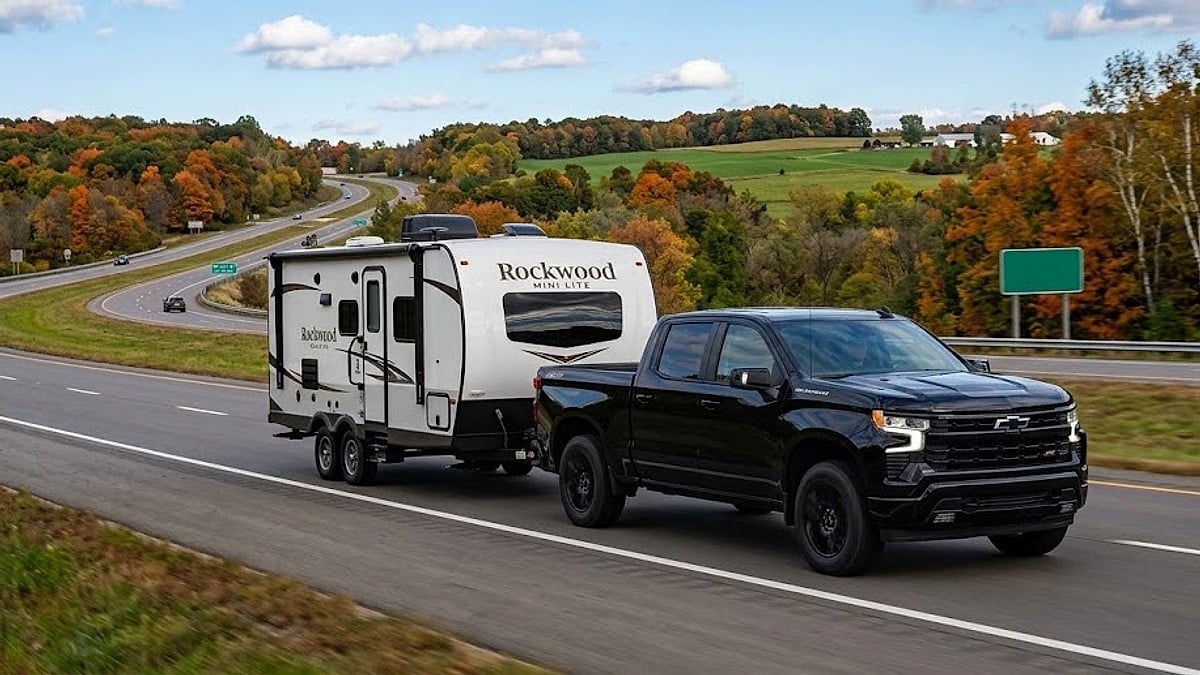
According to Morrell, he recently pulled his 6,000-pound Mini Light Rockwood Travel Trailer with his new 2026 Chevy Silverado RST TurboMax with complete ease.
Even more surprising was his recorded fuel economy of 12.6 MPG, a metric he claimed was substantially better than that of his previous 2020 Ford F-150 EcoBoost in every way.
The Hidden Engine Disruption Changing The Half-Ton Segment
The real story here is not just about a single good towing trip through the Midwest.
The underlying news story is the psychological and physical shift happening under the hoods of modern half-ton pickup trucks.
For decades, convincing a traditional truck buyer to purchase a full-size pickup with a four-cylinder engine was an absolute marketing impossibility.
Yet General Motors has quietly engineered a mechanical marvel in its 2.7-liter TurboMax power plant, a dual-volute turbocharged inline-four engine designed specifically to mimic diesel power delivery characteristics.
This engine features a massive 430 pound-feet of standard torque available at a remarkably low 3,000 RPM, providing immediate low-end grunt right where a tower needs it most.
This specific engineering direction explains why many buyers are seeing unexpected performance jumps.
As noted in a broad analysis on truck powertrain developments by the automotive engineering experts at SAE International, modern downsized high-output engines use specialized thermal management and precise turbo geometries to sustain high loads without cooking vital internal components.
The real-world result is that a high-output four-cylinder engine is now stepping directly into territory once completely dominated by small-block V8s and twin-turbocharged V6 platforms.
Escaping The Infamous EcoBoost Fuel Chute
To fully comprehend why this owner is celebrating a 12.6 MPG towing average, you have to look into the root cause of small-displacement engine geometry under heavy loads.
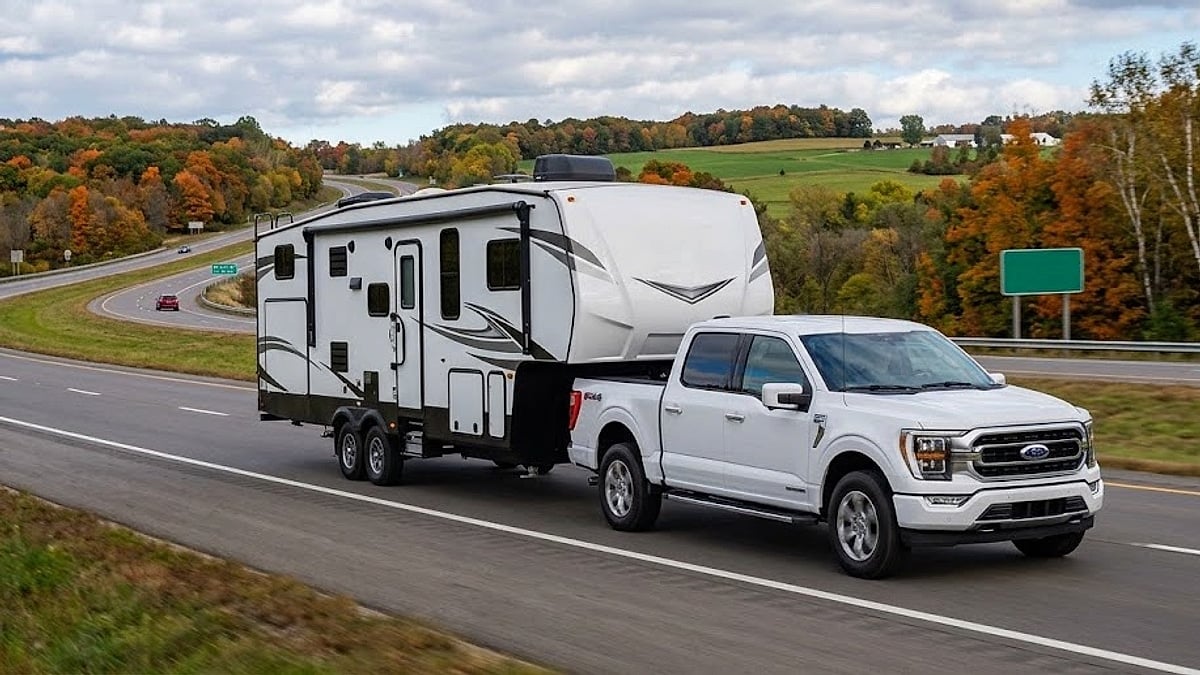
Ford’s EcoBoost platform is a fantastic piece of technology, but it has long harbored an open secret among truck owners: when it enters boost while towing, the "Eco" completely disappears, leaving only the "Boost."
When a twin-turbocharged V6 engine like the 2.7-liter or 3.5-liter EcoBoost pulls a heavy, aerodynamic brick like a travel trailer, the engine computer must dump extra fuel into the cylinders to cool down the exhaust gas temperatures and prevent destructive engine knock.
This fuel-enrichment strategy protects the internal components but absolutely obliterates real-world fuel economy, often dropping heavy-towing metrics into the single digits.
Conversely, the General Motors TurboMax operates on a different thermal and mechanical cycle.
According to long-term truck tracking data compiled by the consumer vehicle valuation experts at Kelley Blue Book, buyers are discovering that the unique dual-volute turbo design maintains optimal pressure without requiring the same hyper-rich fuel mixtures under sustained load.
By avoiding the extreme fuel-enrichment penalty that frequently plagues the EcoBoost under heavy throttle, the TurboMax maintains highly stable efficiency, even when fighting a stiff headwind.
High Altitude Integrity and Root Cause Engineering
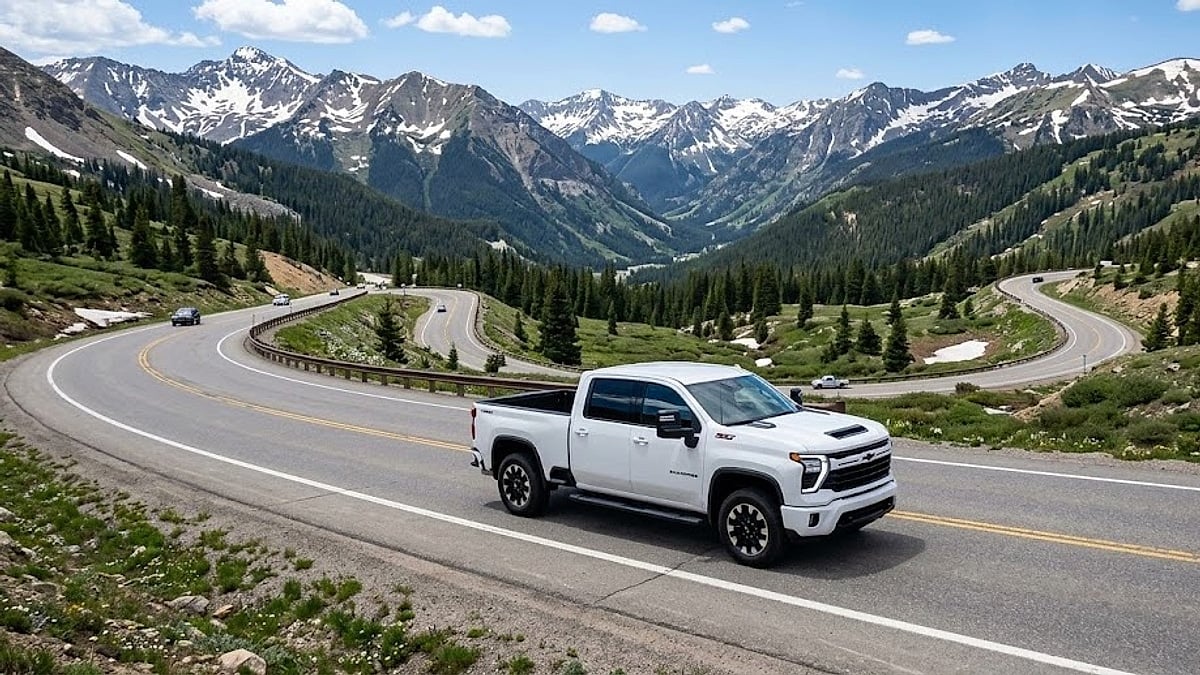
This exact scenario is something I observe constantly in my own backyard while conducting high-altitude vehicle evaluations for the Rocky Mountain Automotive Press in Parker, Colorado.
Up here, where the air is thin and the mountain passes force engines to work twice as hard, the differences between competitive turbocharger configurations become instantly apparent.
When a truck is forced to climb thousands of feet of elevation, atmospheric pressure drops, which typically robs naturally aspirated engines of power and causes turbochargers to spin faster to compensate.
I recently investigated how modern engineering constraints interact with high-stress driving dynamics in my deep dive on The Silverado Ultra-Thin Oil Dilemma.
In that investigative report, I highlighted how modern full-size truck engines face extreme mechanical wear when operating under continuous thermal load.
The TurboMax counteracts these intense operational pressures by using a fully forged steel crankshaft, exceptionally robust full-floating piston pins, and an incredibly rigid cylinder block that easily withstands high combustion pressures.
This heavy-duty design architecture ensures that when you are towing a 6,000-pound camper up a steep grade, the engine is fully capable of handling the load without severe internal deflections or large oil temperature spikes.
What The Major Outlets Completely Missed About This Comparison
If you look at mainstream automotive media coverage, journalists will simply tell you that the Ford EcoBoost makes more peak horsepower on paper and call it a day.
But peak horsepower is a useless metric when you are stuck behind a slow-moving tractor-trailer on a two-lane highway and need immediate throttle response to pass safely.
The hidden reality lies in the structural differences between how these two engines generate their power bands.
The GM TurboMax uses an exceptionally long piston stroke of 102 millimeters combined with a 92.2-millimeter cylinder bore, a classic undersquare configuration that naturally favors torque production over high-RPM horsepower.
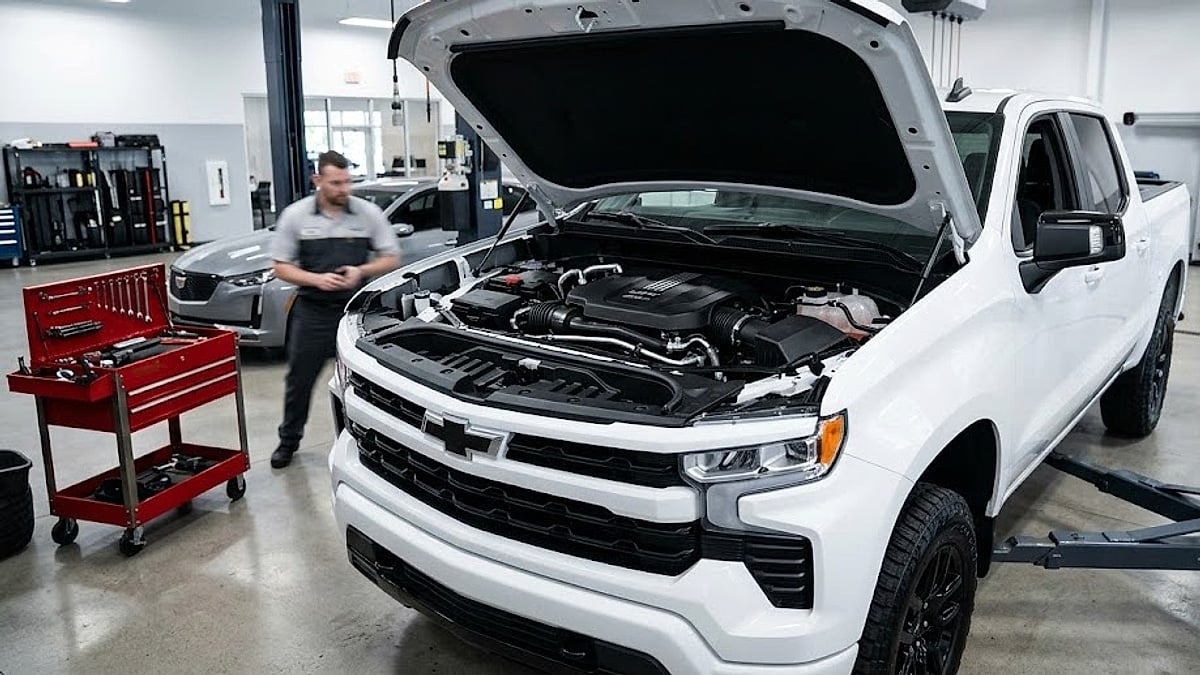
This long-stroke architecture allows the engine to pull like a commercial diesel engine, maintaining momentum without constantly shifting gears through the transmission.
When you pair that layout with an eight-speed automatic transmission calibrated explicitly for early torque converter lockup, you get a truck that stays settled in its gear structure.
In my previous analysis on why owners sometimes regret changing vehicle brands, which I detailed extensively in The $15,000 Trade-In Mistake, I noted how crucial a truck's daily driving dynamics are to long-term owner satisfaction.
When an engine constantly hunts for gears or screams at 5,000 RPM just to maintain highway speed, it creates driver fatigue and a deep sense of mechanical distrust.
By keeping the RPMs low and using the massive 430 pound-feet of torque to muscle through the wind, the Silverado provides a relaxed, confident towing experience that makes an older V6 platform feel strained by comparison.
The Next Logical Towing Question
Can a small four-cylinder engine actually survive a decade of continuous, heavy-duty towing without suffering premature turbo failure or severe internal engine block fatigue?
The answer comes down to commercial-grade engineering principles.
Because General Motors originally designed this specific engine block to withstand the extreme cylinder pressures of a medium-duty work vehicle, the thermal margins are significantly wider than what you typically find in a standard passenger car engine.
As long as owners strictly adhere to severe-duty maintenance schedules, use high-quality full synthetic fluids, and allow the turbocharger to idle for a minute after a hot highway pull to prevent oil coking, this high-output four-cylinder platform is built to last just as long as a traditional small-block V8.
Navigating The Shift in Half-Ton Powertrains
The era of choosing a truck engine solely based on the cylinder count on the badges is officially over.
Real-world owner data show that smart engineering and robust torque delivery are far more valuable than old-school displacement when a heavy trailer is hitched to your rear bumper.
What Would You Do? Would you ever trust a high-output four-cylinder engine to pull your family travel trailer, or are you staying completely loyal to traditional V8 power?
Please leave your thoughts and experiences in the "Add new comment" link below.
Wait, There’s More Coming… Also check out my Torque News Home Page for more of my informative Chevy Silverado news articles.
About The Author
Denis Flierl is a 14-year Senior Reporter at Torque News and a member of the Rocky Mountain Automotive Press (RMAP) with 30+ years of industry experience. Explore his full investigative reporting archives and technical guides at DenisFlierl.com.
Based in Parker, Colorado, Denis leverages the Rockies' high-altitude terrain as a rigorous testing ground to provide "boots-on-the-ground" analysis for readers across the Rocky Mountain region, California EV corridors, the Northeast, Texas truck markets, and Midwest agricultural zones.
A former professional test driver and consultant for Ford, GM, Ram, Toyota, and Tesla, he delivers data-backed insights on reliability and market shifts. Denis cuts through the noise to provide national audiences with the real-world reporting today’s landscape demands.
Connect with Denis: Find him on LinkedIn, X @DenisFlierl, @WorldsCoolestRides, Facebook, and Instagram.
Photo credit: Denis Flierl via Rodney Morrell
Set Torque News as Preferred Source on Google
Follow us today...