
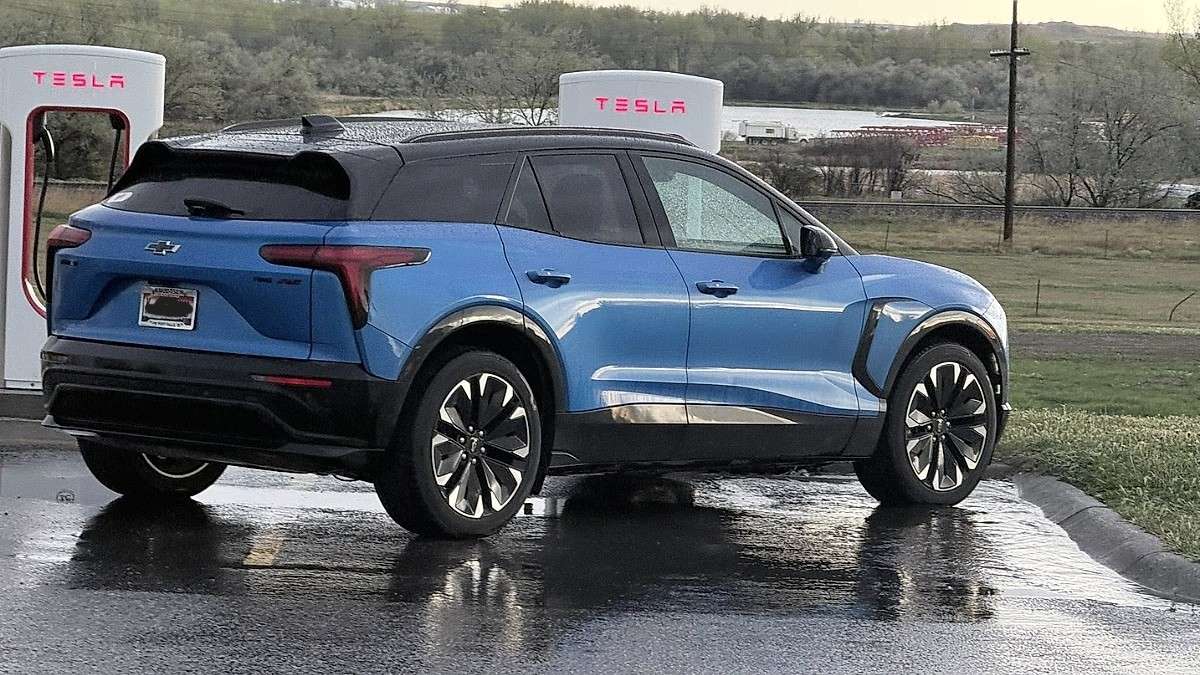

Long-distance EV road trips are no longer the experimental adventure they once were, but that doesn't mean they are effortless yet. For many drivers, the real test of an electric vehicle isn't whether it can handle a daily commute or a weekend grocery run, but it's whether it can cross multiple states, deal with different weather, find reliable charging, and still leave the owner feeling like the vehicle was worth the planning. That's why one 2025 Chevrolet Blazer EV RS owner’s 7,000-mile journey across America stood out. This trip wasn't necessarily perfect, but it showed how far modern EV travel has come and where the pain points still remain. Michael Baumann shared his experience in the Chevy Blazer EV Group after driving his 2025 Blazer EV RS from North Idaho to Florida, New York, and back to North Idaho.
As he put it: “Sorry for the long post but here are a few observations from my 7,000 mile cross country trip from North Idaho to Florida to NY and back to North Idaho in my ‘25 RS.
First thing: I spent way too much on changing when I started my trip. I didn’t join any charging networks and it cost me so much money compared to driving an ICE vehicle. The most was at a truck stop outside of Amarillo, Texas as it was over $30 dollars to charge.
Second thing. After joining Tesla’s subscription for $11 a month, I only hit them on the second part of my trip and it saved me a lot of money. I averaged $20 a charge at Tesla.
Third thing: The only issue I had with the Blazer was my Google Maps wouldn’t put my charging stops to Tesla when I put the hotel address in. I would use the ABRP app for the address of the Tesla chargers.
Fourth: I used the ABRP app for my trip to look up where any charging stations were and the best way to go. There are way more chargers than I ever could have imagined.
Fifth thing. I freaking loved the Tesla chargers on I95 in the Carolinas I stopped at two that had 60 plus chargers that were covered overhead. I wish they all could be that nice.
Sixth thing. The most annoying thing about changing at the older Tesla chargers is having to park almost sideways to charge since the charging cables are so short at those.
Last thing. This was one of, if not, the best cars I’ve ever driven across the country. It was comfy and drove amazing the whole trip. No matter if it was snow, rain or wind. Yes it took more planning and more stops, but I enjoyed everything about my trip with this car.
Side note. Wyoming isn't EV friendly at all. They are getting there but my god it was stressful driving through there.”
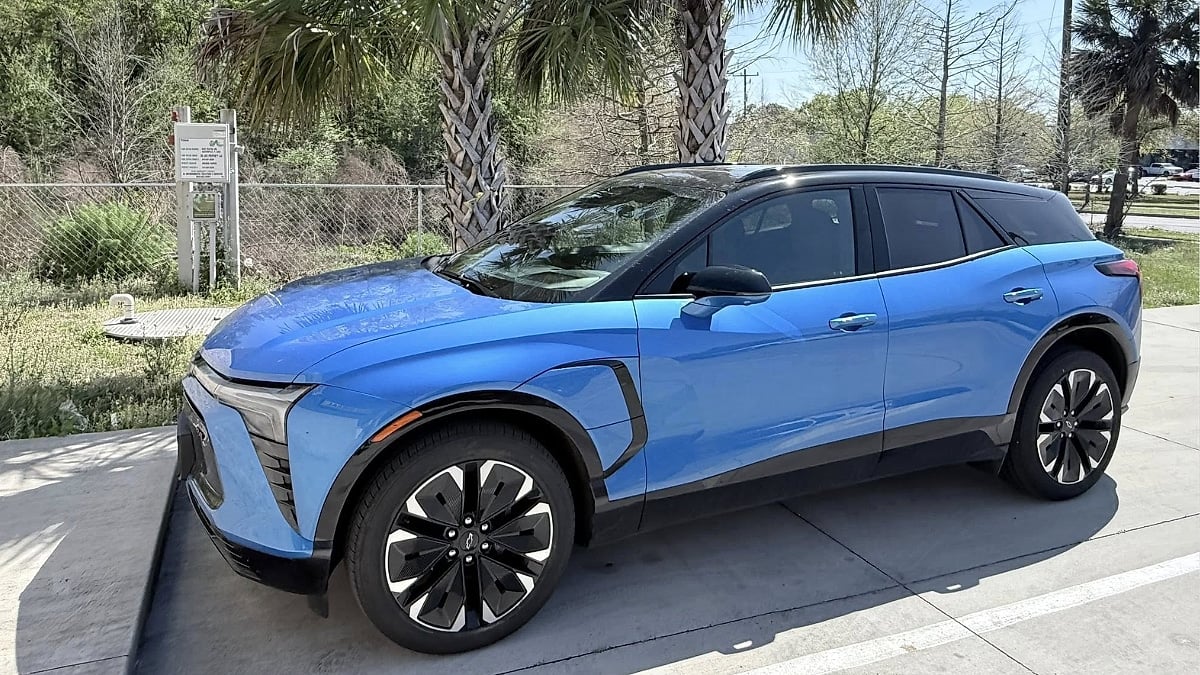
A Road Trip That Started With Charging Sticker Shock
The biggest surprise from Michael’s story was the charging cost difference between networks, although the sheer mileage of the trip also shouldn't be understated. He admitted he spent far too much money early in the trip because he didn’t join any charging memberships before leaving.
That’s an important distinction because EV road trips reward preparation more than gasoline vehicles do. Charging prices can vary dramatically depending on the network, location, and membership status. His over-$30 charge outside Amarillo, Texas quickly changed his perspective.
That charging-cost reality also fits into a broader Blazer EV ownership conversation we’ve been following at Torque News. In a previous report, I wrote about a Chevy Blazer EV owner dealing with charging frustration when a Tesla Supercharger only delivered 43 kW. The issue wasn’t just access to Tesla chargers, but whether the real-world experience matched expectations.
Michael said the trip improved dramatically once he joined Tesla’s $11 monthly charging subscription and focused mostly on Superchargers during the second half of the drive. His average charging session dropped to around $20, and he especially praised Tesla’s large covered charging stations along I-95 in the Carolinas.
That’s a major point for non-Tesla EV owners because Supercharger access is becoming one of the biggest advantages in the EV world. For many drivers, it completely changes the long-distance ownership experience.
Another big frustration wasn’t with the Blazer EV itself but with trip planning. He said Google Maps wouldn’t properly route him to Tesla chargers when entering hotel destinations, forcing him to rely on the ABRP app instead. That’s one area where EV travel still feels more complicated than driving a gasoline vehicle. The infrastructure may exist, but drivers still sometimes need multiple apps and extra planning to make everything work smoothly.
Now he did say that there were far more chargers available across the country than he expected. Still, he admitted Wyoming was stressful because charging infrastructure there still feels limited compared to major interstate corridors. That uneven charging experience remains one of the biggest concerns for EV adoption. Some routes now feel effortless, while rural stretches can still create anxiety for drivers unfamiliar with the area. That's why EV ownership can't be for everyone. For those who have the right setup, it does the job, but for those who live in rural areas or don't strategize with home charging, they can and will most likely see obstacles.
Other Owners Saw Their Own Road Trips In Michael’s Story
The comments under Michael’s post were useful because they showed that his experience was not isolated. Other owners recognized the same mix of excitement, planning, and regional inconsistency.
Jeff Noyes said, “I have been considering a trip from Oregon to Ohio so this was great information. I’ve driven down to San Francisco several times and there are so many chargers it is an easy trip. I preplan to see what chargers are available so I don't have any surprises. Went to Walla Walla, Washington and the only chargers were Tesla. Without those we couldn't make it there and back. Victoria, British Columbia, Canada isn’t too good either. Super slow chargers and not too many.”
Jeff’s comment highlights how different EV travel can feel depending on the region. Some routes now feel easy because chargers are everywhere, while others still rely heavily on Tesla infrastructure.
Grant Oxner added a more practical point, saying, “For Tesla SC with short cables, A2Z has tested and certified extension cables that would do the trick and prevent Tesla bros from raging about non-Teslas using two spaces. The cables ain't cheap but they work.”
Grant’s point reflects one awkward reality of non-Tesla EVs using older Superchargers. Many stations were originally designed around Tesla charge-port placement, forcing some vehicles to park at odd angles because the cables are too short.
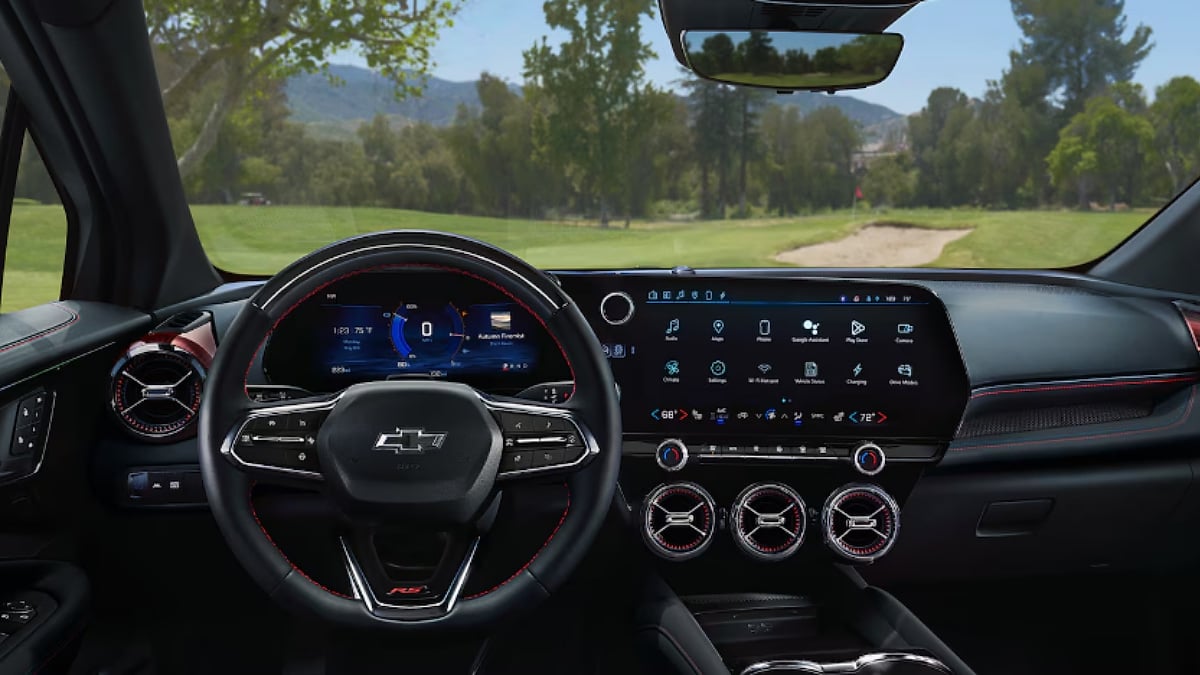
The Blazer EV Still Left a Strong Impression
Despite the charging frustrations, Michael still called the Blazer EV one of the best vehicles he has driven cross-country. He praised its comfort and stability through snow, rain, and wind. That matters because the Blazer EV has developed a mixed reputation since launch. I’ve previously covered a positive Chevrolet Blazer EV ownership story that helped win over a skeptical family member, so we've seen how the vehicle can genuinely impress people in daily use.
At the same time, Michael’s positive road trip doesn’t erase the fact that some Blazer EV owners have dealt with serious issues. We have seen a Chevrolet Blazer EV owner whose vehicle shut down while driving after only 2,000 miles here at Torque News, showing how inconsistent the ownership experience can still be. Still, Michael’s story suggests the Blazer EV itself is capable of being an excellent long-distance vehicle when the software, charging access, and infrastructure all cooperate.
What Michael’s Trip Says About EV Ownership Today
I think Michael’s story perfectly captures where EV ownership sits today. Vehicles like the Blazer EV are now capable enough to comfortably handle massive cross-country drives, but the charging experience still depends heavily on planning, infrastructure quality.
To me, the most interesting part is that the vehicle itself didn’t seem to be the weak point since the biggest frustrations came from routing, charger layouts, and regional charging gaps. That suggests the next big improvement for EVs may not come from more horsepower or range, but from making charging feel simpler and more predictable.
Key Takeaways For Readers
- Charging memberships matter: They can dramatically lower long-distance EV travel costs.
- Tesla Supercharger access is becoming essential: It’s quickly turning into one of the biggest advantages for non-Tesla EV owners.
- Route-planning apps still play a major role: Tools like ABRP remain extremely useful for cross-country EV trips.
- Charging infrastructure still depends heavily on region: Some routes feel effortless while others can still create anxiety.
- The Blazer EV RS itself impressed: Michael’s experience suggests it’s a genuinely comfortable and capable long-distance cruiser.
The Conversation Continues With You
Would you take a 7,000-mile road trip in a non-Tesla EV now that more brands can use Tesla Superchargers, or would you still feel safer doing that kind of drive in a gas vehicle?
If you have road-tripped a Chevy Blazer EV, Equinox EV, Mustang Mach-E, Rivian, or another non-Tesla EV, what was the biggest charging lesson you learned the hard way?
I'd love to hear what you have to say in the comments section below.
About The Author
Aram Krajekian is a young automotive journalist bringing a fresh and analytical perspective to the evolving automotive landscape by reporting on real-world ownership experiences and providing industry analysis. Based in North Carolina, he covers electric vehicles, trucks, and broader automotive trends with a focus on contributing a balanced evaluation. His reporting cuts through brand bias to provide readers with grounded insight into how vehicles perform for everyday drivers beyond marketing narratives.
Aram can be reached on X and LinkedIn for ongoing automotive coverage.
Image Credits
The “Chevy Blazer EV Group” Facebook group and Chevrolet’s gallery, respectively.
Set Torque News as Preferred Source on Google
Follow us today...





Comments
I have 3 5,000 mile trips on…
Permalink
I have 3 5,000 mile trips on my 2024 Blazer EV. Best traveling car I’ve ever ridden in let alone owned and 80% of the country has good charger access and the other 20% isn’t that bad . I’m retired so not in a hurry charge time is always what I would rest with a ice car on trips anyway. You can’t beat an EV
We have a Blazer EV and love…
Permalink
We have a Blazer EV and love it but for that kind of trip depending on fast DC charging there is no advantage over gas. It certainly can be done.
Honestly I prefer flying,…
Permalink
Honestly I prefer flying, unless I was staying more than a week.