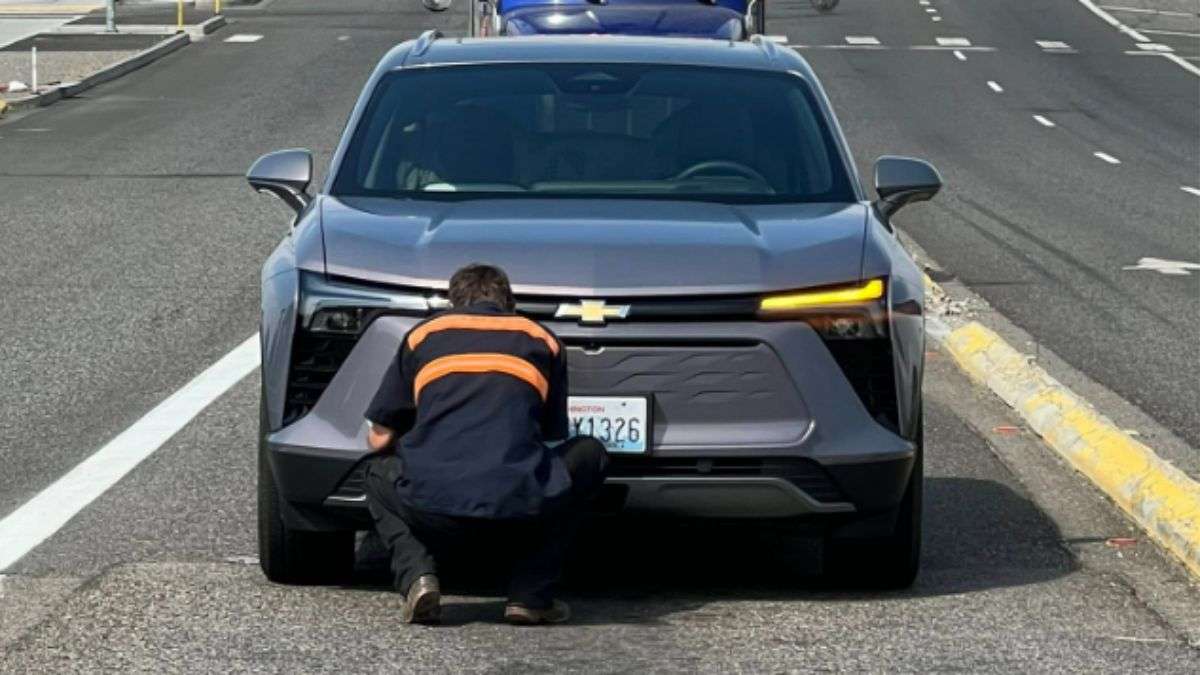

It’s one thing to hear about first-year vehicle problems from afar, but it’s another when your EV shuts down in real-world traffic with barely any miles on the odometer. That kind of experience not only raises concerns for the owner but also sparks broader questions about how ready automakers are to support customers when things go wrong. That’s exactly what happened in the “Chevy Blazer EV Group” on Facebook, where Amy Repoff shared what might be one of the most frustrating early ownership stories I've seen so far.
Amy explained that her Chevy Blazer EV suddenly lost power after coming to a stop, skidding like it was on gravel before shutting down completely. She couldn’t shift into drive or reverse, her emergency lights wouldn’t activate, and now the vehicle is stuck at the dealer awaiting parts and possibly even GM engineer involvement.
“Well it’s my turn I guess. Slowed to a stop and the car skidded a bit as it stopped. Felt like gravel /losing traction and then the car went dead. I can’t go into reverse or drive and it intermittently just shuts down. I couldn’t even activate the emergency lights. I’m not having a good day, but the tow guy was great. Service says they may be able to work on it Thursday. He did already warn me that I may need to involve a GM engineer.
Update: parts arrive Monday so repairs may start Tuesday but are extensive so…who knows when we will see the car again.”
Her update in the comments is what really caught people’s attention. “There’s metal in the fluid from the rear differential. I’ve driven this thing 2,000 miles since we got it and it’s mostly in town. What would cause this?”
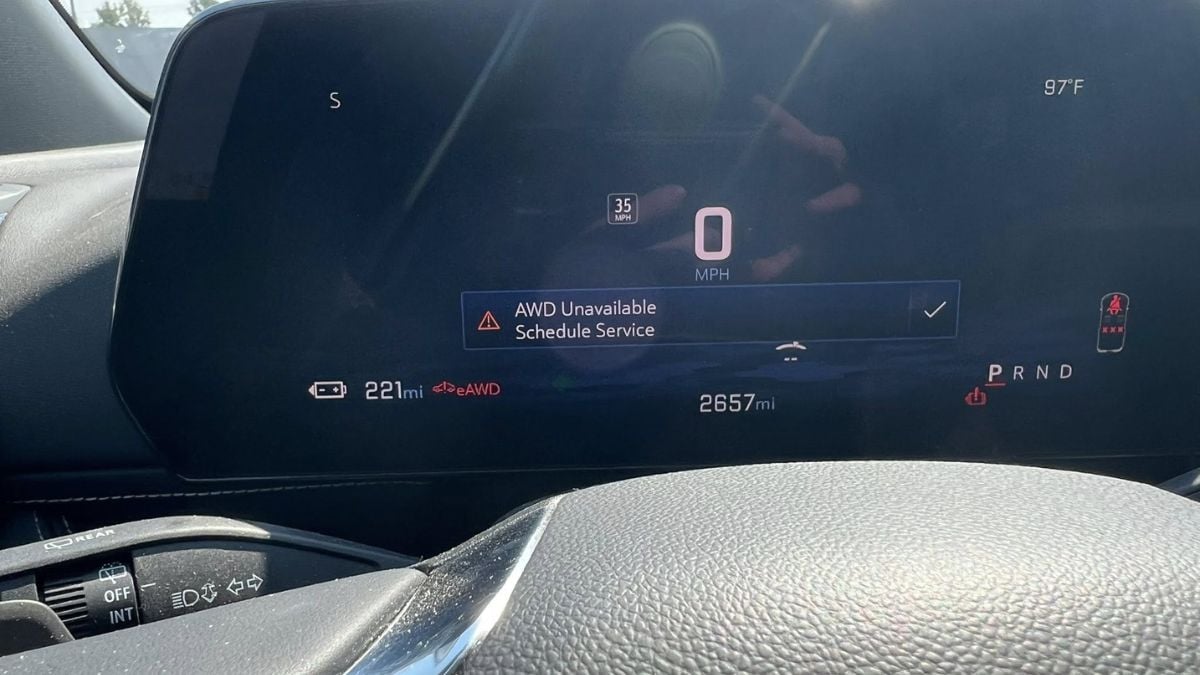
That’s a heavy statement for any EV owner to make. Rear differentials rely on gear oil to keep internal components lubricated and cool. Finding metal in that fluid means something inside is wearing down abnormally. In brand-new vehicles, a light shimmer of break-in wear can be expected, but visible flakes or large amounts of metal shavings often point to bearing or gear damage. For an EV marketed as one of GM’s flagship models, a problem like this happening in the first couple of thousand miles is troubling.
We’ve already seen reports of the Blazer EV behaving unpredictably, including instances where the car suddenly shifted into park while driving. The pattern that seems to be emerging is less about isolated glitches and more about complex hardware and software integration issues that need more consistent fixes from GM.
Community Reactions
The Facebook group lit up with responses from other owners sharing similar experience s or offering perspective.
Art McMonigle commented: “In my opinion, you should always get a GM engineer involved on anything this unusual on an EV. That said, there is a lot of misinformation on these posts with no specifics. The Blazer EV, Cadillac, and Honda version of this car are performing great.”
Art’s point underlines something worth remembering: one driver’s nightmare isn’t the universal story. These EVs share platforms across multiple brands, and while problems make headlines, there are also plenty of customers reporting smooth ownership. His comment highlights the need to separate noise from fact, but also the importance of transparency from GM in clarifying what issues are actually widespread.
Taurus Rogers added a story that shows how unnerving shutdowns can be, even if the fix ends up being simple: “I didn't get the AWD prompt but I did get the red outline of the car with the exclamation sign. It happened to me in a parking lot. The tow truck driver called me about 2 hours later. After I remotely let him into the car, he said that he drove the truck on the trailer. Whenever it goes into that mode, letting it stay powered off for about 30 minutes may get you back on your way. It's very unsettling when your EV goes dark (no power). GM basically reset it. I was charged nothing.”
This is an important example of how EVs are essentially rolling computers. Sometimes, letting them “reboot” clears the fault. But for owners, being stranded in a parking lot or on the road without power isn’t something you just shrug off. Even if the fix costs nothing, the experience chips away at confidence.
Then there’s Tim Pratt, who shared: “Mine was delivered from the factory with a loose 12v battery cable! It would intermittently 'brick' on me. I almost blew up the deal over it, but I’m glad I didn't. The car is flawless now.”
Tim’s experience shows the other side of the coin. Sometimes, a minor assembly issue can mimic a catastrophic failure. Once resolved, the car performs as intended. This perspective matters because it suggests not every breakdown spells doom for the Blazer EV long term, but it does show how easily small mistakes at the factory can create major stress for customers.
Looking Deeper Into the Technical Side
Amy’s note about metal in the differential fluid brings the discussion beyond software resets or loose connections. Differentials in EVs play a critical role in transferring torque smoothly, and while they don’t face the same heat cycles as traditional combustion engines, they’re still under tremendous stress. If abnormal wear starts showing up early, it could raise concerns about machining tolerances, lubrication failures, or quality control in manufacturing.
It’s worth remembering that EV buyers are often attracted to the promise of lower maintenance and long-term savings compared to gasoline vehicles. One Blazer EV driver recently pointed out that they had driven 6,000 miles and saved $350 in energy costs compared to their Honda. That kind of math is appealing only if the car stays out of the shop. Metal in driveline components at 2,000 miles is the type of thing that flips the narrative.
When I see stories like Amy’s, what stands out to me is not just the failure itself but the timing. Early breakdowns at such low mileage test customer trust more than anything. People buy new EVs not just for performance, but because they believe they’re stepping into the future of driving. But when that future leaves you stranded with no emergency lights and a tow truck on speed dial, the glow of innovation quickly fades.
At the same time, we have to balance one owner’s experience against the broader picture. For every high-profile failure, there are other owners who genuinely love their Blazer EV, like those who said they loved it so much they went back for another one. These vehicles can deliver real satisfaction, but stories like Amy’s remind us that GM still has to prove reliability on a wide scale if they want their EV rollout to succeed.
Lessons and Takeaways
- Low-mileage failures matter most: A car shutting down at 2,000 miles raises questions that go beyond one owner, as it speaks to quality control.
- Mechanical wear isn’t going away: EVs still have gears, fluids, and bearings. They may avoid oil changes, but drivetrain issues like metal in differential fluid show mechanical parts can still fail early.
- Customer experience defines trust: A simple tow and reset might be forgivable, but extensive repairs and delayed parts risk turning excited buyers into skeptical ones.
- Community voices shape perception: Online groups highlight both problems and praise, and both sides influence how future buyers perceive a new EV model.
Join the Conversation
Would you feel confident buying a first-year EV model knowing stories like Amy’s are out there? Or would you wait a few years until issues get ironed out?
And if you already own a Blazer EV, what has your experience been so far? Have you seen reliability concerns? Or has your ownership been smooth sailing?
We'd love to hear your thoughts and experiences in our comments below.
Aram Krajekian is a young automotive journalist bringing a fresh perspective to his coverage of the evolving automotive landscape. Follow Aram on X and LinkedIn for daily news coverage about cars.
Image Sources: The “Chevy Blazer EV Group” public Facebook group.
Set Torque News as Preferred Source on Google
Follow us today...