
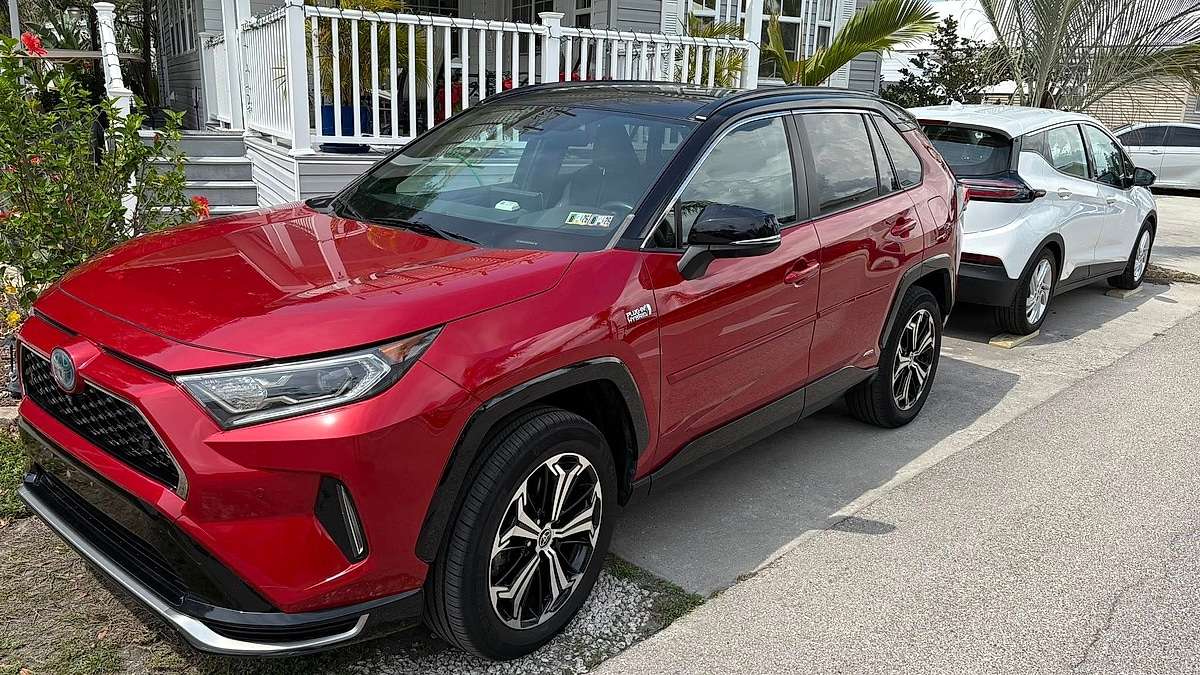

Everyone's asking whether $4 gas will finally push Americans into EVs. But that might be the wrong question. While the EV debate dominates headlines, hybrid sales have quietly been climbing, and when you actually run the numbers on energy cost per mile, the reasons become very clear. The comparison EV advocates rarely make is the one that matters most to your wallet.
Where You Live and Your Housing Type Matter Most
Let's be upfront about something: if you live somewhere with cheap electricity and expensive gas, EVs win on cost. Nobody disputes that. But that describes a minority of Americans. Millions rent, live in apartments, or park on the street with no home charger in sight. For them, public charging is the only option. And here's what the EV conversation almost never acknowledges: in most of the country, public charging costs more per mile than filling up a hybrid. We'll show you the math.
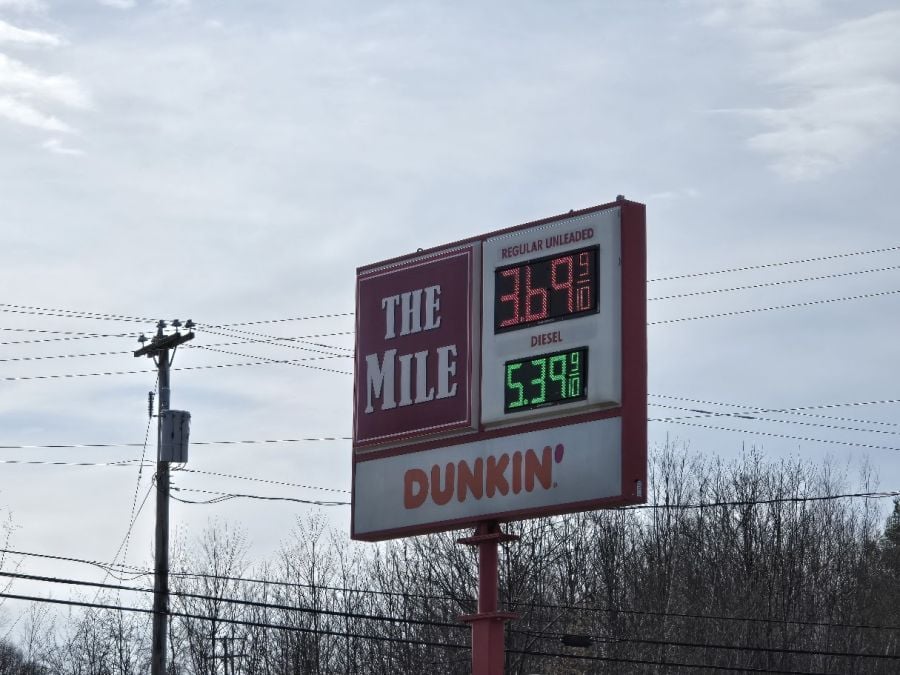
If Gas Is Average In Price and Electricity Is Higher Than Average - EVs Lose the Comparison
Other Americans, like those of us who live in Metro Boston, have average or lower fuel costs and about double the national average of electricity costs at home. For those Americans, EVs are not lower-cost-per-mile vehicles compared to hybrids. The math will follow if you want to do your own calculations.
How To Calculate Energy Cost Per Mile - EVs
To calculate the cost per mile for the energy of an EV takes three easy steps. First, find out how many miles the EV travels on 100% of its battery capacity. Let’s say it’s 300 miles. Next, look up the battery capacity in kWh. Let's say it is 85 kWh. Next, you need to know the cost per kWh you will pay to charge. Let’s use the national average of $0.417 kWh when charging in public (AAA is our source). The math to find the cost per mile is simply:
85kWh x $0.417/kWh = $35.44 (The cost to fully charge the vehicle)
Now we divide the cost of a full charge by the total range $35.44/300 Miles = $0.12 per mile.
So the cost per mile for this example EV is twelve cents per mile. This assumes that the range is not reduced by highway travel or cold weather operation. Combine those two factors, and the cost per mile could be much higher.
Cost Per Mile To Drive a Hybrid with Gas at $4/Gallon
Calculating the cost per mile for a hybrid is also easy, but it’s different for gas cars, and even easier. I use what is called dimensional analysis. Just take the miles per gallon. Let’s say 42 MPG for a vehicle like a RAV4 SE, and the cost per gallon of fuel in cents, and multiply so the units of gallon cross out.
1gallon/42Miles x 400cents/gallon = 9.5 cents per mile
Cost to Drive an EV Using DC Charging
In our example above, we used the average cost of public charging in America. That includes Level 2 charging at places like retail outlets, town halls, libraries, and at car dealers. This cost is always lower than DC charging because it is dramatically slower. We’ve run many example tests charging up an EV at Level 2 locations, and unless they are subsidized or offering free charging for some reason, public Level 2 charging is worthless. The reason is that you only add back about 20 miles of range per hour. So, to charge up a 300-mile EV from around 10% state of charge (SOC) to full, you’d need to be parked at that Level 2 charger for over 12 hours. To prevent you from doing that, most locations now charge a fee after a couple of hours, so others can use the charger too.
DC charging is often called “fast charging,” but that term is relative. In most circumstances, EV owners only add back about 50% to 60% SOC when they use DC chargers. They don't work well after 80% SOC, and some limit your ability to top off the EV. Is adding 150 miles of range in 20 minutes “fast?” If it is, then what word describes adding 425 miles of range to a RAV4 Hybrid in 87 seconds? DC charging is only fast compared to slower charging methods. There is nothing fast about it compared to how hybrids add range in public.
The biggest downside of DC charging isn't the time it takes, but the cost. Fifty-five cents per kWh is typical in my metro Boston area for DC charging. At that price, hybrids are dramatically less expensive to power.
Cost To Drive an EV Using Average At-Home Energy Prices
Charging at home is usually a good value, and those EV owners who have that luxury can often enjoy a low cost per mile for energy. However, in states like Massachusetts, where at-home EV charging can cost around $0.33/kWh, it’s not meaningfully different from the cost of a hybrid.
Solar Charging Is Great For a Tiny Number of Wealthy Americans
If you already have excess solar capacity installed at home and your panel can accommodate a Level 2 home EV charger, going electric is a no-brainer. You already have a source of low-cost, arguably no–added-cost electricity. It’s hard to beat that scenario with a hybrid. But let’s be honest. Only about half of Americans will ever live in a home that can accommodate any type of charger. According to the most pro-solar sources, only 7% of American residences presently have home solar. Many sources say that up to 80% of American homes are ineligible for solar. Fewer homes than that small percentage have enough solar to power another high-consumption device. For example, we were speaking to our friend Bill, the experienced Bolt owner, about solar this week, and he revealed that his solar system can only offer him about half his needed charging power because it is nearly maxed out running the rest of his house. The idea that EVs powered by solar are a slam dunk for mainstream Americans is silly, and home solar will never be a solution to a majority of Americans’ transportation needs.
Don’t Rely on Averages - Do the Math
If you’re interested in an affordable way to move around, don't rely on averages. Simply calculate the cost per mile of any EV you wish to consider and any hybrid you like. Let the facts speak for themselves. We’ve provided the easy-to-follow examples above. Tell us what your situation is, and what the results were in the comments below.
John Goreham is a 14-year veteran of Torque News. An accomplished writer and a long-time expert in vehicle testing, Goreham also serves as the Vice President of the New England Motor Press Association and has a growing social media presence. He’s also a 10-year staff writer and community moderator for Car Talk. Goreham holds a B.S. in Mechanical Engineering and an undergraduate Certificate in Marketing. In addition to vehicle and tire content, he offers deep dives into market trends and opinion pieces. You can follow John Goreham on X and TikTok, and connect with him on LinkedIn.
Top of page image courtesy of Gordon Groff.
Set Torque News as Preferred Source on Google
Follow us today...







Comments
One more aspect against EVs…
Permalink
One more aspect against EVs that never comes up in these comparisons is road taxes included in every gallon of gas. All states will eventually be charging this tax to EVs
Great point, John. I'll give…
Permalink
In reply to One more aspect against EVs… by John (not verified)
Great point, John. I'll give you another. If EVs become popular, the electric utilities will shift from offering discounted charging to charging more to charge EVs than for using electricity for other reasons. If everyone is driving an EV, then there is no reason to discount the rate for the EV folks.
I appreciate EVs—along with…
Permalink
I appreciate EVs—along with the challenges that come with them.
Energy costs are still closely tied to oil. In the short term, fluctuations in oil prices don’t significantly impact electricity rates, but over time, kWh pricing tends to follow oil trends… with one notable exception: it rarely comes back down when oil prices drop.
At the end of the day, it’s up to each of us to choose the right tool for the job—whether that’s an EV, hybrid, or a gasoline/diesel vehicle.
In my case, I use all four:
• My Nissan Leaf is perfect for short, in-town trips (mostly school runs)
• The Honda CR-V Hybrid excels on long-distance drives
• My Ram 3500 dually diesel handles the heavy hauling
• And my 2013 Honda CR-V is a reliable backup when needed
Bottom line: I’m not committed to one technology. Instead, I’m committed to using the best solution for each situation.
I own an F150 Lightning (2nd…
Permalink
I own an F150 Lightning (2nd) and two ICE F150s. My lead tech and I both run about 32000 km annually. He used about $5650.00 in Gas last year. I used about $1300.00 in Electricity. He got three oil changes and a brake job. I got none of those. His gas this year will be over $7000.00. My electricity costs will be under $500.00 with a new Carbon credit program that I am in the process of initiating. Apples to apples purchase with an F150 XLT provide me a $6000.00 savings over $1.60/ liter gas. BEV doesn't work for everyone but it sure as hell does for me. Currently waiting for a new Silverado WT to replace his truck. A PHEV is also a great choice for many but Hybrid only provides a much smaller savings.
My boys all drive hybrids,…
Permalink
My boys all drive hybrids, they pug in at night. Many days they do not actually shift to gas during the drive to and from work.
The hybrids are lighter, lower cost, and not as "zoomy" as battery electric vehicles, but have ~double the range on longer trips. Based on 5 years of actual experience, the hybrids have the lowest total cost of ownership.
I am still waiting for a vehicle that can pull 12,00 lbs., run 200 miles between charges, and is under $40,000. I probably will still be waiting in 20 years.
Total cost per mile is the…
Permalink
Total cost per mile is the better comparison. Include purchase cost and maintenance cost. EV’s avoid oil changes, brake pad replacement, and transmission service. They do have more frequent tire replacement. In my personal experience with a pair of Tesla EV’s, my total cost is far lower (charge at home).
I drive a PHEV. Best of both…
Permalink
I drive a PHEV. Best of both. The EV battery gives me 30-45 mile range depending on conditions. Most days, I drive less than 40 miles. Then I recharge overnight on a 120v 20a household circuit. I’ve gone 2,000 miles between tank fillups a few times.
Fantastic addition to this…
Permalink
In reply to I drive a PHEV. Best of both… by Todd Padezanin (not verified)
Fantastic addition to this discussion, Todd. PHEVs are truly the best of both worlds for so many drivers. Thanks for adding this comment.
Public charging is not…
Permalink
Public charging is not economical but being able to charge at home is in most circumstances. One example, Boston, is listed here. No dispute. However, the potential of EVs as a cost saver for a lot of Americans is substantial, especially with the number of used EVs hitting the market. Everyone should consider their own use case since the real answer is, it depends.