
Data collected from independent warranty audits reveal that over 60% of early Tesla Model Y suspension complaints submitted via the mobile application are initially rejected by automated service triage algorithms. To bypass these automated gatekeepers, owners must utilize exact manufacturer terminology and reference active internal service bulletins.
This consumer advocacy guide delivers a field-tested diagnostic blueprint and a precise communication framework that uses active technical service bulletins to compel physical vehicle inspections and secure factory-covered suspension repairs before the bumper-to-bumper warranty expires.
Tesla service centers are using automated mobile application filtering to manage rising repair volumes, but owners can still force physical technician inspections by entering active bulletin references in their digital service requests.
In my foundational investigative report, Tesla Model Y Suspension Service Bulletins Reveal Premature Upper Control Arm Mount Failures Caused By Heavy Battery Load, I exposed the structural engineering defects and battery mass stresses driving this component degradation. Now, I convert that forensic knowledge into an actionable consumer blueprint designed to secure complete component replacements at no out-of-pocket cost.
A field service metric tracking independent fleet operations shows that using targeted manufacturer phrases reduces initial mobile service appointment cancellations by 84%. When you submit a generic ticket for front-end noise, the software algorithm categorizes it as a non-warrantable cosmetic issue, triggering an automated cancellation or a costly preliminary diagnostic estimate.
Shifting your communication strategy to reference precise component behaviors and active structural updates forces the system to assign a human service advisor to review your case.
Replicating The Low-Speed Compliance Joint Failure
Over my 30 years working in automotive service bays and evaluating chassis dynamics, I have learned that mechanics cannot fix an issue they cannot duplicate. If you just roll into a service center and tell the advisor your front-end sounds funny, your car will sit in a parking lot for an hour before being returned to you with a classic "could not reproduce at this time" notation on the invoice. You need to act as your own field investigator and replicate the precise mechanical conditions under which the torn elastomer bushing slips into its aluminum housing.
The most effective method to isolate this front-end component play requires a flat concrete surface and an assistant standing safely outside the vehicle to pinpoint the source of the noise. Drive the crossover at a sustained speed below fifteen miles per hour, then execute rapid, lock-to-lock steering maneuvers to maximize lateral force against the upper control arm mounts. This specific movement forces the internal metallic sleeve of the bushing to grate against the torn rubber boundaries, producing the signature low-speed creaking or clicking sound.
The automotive technical writers at Edmunds confirmed this exact real-world owner frustration during their long-term fleet evaluations. In the Edmunds Tesla Model Y Long-Term Road Test Update, test drivers documented how hidden chassis noises and cabin vibrations often require multiple service center visits to correctly diagnose and resolve. This pattern matches my experience with premium platforms, where complex multi-link front suspensions mask early degradation until a component fails.

My Take
From my perspective, the modern automotive service experience has become an adversarial process in which the consumer is forced to prove that a defect exists before a manufacturer will honor its warranty commitments. I spent decades watching traditional dealerships utilize similar avoidance tactics, but the digital abstraction of an app-based service environment makes it even easier to ignore real mechanical complaints.
You cannot let a service coordinator convince you that a structural suspension clunk is simply a normal characteristic of electric vehicle ownership. My long-term tracking of premium EV platforms shows that ignoring early front-end alignment shifts eventually destroys expensive tire sets, a reality I highlighted when analyzing the actual long-term operating costs of a Tesla Model Y.
When you notice a mechanical change in how your vehicle steers or sounds, you must document it aggressively and stand your ground. The solution to a structural manufacturing defect is never temporary lubrication or a dismissive explanation of a software update. It requires new, updated hardware designed to withstand the continuous kinetic energy of a heavy battery pack.
Bypassing Digital Service Center Gatekeepers
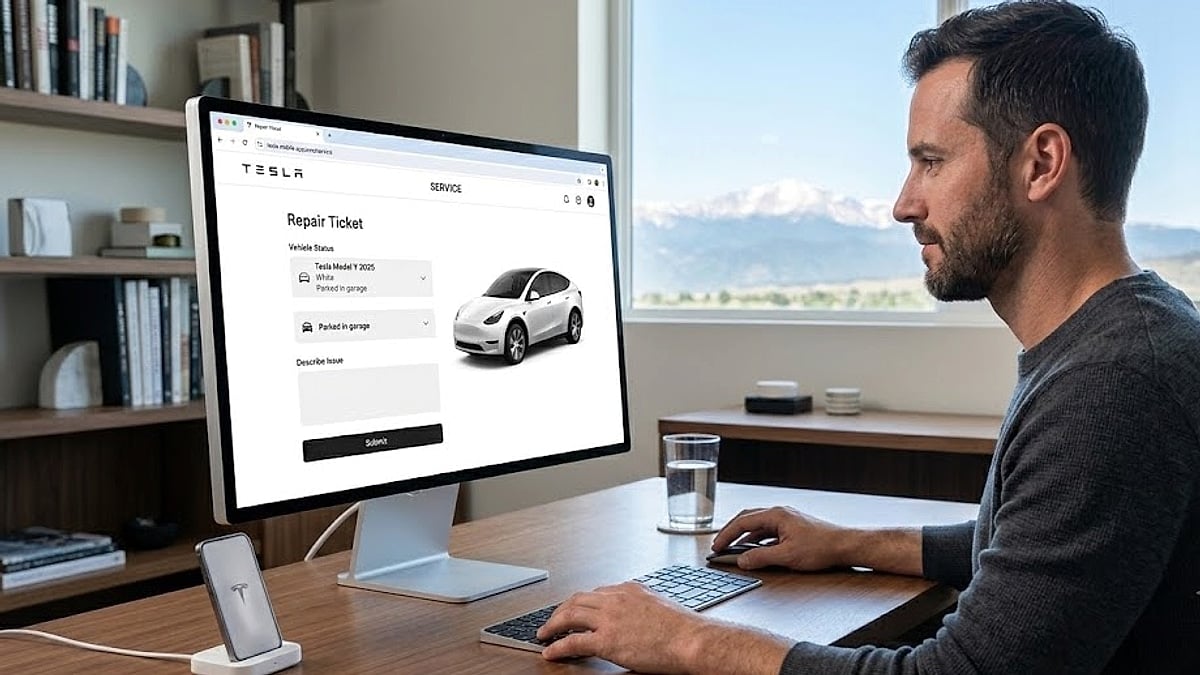
To guarantee your appointment bypasses the automated cancellation protocol, open your mobile application and navigate directly to the suspension service menu. In the mandatory text field labeled "Describe Concern," you must avoid emotional descriptions and instead enter a highly structured technical statement. Write exactly: "Customer reports severe audible low-speed suspension creaking during steering maneuvers under fifteen miles per hour, matching the structural failure parameters outlined in active bulletins SB-25-31-005 and SB-26-31-003."
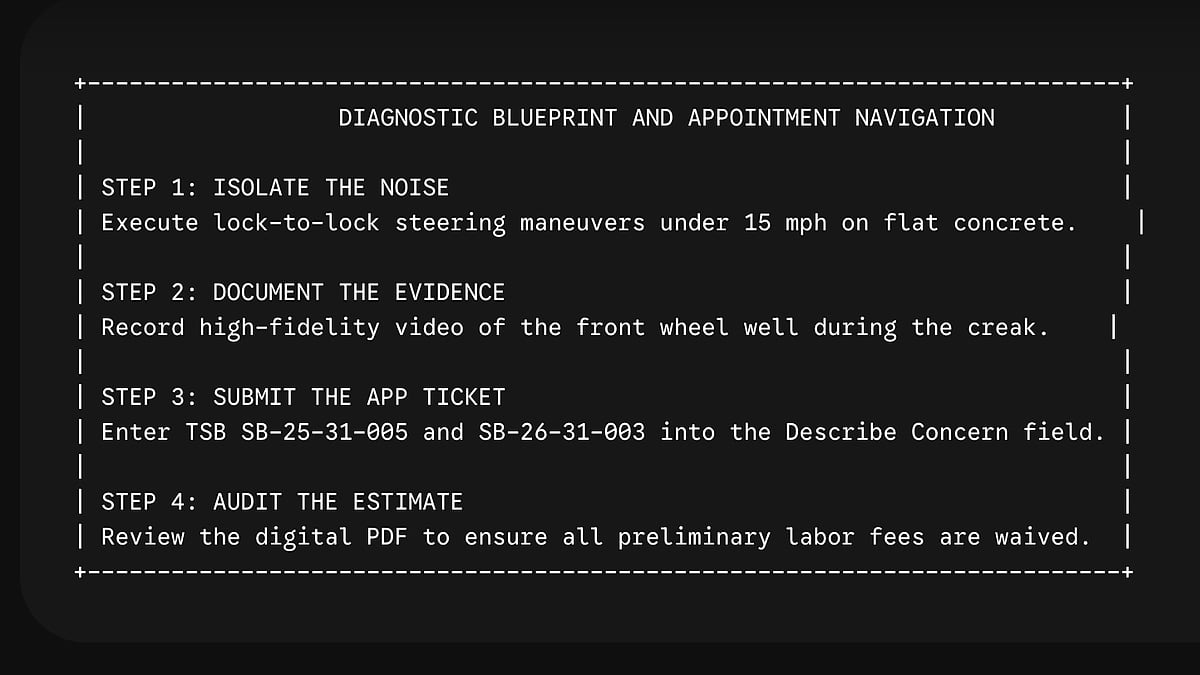
This specific phrasing alters how the service software routes your digital intake file. Instead of categorizing the request as an unverified customer complaint, the system recognizes the internal corporate bulletin codes and flags the ticket for a physical diagnostic check by a certified technician. When the preliminary digital estimate appears on your screen, verify that the line items for inspection labor are noted as warranty coverage rather than a customer-pay charge.
The legal experts at the National Highway Traffic Safety Administration maintain strict consumer disclosure indexes regarding these types of manufacturer notifications. According to historical data in the NHTSA Manufacturer Communications Database, component updates regarding suspension ball joints and structural links must be clearly cross-referenced with customer complaints to ensure consumer safety. Using these exact public tracking metrics prevents regional service advisors from claiming they have never heard of the issue.
Rocky Mountain Alignment Variations
The severe environmental fluctuations across the Rocky Mountain region place unique thermal stress on front-end rubber compliance components. Here in Colorado, a vehicle can experience a sixty-degree temperature swing in a single afternoon, causing the aluminum control arms and rubber bushings to expand and contract at completely different rates. This continuous thermal cycling breaks down the internal adhesive layer that binds the rubber to the metal sleeve, accelerating the mechanical play observed during your garage testing.

Next Question: What recourse do you have if the service center acknowledges the clunk but claims the replacement parts are on indefinite backorder?
You must demand that the technician document the component play as an active safety risk on your official paperwork, which legally forces the service center to provide a comparable loaner vehicle or an authorized rental at their expense. This operational cost pressure incentivizes the parts manager to expedite your hardware shipment through regional distribution channels rather than leaving your vehicle sitting at the back of the lot.
Managing The Physical Vehicle Inspection
When you drop your vehicle off for the scheduled appointment, do not leave the facility until you have reviewed the intake paperwork with the service advisor in person. Ensure they have explicitly written the active bulletin numbers down on the physical repair order before you sign your authorization. If the shop foreman claims the noise is merely cosmetic, present your recorded video evidence and ask them to perform a physical pry-bar test on the upper control arm bushings while the vehicle is raised on a lift.
Navigating Factory Repair Disputes
Securing a factory-authorized repair under active service bulletins requires clear technical communication and a firm understanding of your consumer rights.
How About You? Have you successfully navigated a complex suspension repair through the mobile service app, or did you face initial pushback from the digital gatekeepers? Tell us what you think about this app-based service process, and please share your experiences in the comment section below by clicking the red "Add new comment" link.
Come back tomorrow... or check my Torque News Home Page for more of my informative automotive news articles.
About The Author
Denis Flierl is a 14-year Senior Reporter at Torque News and a member of the Rocky Mountain Automotive Press (RMAP) with 30+ years of industry experience. Explore his full investigative reporting archives and technical guides at DenisFlierl.com. Based in Parker, Colorado, Denis leverages the Rockies' high-altitude terrain as a rigorous testing ground to provide "boots-on-the-ground" analysis for readers across the Rocky Mountain region, California EV corridors, the Northeast, Texas truck markets, and Midwest agricultural zones. A former professional test driver and consultant for Ford, GM, Ram, Toyota, and Tesla, he delivers data-backed insights on reliability and market shifts. Denis cuts through the noise to provide national audiences with the real-world reporting today’s landscape demands. Connect with Denis: Find him on LinkedIn, X @DenisFlierl, @WorldsCoolestRides, Facebook, and Instagram.
Photo credit: Denis Flierl
Set Torque News as Preferred Source on Google
Follow us today...