
Germans love to innovate, then give the machine a name that sounds as if it belongs on an electrical schematic.
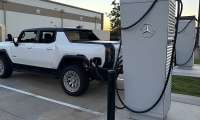
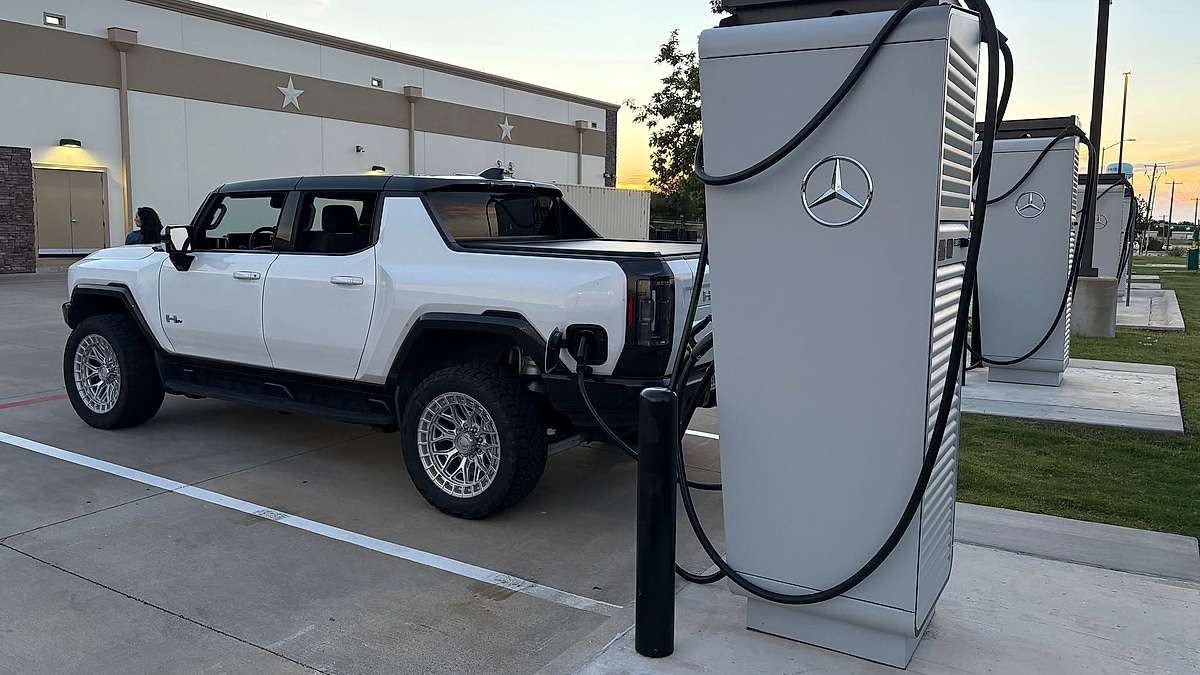
Mercedes-Benz High-Power Charging is exactly that kind of thing. Clean face. Big rating. No nonsense. The screen in Pierre Ericsson’s posts says “Max 400 kW High-Power Charging,” open to all electric vehicles, no app required. The price on the Mercedes charger in Madisonville, Texas, reads $0.49 per kWh, with a 50-cent-per-minute idle fee starting 30 minutes after charging ends.
A Hummer EV at a Mercedes charger in a Buc-ee’s lot sounds like the setup to a joke about modern excess.
It worked.
Ericsson posted in a Hummer EV group that this was one of the fastest chargers he had ever used. In the comments, he said the station pushed about 320 kW for roughly 10 minutes, then dropped to 178 kW after the battery passed 60 percent. He took in 80.5 kWh, gained 149.75 miles of displayed range, added 42 percent to the battery, paid about $39, and stopped for only 16 minutes.
That is a serious charging session.
Do the back-of-the-napkin math and 80.5 kWh in 16 minutes works out to roughly 302 kW average power. The Hummer’s own screen shows 511 miles per hour of range increase at 42 percent state of charge, with 111 miles of current range displayed and 31,191 miles on the odometer.
That is the kind of number that turns a charging stop from an apology into a pit stop.
The Hummer EV needs this kind of charger
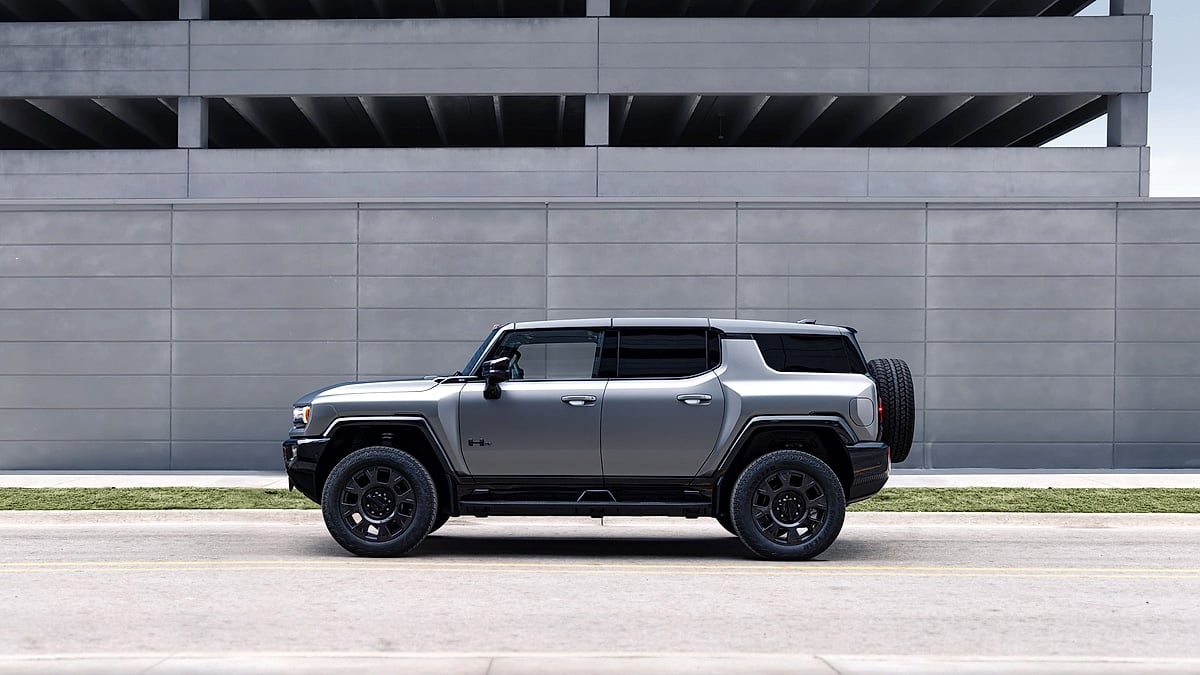
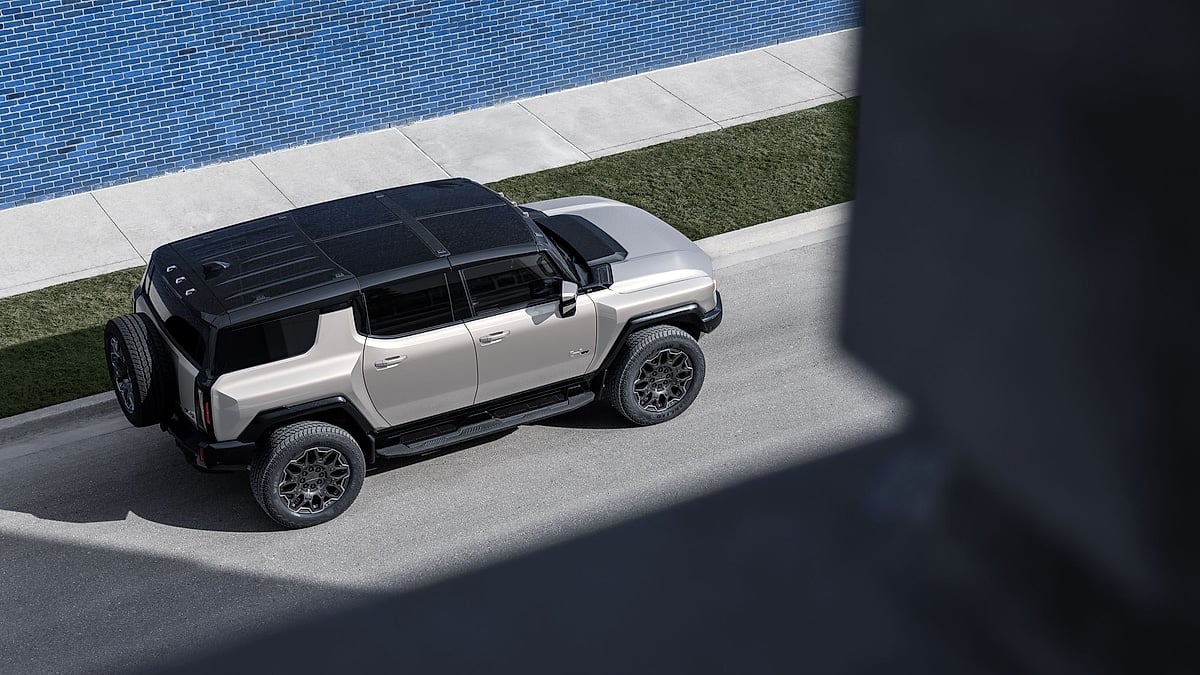
The GMC Hummer EV is not an efficiency saint. Nobody sensible bought one expecting Prius manners.
It is huge, heavy, theatrical, and wonderfully unreasonable. It carries the emotional footprint of a monster truck and the electrical appetite of a small neighborhood. A machine like this cannot lean on thrift to make its road-trip case. It needs a big battery, a strong charge curve, and chargers that can feed it without flinching.
That is why this Mercedes stop caught my eye.
A 150 kW charger can serve plenty of EVs well. Put a Hummer EV on one during a long trip and the mood changes. The truck’s battery is too large, its consumption too blunt, and its whole personality too excessive for half-measures. The Hummer wants power the way a big-block muscle car wanted fuel, loudly and without shame.
The Mercedes unit gave it the right audience.
The owner-reported peak of 320 kW sits below the charger’s 400 kW label but right in the zone a Hummer EV driver wants to see. GMC lists the Hummer EV Pickup with up to 350 kW available 800V DC fast charging. A real-world 320 kW peak on a public charger is not marketing vapor. That is the equipment and the truck having an adult conversation.
The taper after 60 percent also sounds normal. Big EVs charge hardest when the battery has room to absorb power, then slow as the pack fills and heat, voltage, and battery-protection logic take command. The smart Hummer driver watches the curve, not the ego. When the truck drops from 320 kW to 178 kW, that may still be fast. It may also be the moment to leave if the route has another strong charger ahead.
A Hummer EV rewards the driver who understands the middle of the battery.
The cost is honest, and that is the point
The session cost about $39 for 80.5 kWh. At the posted 49 cents per kWh, that math checks out.
The range gained was 149.75 miles, according to Ericsson. That puts the cost at about 26 cents per mile added. At $3.50 per gallon, that feels like a gas truck getting roughly 13 miles per gallon. Not cheap. Not embarrassing for a rolling battery-powered fortress, either.
This is where EV evangelists usually get sloppy. They compare home electricity to gasoline and pretend every trip carries the same math. Public fast charging lives in a different world. It sells time, location, reliability, and convenience. The electricity costs more because the driver is buying a 16-minute answer to a 9,000-pound question.
At home, 80.5 kWh can be bargain fuel.
At a Mercedes high-power charger beside a Texas travel stop, 80.5 kWh buys range while the driver uses the restroom, grabs food, walks past 900 square feet of jerky, and wonders how Buc-ee’s became the unofficial cathedral of American road travel.
I can live with that trade.
The Hummer EV is not the EV to use when you want to brag about lowest possible operating cost. It is the EV you use when you want absurd capability, outrageous presence, and enough charging speed to keep the absurdity usable.
That is a different bargain.
Buc-ee’s may be the best charging lobby in America
Mercedes picked a good battlefield.
Buc-ee’s understands time better than most charging networks. A driver can spend 16 minutes there without feeling trapped. Food, bathrooms, coffee, snacks, clean pavement, bright lighting, room to move, and enough distraction to make a charging stop feel shorter than the clock says. The old gas-station model already had a social contract: stop, refuel, reset, leave.
EV charging needs the same rhythm.
Too many charging sites still feel like somebody placed expensive hardware behind a bank, beside a dumpster, or in the forgotten edge of a shopping center where retail goes to die. A 300 kW or 400 kW charger deserves a better stage. If the car can take serious power, the site should serve the human at the same pace.
Buc-ee’s does that.
The Mercedes charger screen also says no app is required. That line should be printed on a flag and carried through every EV conference in America. I have enough apps. So do you. So does every normal person who wants to charge a vehicle without joining another digital club, inventing another password, or feeding another QR code into the void.
Tap. Plug. Charge.
German innovation, in this case, looks almost radical because it behaves like common sense.
The 400 kW label still has value even when the truck pulls 320
Some people will see “400 kW” on the charger and “320 kW” in the owner’s comment and start yelling about hype.
They should relax.
A charger’s maximum rating is the ceiling. The vehicle, battery temperature, state of charge, voltage, current limits, cable cooling, site load, and software all decide the real number. A 400 kW unit gives the vehicle room to take what it can. The Hummer EV cannot turn every 400 kW dispenser into 400 kW at the pack, and it does not need to.
The key number here is the average.
Roughly 302 kW over a 16-minute stop is excellent. That tells me the session had strength beyond a quick peak screenshot. The owner did not just touch a big number and fall off a cliff. He took in a large chunk of energy quickly enough to add about 150 miles of displayed range before the stop became lunch.
That is the real EV-truck breakthrough.
Peak power wins forum arguments. Average power gets you home.
The range display tells two stories at once
The Hummer display in the photo shows 42 percent battery and 111 miles of current range. That implies a full-range projection around the mid-260-mile area at that moment. Yet the owner says a 42 percent gain added 149.75 miles, which points closer to a mid-350-mile full-range estimate.
That spread is not a contradiction worth panicking over.
Range displays are living estimates. They react to recent driving, wheel and tire setup, temperature, terrain, HVAC use, speed, and whatever the truck has recently endured. A Hummer EV on big aftermarket wheels, highway speeds, or unfavorable terrain can make the dashboard more pessimistic. A charging-session gain can look rosier depending on how the vehicle calculates added range.
Owners should treat the range number like a weather report from a machine with expensive tires.
Useful. Imperfect. Best read with context.
The hard numbers remain strong: 80.5 kWh, 16 minutes, about $39, roughly 302 kW average, and about 150 miles of displayed range gained.
That is enough to make a Hummer EV road trip feel far less silly.
This is the charger network heavy EVs deserve
A Hummer EV, Sierra EV, Silverado EV, Escalade IQ, R1T, R1S, Cybertruck, and heavy electric vans all expose the same truth. Small EV charging habits do not scale cleanly to big EVs.
A compact EV can turn a 150 kW stop into a tidy break. A giant electric truck turns that same stop into a longer negotiation. The hardware has to grow with the vehicles. So does the site design. So does the payment system. So does the host location.
Mercedes seems to understand the prestige angle, naturally. It is Mercedes. The surprise is that the practical angle looks even better: open to all EVs, high power, travel-center placement, clear pricing, no app requirement, and enough output for the heaviest customers to feel seen.
I like that.
I like it more because the charger is wearing a Mercedes badge while feeding a GMC Hummer EV. That is the EV future in one photograph. Brand walls matter less at the plug than reliability, speed, access, and price. A German luxury network helping an American electric supertruck inhale electrons at Buc-ee’s in Madisonville, Texas, feels absurd only until you realize it is exactly how this market should work.
The vehicle does not care whose star is on the charger.
It cares whether the power arrives.
The owner lesson
If you drive a Hummer EV 3X, use chargers like this aggressively but intelligently. Arrive with the battery low enough to take real power. Watch the curve. If the truck is pulling 300-plus kW, enjoy the miracle and keep the stop short. Once the curve settles near 178 kW after 60 percent, decide whether the extra range is worth the time. On a route with another strong charger ahead, leaving earlier may beat chasing a fuller battery.
At 49 cents per kWh, this kind of stop is a road-trip tool, not a daily fuel plan. Use home charging for cheap miles. Use Mercedes high-power sites, Tesla V3 or V4 sites, EA, IONNA, and other strong DC chargers when location and speed justify the bill.
The Hummer EV will never be the accountant’s favorite EV.
A 16-minute, 80.5-kWh stop makes it feel like a better road machine than the skeptics want to admit.
Hummer EV owners, what have you seen?
If you own a Hummer EV Pickup or SUV, what is the highest charging power you have seen, which network delivered it, what state of charge did you start at, and how long did the truck hold peak power before tapering?
First image by Pierre Ericsson.
About The Author
Noah Washington is an automotive journalist based in Atlanta, Georgia, covering sports cars, luxury vehicles, and performance culture. His reporting focuses on explaining the engineering, design philosophy, and real-world ownership experience behind modern vehicles.
Noah has been immersed in the automotive world since his early teens, attending industry events and following the enthusiast communities that shape how cars are built and driven today. His work blends industry insight with enthusiastic storytelling, helping readers understand not just what a car is, but why it matters.
Noah is also a member of the Southeast Automotive Media Association (SAMA), a professional organization for automotive journalists and industry media in the Southeast.
His coverage regularly explores sports cars, luxury vehicles, and performance-driven segments of the automotive industry, including the evolving culture surrounding Formula Drift and enthusiast builds.
Read more of Noah's work on his author profile page.
You can also follow Noah here:
Set Torque News as Preferred Source on Google
Follow us today...