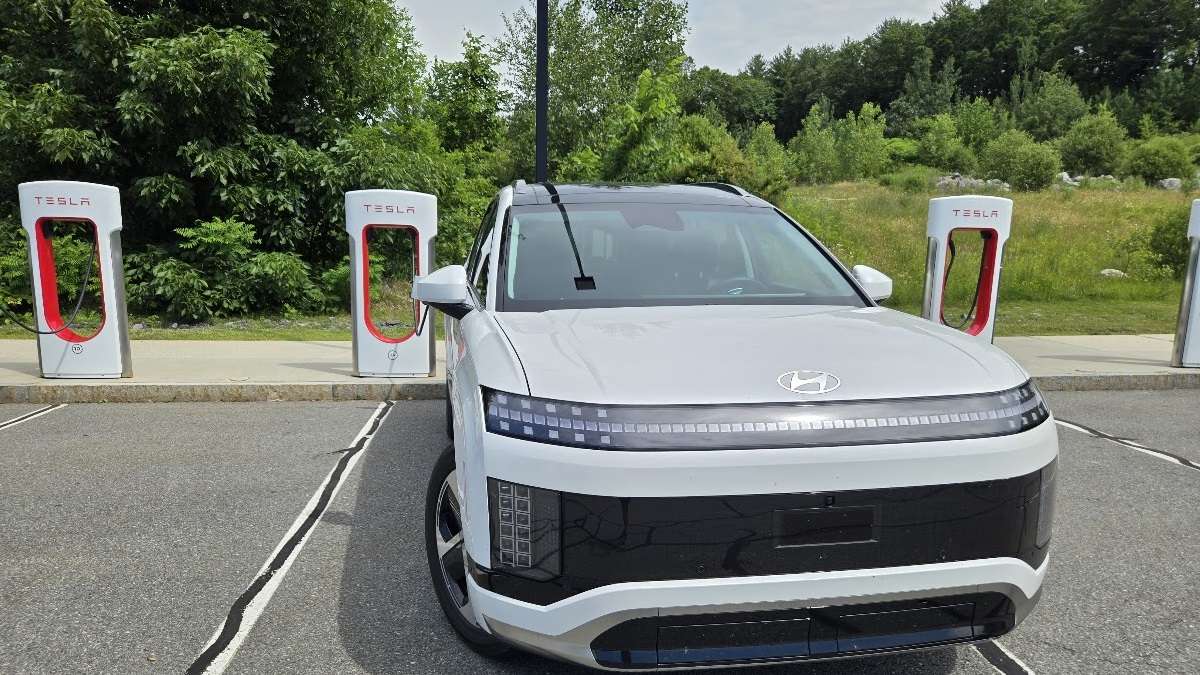

The EV spectrum has two ends. On one extreme are the affordable EVs like the Chevy Bolt and Nissan Leaf. On the other hand, high-performance luxury SUVs with three rows, epitomized by the 2026 Hyundai Ioniq 9 AWD Performance Calligraphy. The arguments for and against ownership of these two extremes are entirely different.
Anyone Who Can Afford $77,540 Can Charge At Home
With small, affordable runabout EVs, whether you experience range anxiety and struggle to maintain charge depends mostly on whether you can charge at your residence with a dedicated level 2 charger you control. With your own home charger, you’ll be fine. Without one, not so much. Sure, you can alter your lifestyle and live for the charge, or you can simply drive fewer miles than a typical commuter or family vehicle owner. But why? Just get a hybrid and be at peace.
The flip side to the EV coin is the large luxury roller. We’ve never tested a better driving three-row vehicle, EV or otherwise, than the 2026 Ioniq 9 AWD Performance Calligraphy. It is fabulous. Immense torque. So much so that you can use ECO mode all the time and extend your range. Great handling in the context of a vehicle with three spacious rows. Quiet, serene cruising, thanks in part to foam-filled tires that run about $500 apiece. This is luxury at its finest, and it’s worth every penny if you have the means.
Let’s be factual. If you do have the means to buy a $77K vehicle, you won’t have any difficulty springing for your own at-home level 2 EV charger. Maybe a pair of them if you own two EVs. That means you’ll normally be leaving home with 100% state of charge (SOC). In the Ioniq 9, 100% SOC means you can drive for about six hours without stopping if you wish. More than 300 miles in moderate temperatures.
Another reality is that you’re not going to look at the cost per kWh as any sort of downside when you pull into a Tesla Supercharger to grab about 50% SOC in the time it takes to grab a Starbucks treat. With its well-positioned charger port, NACS female charging connector, and your Tesla app, the Ioniq 9 is simple and quick to charge.
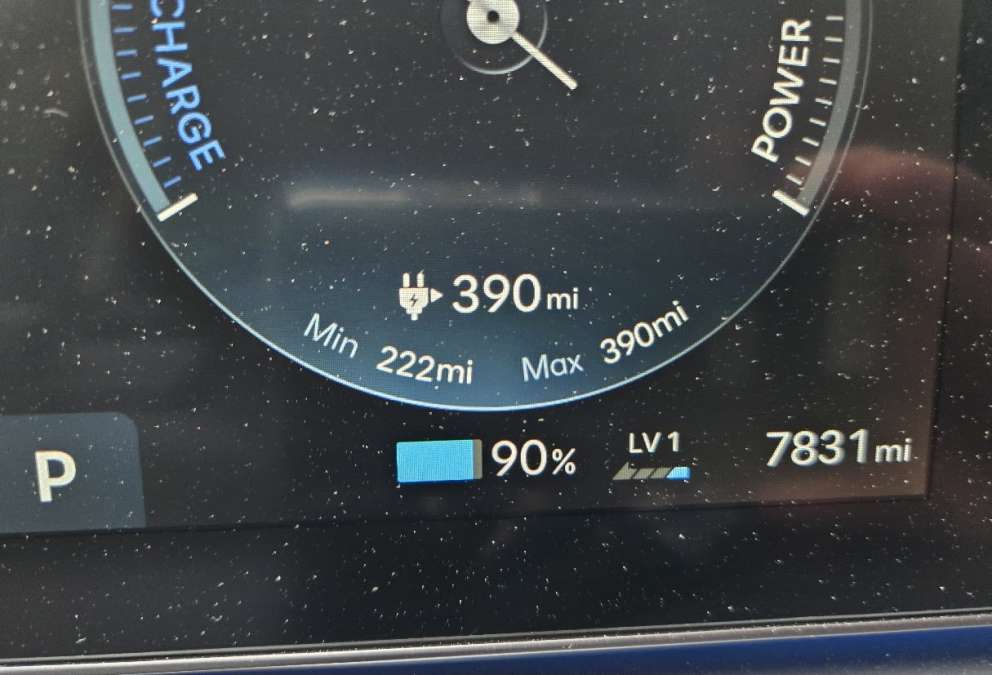
We preconditioned our Ioniq 9 tester’s battery, arrived with about 40% SOC, and plugged it in. Before we could pick up our pre-ordered lattes and scones and return to the vehicle, the Ioniq 9 was well past the polite 80% SOC one usually disconnects at. No worries, the Littleton, Mass. The Supercharger had about six empty spots, so we didn't ruffle any feathers among the Tesla owners driving (lesser) Model Ys and Model 3s. Just friendly waves.
Unlike nearly every EV we have ever tested, the Ioniq 9 under-promises. Its 311-mile EPA range was exceeded every time we added power to the humongous 110.3 kWh battery pack. Not just on the range estimator, but in real driving. We need to stress that temperatures were ideal, but we observed about 25% more range than the EPA’s estimate.
The upshot of the Ioniq 9 being suited to an owner with a home charger and who can use the pricey Tesla DC Supercharger network without noticing the cost is that range anxiety melts away. In a pinch, you could use one of the many other DC charger networks if a Tesla Supercharger isn't on one’s route. A nice backup plan, but one we never needed.
With Hyundai’s faster-than-the-industry-average charging capability, the Ioniq 9’s massive battery capacity, NACS compatibility, and Tesla’s Superchargers now in play, the dreaded range anxiety of the past finally seems like a fading bad dream.
About the Author:
John Goreham is a 14-year veteran of Torque News. An accomplished writer and a long-time expert in vehicle testing, Goreham also serves as the Vice President of the New England Motor Press Association and has a growing social media presence. He’s also a 10-year staff writer and community moderator for Car Talk. Goreham holds a B.S. in Mechanical Engineering and an undergraduate Certificate in Marketing. In addition to vehicle and tire content, he offers deep dives into market trends and opinion pieces. You can follow John Goreham on X and TikTok, and connect with him on LinkedIn.
Images by John Goreham
Set Torque News as Preferred Source on Google
Follow us today...