
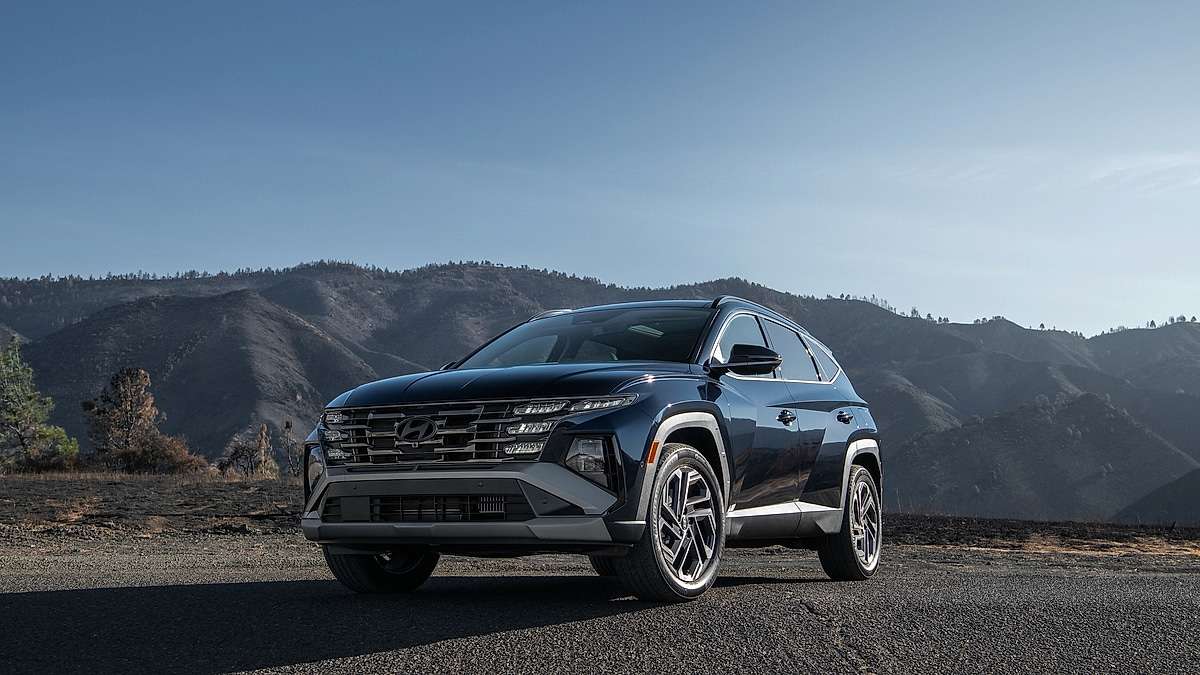

The new Night edition may grab the headlines, but Hyundai's latest 2026 Tucson Hybrid changes reveal a broader strategy: lower prices, stronger styling, and a bigger push into the fast-growing hybrid market.
That's the story behind the press release. The trim changes are the mechanism. The real story is Hyundai's attempt to widen the Tucson Hybrid's appeal from both ends of the market at the same time while hybrid demand continues to accelerate.
At first glance, Hyundai's announcement about the 2026 Tucson Hybrid looks like a routine trim update. A new Night model joins the lineup. A couple of new entry level hybrid trims arrive. Some pricing and packaging changes are made. But if you look at what Toruqe News learned after spending a week behind the wheel of the 2024 Hyundai Tucson Hybrid Limited, where the SUV delivered 37 MPG combined and impressed with its 226 horsepower turbocharged hybrid system, the trajectory Hyundai has been on with this vehicle becomes very clear. Automakers do this kind of thing all the time, but there is also a bigger pattern worth understanding when you consider that the Hyundai Tucson is currently gunning for the Toyota RAV4 as a slightly more affordable and more practical proposition, finishing 2025 as the third bestselling compact SUV in America with 234,230 units sold.
After looking closer at Hyundai's latest move, this is not really a trim level story at all. It is a market expansion story. Hyundai appears to be doing something surprisingly ambitious. Instead of targeting one type of customer, the company is simultaneously trying to attract three very different groups of buyers with a single vehicle lineup. And if the strategy works, the Tucson Hybrid could become even more important to Hyundai's future than it already is.
Why Hyundai Is Expanding The Tucson Hybrid Lineup Now
Timing matters. Hyundai isn't making these changes in a vacuum. Hybrid demand has been growing rapidly as many consumers search for better fuel economy without fully committing to an electric vehicle. Some shoppers like the idea of EVs but aren't ready to change their driving habits, rely on public charging, or pay higher upfront prices. This is a pattern that has shown up clearly across the market. Consider that Ford's hybrid pickups outsold the entire battery electric pickup segment in 2024, a dramatic signal that everyday consumers keep choosing electrified but not fully electric options when given a genuine choice.
Hyundai appears to see the same opportunity in the compact crossover segment. Rather than asking customers to choose between a gasoline Tucson and a fully electric vehicle, the company is putting more emphasis on the middle ground. The Tucson Hybrid is already one of Hyundai's strongest products, and now the company seems determined to make it appealing to an even wider audience. Consumer Reports has recognized the Tucson Hybrid as a top pick among compact SUVs, ranking the 2024 model at an impressive 35 MPG combined, which helps explain why Hyundai keeps investing resources here rather than pivoting elsewhere.
Hyundai Is Lowering The Cost Of Entry Into The Tucson Hybrid
The first group Hyundai appears to be targeting is budget conscious buyers. For years, one challenge facing many hybrid vehicles has been affordability. Buyers often had to move up the trim ladder or accept additional features they didn't necessarily want just to get the hybrid powertrain. The new front wheel drive Tucson Hybrid SE and SEL trims change that equation. According to pricing data from Edmunds, the Hybrid SE FWD starts at $30,950 and the Hybrid SEL FWD starts at $32,400, both featuring an eight speed automatic transmission. These represent the most accessible entry points Hyundai has ever offered for the Tucson Hybrid in the United States.
By creating more affordable entry points into the hybrid lineup, Hyundai is lowering the financial barrier for shoppers who want better fuel economy but remain sensitive to price. This is not just a trim adjustment. It is a customer acquisition strategy. The 2022 Hyundai Tucson Limited AWD already set a benchmark as a premium SUV with an affordable price, demonstrating that the Tucson family has always leaned toward delivering strong value relative to its price point, a tradition the new lower FWD trims carry forward for a new generation of shoppers. Lower priced hybrids have the potential to attract buyers who previously would have chosen a traditional gasoline crossover simply to keep monthly payments manageable.
The Hyundai Tucson Night Edition Targets A Different Kind Of Buyer
The second group Hyundai is pursuing has little to do with fuel economy. These buyers care about appearance. The new Tucson Hybrid Night edition arrives with blacked out styling elements, dark exterior accents, glossy black mirror casings, black window trim, and 19 inch alloys with a silver logo. It also features a black headliner for a sportier interior atmosphere. Based on the Limited trim, the Night AWD starts at $44,175 before the $1,600 destination charge. Edmunds calls the 2026 Tucson Hybrid an SUV it highly recommends, noting its smooth ride, spacious interior, and quick acceleration as standout qualities.
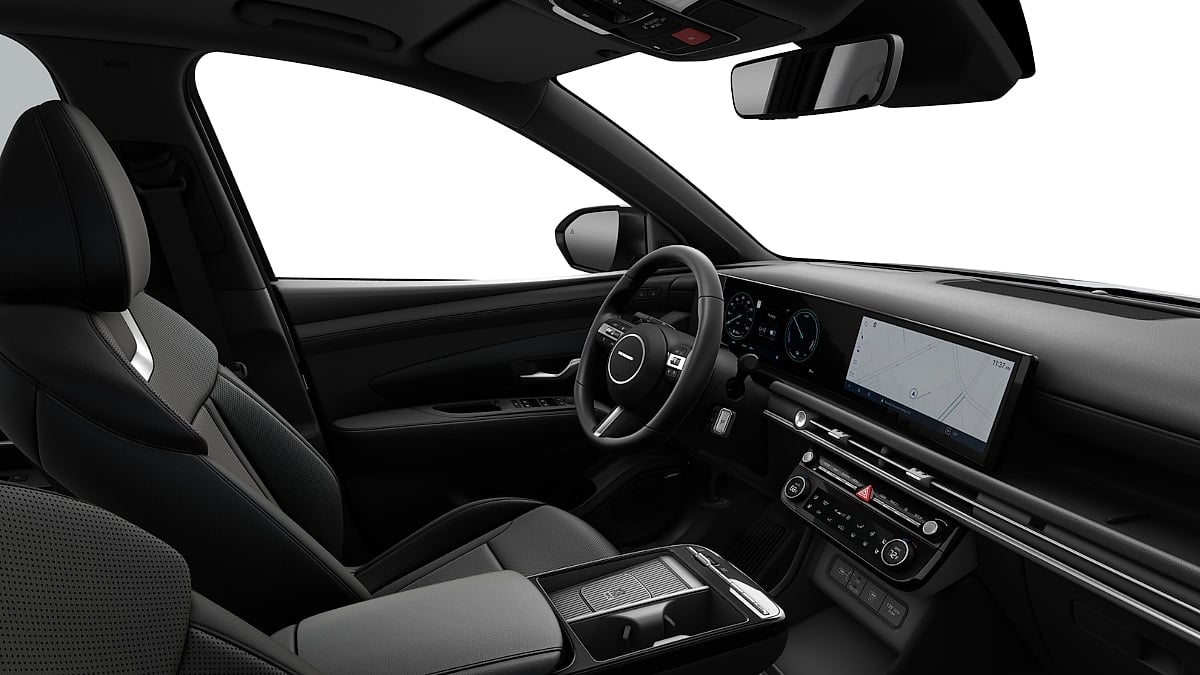
On paper, none of those blacked out changes improve efficiency, range, or performance. But they don't need to. Many buyers make emotional decisions before they make practical ones. Automakers have learned this lesson repeatedly. It is worth noting that this same phenomenon is visible in how the 2022 Hyundai Tucson earned segment busting recognition when it first launched, partly because Hyundai took the risk of introducing an unusually bold and polarizing exterior design language at a time when most competitors played it safe. The Night edition builds on that visual legacy, suggesting Hyundai understands that some customers aren't looking for the cheapest Tucson Hybrid. They are looking for the coolest one.
Hyundai Is Quietly Doubling Down On Hybrid Demand
The third audience Hyundai appears to be targeting may be the largest of all: mainstream crossover buyers who simply want a vehicle that is practical, efficient, comfortable, and easy to live with every day. The Tucson Hybrid sits directly in that sweet spot. The company's decision to expand the hybrid lineup sends an important message. Hyundai isn't putting its focus on a new gasoline trim. It isn't introducing a new performance model. It isn't expanding the EV side of the Tucson lineup. Instead, Hyundai is investing further into hybrids. Looking at how Subaru's pivot toward the 2025 Forester Hybrid has been described as the brand's future rather than a full EV commitment, it's clear that multiple automakers are reaching the same conclusion simultaneously: hybrids are where the volume is right now, and companies that fail to compete aggressively in this space are leaving real sales on the table.
That tells us something about where Hyundai sees demand heading. For additional context, it is worth remembering that when we compared the Toyota RAV4 Prime against the Hyundai Tucson PHEV, the Tucson consistently impressed with its user friendly interior and competitive fuel efficiency, even as it faced one of the strongest plug in hybrid competitors in the segment. Hyundai has been building this platform and brand equity for years, and the 2026 lineup expansion is the natural continuation of that patient strategy.
What Hyundai's Tucson Strategy Says About The Future Of Hybrids
This is where the story becomes more interesting. Look at the three buyer groups Hyundai is trying to attract: buyers focused on affordability, buyers focused on styling, and buyers focused on efficiency and practicality. Traditionally, automakers might have needed three different products to appeal to all three audiences. Hyundai is attempting to accomplish it with one vehicle family. The Tucson Hybrid is becoming less of a niche powertrain choice and more of a platform capable of serving multiple customer types simultaneously. That's a significant shift.
For years, hybrids were often treated as specialized products aimed primarily at fuel conscious shoppers. The top five safest affordable hybrid SUVs in 2024 all pointed to a market that had matured dramatically, with five star safety ratings and excellent fuel economy no longer positioned as exceptional achievements but as baseline expectations. Hyundai appears to be positioning the Tucson Hybrid as something broader: a mainstream crossover with options tailored to different lifestyles and priorities, one that competes not just on specs but on identity.
The Hidden Story Behind Hyundai's Tucson Hybrid Expansion
Most headlines about Hyundai's announcement will focus on the new Night edition. That is understandable. Visual changes are easy to photograph and easy to market. But the Night trim is only part of the story. The bigger takeaway is that Hyundai is widening the Tucson Hybrid's appeal from both ends of the market at the same time. On one end, it is creating more affordable entry points for budget conscious buyers. On the other, it is introducing a more stylish version for shoppers who want their crossover to make a stronger statement.
Sitting between those two groups is a growing number of consumers who increasingly see hybrids as the practical alternative to both traditional gasoline vehicles and fully electric cars. That dynamic is something we saw play out firsthand in the buyer story about a shopper who was torn between the 2026 RAV4 XSE and the Honda CR V Hybrid, where the Hyundai Tucson Hybrid repeatedly came up in reader comments as the alternative that offered superior technology and warranty value. Hyundai isn't simply adding trims. It's expanding the number of reasons people might choose a Tucson Hybrid in the first place. And in today's rapidly evolving automotive market, that may be one of the smartest moves an automaker can make.
What do you think about Hyundai's decision to expand the Tucson Hybrid lineup with both lower cost and style focused trims? And if you were shopping for a compact SUV today, would you choose a hybrid like the Tucson, a traditional gasoline model, or a fully electric vehicle? Let us know in the comments below.
About The Author
Armen Hareyan is the founder and Editor-in-Chief of Torque News and an automotive journalist with over 15 years of experience writing car reviews and industry news. Now based in the Charlotte region (Indian Land, SC, he founded Torque News in 2010, which since then has been publishing expert news and analysis about the automotive industry. He can be reached at Torque News on X, Linkedin, Facebook, and Youtube. Armen holds three Masters Degrees, including an MBA, and has become one of the known voices in the industry, specializing in the landscape of electric vehicles and real-world stories of actual car owners. Armen focuses on providing readers with transparent, data-backed analysis bridging the gap of complex engineering and car buyer practicality. Armen frequently participates in automotive events throughout the United States, national and local car reveals and personally test-drives new vehicles every week. Armen has also been published as an automotive expert in publications like the Transit Tomorrow, discussing how will autonomous vehicles reshape the supply chain, and emerging technologies in vehicle maintenance.
Images by Hyundai Press.
Set Torque News as Preferred Source on Google
Follow us today...




Comments
Great report. I heard it…
Permalink
Great report. I heard it here first.