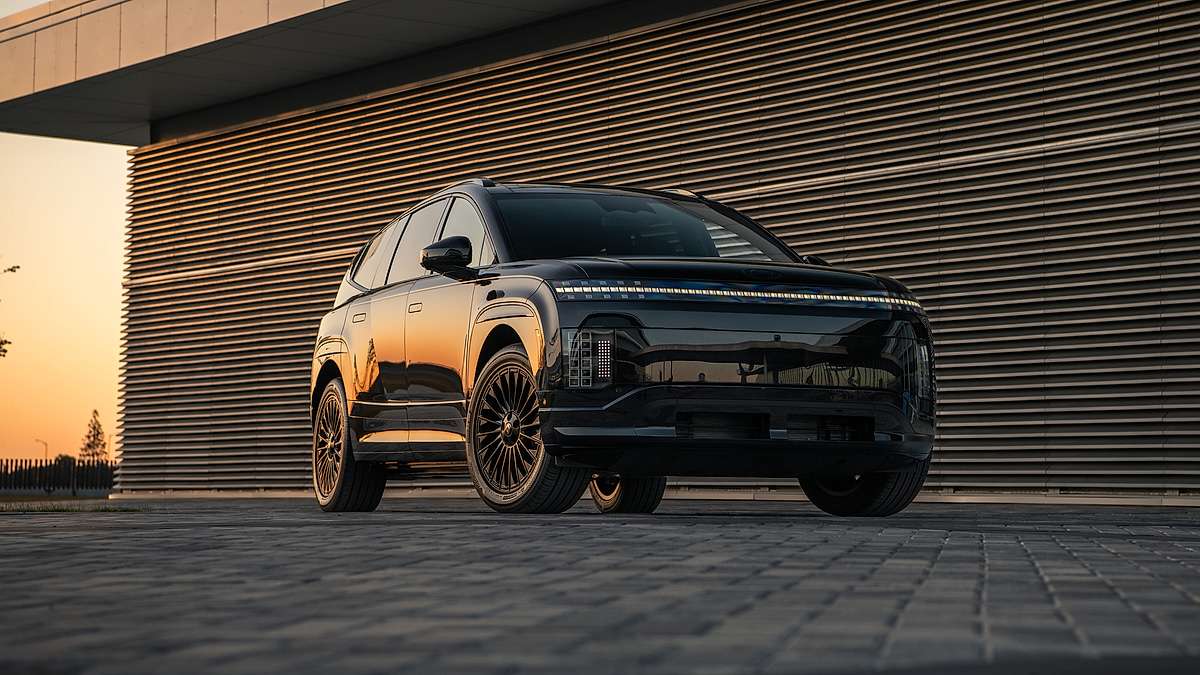

Hyundai’s loudest May number was easy to understand.
IONIQ 9 sales were up 279 percent.
That is the sort of figure a sales department can put on a slide before lunch. It is also the kind of early-growth number that needs context. New models climb as inventory reaches dealers. A small prior-year base can make a monthly increase look theatrical. Lease support can pull shoppers forward. First-year launch curves always carry some noise.
The useful number came from Hyundai’s early buyer data.
A slide Hyundai shared with Torque News, citing 2025 calendar-year S&P Global Loyalty data using household methodology, shows the IONIQ 9 with a 64.3 percent conquest rate. In practical terms, 64.3 percent of IONIQ 9 buyers in that data set were new-to-Hyundai households.
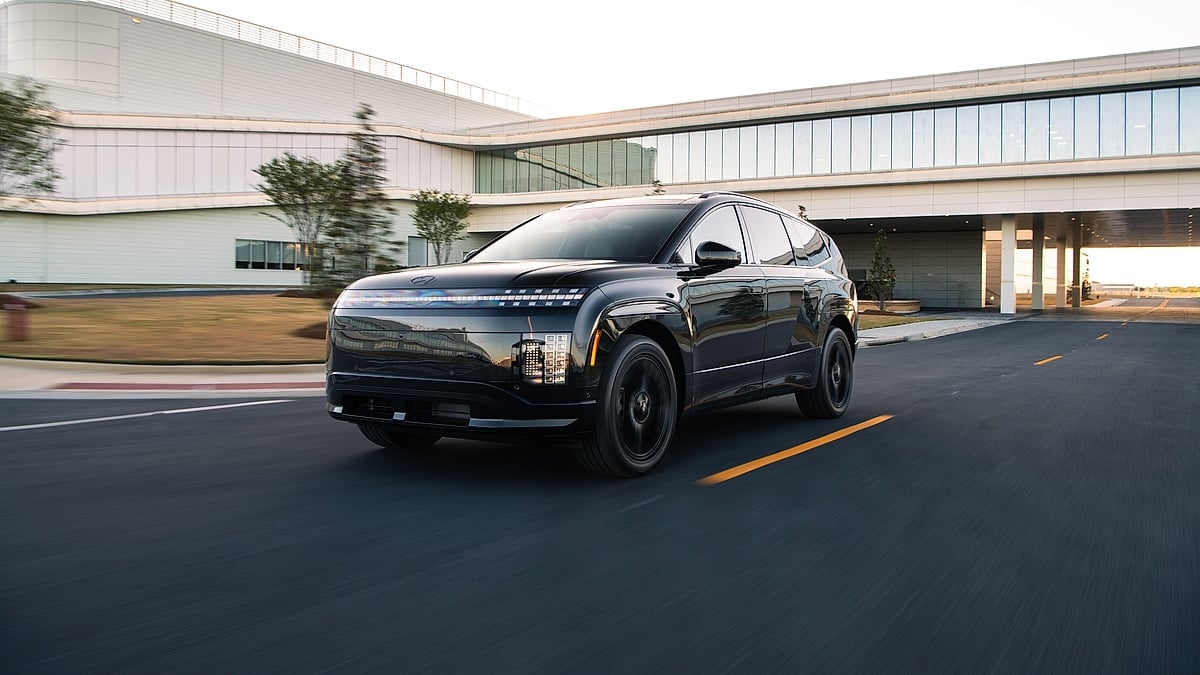
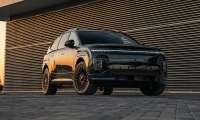
IONIQ 9 is a new three-row electric SUV in one of the least forgiving family-vehicle categories. Hyundai does not merely need EV shoppers to notice it. It needs families, current EV owners, and three-row SUV shoppers who may never have owned a Hyundai to place the brand on the same list as Kia, Toyota, Honda, Ford, Tesla, Rivian, Volvo, and the luxury field.
According to Hyundai’s own early data, that is already happening.
Hyundai’s Statement To Torque News
I asked Hyundai whether IONIQ 9’s early growth was mainly an inventory ramp or evidence of retail demand from families waiting for a three-row EV. I also asked whether shoppers were treating the IONIQ 9 as an EV first or a family SUV first.
Hyundai Motor America provided this written statement to Torque News:
“IONIQ 9 is showing strong year-over-year growth and one of our highest conquest rates among new-to-Hyundai buyers. Early demand is especially strong from families who’ve been waiting for a three-row EV, as well as current EV owners looking to size up. Interest is leading in established EV markets like the West and expanding as inventory grows nationwide. At its core, customers are choosing IONIQ 9 as a family SUV first, for its space, range, and usability, with electrification as a clear added benefit, supported by competitive lease options.”
A three-row EV has to win the household job before its charging curve can impress anyone. Parents do not shop the way EV forums argue. They need space, seat access, cargo room, range, payment logic, charging confidence, visibility, safety, and enough normalcy that grandparents, car seats, dogs, luggage, and children’s sports gear do not turn the vehicle into a science project.
Hyundai’s early read is that IONIQ 9 shoppers are arriving through that family-SUV door.
The electric powertrain helps close the sale. It is not carrying the wholesale.
The 64.3% Conquest Rate Gives The Launch A Cleaner Read
Hyundai’s May sales release reported 1,145 IONIQ 9 sales in May 2026, up 279 percent from 302 in May 2025. Year-to-date IONIQ 9 sales reached 4,001 units through May, up from 302 during the same period last year.
Those are volume numbers. The conquest rate tells a different story.
Hyundai’s slide places IONIQ 9 at 64.3 percent among the 2025 calendar-year Hyundai lineup. Only IONIQ 5 ranked higher, at 69.8 percent. Palisade was listed at 61.2 percent, Kona Electric at 60.9, Elantra N at 61.9, Santa Cruz at 58.3, Santa Fe at 57.2, Venue at 49.7, and Elantra at 48.3. That lineup comparison makes IONIQ 9 look less like a simple EV expansion and more like a brand-acquisition tool.
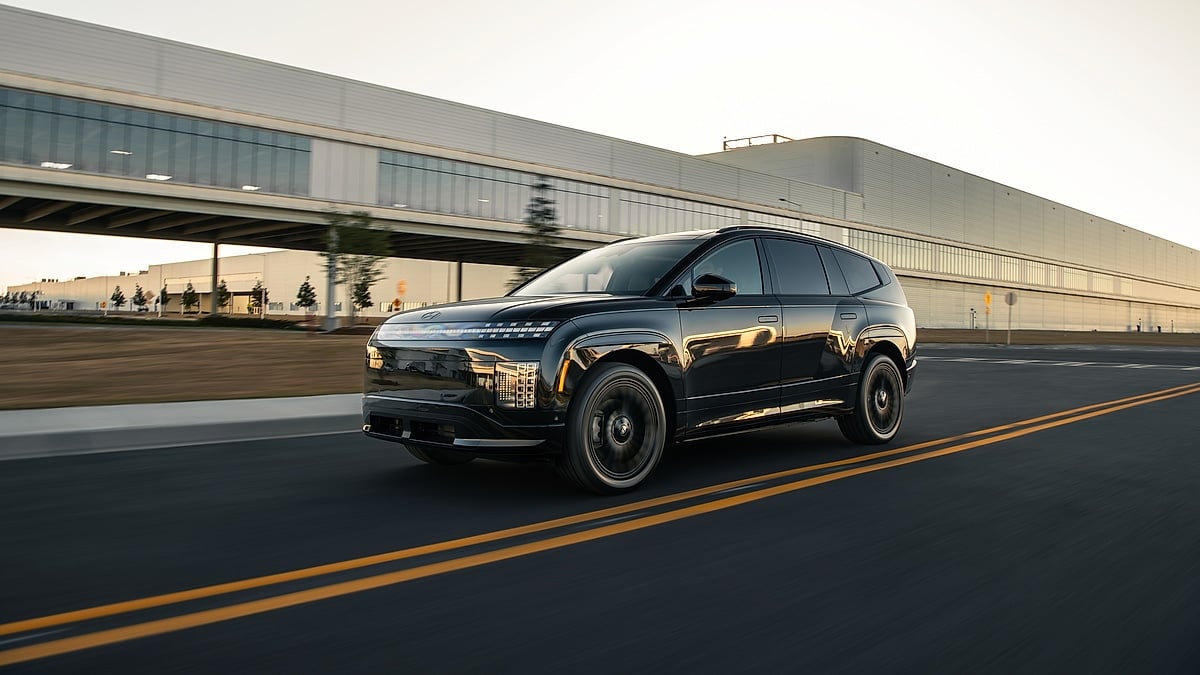
A loyal Hyundai customer replacing a Palisade with an IONIQ 9 would still be valuable. A new household entering Hyundai through a $60,000-plus electric three-row SUV carries a different strategic value. It gives Hyundai access to customers with larger budgets, larger families, and a willingness to compare the brand against long-established family SUV leaders.
A conquest sale puts Hyundai into a driveway where it had no prior claim.
That is harder than selling the next vehicle to someone who already trusts the badge.
IONIQ 5 Shows The Pattern
The same Hyundai slide shows IONIQ 5 leading the 2025 calendar-year two-row SUV segment conquest comparison at 69.8 percent, excluding VinFast. In that table, IONIQ 5 ranked ahead of Mini Countryman at 67.6 percent, Kona Electric at 60.9, Kia EV6 at 59.2, Tesla Model Y at 59.0, Kia Niro EV at 58.9, Volkswagen ID.4 at 57.7, Mustang Mach-E at 57.6, Jeep Wagoneer S at 55.2, and Chevrolet Equinox EV at 54.7.
That context helps explain why IONIQ 9’s 64.3 percent figure matters.
Hyundai’s IONIQ sub-brand is bringing in shoppers from outside the brand at a higher rate than Hyundai’s conventional gasoline and hybrid lineup, according to the data Hyundai provided. IONIQ 5 has already shown the formula in the two-row EV space. IONIQ 9 now extends that conquest behavior into a three-row category where the buyer is often less experimental and more demanding.
The IONIQ 5 buyer can be drawn in by design, charging speed, value, and daily usability.
The IONIQ 9 buyer needs a family vehicle that survives routine abuse.
Hyundai’s early data suggests the IONIQ badge is stretching across both jobs.
Why “Family SUV First” Is The Better Sales Pitch
A three-row EV cannot win only by being electric.
That was the mistake many early EV launches made, especially outside the commuter-car segment. The product conversation started with motors, charging, range, and software. Useful information, yes. Incomplete information for a family shopper.
The family SUV buyer begins elsewhere.
Can adults use the third row? Can children climb in without a daily argument? Does cargo space remain useful with all seats raised? Can the vehicle handle a road trip without forcing the family to plan the entire day around charging? Is the lease payment sane? Does the vehicle feel easy to drive and easy to explain?
Hyundai’s statement says IONIQ 9 shoppers are choosing the vehicle for “space, range, and usability,” with electrification as an added benefit.
The IONIQ 9 can charge quickly and offer a long EPA-estimated range, but those advantages matter most after the household decides the vehicle can replace a normal three-row SUV. The buyer has to believe the IONIQ 9 can handle school, travel, family visits, weekend errands, dogs, luggage, groceries, and winter or summer HVAC demands before the electric side becomes a bonus.
That makes the vehicle less dependent on EV enthusiasm. It gives Hyundai access to practical shoppers who may not define themselves as EV people.
Lease Support Is Part Of The Conquest Story
Hyundai also pointed to competitive lease options.
That should not be buried.
A three-row EV is still a major financial step for many households. Buyers worry about EV resale values, battery life, tax-credit changes, future price cuts, charging access, and whether a newer model will arrive with better range or faster charging two years from now.
Leasing reduces the long-term cost.
That is especially useful with conquest buyers. A household already loyal to Hyundai may accept more uncertainty because the brand has earned trust. A new-to-Hyundai household may need the payment structure to make the experiment feel controlled.
Lease support can do that.
It can also help Hyundai place IONIQ 9s into family driveways while the segment is still forming. More vehicles in service means more visibility at schools, youth-sports lots, offices, neighborhoods, and charging stations. That visibility feeds the next wave of shoppers.
The vehicle becomes easier to consider once people see it doing ordinary family work.
The West Leads, National Expansion Will Decide The Shape Of Demand
Hyundai says interest is leading in established EV markets like the West and expanding as inventory grows nationwide.
That is expected.
The West has more EV familiarity, stronger charging habits, more home-charging awareness, and customers who already understand the tradeoffs. An electric three-row SUV landing in California or other mature EV markets faces less explanation at the point of sale.
The broader U.S. test will be harder and more revealing.
Hyundai needs IONIQ 9 to reach families in places where gas three-row SUVs still own the category by default. Texas, Georgia, Florida, North Carolina, Ohio, Michigan, Tennessee, Pennsylvania, and the Midwest suburbs will test whether IONIQ 9 can sell as a family SUV to buyers who are interested in electrification but not willing to let the powertrain complicate their lives.
That is where dealer education, charger guidance, lease math, inventory depth, and real-world ownership stories become central.
A shopper in a mature EV market may arrive already trained.
A family-SUV shopper elsewhere may need the dealer to make the charging story feel ordinary.
What Hyundai Can Claim, And What It Cannot Yet Claim
Hyundai can claim a strong early conquest signal.
It can claim the IONIQ 9 is attracting families waiting for a three-row EV and current EV owners looking for more space, based on its written statement to Torque News.
The three-row EV market is young. Kia EV9 already has recognition. Rivian R1S holds a premium adventure position. Volvo EX90, Volkswagen ID. Buzz, future GM electric SUVs, and other entries will keep reshaping the field. Gas three-row SUVs remain powerful because they are familiar, available, and easy to refuel.
IONIQ 9’s early conquest data should be treated as a strong first read.
A 64.3 percent new-to-Hyundai rate does not prove every family is ready for an electric three-row SUV. It does show that when Hyundai packages the EV as a real family vehicle, shoppers outside the brand are responding.
That is enough to make the launch strategically important.
The Key Quote For The Industry
“At its core, customers are choosing IONIQ 9 as a family SUV first, for its space, range, and usability, with electrification as a clear added benefit.”
That is the three-row EV market in one sentence.
The product has to behave like the vehicle families already need. The electric side has to make that vehicle better, quieter, smoother, cheaper to operate for the right household, and more compelling to lease or own.
IONIQ 9’s early conquest rate shows Hyundai has earned attention from buyers who were not already in the Hyundai world.
The next test is whether those families stay.
IONIQ 9 Owners, What Did It Replace?
If you’re shopping for a three-row SUV right now, would you seriously consider going electric, or is gas still the safer choice for your family? Share your thoughts below. If you already own or have test-driven the IONIQ 9, tell us what stood out, what didn’t, and whether it actually works as a daily family vehicle.
About The Author
Noah Washington is an automotive journalist based in Atlanta, Georgia, covering sports cars, luxury vehicles, and performance culture. His reporting focuses on explaining the engineering, design philosophy, and real-world ownership experience behind modern vehicles.
Noah has been immersed in the automotive world since his early teens, attending industry events and following the enthusiast communities that shape how cars are built and driven today. His work blends industry insight with enthusiastic storytelling, helping readers understand not just what a car is, but why it matters.
Noah is also a member of the Southeast Automotive Media Association (SAMA), a professional organization for automotive journalists and industry media in the Southeast.
His coverage regularly explores sports cars, luxury vehicles, and performance-driven segments of the automotive industry, including the evolving culture surrounding Formula Drift and enthusiast builds.
Read more of Noah's work on his author profile page.
You can also follow Noah here:
Set Torque News as Preferred Source on Google
Follow us today...