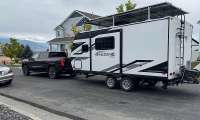

Corey Vaughn bought his first camper and immediately found the place where truck confidence becomes truck math.
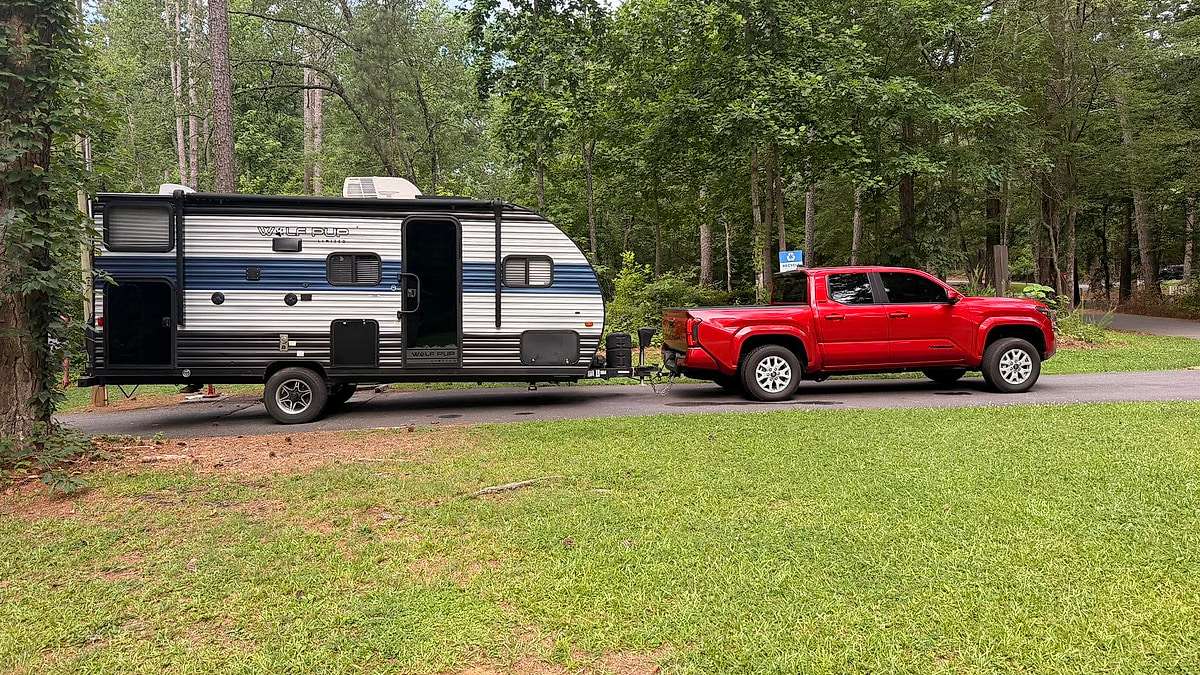
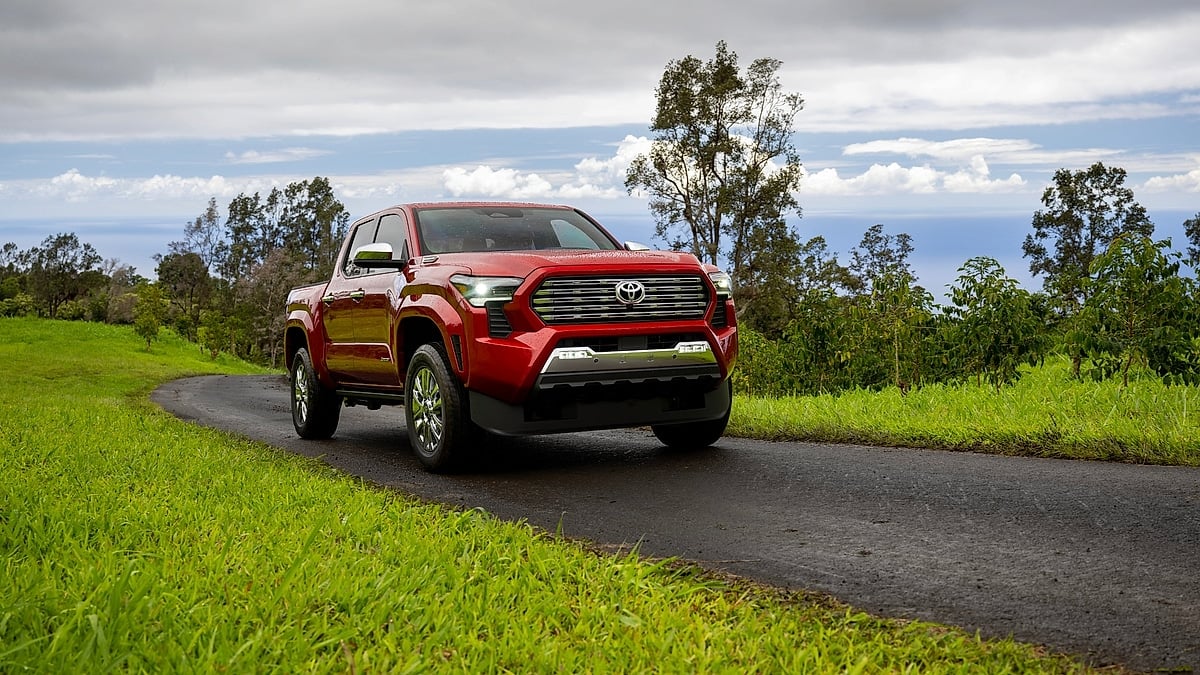
The photo looks familiar to anyone who has ever brought home an RV and then stood in the driveway staring at the rear fender gap. His fourth-generation Toyota Tacoma is hitched to a Wolf Pup travel trailer. The trailer is not outrageous. Dry weight is about 3,900 pounds, and GVWR is roughly 4,900. That puts it well inside the Tacoma’s published tow capacity for many configurations.
The problem is visual.
The truck squats.
That squat bothers him enough that he ordered a weight-distribution hitch with sway control. He also started shopping for airbags, then found that support for a 2WD fourth-gen Tacoma is not as simple as he expected. Now he is asking Facebook whether Sumo springs would solve the same problem.
- Measure fender height before and after hitching up, then again after setting up the weight-distribution hitch. This gives a clear, repeatable way to confirm whether front axle weight is being properly restored.
- Check tire load ratings and pressures on both the truck and trailer; underinflated or underrated tires can exaggerate squat and instability even when weights are technically within limits.
- Load heavier gear low and slightly forward of the trailer axle to maintain proper tongue weight without overloading the truck’s rear, improving both stability and ride quality.
That is a better first-camper question than “Can my Tacoma tow it?” The truck can pull the trailer.
The more useful question is how the weight lands on the Tacoma and whether the combination keeps enough margin when the camper is loaded for a real trip.
The Camper Is Small Enough To Pull And Large Enough To Measure
A 4,900-pound GVWR camper sounds comfortable against a Tacoma with a 6,300-to-6,500-pound tow rating. That gap is why the setup looks reasonable at first.
Tongue weight changes the mood.
Travel trailers generally want about 10 to 15 percent of the loaded weight on the tongue for stable towing. At 4,900 pounds, that range looks like this:
- 10 percent: 490 pounds
- 12 percent: 588 pounds
- 13 percent: 637 pounds
- 15 percent: 735 pounds
The scale weight of the trailer may be perfectly acceptable. The tongue weight may still crowd the truck’s rating once propane, batteries, tools, hoses, food, chairs, leveling blocks, a weight-distribution hitch, and front-storage cargo enter the picture.
Dry numbers flatter campers.
Loaded numbers decide whether the weekend feels calm.
A Weight-Distribution Hitch Should Come First
Vaughn ordered the right part before chasing the suspension.
A weight-distribution hitch does a job airbags, and Sumo-style helper springs do not. It can transfer part of the tongue load forward, restore weight to the front axle, improve steering feel, reduce rear squat, and add sway control if the design includes it. That front-axle restoration matters.
Rear squat is not only about looks. When too much trailer weight sits behind the rear axle, the front end can lose load. The steering may feel lighter. Headlights point higher. The rear suspension works harder. The truck may feel fine at 40 mph and less friendly when wind, bumps, or a passing semi enters the lane next door.
A properly adjusted weight-distribution hitch can bring the truck back toward balance.
Helper springs and airbags mostly push up from the rear.
They can improve stance and ride control, though they do not move the same amount of load forward through the frame, the way a weight-distribution hitch can. Install them first, inflate or tune them aggressively, and the truck may look level while the front axle still lacks proper load.
The sequence should be simple.
Set up the weight-distribution hitch correctly. Measure before and after. Drive it. Then decide whether the Tacoma still needs rear support.
Airbags, Sumo Springs, And The Seduction Of A Level Truck
The owner’s instinct makes sense. Squat looks wrong. A level truck feels reassuring. Airbags have become the quick visual fix for pickups under load.
They can be useful.
Airbags can reduce rear sag, improve ride height, help the truck feel less sloppy over bumps, and give owners adjustability for different loads. Sumo springs and other jounce-style helpers can add progressive support without airlines, valves, compressors, or pressure checks.
Each has a personality.
Airbags give adjustability. They can also make the rear suspension feel stiff if overinflated, and they add plumbing, fittings, and leak points. Sumo springs are simpler and maintenance-light, but they do not offer the same fine adjustment. Either can improve how a loaded truck feels if selected and installed properly.
Neither changes Toyota’s payload, tongue-weight, rear-axle, tire, or receiver ratings.
That sentence is the one every first-time camper owner needs on the garage wall.
Suspension helpers can make a setup more composed. They cannot certify extra capacity. A Tacoma sitting level can still be overloaded on the rear axle or payload sticker. A camper riding level can still have too much or too little tongue weight.
A clean stance is encouraging.
A scale ticket is evidence.
The First Trip Should Include A CAT Scale
Vaughn should make one stop before judging the setup.
Pack the camper as it will travel. Propane filled. Batteries installed. Food, chairs, hoses, blocks, clothes, tools, dog gear, coolers, and anything else in its normal place. Put the family in the truck. Leave water tanks in the condition he actually expects to use.
Then go to a certified scale.
Weigh the truck and camper with the weight-distribution hitch engaged. Weigh again with the spring bars released if the scale layout and conditions allow. Weigh the truck alone. Those numbers will show the loaded trailer weight, loaded truck weight, tongue effect, axle loads, and whether the hitch is restoring enough front-axle weight.
He should compare those numbers with:
- Door-sticker payload
- GVWR
- Front and rear axle ratings
- Tire ratings
- Receiver rating
- Maximum tongue weight
- GCWR
- Actual loaded trailer weight
If all of those work, the Tacoma has earned confidence.
If one number is tight, adjust the load and hitch. If several numbers are tight, stop shopping, helper springs, and rethink the trailer, the cargo, or the truck.
A $20 scale ticket can save thousands of dollars in bad assumptions.
The Camper Also Needs Attention
One comment under Vaughn’s post may have been the most useful one: reseal the windows and check the roof regularly.
That has nothing to do with Tacoma squat.
It has everything to do with first-camper ownership.
New RV buyers often focus on tow ratings, hitch setup, and rear suspension because those topics feel urgent. Water intrusion is quieter and more expensive. A camper can be within every weight rating and still become a moldy financial problem if seals are ignored.
A first camper teaches two kinds of discipline.
The truck needs weight discipline.
The trailer needs maintenance discipline.
Roof penetrations, corner seams, windows, marker lights, door frames, vents, and awning mounts deserve inspection. A small leak can travel behind wall panels and show up only after the repair becomes ugly.
Vaughn is already paying attention to the truck. Good. He should give the camper the same suspicion.
The Tacoma May Be Fine
Nothing in the photo proves the setup is wrong.
The trailer size is plausible. The owner is already buying a weight-distribution hitch with sway control. He noticed squatting before it became a routine. He is asking the right questions early rather than insisting the truck is perfect because the brochure says it can tow more.
That is how good towing setups begin.
The best answer may be boring: adjust the WDH properly, load the camper intelligently, verify the tongue weight, and skip airbags or Sumo springs unless the rear suspension still needs help after the hitch is dialed in.
If helper springs are added later, use them to refine ride control, not to create an imaginary payload.
The Tacoma’s turbo engine will probably move the Wolf Pup without drama. The danger lives in the quiet margins: tongue weight, payload, front-axle load, trailer sway, and the tendency of camping gear to multiply in the dark.
A first camper is allowed to teach.
This one has already started.
Tacoma Owners, What Did Your Scale Ticket Show?
If you tow a 4,000-to-5,000-pound camper with a fourth-generation Tacoma, share the loaded trailer weight, measured tongue weight, door-sticker payload, weight-distribution hitch model, and whether airbags or Sumo springs helped after the hitch was adjusted.
Comment below with your experiences.
First image by Corey Vaughn
About The Author
Noah Washington is an automotive journalist based in Atlanta, Georgia, covering sports cars, luxury vehicles, and performance culture. His reporting focuses on explaining the engineering, design philosophy, and real-world ownership experience behind modern vehicles.
Noah has been immersed in the automotive world since his early teens, attending industry events and following the enthusiast communities that shape how cars are built and driven today. His work blends industry insight with enthusiastic storytelling, helping readers understand not just what a car is, but why it matters.
Noah is also a member of the Southeast Automotive Media Association (SAMA), a professional organization for automotive journalists and industry media in the Southeast.
His coverage regularly explores sports cars, luxury vehicles, and performance-driven segments of the automotive industry, including the evolving culture surrounding Formula Drift and enthusiast builds.
Read more of Noah's work on his author profile page.
You can also follow Noah here:
Set Torque News as Preferred Source on Google
Follow us today...