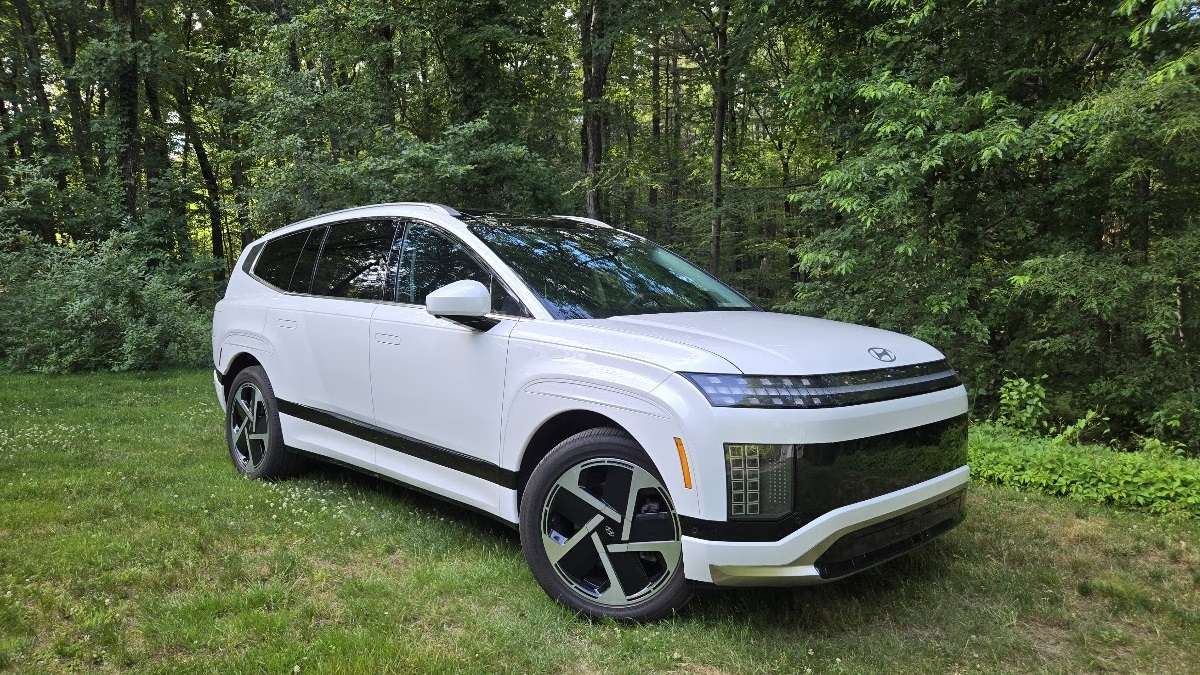

Hyundai has wisely created a wide array of green vehicles targeted directly at high-volume segments of the American vehicle market. Rather than pick a winning powertrain technology, Hyundai offers literally every option across many different vehicle sizes, from smaller than compact crossovers to full-size three-row SUVs. Let’s compare and contrast the largest of the green three-row SUVs that Hyundai builds to see if the battery-electric Ioniq 9 EV or the hybrid-electric Palisade Hybrid has the best cost of ownership. We’ll go all in and compare the top-of-the-line trims, which Hyundai calls Calligraphy. We’re going to lean toward the EV in every possible way in this comparison, just as we did with our recent comparison of the Subaru Solterra EV and Crosstrek Hybrid.
Purchase Price and Depreciation
Purchase price is one area where the hybrid usually has an edge, and it is true when comparing the Ioniq 9 EV and the Palisade Hybrid. We used Hyundai’s 2026 Build tool to add the Freight charges for each vehicle. The Ioniq 9 includes AWD, so we added it to the Palisade Hybrid at an added cost of $2K. The Ioniq 9 has a more expensive trim above Calligraphy, but we’ll use the lower-cost trim to lean toward the EV.
Ioniq 9 Calligraphy AWD Price $76,590
Palisade Hybrid AWD $60,380.
On day one of ownership, the hybrid is ahead by $16,210
EVs have the worst depreciation, and hybrids have the best value retention of all powertrain types, according to a recent study published by iSeeCars. Because neither of these two vehicles' depreciation values was specifically listed, we will use the average for each vehicle's powertrain type. However, we will again lean into the EV. Instead of 57.% depreciation, we will use 50%. For the Palisade Hybrid, instead of 35.4%, we will round up to 36%. Here is the 5-year depreciation of each model using these depreciation estimates from iSeeCars.
Ioniq 9 Calligraphy AWD $38,295
Palisade Hybrid AWD $21,737
If the owners were to trade in their vehicles after five years, the hybrid owner would be ahead by $16,558.
Insurance Cost
A recent study by Insurify found that EVs cost more to insure than vehicles with other powertrains. We are fortunate to have Insurify's support, so we reached out to ask for the national average annual insurance cost for these two specific models. Here is what Insurify told us. Please bear in mind that your location and driving record will determine your specific insurance costs, so please contact your own agent whenever you shop for a new vehicle:
Ioniq 9 Calligraphy AWD $3,107
Palisade Hybrid AWD $2,551
As you can see, based on these national averages (which may vary considerably for you), the EV owner will pay $556 more for insurance each year, or over five years, a total of $2,780 more than the hybrid owner.
Maintenance Costs EV vs. Hybrid
Sadly, Hyundai has ended its popular included maintenance plan that used to offer three years of coverage. So, in 2026, owners of these two vehicles will pay out of pocket from the first service visit on. We will make an estimate here, and again, lean into the EV and give it every possible benefit of the doubt. Since both vehicles require tire rotations, cabin air filters, wiper blades, 12-V batteries, and brake fluid services, we’ll omit those. We priced the OEM tires for both on Tire Rack, and we found them to be the same (close to $500 each - yowza!). Both vehicles have electric regenerative braking, which prolongs brake life, so we don’t need to do a brake calculation.
In this section, we will add $80 x 10 oil changes, totaling $800, to the COO of the Palisade Hybrid. Remember, with the tire rotations equaling out, the routine service is just an oil and filter change. We will add $300 additional costs for a transmission fluid change to the Palisade. We will also add $200 for a rear differential fluid change. The total five-year maintenance cost for the Palisade Hybrid will be $1,300. Since Hyundai has a “bumper to bumper” five-year warranty, we need not factor in any repair costs.
Energy Costs
The price an owner pays for the vehicle's energy is like insurance. It is hyper-local. In areas with low-cost electricity, the EV will have a decided advantage. By contrast, for EV owners who charge at public DC chargers, energy costs are very high. In areas like Indianapolis, where top-tier gas is selling at under $3.00/gallon today, hybrids will have a relatively low cost of energy. Price your energy costs yourself using your actual local cost data.
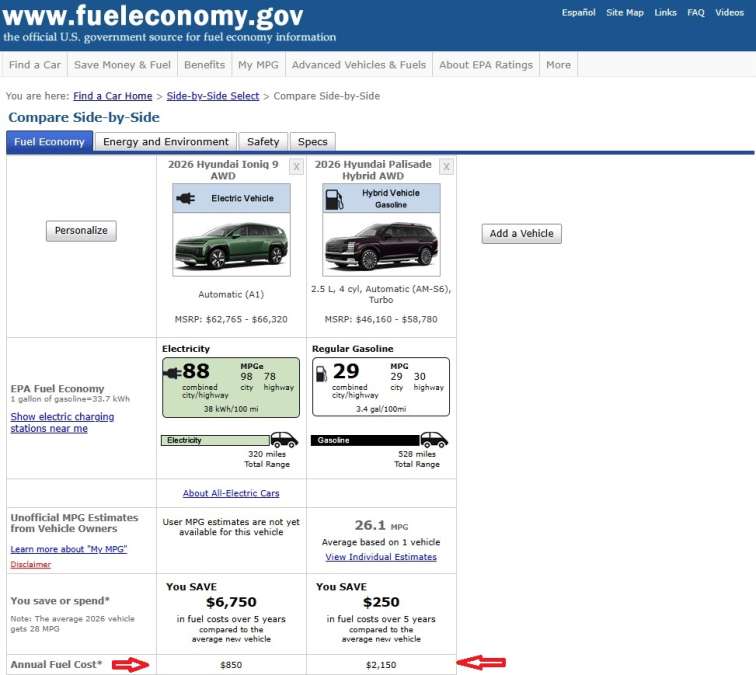
The EPA’s www.FuelEconomy.Gov website conveniently averages everything using a 15,000-mile-per-year assumption, and we can simply use the EPA’s numbers for example costs. We are again leaning towards the EV here, since gasoline is at a relative high point due to the Straight of Hormuz being closed (day 110). Here is the data:
Ioniq 9 Calligraphy AWD Price $850/year - $4,250 over 5 years
Palisade Hybrid AWD $2,150/year - $10,750 over 5 years
The five-year advantage for the EV is $6,500.
The Final Verdict - 2026 Hyundai Ioniq 9 EV vs. Palisade Hybrid
We totaled up the advantages and disadvantages this way:
$16,588 vehicle cost advantage Palisade Hybrid
$2,780 insurance cost advantage Palisade Hybrid
$1,300 maintenance cost advantage for Ioniq 9 EV
$6,500 energy cost advantage for the Ioniq 9 EV
Based on our analysis, which leaned toward giving the EV every possible advantage, we found that the Hybrid has a 5-year cost-of-ownership advantage of $11,568. Or $2,314 per year. As with our Solterra EV vs. Crosstrek Hybrid comparison, the hybrid wins decisively on cost of ownership. At the time of this story’s publication, Hyundai was delivering about ten times as many 3-row hybrid SUVs as Ioniq 9 EVs, and the gap was widening in favor of the hybrids. Could the real-world average cost of ownership be a primary reason why this is true?
Please help us find the inevitable math error in our analysis. Tell us about it in the comments below, and we will make corrections as needed.
John Goreham is a 14-year veteran of Torque News. An accomplished writer and a long-time expert in vehicle testing, Goreham also serves as the Vice President of the New England Motor Press Association and has a growing social media presence. He’s also a 10-year staff writer and community moderator for Car Talk. Goreham holds a B.S. in Mechanical Engineering and an undergraduate Certificate in Marketing. In addition to vehicle and tire content, he offers deep dives into market trends and opinion pieces. You can follow John Goreham on X and TikTok, and connect with him on LinkedIn.
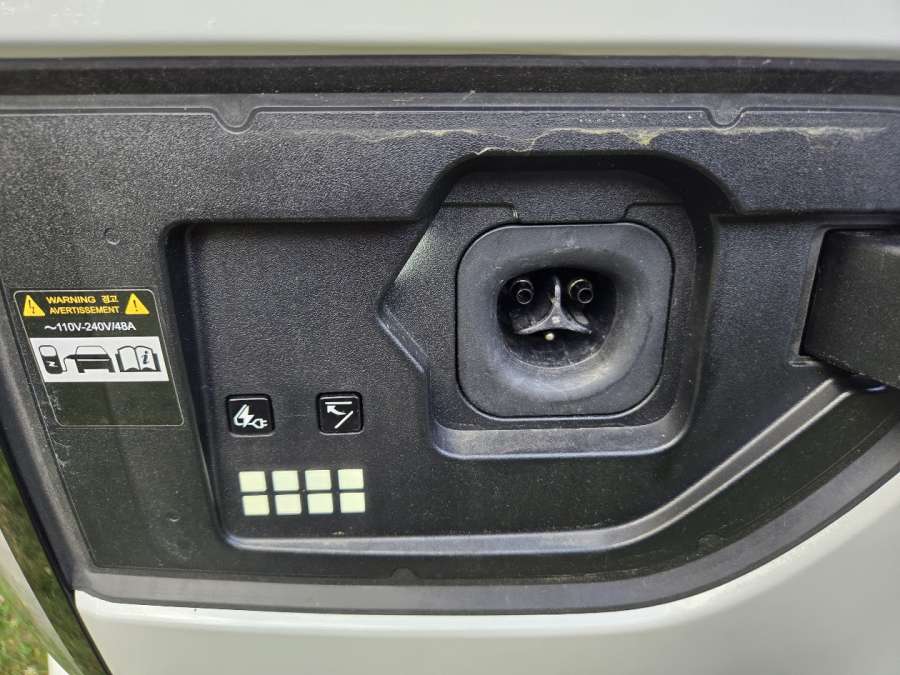
Top of page image of Ioniq 9 by John Goreham. Image of Ioniq 9 NACS port by John Goreham. Energy chart courtesy of the EPA.
Set Torque News as Preferred Source on Google
Follow us today...