
To start with, we must address a fundamental misunderstanding currently plaguing the automotive tech industry: the dangerous misapplication of artificial intelligence terminology. We see endless marketing hype about new electric vehicles functioning as "smart agents" or using "agentic AI" to transform how vehicles operate. But as I have consistently argued, the push for agentic AI is an error, as you wouldn't need agents to manage car functions. Agentic AI resides entirely in the cognitive layer; it is designed for reasoning, complex multi-step planning, and managing open-ended queries.
When I am driving through a sudden snow squall here in Bend, Oregon, I do not want my car's onboard systems to "reason" about the optimal distribution of torque or "plan" a response to black ice. I need highly capable, deterministic execution-layer automation. This is precisely where the 2026 Volvo EX90 excels. By wisely bypassing the flashy trend of attempting to make the car a reasoning agent, Volvo has focused instead on upgrading its onboard computers to deliver lightning-fast execution. The EX90 introduces enhanced slippery-road warnings and sophisticated hazard detection that function purely as execution-layer automation. This is exactly how vehicle systems should mature: by taking immense volumes of sensor data and translating it into immediate, automated physical responses that protect the occupants without unnecessary cognitive processing overhead.
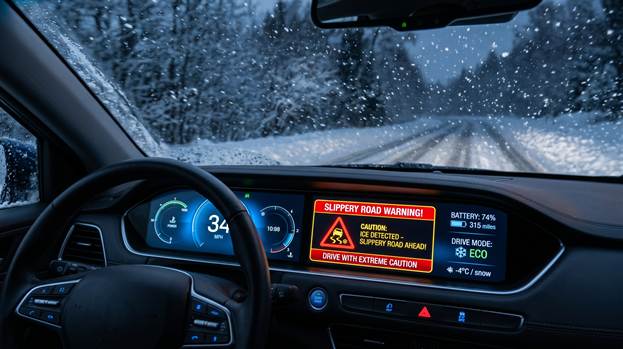
Understanding Advanced Sensor Integration in the EX90
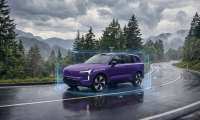
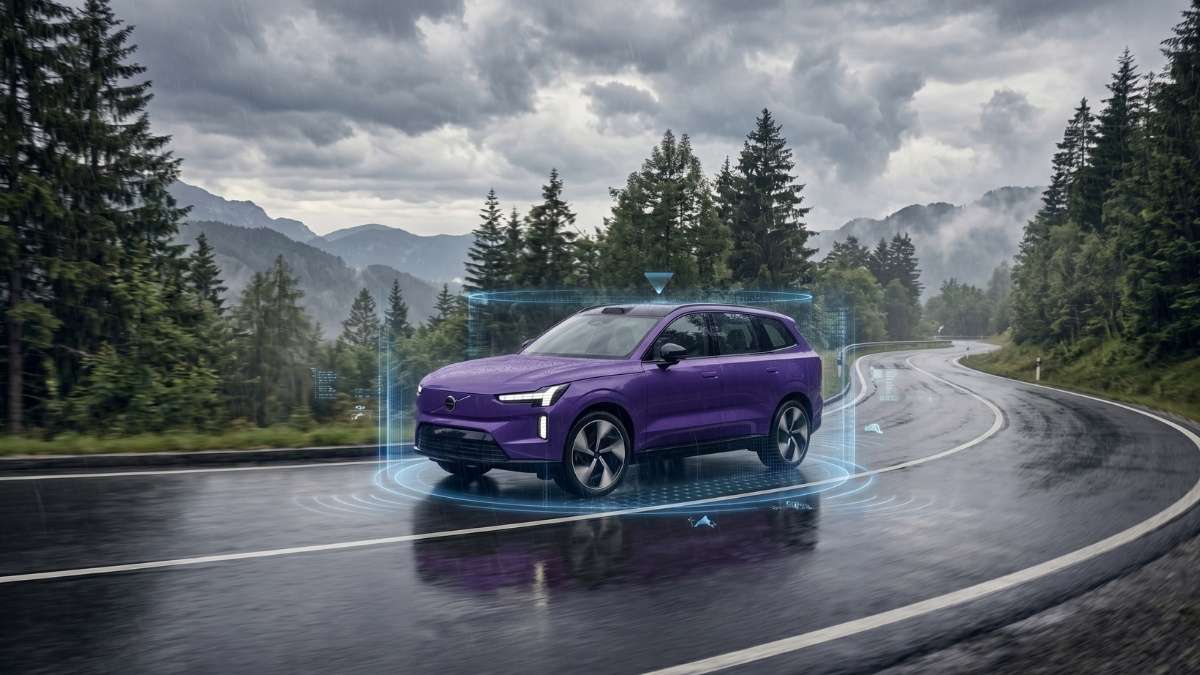
Let us look closely at how the EX90 gathers the data required for this execution-layer automation. The vehicle is essentially a rolling sensor suite, utilizing a highly advanced integration of cameras, radar, and ultrasonic sensors to create a continuous, 360-degree real-time model of its environment. According to the latest comprehensive testing by Car and Driver, the 2026 EX90 model has significantly upgraded its onboard computers to improve processing power and safely manage this immense data flow.
This level of sensor fusion is critical because no single sensor type is infallible. Optical cameras offer incredible resolution but can be blinded by the glaring afternoon sun or heavy snowfall. Radar pierces through weather and darkness to detect the speed and mass of objects but lacks fine visual detail. Ultrasonic sensors handle the immediate proximity data required for low-speed maneuvering. When you integrate these systems, you create an overlapping digital safety net. If a deer jumps onto a dark road, the vehicle’s execution automation doesn’t pause to query a large language model about the animal's species; the radar detects an object of significant mass entering the collision path, the cameras confirm the obstruction, and the onboard computer triggers the braking actuators within milliseconds.
This massive influx of data requires serious local compute capability. As someone who builds around two custom high-performance desktop systems a quarter—often leveraging the raw, multi-threaded power of AMD Threadripper processors—I intimately understand the value of processing power sitting close to the metal. You simply cannot rely on cloud latency for safety. The EX90 processes its environmental data entirely onboard, immediately translating sensor inputs into action.
One of the most practical and ingenious applications of this sensor integration is Volvo's interior radar system. This technology is sensitive enough to detect the sub-millimeter movement of a sleeping infant's chest or an animal's breathing. With six dogs in our family—Winston, Raven, Finn, Dolly, Adonis, and Fable—this isn't just an abstract marketing bullet point. An execution-layer system that prevents you from accidentally locking a pet in a hot car is a perfect example of technology solving a real-world problem through robust engineering, entirely without the need for a conversational AI overlay.
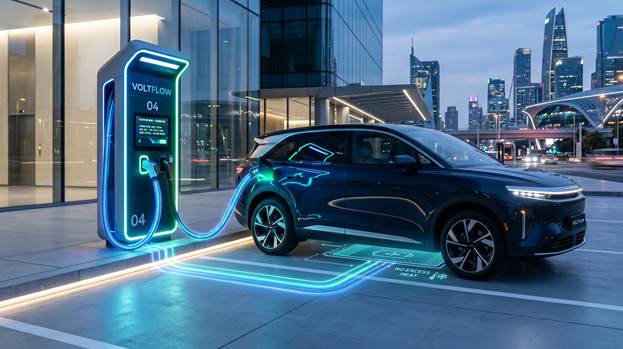
The Power of Upgraded 800V Tech and Onboard Computers
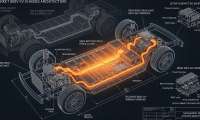
Beyond the sensor suite, the other massive technological leap for the 2026 EX90 is its migration from a 400-volt to an 800-volt electrical architecture. As a former Financial Analyst and Certified Management Accountant, I evaluate the structural foundation of a product line to determine its long-term market viability and return on engineering investment. Launching a flagship, three-row luxury EV on a 400-volt system in today's rapid-charging market creates an immediate technical bottleneck. Volvo recognized this constraint and pivoted with impressive speed.
I have a used EV myself - a 2022 Audi e-tron GT—and love it. A primary reason I love that car is the underlying 800-volt architecture. It fundamentally changes the ownership experience, particularly when traveling. In the updated EX90, the 800-volt system drastically reduces internal electrical resistance and heat generation during high-speed charging. This allows Volvo to use thinner, lighter wiring harnesses, reducing overall vehicle weight while simultaneously pushing peak DC fast-charging rates up to 350 kW. The result is that the EX90's massive 107-kWh battery can charge from 10 to 80 percent in a highly efficient 22 minutes.
Furthermore, this electrical upgrade facilitates a significant bump in dynamic performance. The Twin Motor Performance variant now produces a staggering 670 horsepower. That level of power delivery requires the thermal stability that only an 800-volt system can reliably provide under sustained acceleration. The upgraded onboard computers manage this immense power output, constantly adjusting torque vectoring at the execution layer to maintain traction and stability, even on compromised surfaces.
Evaluating Volvo’s Electric Vehicle Progress
When assessing how Volvo is doing overall with electrics, it is clear they are executing a calculated, iterative approach. While some competing automakers have chased viral headlines with beta-level autonomous driving software that frequently demands sudden driver intervention, Volvo has remained focused on what they have historically done best: occupant safety and elegant, highly functional design.
Their rollout hasn't been entirely without friction. Early software optimization challenges in smaller models demonstrated the inevitable growing pains of transitioning to entirely software-defined vehicles. However, their willingness to rapidly deploy the 800-volt system into the EX90 just one year after its initial launch reveals a highly agile engineering culture. They are actively learning, adapting, and refining their hardware platforms in real-time. This steady iteration builds long-term consumer trust, a metric that ultimately proves far more valuable in the automotive sector than temporary hype. Volvo is proving that you can successfully blend legacy safety philosophies with cutting-edge electrification.
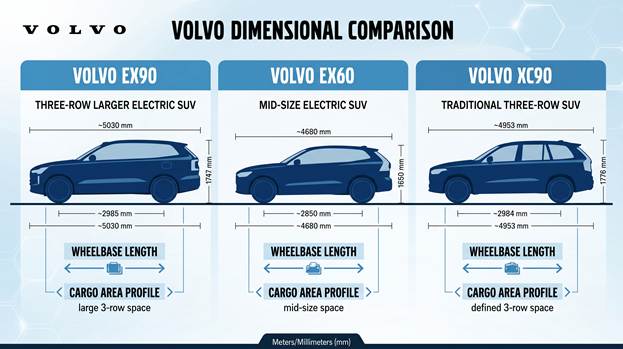
EX90 vs. EX60 vs. XC90: Finding the Right Fit
With this rapid influx of new models, premium SUV buyers face a complex choice between the EX90, the highly anticipated EX60, and the legacy XC90. Let us break down who should consider which vehicle within the lineup.
The Volvo XC90: This vehicle serves as the crucial bridge. It is ideal for the buyer who requires the interior volume of a three-row SUV but is not yet prepared for a fully electric lifestyle, or perhaps lives in an area where fast-charging infrastructure remains sparse. My wife Mary and I actually just ordered a 2026 XC60 to replace our 2021 model, recognizing the continued utility, safety, and refinement of that existing internal combustion platform. The XC90 serves a similar, reliable purpose for larger families, providing classic Volvo safety and space with the flexibility of internal combustion or plug-in hybrid powertrains.
The Volvo EX90: This is the uncompromised, all-electric flagship. Starting around $78,000, it is specifically tailored for affluent families who demand the absolute pinnacle of Volvo’s safety technology, maximum cargo space, and comfortable seating for seven passengers. If you are doing frequent road trips with a full cabin and want the security of an electro-mechanical fortress around your family, the EX90 is the definitive choice. The newly upgraded onboard computers power the Emergency Stop Assist—which can autonomously pull the vehicle over and contact emergency services if the driver becomes completely unresponsive. It is exactly this kind of execution-layer automation that justifies the flagship premium.
The Volvo EX60: This represents the sweet spot of the modern EV market, and quite frankly, it is the vehicle I am currently trying to order. I prefer 16-inch notebooks personally because the larger display makes them far closer to a true desktop replacement without being entirely immobile; the EX60 applies this exact same philosophy to the road. It is nimble enough for daily urban driving but spacious enough to serve as a primary utility vehicle without the sheer bulk of the EX90. Built on the new SPA3 architecture with native 800-volt technology from day one, the EX60 promises exceptional efficiency and rapid charging times. It is designed for drivers who want the advanced compute and sensor integration of the EX90, but in a slightly more agile, perfectly proportioned mid-size footprint.
The 800-volt foundation of the EX60 will mean that drivers can spend less time waiting at DC fast chargers and more time enjoying the open road. As electric vehicle infrastructure continues to mature, having a vehicle that can fully utilize 350 kW charging stations is a massive strategic advantage. It future-proofs the investment in a way that older 400-volt architectures simply cannot match.
Wrapping Up
When assessing the trajectory of the modern automotive landscape, it is remarkably easy for both consumers and manufacturers to become distracted by parlor tricks, screen-based novelties, and the misapplication of artificial intelligence. However, a vehicle is fundamentally a heavy, high-speed kinetic object, and its critical systems must be designed with absolute physical certainty. The automotive industry is at a critical juncture where the line between software and physical machinery is permanently blurred. Companies that fail to respect the physics of driving will inevitably stumble.
Volvo's comprehensive updates to the EX90 demonstrate a profound, industry-leading understanding of this reality. By investing heavily in a robust 800-volt electrical architecture and equipping the vehicle with serious, localized compute power, they are enabling highly capable execution-layer automation. Features like predictive slippery-road warnings, ultra-fast automated braking, and the lifesaving interior radar system rely on instant, deterministic hardware execution. They correctly recognize that cognitive-layer agentic AI has no business managing a car's critical dynamic functions.
Whether you are looking at the flagship scale of the EX90, the versatile and proven nature of the XC90, or the perfectly balanced EX60 that I am eager to secure, Volvo’s strategy remains clear and resolute. They are continuing their decades-long legacy of safety, forcefully updating it for the electric era through intelligent sensor integration and uncompromising engineering fundamentals.
Disclosure: Images rendered by Artlist.io
Rob Enderle is a technology analyst at Torque News who covers automotive technology and battery developments. You can learn more about Rob on Wikipedia and follow his articles on TechNewsWord, TGDaily, and TechSpective.
Set Torque News as Preferred Source on Google
Follow us today...