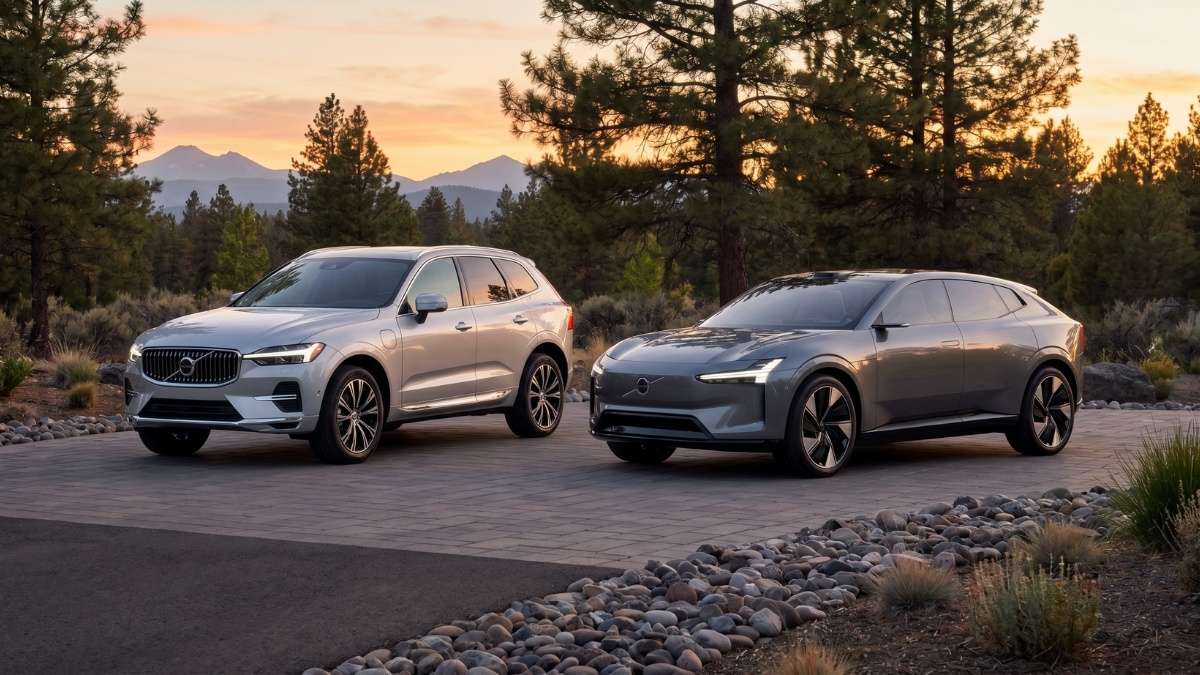

For the better part of a decade, the automotive industry has grappled with the messy middle ground of electrification. As an analyst who regularly evaluates the intersection of advanced computing platforms, software ecosystems, and transportation, I have watched automakers struggle to balance the familiar convenience of internal combustion with the inevitable, software-defined future of pure electric vehicles. Navigating this transition requires more than just adding batteries to existing platforms; it demands a comprehensive rethinking of how a vehicle operates, communicates, and manages energy. Among the premium midsize SUVs, the Volvo XC60 has consistently stood out as the gold standard for bridging this massive technological divide. It elegantly combined Scandinavian minimalism with an advanced, forward-looking powertrain philosophy that gave consumers the best of both worlds.
My wife Mary and I currently own a 2021 Volvo XC60 Recharge, and it is a vehicle we still thoroughly enjoy driving around our home in Bend, Oregon. When it was introduced, the T8 plug-in hybrid electric vehicle (PHEV) architecture represented a massive leap forward in consumer automotive technology. It gave us enough battery capacity for local errands, zero-emission school runs, and grocery trips while retaining a supercharged and turbocharged combustion engine for longer road trips without the anxiety associated with early charging infrastructure. The vehicle has been flawlessly reliable. However, as battery chemistries improve and central computing architectures evolve at a breakneck pace, the calculus for buying a new vehicle shifts dramatically. We recently found ourselves at a distinct decision point: do we upgrade to the substantially improved 2026 XC60 Recharge, or do we finally make the hard pivot to Volvo’s entirely new pure-electric platform?
Why The XC60 Remains The Benchmark For Midsize Luxury SUVs
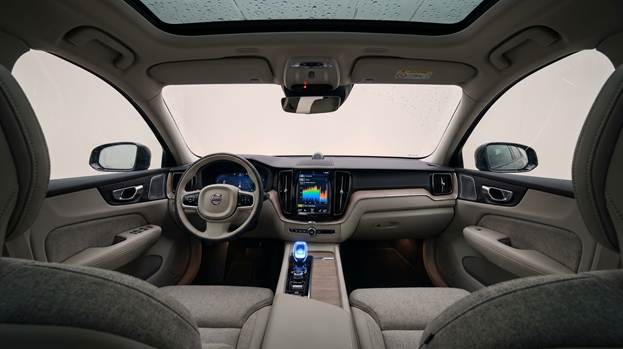
To fully understand the gravity of our purchase decision, one must first understand why the XC60 is such a formidable benchmark in its class. In the highly competitive premium midsize crossover segment, a vehicle is competing against established heavyweights like the Mercedes-Benz GLC, the Audi Q5, and the BMW X3. Yet, Volvo managed to carve out a dominant, highly profitable niche by focusing on an integrated experience rather than raw, aggressive specifications.
The XC60 does not try to be a sports car on stilts. Instead, it offers a rolling sanctuary. The integration of high-strength boron steel, advanced driver-assistance systems, and an interior that feels more like a high-end modern living room than a piece of heavy machinery makes it uniquely compelling. When we purchased our 2021 model, it was the integration of the T8 Twin Engine setup that truly impressed me as a technology analyst. It was a complex but beautifully orchestrated system where the electric motor handled the immediate torque demands and rear-wheel traction, while the combustion engine took over seamlessly at higher speeds.
For anyone looking to understand the pinnacle of this hybrid approach, taking a deep dive into the engineering of the 2026 Volvo XC60 plug-in hybrid reveals why it remains such a compelling option. This platform has proven its reliability, safety, and comfort over the years, setting an incredibly high bar for any vehicle—whether hybrid or pure electric—that attempts to replace it in a consumer's garage.
Breaking Down The 2026 XC60 Recharge Improvements
When Volvo announced the major refresh for the 2026 XC60 Recharge, it looked on paper like the perfect, logical upgrade path for our family. Volvo did not just give the car a superficial facelift with new bumpers and wheel options; they fundamentally improved the electric capability of the vehicle, making it arguably the most superior plug-in hybrid on the market today.
The most critical enhancement in the 2026 XC60 Recharge is the substantially denser battery pack and refined power delivery system. By updating the battery chemistry and increasing capacity, the electric-only driving capabilities have been vastly improved over older iterations, effectively allowing drivers to handle almost all daily tasks without burning a drop of fuel. The XC60 seamlessly integrates a 312-horsepower gas engine with a 143-horsepower electric motor, delivering a combined 455 horsepower that propels the SUV from 0 to 60 mph in a blistering 4.5 seconds.
With this kind of capability, the 2026 XC60 Recharge operates as a full EV for the vast majority of daily use cases. You get the immediate torque, the silent cabin, and the zero-emission driving for commuting, with the combustion engine only ever waking up for interstate travel or demanding uphill climbs. Furthermore, Volvo integrated their latest Android Automotive OS much deeper into the vehicle’s core hardware. This means Google Assistant, Google Maps, and the Play Store are not merely mirrored from a smartphone screen; they serve as the native intelligence of the car, capable of pre-conditioning the battery and routing trips based on topography to maximize hybrid efficiency.
For a long time, we were completely convinced. We were ready to trade in our 2021 model and order the 2026 XC60 Recharge. It represented the ultimate refinement of a hardware and software platform we already knew, trusted, and loved.
The Turning Point When We Saw The Pure-Electric EX60
Our plans changed abruptly when Volvo officially unveiled the EX60. Built on the brand’s highly anticipated pure-electric architecture, the EX60 is not just an electrified XC60; it is a fundamental rethinking of what a midsize luxury SUV can be when completely freed from the packaging and thermal constraints of internal combustion.
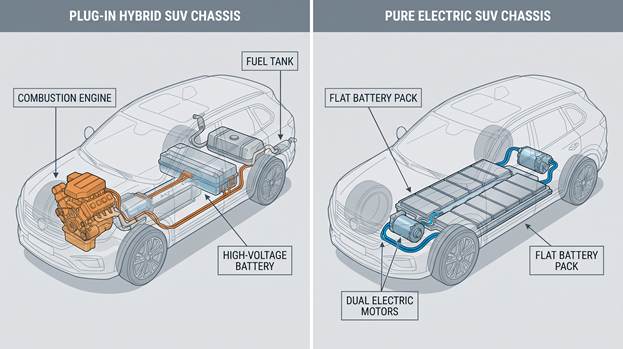
In the technology sector, we often look at the underlying architecture to determine the lifespan and true capability of a product. A hybrid, no matter how advanced, is essentially running two disparate operating systems—mechanical and electric—trying to work in harmony. The EX60 utilizes a core computing technology called HuginCore, paired with highly advanced centralized computing intelligence. This centralized compute architecture is a massive leap over the distributed, isolated electronic control units (ECUs) found in older legacy vehicles.
More importantly, it shifts the vehicle's software paradigm. In my previous columns, I have drawn a strict distinction between agentic AI at the cognitive layer and simple automation at the execution layer. The 2026 XC60 uses excellent automation- it can execute lane-keeping and optimize fuel mixing based on fixed algorithms. The EX60, however, leverages integrated Google Gemini technology to deliver true AI capabilities. It doesn't just automate tasks; it cognitively manages the vehicle's entire ecosystem. The AI assistant understands natural, conversational context, monitors battery health dynamically, and utilizes Breathe Charge software to adapt its charging curves in real-time. This reduces charging times by up to 30 percent without degrading the battery cells. This is a cognitive vehicle, entirely distinct from an automated one.
Why We Pivoted To The EX60 P12
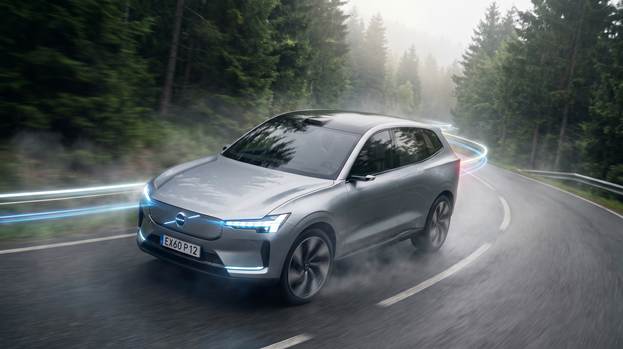
Once you experience a true, ground-up EV platform with a centralized compute architecture, buying another combustion-hybrid—even one as brilliantly executed as the 2026 XC60—feels akin to investing in the ultimate flip phone right after the smartphone was announced. We decided not to get the new XC60, and instead, we are waiting to order the flagship EX60 P12 version when it becomes available in late spring.
Let’s break down the specifications of the all-new Volvo EX60, specifically the top-tier P12 variant, because the numbers are nothing short of revolutionary for this segment. The P12 features an enormous 117 kWh structural battery pack paired with a next-generation dual-motor, all-wheel-drive system that produces a staggering 670 horsepower. It can launch this midsize SUV from 0 to 60 mph in just 3.8 seconds with instant torque and steady traction.
However, as I frequently note when analyzing EVs, raw acceleration is a cheap party trick. What actually matters to consumers is reliable range and efficient thermal management. The EX60 P12 promises an estimated 400 miles of range. For my specific driving profile—frequent trips across the sprawling Pacific Northwest—400 miles is the magic number where range anxiety completely evaporates.
Equally critical is the charging architecture. I have long advocated for the industry to move aggressively toward 800-volt charging architectures. The EX60 embraces this high-voltage platform, allowing it to pull power from 400 kW DC fast chargers to replenish the massive battery from 10 to 80 percent in just 19 minutes. When you combine 400 miles of range with a sub-20-minute charge time and access to the built-in NACS charging port for widespread compatibility, the last remaining argument for carrying a heavy internal combustion engine around just in case you need to take a road trip completely collapses.
The Software And Hardware Synergy
Beyond the battery, the EX60 P12 offers a physical packaging advantage that the XC60 simply cannot match. By eliminating the transmission tunnel, the bulky exhaust routing, and the engine bay entirely, the EX60 opens up 64.3 cubic feet of rear cargo space. It adds a versatile front trunk (frunk) for charging cables and delivers incredibly spacious interior seating dimensions that rival vehicles a full class larger. The raised cabin maintains a confident driving position, while the low front and gently sloping roof let air flow smoothly over the body, minimizing drag.
The integration of world-first multi-adaptive safety belts in the front seats and a structural battery pack that enhances chassis rigidity shows a maturity in EV design that Volvo has clearly mastered. It is this profound synergy of software intelligence at the cognitive layer and advanced material engineering at the physical layer that makes the EX60 the logical endpoint of the journey the XC60 started.
Wrapping Up
The automotive industry's transition from fossil fuels to sustainable electric power is not a sudden, binary switch; it is a phased, complex evolution. The Volvo XC60 has served as the perfect technological bridge during this turbulent decade. Our 2021 model introduced us to the tangible benefits of electrification, and the upcoming 2026 XC60 Recharge represents the absolute pinnacle of plug-in hybrid technology. With its refined powertrains and improved battery density, it remains the definitive benchmark for anyone who still requires the safety net of gasoline.
Yet, technology marches forward relentlessly. Seeing the pure-electric EX60, particularly the high-performance, long-range P12 variant, made it abundantly clear that the bridge has finally been crossed. With a 400-mile range, an 800-volt fast-charging architecture, and true agentic AI managing its cognitive computing layer, the EX60 is not just a replacement for the XC60; it is a fundamental paradigm shift in what a luxury vehicle can be. We will continue to enjoy driving our 2021 hybrid for a little while longer as we wait for the order banks to open, but our next vehicle will definitively leave the combustion engine behind. The future is fully electric, and with the impressive EX60 P12, that future has finally arrived.
Disclosure: Images rendered by Artlist.io
Rob Enderle is a technology analyst at Torque News who covers automotive technology and battery developments. You can learn more about Rob on Wikipedia and follow his articles on TechNewsWord, TGDaily, and TechSpective.
Set Torque News as Preferred Source on Google
Follow us today...