
The automotive industry is undergoing a seismic shift, transitioning from mechanical engineering marvels to rolling computers. Today’s electric vehicles (EVs) are what the industry calls "Software Defined Vehicles" (SDVs). This shift has fundamentally altered how cars are manufactured, sold, and maintained. Analysts tracking the automotive software landscape at McKinsey & Company project that the software and electronics market could reach a staggering $519 billion by 2035. But this rapid digitalization has introduced a deeply frustrating reality for consumers: the hardware you physically bought and paid to transport might not actually belong to you—at least, not functionally.
To streamline manufacturing and maximize post-sale revenue, automakers are increasingly building cars with fully loaded hardware suites. They then use software to artificially lock away features, demanding monthly subscriptions or hefty one-time fees to turn them on. From heated seats to advanced battery capacity and dynamic lighting, the capability is already bolted to your chassis.
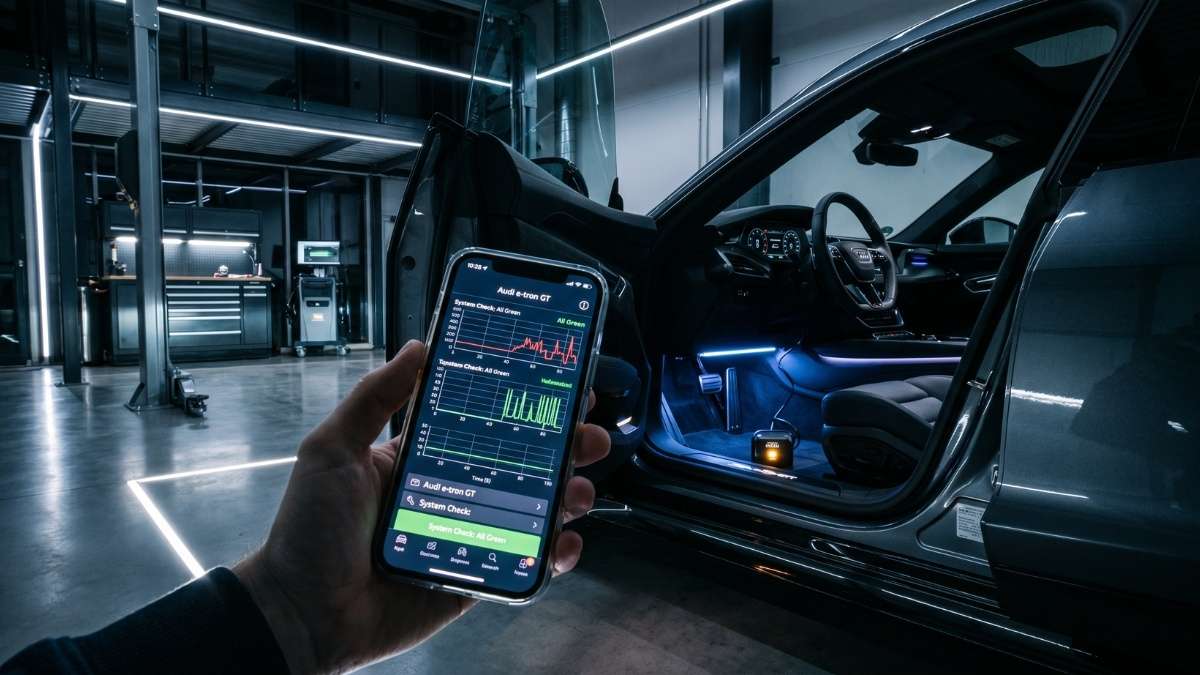
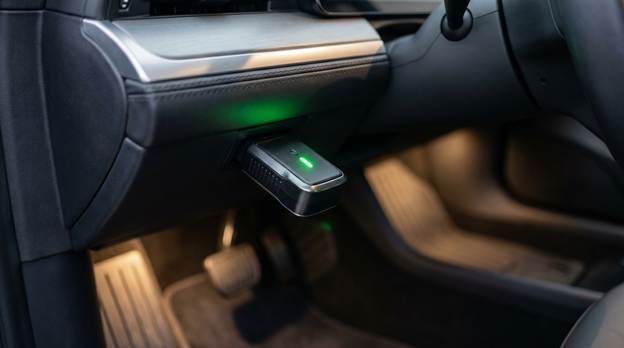
However, a quiet rebellion is taking place in the garages of tech-savvy owners. Through the use of third-party On-Board Diagnostics (OBD-II) coding tools, drivers are pulling back the curtain on these software-locked features. As a technology analyst who monitors the intersection of consumer electronics and the automotive industry, I recently decided to investigate this firsthand. I have a Carly diagnostic tool, and I recently used it to dive into the digital brain of my own used 2022 Audi E-Tron GT to make some personalized changes.
What I found perfectly illustrates the ongoing battle for control over the modern automobile, and it proves that the fight for digital ownership has officially moved from the smartphone to the driveway.
The Economics of the Hardware Paywall
To understand why a manufacturer would spend money to install hardware they aren't charging you for upfront, you have to look at supply chain economics. Building a single, unified wiring harness and installing a standardized set of LED headlights or battery packs across an entire vehicle lineup is vastly cheaper than managing dozens of different physical configurations on the assembly line.
Automakers realize their savings in streamlined manufacturing, but they realize their profits through software paywalls. Tesla famously popularized this by shipping cars with identical battery packs, artificially limiting the range via software on cheaper models, and offering an over-the-air "unlock" for a fee. This practice has generated massive controversy, such as the widely reported incident documented by Electrek where a customer was asked to pay a $4,500 ransom just to reclaim 80 miles of battery range that a software update arbitrarily locked away. European automakers quickly followed suit, seeking the same lucrative margins.
This brings us to the enthusiast's desire to bypass the toll booth. If the hardware is physically present, drawing power, and carrying its own weight in your EV, shouldn't you be able to use it? This is where tools like Carly step into the void.
Unlocking Potential: From LED Matrix to Battery Management
Using an OBD-II tool to "code" a car isn't new, but the capability has expanded dramatically with the rise of EVs. Coding doesn't mean writing software from scratch; it means accessing the vehicle's control modules and flipping digital switches—changing a "0" to a "1" to tell the car that a specific feature is now authorized to operate.
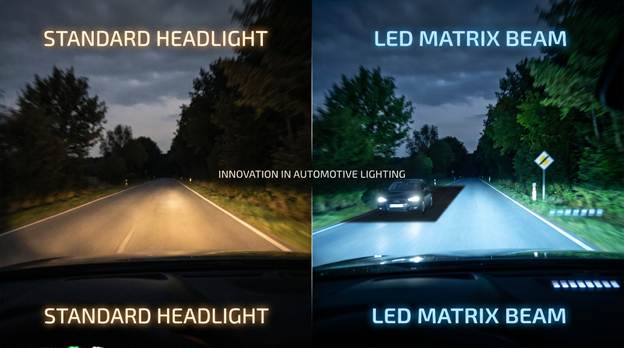
One of the most sought-after modifications today involves LED Matrix headlights. Many European EVs, including my Audi E-Tron GT, are equipped with sophisticated Matrix headlights capable of selectively dimming portions of the high beam to avoid blinding oncoming traffic while keeping the rest of the road illuminated. Due to outdated regulatory hurdles in the United States that were only recently updated by the National Highway Traffic Safety Administration (NHTSA), many vehicles were sold in the US with the Matrix hardware physically installed but software-hobbled to act like standard low/high beams. Tools capable of long-coding allow users to access the central electrics module and activate the full, adaptive Matrix functionality the hardware was designed for. (Sadly, I’ve found, that only very high-end dealer tools can enable these lights, which I did, only to have a subsequent software patch disable them again).
Beyond lighting, software modifications extend deep into the EV's core. Enthusiasts use diagnostic tools to monitor and sometimes tweak battery management systems. While safely increasing range is usually locked behind heavily encrypted powertrain modules, owners can unlock granular data displays. You can expose raw battery temperatures, true state-of-charge metrics that the dashboard usually hides to prevent range anxiety, and detailed cell-balancing data.
Furthermore, you can disable annoyances. When I connected Carly to my E-Tron GT, I found options to adjust the behavior of the parking sensors, change the number of turn signal flashes for a lane change, and alter the startup animations of the infotainment system. To get the most out of the system and access the full database of coding options, users typically subscribe to the full suite of features. If you are curious about how these business models are structured and what is actively supported, you can read exactly What is Carly Premium Package directly from their official support documentation.
How Carly Compares to the Competition
The market for OBD-II modification tools is highly stratified, catering to everyone from the casual tinkerer to the master mechanic. Carly occupies a specific, consumer-friendly middle ground, but it is far from the only player in the digital garage.
At the highest end of the spectrum for Volkswagen Group vehicles (which includes Audi, Porsche, and VW) is VCDS by Ross-Tech. VCDS is the gold standard for authorized independent mechanics. It requires a dedicated Windows laptop, a wired or specialized wireless connection, and a deep understanding of hexadecimal coding. It is immensely powerful, allowing for deep module reprogramming, but its user interface looks like a spreadsheet from 1998. It is decidedly not for the faint of heart, and making a mistake here can be catastrophic.
In the middle sits OBDeleven. Highly popular among European car enthusiasts, OBDeleven operates via a smartphone app just like Carly. However, it relies heavily on a micro-transaction model. While you can do manual long-coding yourself if you purchase the recurring "Pro" license, the app heavily pushes "One-Click Apps" that cost digital credits to activate. You buy these credits with real money simply to flip a switch. It creates a nickel-and-dime environment that some users find frustrating.
Carly takes a more streamlined approach. It is explicitly designed for the modern smartphone user who wants the benefits of coding without needing a computer science degree or wanting to deal with confusing credit systems. The interface is clean, and the modifications are presented in plain English (e.g., "Activate Video in Motion" or "Seatbelt Warning Sound - Off"). Instead of micro-transactions per tweak, Carly operates on an annual subscription model tied to the specific brand of your car. For someone who just wants to customize their daily driver, run thorough diagnostic checks before taking the car to the dealer, or monitor real-time engine and battery parameters, Carly provides an accessible bridge over the technical moat automakers have dug.
The Automaker Pushback: Security Versus Monopoly
Automakers are acutely aware that consumers are bypassing their paywalls. Consequently, the walls are getting higher. Cars are no longer standalone machines; they are connected nodes on a massive network, making cybersecurity a genuine concern.
Manufacturers are increasingly locking down their vehicles to prevent third-party tools from accessing the full range of upgrades. Volkswagen Group, for instance, introduced SFD (Schutz Fahrzeug Diagnose), a strict security gateway. As detailed by aftermarket tuning companies like APR in their SFD technical guidance, this system requires a real-time, online cryptographic token from the manufacturer's servers before any control module will accept coding changes. Other automakers like Stellantis and Ford have implemented similar Security Gateway (SGW) modules.
Automakers argue this is necessary to protect vehicles from malicious hacking. If a car's systems can be rewritten by anyone with a Bluetooth dongle, the risk of a bad actor taking control of the brakes or steering is theoretically non-zero.
However, right-to-repair advocates argue that security is often used as a convenient excuse to monopolize the service and upgrade market. Automakers want you to go to the dealer. They want the dealer to be the sole arbiter of software updates, diagnostics, and feature unlocks. Organizations like the Auto Care Alliance are actively lobbying for the REPAIR Act to ensure independent shops and consumers maintain access to vital vehicle data. By locking out third-party tools, automakers preserve a highly lucrative ecosystem. It ensures that if a consumer wants the Matrix headlights activated or a different thermal management profile installed, they must pay the manufacturer's asking price rather than doing it themselves in their driveway.
The Real Risks of DIY Modifications
While sticking it to the manufacturer and unlocking hidden features feels like a victory for the consumer, using tools like Carly, OBDeleven, or VCDS is not without genuine risk. As cars become heavily reliant on interconnected software, making a change in one module can have unforeseen cascading effects on another.
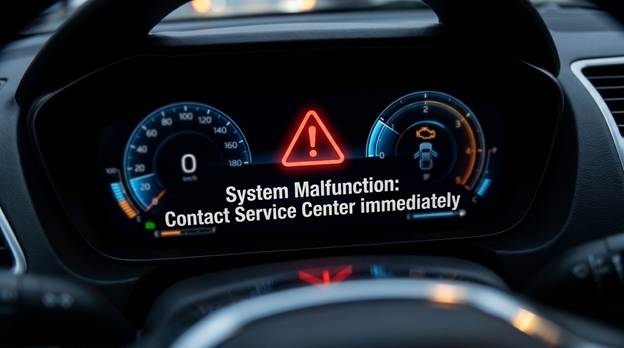
The most severe risk is "bricking" a control module. If the Bluetooth connection drops mid-coding, or if the tool writes an incorrect value to a vital component, the module can become completely unresponsive. Replacing a bricked central electrics module or a battery management controller in a modern EV can cost thousands of dollars, and the car may be entirely undrivable in the meantime.
Furthermore, there is the ever-present threat to your warranty. While the Magnuson-Moss Warranty Act in the United States protects consumers from having their entire warranty voided simply for using aftermarket parts, software is a gray area. If you use an OBD tool to alter the thermal management limits of your EV's battery to achieve faster DC fast-charging speeds, and the battery subsequently degrades or fails, the manufacturer will almost certainly deny your warranty claim. They can easily see the digital footprint of unauthorized access in the vehicle's diagnostic logs.
Finally, there are safety implications. Disabling seatbelt chimes, altering the deployment parameters of driver assistance systems, or messing with the calibration of the anti-lock brakes puts you, your passengers, and other drivers at risk. The line between a "convenience tweak" and a "safety hazard" is one you cross at your own peril. This is why reliable consumer tools like Carly deliberately restrict access to the most dangerous, low-level powertrain and safety modules, keeping the consumer confined to comfort, lighting, and infotainment systems.
Wrapping Up
The era of the Software Defined Vehicle has fundamentally altered the relationship between the driver and the machine. Automakers have realized that wrapping physical hardware in digital paywalls is a highly effective way to generate continuous revenue long after the vehicle has left the showroom lot.
However, as long as these walls exist, there will be a market for ladders. Diagnostic and coding tools like Carly empower drivers to reclaim a sense of ownership over the vehicles sitting in their driveways. My experience tweaking my Audi E-Tron GT proved to me that the desire to customize, understand, and optimize our vehicles hasn't disappeared with the combustion engine; it has simply migrated to the digital realm.
Yet, this power must be wielded responsibly. The tug-of-war between automakers protecting their intellectual property (and their profit margins) and consumers demanding the right to repair and modify their property is only going to intensify. As security gateways become more complex, the tools required to bypass them will become more sophisticated.
For the modern EV owner, understanding how your vehicle's software dictates its physical reality is no longer just for tech geeks—it is a critical part of consumer literacy. Whether you choose to plug in a tool and flip the digital switches yourself, or pay the dealer for the privilege, knowing what your car is truly capable of is the first step to true ownership.
Disclosure: Images rendered by Artlist.io
Rob Enderle is a technology analyst at Torque News who covers automotive technology and battery developments. You can learn more about Rob on Wikipedia and follow his articles on TechNewsWord, TGDaily, and TechSpective.
Set Torque News as Preferred Source on Google
Follow us today...