
As an analyst dissecting everything from the 800V architectures in modern EVs to the nuances of cognitive-layer agentic AI, I spend a massive amount of my professional time analyzing how complex technology reshapes the physical world. Whether I am evaluating the advanced driver-assistance systems in my own used 2022 Audi E-Tron GT or finalizing the order for our new 2026 Volvo XC60 Recharge to replace our 2021 model, I actively look for innovations that fundamentally change the user experience. In the automotive enthusiast space, one of the most profound technological shifts is happening not out on the asphalt, but right in the living room.
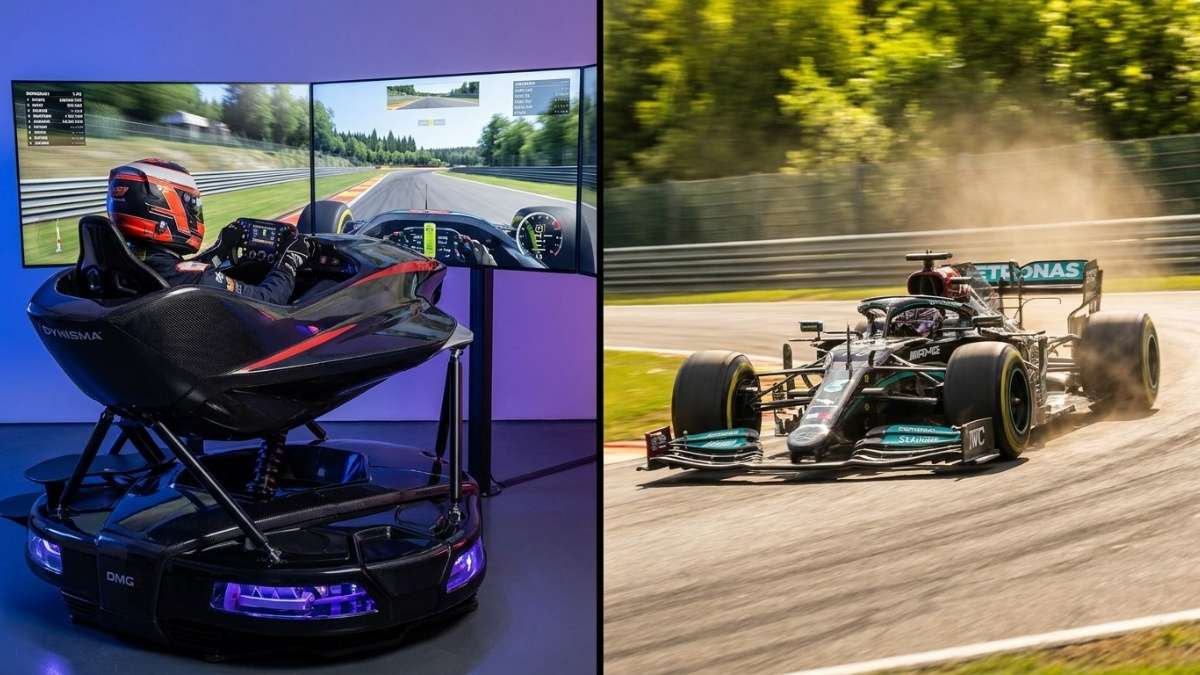
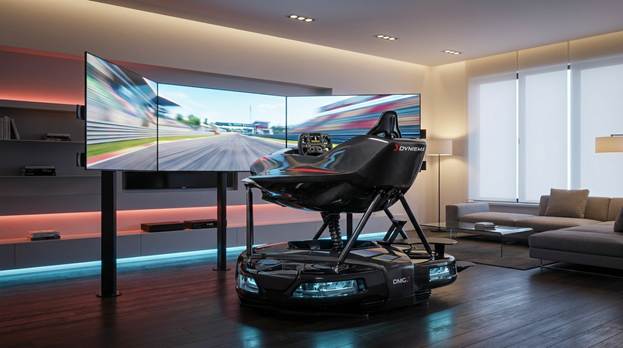
Recently, a specialized engineering company called Dynisma launched the DMG-S, essentially widening access to F1-derived driving simulator technology for the prosumer market. You can explore the exact engineering specifications of this remarkable system directly at Dynisma's official DMG-S portal. This hardware is not a simple gaming peripheral built for casual entertainment; it is a profound piece of engineering designed specifically to bridge the widening gap between virtual simulation and physical track reality. Much like my ongoing lust for the hubless motor engineering of the Verge TS Ultra electric motorcycle, the DMG-S represents a zero-compromise approach to performance hardware, promising to completely revolutionize how drivers prepare for the physical track.
The Personal Struggle Between Building and Buying
A few years back, my lifelong fascination with vehicle dynamics and execution-layer automotive automation led me down a familiar enthusiast rabbit hole. I desperately wanted a high-end driving simulator at home in Bend, Oregon. The idea of running hot laps at the Nürburgring Nordschleife or navigating the Corkscrew at WeatherTech Raceway Laguna Seca while the winter snow fell heavily outside our residence was incredibly appealing. However, when I presented the budget for a professional-grade simulator to my wife, Mary, she immediately balked. As the former Creative Director for Intel, Mary has an incredibly refined eye for technology and design, but she also possesses a finely tuned radar for when an enthusiast budget crosses the line from rational to absurd. The professional rig was firmly and immediately vetoed.
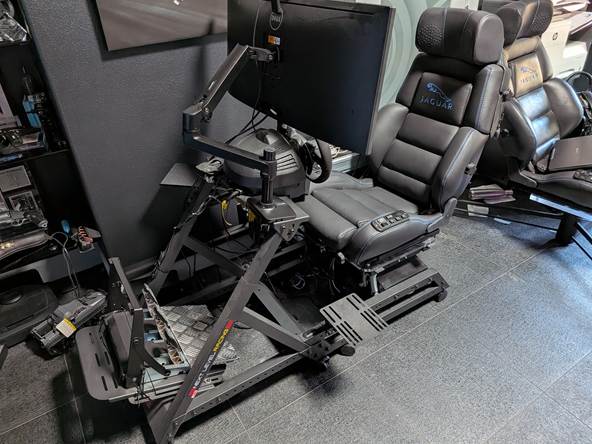
Not one to be deterred by a simple "no," I decided to build my own solution. For decades, I have built around two desktop systems a quarter to test new hardware configurations, so I am certainly no stranger to custom architectural builds. I started with a Threadripper high end gaming rig that AMD sent and rigged up internal RGB lighting to give the entire setup some visual flair. Because I personally prefer 16-inch notebooks for their desktop-like screen real estate when traveling, I wanted the simulator to have massive visual presence. I connected the rig to a 24” curved monitor setup (and often used a head mounted VR display) to emulate a true, immersive cockpit environment, heavily powered by that AMD Threadripper processor to eliminate any frame drops. It is articulated so it angles in curves and for acceleration, and it even has as but-Thumper to feel the rumble of the virtual engine.
It was a fantastic, high-performance machine. But despite the raw compute power pushing the pixels, the entire experience was ultimately constrained by consumer-grade peripherals. It simply lacked the instantaneous, high-bandwidth haptic feedback that a professional system like the Dynisma DMG-S effortlessly delivers. The DMG-S utilizes advanced Direct Drive technology that translates the exact friction, slip angle, and track surface irregularities directly into the driver’s hands and body with virtually zero perceptible latency. My homemade rig was fun, but it wasn't a professional training tool.
How High-Fidelity Simulators Actually Improve Driving Skills
There is an ongoing, heavily contested debate in the automotive community about whether virtual track time truly translates to physical driving skills. The short, scientifically validated answer is an emphatic yes, provided the simulator hardware possesses the requisite fidelity. When you are piloting a high-performance vehicle on a physical race track, your brain is functioning fundamentally as the agentic AI at the cognitive layer. It is processing rapid visual and tactile inputs at extreme speeds, while your hands and feet manage the execution layer to keep the car balanced on the knife-edge of traction.
Simulators like the DMG-S allow you to intimately train this cognitive processing loop without the inherent, catastrophic risks of physical track time. You can experiment with different racing lines, threshold braking points, and aggressive slip angles without the paralyzing fear of putting a six-figure car into a concrete retaining wall. This is backed directly by empirical research; studies utilizing professional racing simulators have shown that the telemetry and behavioral data generated by human drivers in high-fidelity virtual environments can be directly utilized to optimize physical racing performance and even train autonomous driving systems, effectively blurring the line between human and machine telemetry.
Furthermore, rigorous academic research comparing the visual-motor performance of racing drivers and non-racing drivers within a simulator environment found that professionals naturally maintain significantly faster lap times, exhibit higher steering precision, and utilize optimal racing lines even when the vehicle is entirely virtual. The cognitive skills are directly transferable. By spending dozens of hours in a high-fidelity Dynisma simulator, a driver comprehensively trains their eye-tracking and muscle memory. When they finally arrive at the physical track, they are already entirely up to speed. They spend their extremely expensive track sessions refining their technique rather than learning the basic geographic layout of the circuit.
The True Cost of Track Days and the Financial Breakeven
While the initial purchase price of an F1-derived simulator like the DMG-S is undeniably steep, it absolutely must be viewed through the lens of long-term cost displacement. Physical track days are financially brutal endeavors. Between exorbitant entry fees, mandatory travel, specialized insurance policies, and the severely accelerated wear on vehicle consumables, the physical pursuit of speed is essentially a bottomless money pit.
To truly understand how a professional simulator can actually save an avid track day driver substantial money over the long term, we need to analyze the breakeven point across three distinctly different ownership scenarios.
Scenario 1: The Dedicated Track Car Owner
Consider the enthusiastic driver who has explicitly purchased a dedicated track car—perhaps a stripped-out BMW M3 or a specially prepped, roll-caged track vehicle. This individual isn't just paying for the car itself; they are perpetually paying for a heavy-duty tow vehicle, a specialized enclosed trailer, and dedicated commercial storage space to house the entire rig.
When this driver actually hits the track, the consumable costs are staggering. A single set of sticky, track-focused slick tires can easily cost $1,500 to $2,500, and they might only last for two aggressive weekend events before heat cycling out. High-performance racing brake pads and slotted rotors can add another $1,000 every few months. When you factor in track registration fees, high-octane racing fuel, and out-of-state travel expenses, a single weekend can easily cost $2,000 just in basic operational overhead.
If this driver actively attends ten events a year, they are rapidly burning through over $20,000 annually just to keep the car functionally viable on the asphalt—and that figure doesn't even begin to account for major mechanical failures, inevitable engine rebuilds, or the highly probable minor collisions. By investing in a high-fidelity simulator, this driver can comfortably reduce their physical track days by half while actually increasing their total effective "seat time" exponentially. In this scenario, the absolute financial breakeven for a professional-grade simulator is likely between three and four years, completely paid for by the realized savings on tires, brakes, and travel expenses.
Scenario 2: Tracking a Reasonable Daily Driver
The second, incredibly common scenario involves the enthusiast who takes their reasonable daily driver to the track. This might be a Porsche Cayman, an Audi RS3, or a high-performance EV similar to my Audi E-Tron GT.
While they clearly save money by not owning an expensive tow rig or a dedicated track vehicle, they face a completely different set of devastating financial risks. Track driving subjects a standard street car to immense thermal loads and physical stresses it was never fully engineered to endure constantly. The street-oriented brake fluid boils, the street tires melt into useless clumps of rubber, and the suspension bushings degrade rapidly. Furthermore, standard automotive insurance almost universally excludes on-track incidents. Purchasing specialized supplemental track day insurance for a $70,000 daily driver can easily cost upwards of $400 to $600 per single weekend.
Toyota Insurance
If this driver completes five track weekends a year, they are spending roughly $3,000 on specialty insurance, $4,000 on replacing heavily degraded street tires, and $2,000 on accelerated maintenance intervals. That is nearly $10,000 a year in easily hidden costs, not to mention the severe depreciation hit the vehicle takes from obvious track abuse. Here, a simulator acts directly as a mechanical preservation tool. By satisfying the intense urge to drive aggressively in the virtual world, the owner successfully preserves the longevity and eventual resale value of their primary daily driver. The breakeven point here mathematically extends to perhaps five to seven years, but it successfully eliminates the constant, nagging anxiety of catastrophically breaking your primary mode of daily transportation.
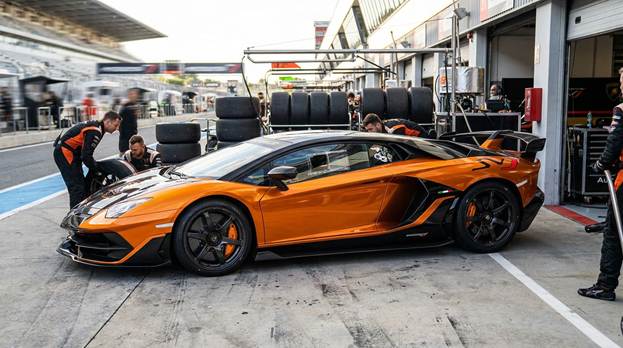
Scenario 3: The Exotic Car Experience
Finally, let’s deeply examine the exotic car owner. This is the affluent individual who actively wants to take their Ferrari, McLaren, or Porsche 911 GT3 RS out to the physical track. In this elite tier, the raw economics of track driving become downright astronomical.
Securing track day insurance for a $350,000 exotic car can easily exceed $2,500 for a single day of coverage, assuming a specialized policy can even be underwritten by the carrier. The standard consumables are equally punitive. A single set of factory carbon-ceramic brake rotors can cost an astonishing $15,000 to replace once they inevitably oxidize from extreme track temperatures. Specialized, ultra-high-performance track tires like Michelin Pilot Sport Cup 2s routinely run $3,000 a set and may realistically only last a single, highly aggressive weekend of hard driving before the tread is completely gone.
More importantly, the absolute financial risk of a minor off-track excursion is simply massive. Dropping a single wheel into a gravel trap can instantly result in $20,000 of cosmetic damage to delicate carbon fiber splitters and critical underbody aerodynamic components in a matter of seconds. For the exotic car owner, the purchase of a Dynisma DMG-S simulator isn't just a high-end accessory; it is a critical, highly vital insurance policy. If the simulator prevents even a single crash by allowing the driver to perfectly memorize the incredibly tricky braking zones of a difficult circuit before they ever arrive in their physical car, the simulator functionally pays for itself instantaneously. Even without calculating an accident, the massive savings on preserving carbon-ceramic brakes and exotic tires mean the true financial breakeven point is very often reached in less than two years of active use.
Wrapping Up
The global automotive landscape is undeniably evolving at a rapid pace, and the technological tools we use to interface with these incredibly complex machines must necessarily evolve alongside them. Just as the advanced execution-layer automation in modern vehicles has fundamentally changed how cars physically handle on the extreme limit of adhesion, virtual technologies like the Dynisma DMG-S are fundamentally changing how human drivers actively train at the crucial cognitive layer.
I still have a very deep fondness for the custom-built, heavily illuminated PC rig I painstakingly assembled in my Bend office, and the distinct memory of Mary firmly bringing me back to economic reality regarding my initial simulator budget still makes me smile. However, looking at the pure, calculated economics and the undeniably verified skill-transfer benefits, it is abundantly clear that professional-grade simulators are no longer just expensive toys reserved for the ultra-wealthy. They are highly calculated, highly rational investments for anyone truly serious about going fast. Whether you are preserving a dedicated track car, saving a daily driver from extreme mechanical wear, or meticulously protecting a six-figure exotic vehicle, successfully bringing authentic Formula 1 technology directly into your home is easily one of the smartest long-term financial decisions an avid track driver can ever make.
Disclosure: Images rendered by Artlist.io
Rob Enderle is a technology analyst at Torque News who covers automotive technology and battery developments. You can learn more about Rob on Wikipedia and follow his articles on TechNewsWord, TGDaily, and TechSpective.
Set Torque News as Preferred Source on Google
Follow us today...