
Subaru's reputation for producing utilitarian, safe vehicles that will get you to the base camp or trailhead for your out-of-doors activity of choice is well known. Sure, there are a couple of sports cars in the portfolio, but for the most part, it's about the outdoors.
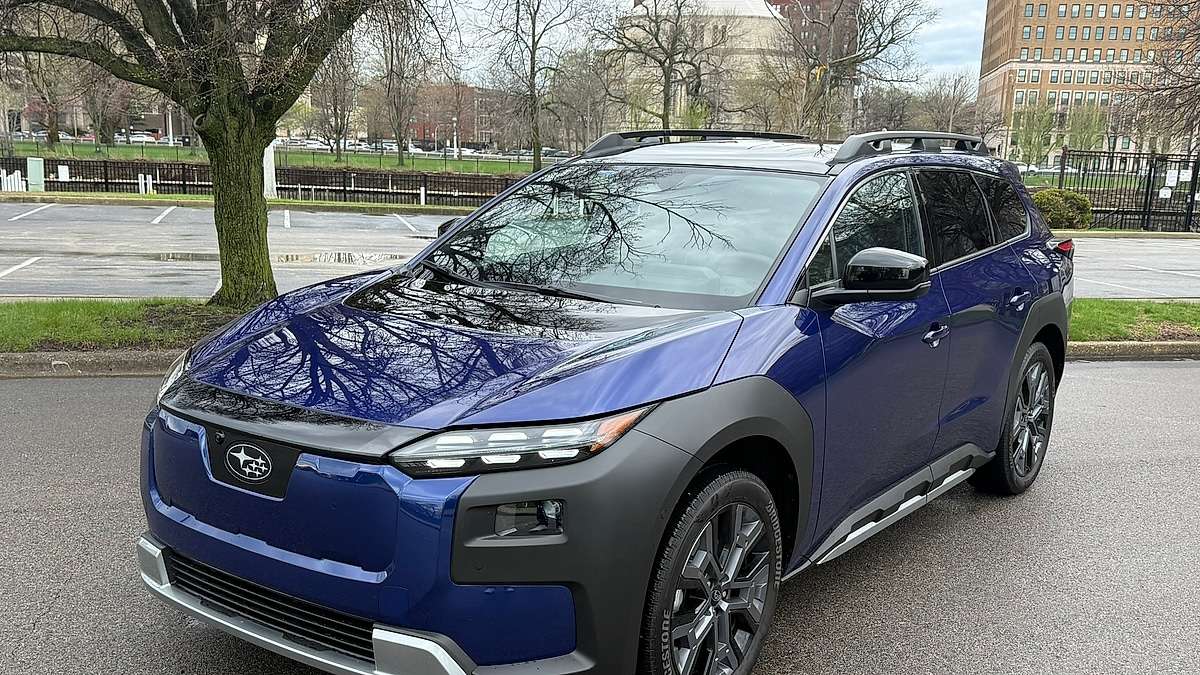
Enter the 2026 Subaru Trailseeker.
This one has electric motors at each axle for all-wheel drive and puts out 375 system horsepower. Subaru claims a 0-60 sprint of 4.4 seconds.
Range is up to 280 miles, and recharging speeds are up to 150 kW using the car's standard North American Charging Standard charge port.
Torque News Tests The 2026 Subaru Trailseeker
On road, the Trailseeker offers up fairly standard EV vibes. It's quick and torque is summoned nearly instantaneously, though it's not going to pin you back in your seat like, say, a Mustang Mach-E.
It rides well, balancing out stiffness and sportiness, though it's neither the most comfortable or sportiest tall wagon/crossover out there. It settles in to a nice middle ground.
The same could be said about handling and steering -- it doesn't feel terribly sporty, but it is competent. Some body roll is present, naturally, and the steering is more than a little artificial and fake in feel. This is a commuter vehicle, not a wagonized WRX.
Which is fine -- Subaru excels at building commuter cars that are a tick boring and a tad underwhelming when pushed, but work very well for just about every other use case. When yours truly attended an IndyCar race at Road America in the pre-Covid years, a Subaru tester was in my driveway, and it was a great companion for a short road trip and overnight.
Just like the Trailseeker will be. Most of my time with the car involved quietly tooling around the city, running errands, and the Trailseeker is the type of vehicle that does the basics well.
Speaking of Road America, I also had a chance to wheel a test unit around a small, make-shift off-road course on the property of the famed track. The Trailseeker is, quite obviously, not going to hit the same trails as a Jeep Wrangler or Ford Bronco, but it has strong enough off-pavement chops to keep you satisfied if you're into camping/kayaking/canoeing and the like and need to do some light off-roading to get to the campsite or trailhead or boat launch.
It hillclimbed well and forded some muddy water with no drama. Ground clearance is at 8.5 inches, just FYI. The X-mode system helps when the pavement ends -- as does downhill assist control.
While the Trailseeker can manage light-duty off-roading, it's not built for serious rock-crawling or more difficult trails -- trails a Forester or Outback might be able to tackle. Still, if you keep it within its limits, it's perfectly happy playing in the muck.
Torque News Says The Interior Is The Biggest Letdown
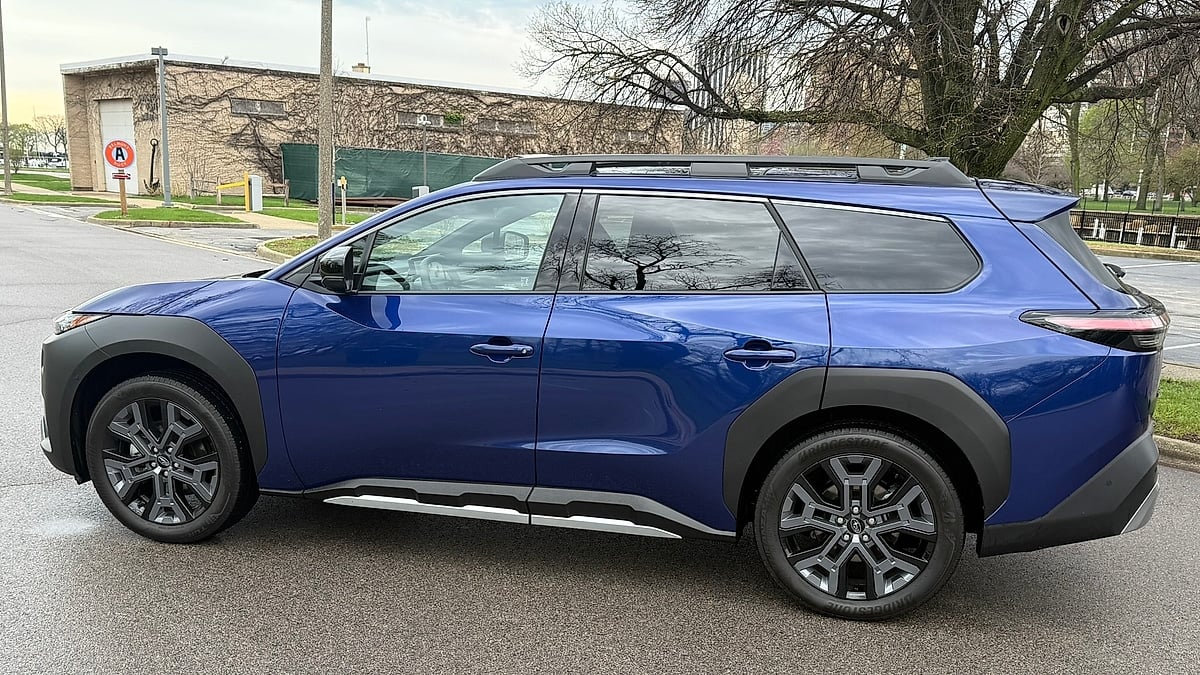
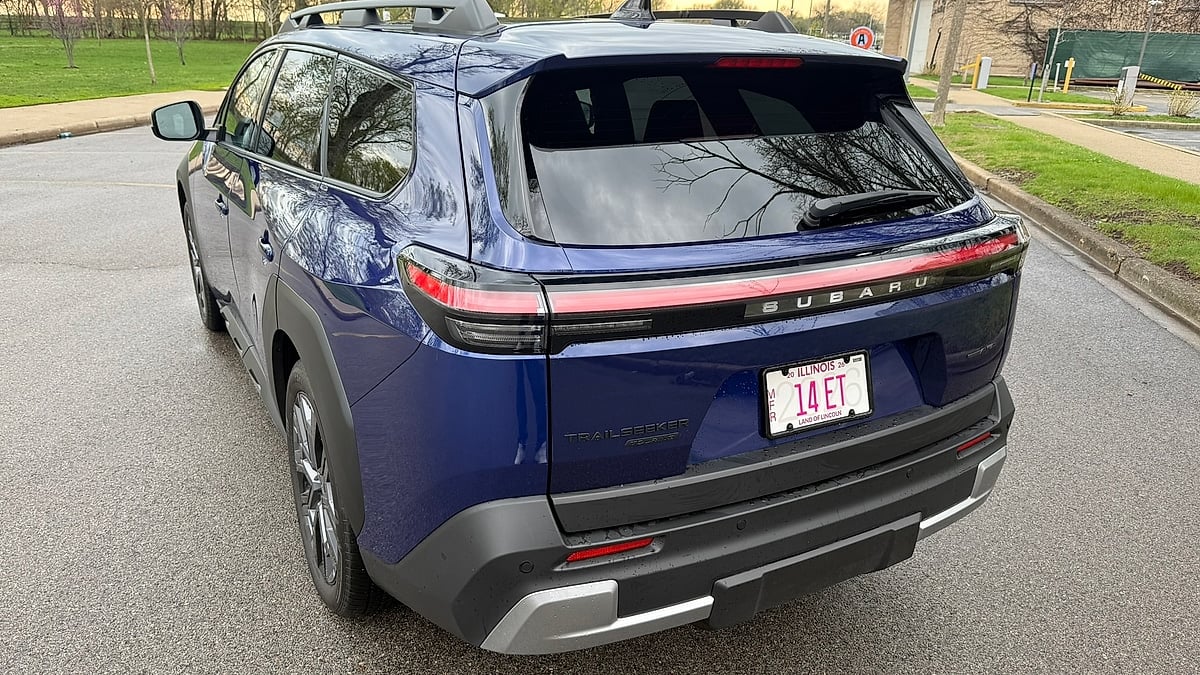
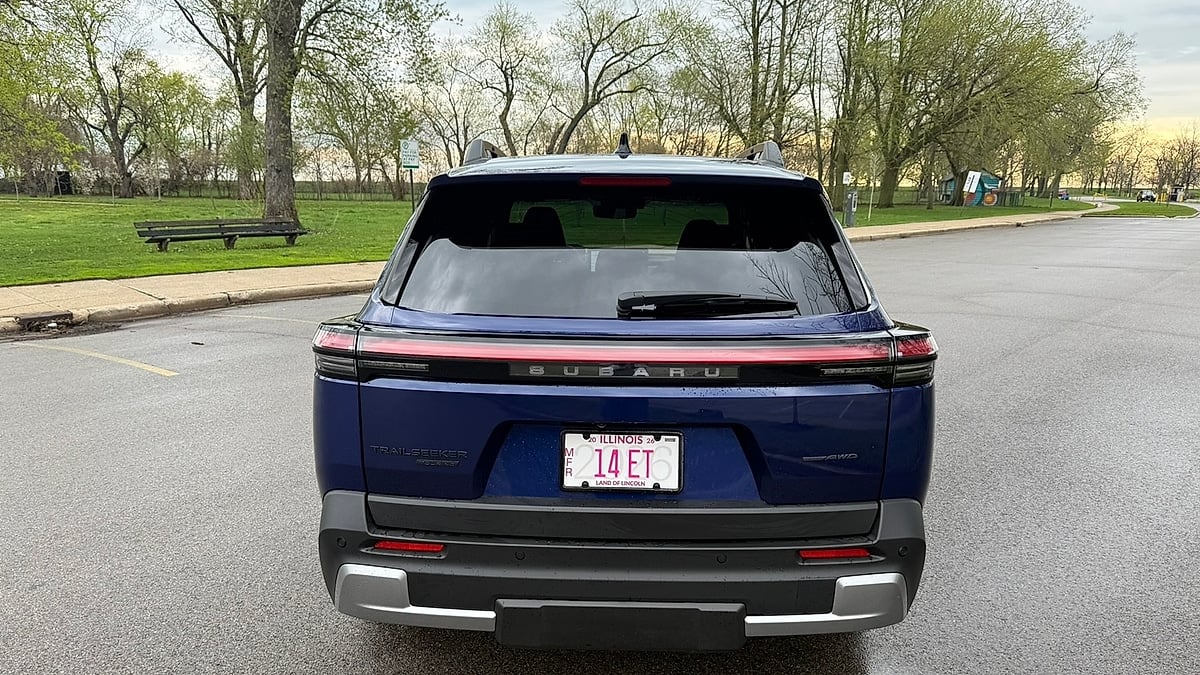
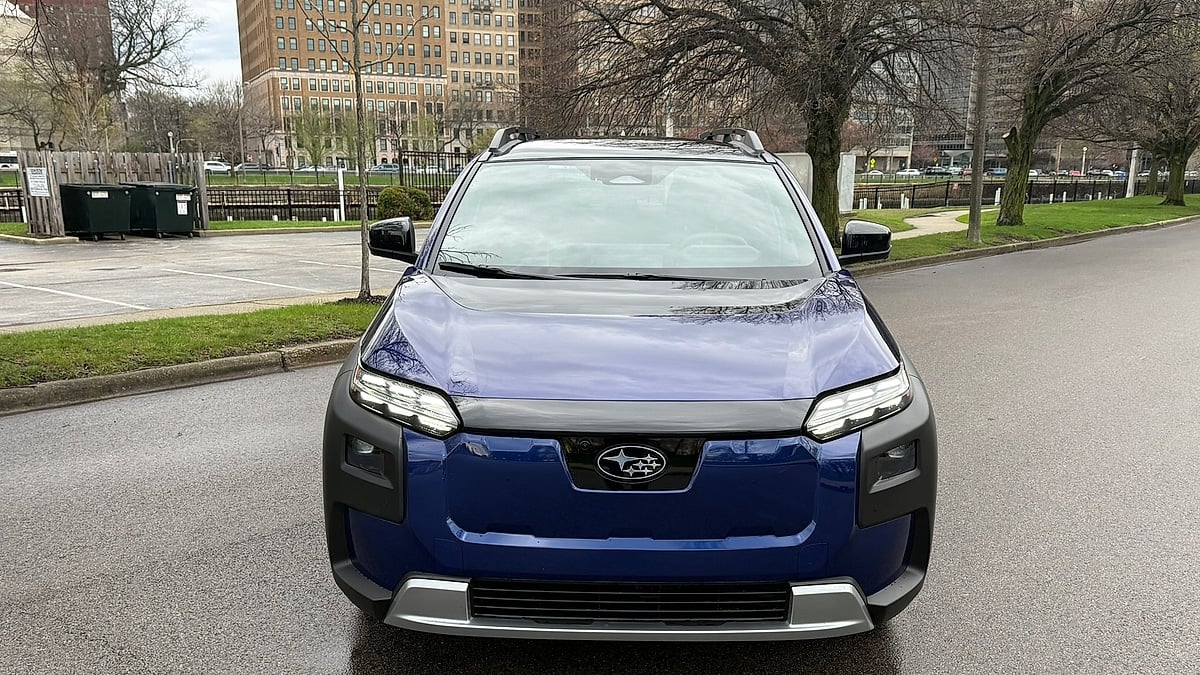
The Trailseeker's exterior styling is pretty easy on the eyes -- and brand appropriate. It looks like your standard wagon-esque Subie crossover, just electrified. Not sexy, but handsome in a plain-spoken kind of way.
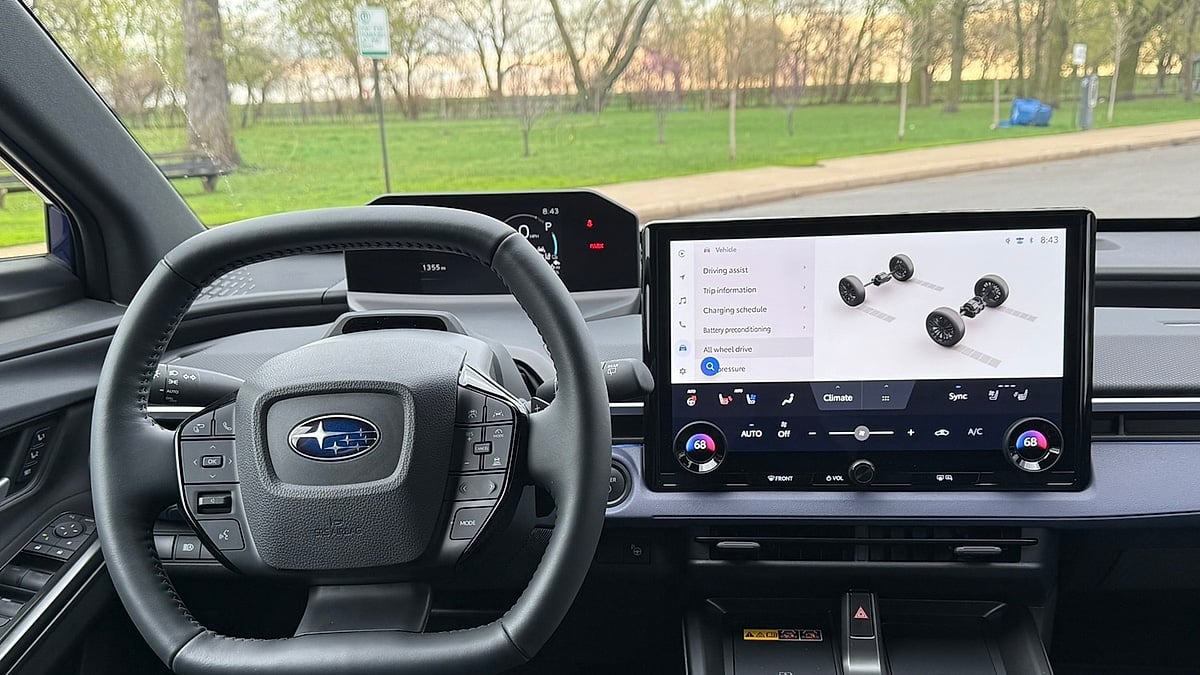
Inside, though, the design is a bit messier. Subaru shares bones with Toyota, and that's evident here. Toyota's newest infotainment system, which is in use here, is leaps and bounds better than its old one -- or Subaru's most recent efforts -- but it's still not quite on par with some other OEM displays.
I don't love the steering wheel with it's flat, D-shape. The infotainment system is a mix of haptic touch and knobs -- the HVAC knobs are nice but some of the inputs require a bit too much work. The shifter is a little wonky, too, which is annoy in big-city parking maneuvers or in tight off-road situations that require a bit of back-and-forth.
I did like the dual wireless phone chargers, which are easily reached and prevent sniping with your passenger over who needs charge now and who can wait. I also found head- and legroom perfectly fine front and rear, and while the gauge cluster looks oddly shaped, it does line up right with one's eye level, making it easy to monitor.
As a longtime observer of this industry, I understand economies of scale and the need for OEMs to share platforms. Still, I wish Subaru had done more to pen its own cabin. I've been harsh on Subie interiors over the years, but I've been harsher on Toyota.
Ah, well, nothing is perfect, and quirky cabin design isn't a deal breaker here. The overall package is what matters.
That package will cost you, in the case of my first test unit, $46,555 -- $48,305 with $300 for leather upholstery and $1,450 for D and D.
Available features include LED headlights and DRLs, USB-C ports, wireless Apple CarPlay and Android Auto, keyless entry and starting, 18-inch wheels, active lane-change assist, active cornering assist, blind-spot assist, downhill assist control, rear cross-traffic alert, 360-degree camera, hill-start assist, Bluetooth, satellite radio, Subaru's EyeSight suite of advanced driver-aid systems, cooled front seats, regenerative braking, and traffic-jam assist.
Subaru buyers who want to go electric previously had to settle for a hybrid. Now they can choose from the Solterra, the Trailseeker, the Uncharted, and the upcoming Getaway.
The Trailseeker isn't perfect off-road -- it has limits, and charging EVs in the wilderness is still, uh, not really a thing. Nor is it perfect on-road, and the interior takes some getting used to.
But it drives like a Subaru. Tackles light-duty off-roading with ease, like a Subaru. It feels like a Subaru.
It's a well-packaged crossover/tall wagon that will get you to your boat launch with ease and provides drama-free motoring around town. That makes it very much a Subaru.
Return tomorrow, or check our Torque News Home Page for more interesting automotive news articles.
Images: The Author
About The Author
Tim Healey is an experienced automotive writer and editor from Chicago. He has covered automotive news at Consumer Guide Automotive, Web2Carz, AutoGuide, and was the managing editor at The Truth About Cars. Tim is a member of the Midwest Automotive Media Association. You can find him on Facebook, X/Twitter, and on LinkedIn.
Set Torque News as Preferred Source on Google
Follow us today...