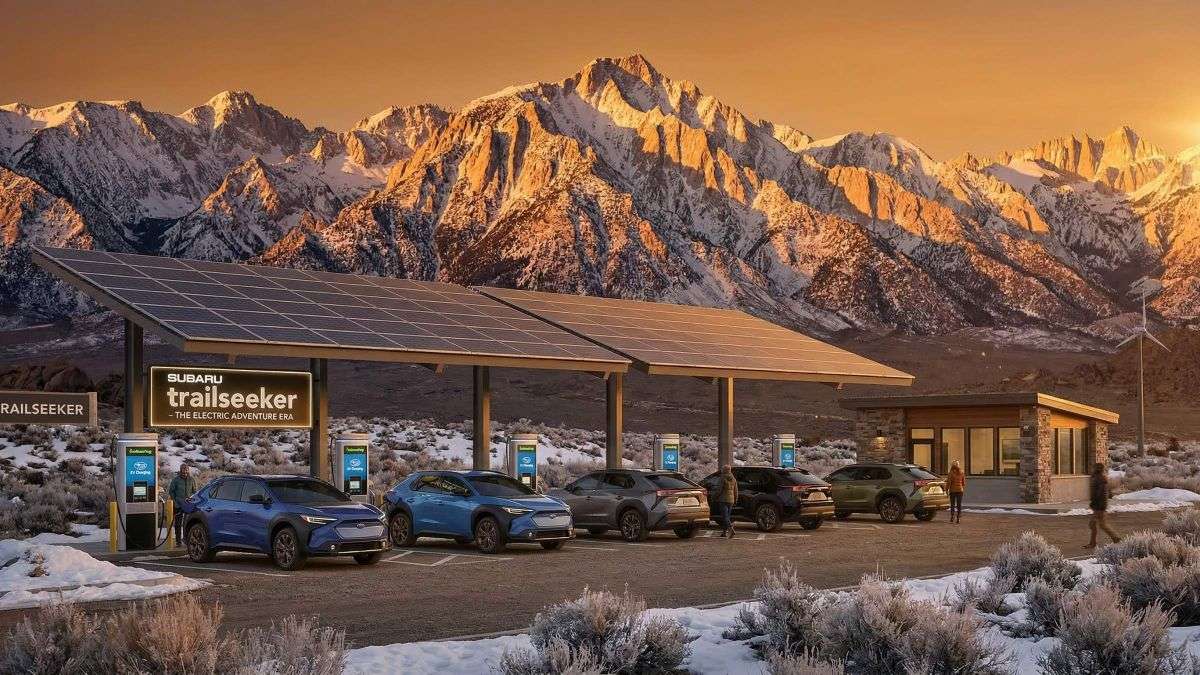

If you spend any time in Oregon—specifically in the corridor between Ashland and Portland—you quickly realize that the state doesn't just have a state bird or a state flower; it has a state car. It’s the Subaru Outback. In neighborhoods like Southeast Portland or the West Hills of Bend, the Subaru-to-human ratio feels roughly one-to-one. According to market data on state-by-state brand popularity, Subaru consistently dominates in regions with varied topography and "all-weather" climates. It is the definitive vehicle of the Pacific Northwest, blending a "no-nonsense" utilitarianism with the rugged capability required to navigate a surprise Cascade snowstorm.
However, as we move deeper into this decade, Subaru has faced a branding crisis. Oregonians are environmentally conscious to a fault, yet Subaru’s transition to electrification has been, to put it mildly, glacial. While Oregon's overall EV market share has climbed toward 12%, Subaru’s presence in that segment has lagged behind its internal combustion dominance.
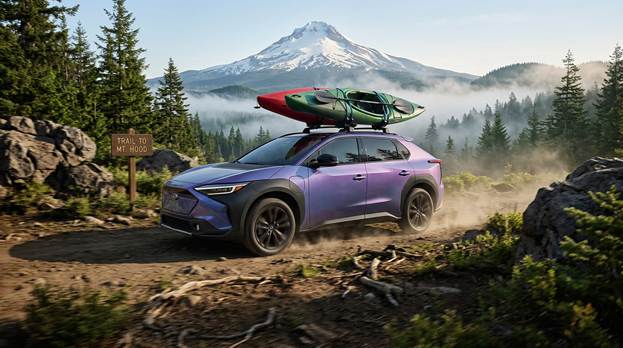
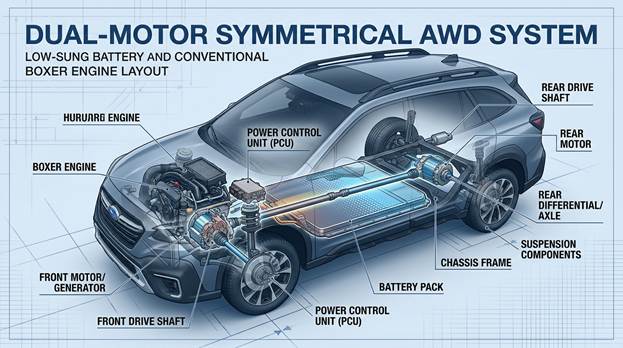
Enter the Subaru Trailseeker. Positioned as the spiritual and mechanical successor to the Outback, the Trailseeker is more than just a new model; it is Subaru’s attempt to reclaim the soul of the Pacific Northwest. With standard Symmetrical All-Wheel Drive (AWD) and a design language that screams "utility" rather than "science fiction," the Trailseeker is designed to prove that you don't have to give up the mountain pass to go green.
Subaru’s Rocky Road to Electrification
To understand why the Trailseeker is so critical, we have to look at Subaru’s track record this decade. While brands like Hyundai and Kia were pivoting rapidly, Subaru’s first effort, the Solterra, was a joint venture with Toyota that struggled to find its footing. It lacked the distinct "Subaru-ness" that loyalists crave.
However, recent sales reports from 2025 show a turning tide. The Solterra actually began outselling performance icons like the WRX in mid-2025, suggesting that even a "compromised" EV could find an audience among the Subaru faithful. The brand has survived on the incredible loyalty of its base, but that loyalty is being tested as gas prices spike and the neighbor’s Rivian looks more attractive by the day. Subaru needs the Trailseeker to be a "homegrown" success—a vehicle that feels like it was engineered in Gunma but tested in the Columbia River Gorge.
The Trailseeker vs. The Pack: A Competitive Analysis
The Trailseeker isn't entering a vacuum. It’s walking into a bar fight against the Ford Mustang Mach-E, the Hyundai Ioniq 5, and the Volkswagen ID.4. As seen in this detailed first-drive review of the 2026 Trailseeker Touring, the vehicle distinguishes itself through "functional ruggedness." While most EVs in this class are styled like aerodynamic jellybeans, Subaru has doubled down on "Protective Aesthetics."
- Standard AWD: Unlike its peers where AWD is a premium upgrade, the Trailseeker offers 375 horsepower and Symmetrical AWD as standard.
- Superior Ground Clearance: With 8.5 inches of clearance, it outclasses the "pavement princess" crossovers that dominate the current EV market.
- Real-World Range: With an estimated 260 to 280 miles of range on a 74.7 kWh battery, it focuses on "cold-weather resilience" rather than just chasing paper stats.
What Subaru Must Do to Win
For the Trailseeker to be more than a niche player, Subaru must execute on three fronts:
First, the Charging Experience. Subaru owners don't just drive to the mall; they drive to places where cell service is spotty. The adoption of the North American Charging Standard (NACS) is a vital first step, but they must ensure their battery pre-conditioning works flawlessly at high-altitude trailheads to maintain the brand’s reputation for reliability.
Second, Software Stability. We are seeing a massive trend of "software-defined vehicles" failing at launch. Subaru needs to ensure the Trailseeker’s new 14-inch multimedia system doesn't feel like a beta product. It needs to work every time, in the rain, with gloves on.
Third, Dealership Education. Subaru corporate needs to incentivize dealers to become EV experts. In my experience, some retailers still push high-margin ICE models because they are simpler to sell.
The $6 Gallon Reality Check: The End of the PHEV?
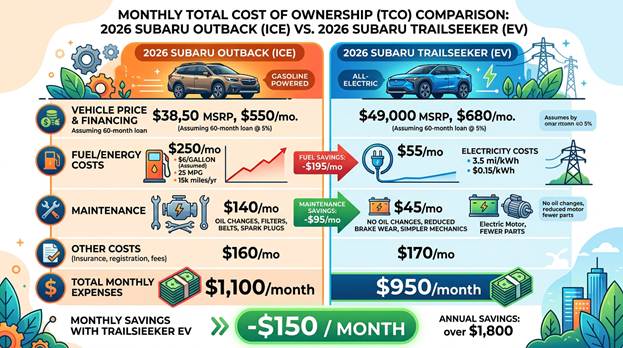
The elephant in the room is the economy. With gas prices surging due to global instability, the "EV vs. ICE" math has shifted violently. When gas was $2, a Plug-in Hybrid (PHEV) made a lot of sense—it offered a safety net for those not ready to commit.
However, at $6 a gallon, the total cost of ownership for a full EV becomes overwhelmingly superior. A PHEV still requires oil changes, spark plugs, and complex transmission maintenance, while hauling around a heavy battery that might only provide 25 miles of range. When the cost of filling a tank hits $100, the psychological barrier to going "Full EV" vanishes. Automakers are being forced to recalibrate their production strategies to avoid being left with unsellable ICE inventory. The Trailseeker isn't just a new model; it's a lifeboat for a brand that needs to transition before the pumps run dry.
Wrapping Up
The Subaru Trailseeker represents a pivotal moment for a brand that has long been the darling of the outdoorsy set. By positioning it as the electric successor to the Outback, Subaru is leaning into its greatest strength: its identity. To succeed, Subaru must move past the mediocrity of its early efforts and deliver a vehicle that is rugged, software-stable, and backed by a charging infrastructure that matches the lifestyle of its owners. In a world of $6 gas, the Trailseeker isn't just a luxury for the eco-conscious; it’s a pragmatic necessity for the Oregonian who needs to get to the mountain without breaking the bank. If Subaru plays its cards right, the Trailseeker won't just be the state car of Oregon—it will be the blueprint for how a legacy automaker survives the electric transition.
Disclosure: Images rendered by Artlist.io
Rob Enderle is a technology analyst at Torque News who covers automotive technology and battery developments. You can learn more about Rob on Wikipedia and follow his articles on TechNewsWord, TGDaily, and TechSpective.
Set Torque News as Preferred Source on Google
Follow us today...