
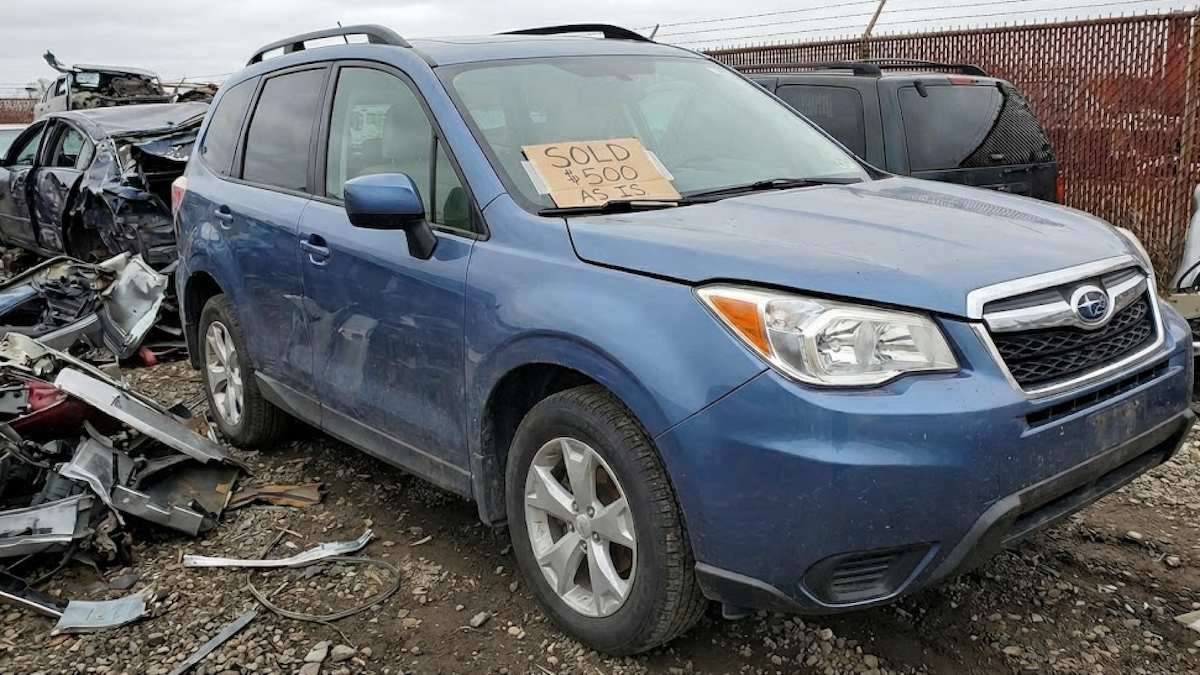

If you think routine maintenance guarantees a Subaru Forester will hit 200,000 miles, this owner’s $4,000 nightmare might make you rethink your next used car purchase.
Key Takeaways
- Routine Maintenance Isn't Always Enough: Even with "good oil" and frequent changes, design flaws like weak wheel bearings and head gasket issues on the Subaru Boxer engine can lead to catastrophic repair bills around the 100,000-mile mark.
- The $4,000 Repair Reality: Owners of 2014-2018 Foresters should budget for potential major failures (AC, wheel bearings, head gaskets) as the vehicle ages, which can quickly exceed the car's trade-in value.
- Rust Belt Risks: If you live in the Northeast or similar climates, inspect suspension components like backing plates and control arms frequently, as premature corrosion can compound mechanical failures.
Bob, a dedicated DIY mechanic on the SubaruForester.org owners page, shared a harrowing account of his 2018 2.5i Limited Forester that required catastrophic repairs despite meticulous maintenance. I have spent 30 years analyzing the automotive industry, and while Subaru has a reputation for longevity, my research into this specific case highlights a troubling pattern of premature component failures that every owner needs to understand.
I have covered the automotive industry for over three decades, and few brands have a following as loyal as Subaru. We often hear stories of Foresters and Outbacks reaching 200,000 or even 300,000 miles with basic care. However, there is a flip side to that coin. Sometimes, even the most diligent maintenance cannot prevent design-inherent failures. I recently came across a story from Bob on the SubaruForester.org forum that stopped me in my tracks. It challenges the "indestructible" narrative we often associate with the Japanese automaker.
Bob’s story is not about neglect. He states clearly, “I am a DIYer, and did the following repairs on this car: (this stuff was in addition to routine maintenance, including filters, oil change every 3,000-4,000 miles with GOOD oil, brakes, etc).” Yet, despite his best efforts, his 2018 Forester ended up in a junkyard far sooner than anyone would expect.
The Early Warning Signs
The trouble for Bob didn't start at high mileage; it began while the car was still relatively fresh. At just 35,000 miles, he reports, “Right rear bearing/Hub Assembly replaced under warranty by Dealer.” For many owners, a single failure under warranty is an annoyance, but it is often a harbinger of things to come.
As the miles ticked up, so did the severity of the repairs. Bob notes that at “70,800 MILES: AC condenser recall replaced by dealer,” followed almost immediately by “70,900 MILES: AC compressor was locked up-NEW installed by me.”
This is a common complaint I see in my reporting. Subaru Forester AC condenser replacement costs and compressor failures are frequent headaches for owners of this generation. When you pay for premium trim levels like the Limited, you expect these systems to last for the life of the vehicle, or at least beyond 70,000 miles.
In a related report I wrote, The 4 Subaru Models Most Likely To Need Expensive Engine Repairs, I detailed how certain components in the Boxer engine architecture can lead to higher-than-average repair bills. Bob’s experience aligns perfectly with the data I have analyzed regarding component longevity.
The Suspension and Drivetrain Collapse
As Bob’s Forester crossed the 100,000-mile threshold, the repairs shifted from annoying accessories to critical safety components. At “95,600 MILES: replaced right front lower ball joint,” and then a cascade of failures hit at 111,000 miles. Bob lists: “New driver’s side front axle with CV joints and axle seal at diff and new axle nut. New left front lower Ball Joint and pinch bolt. New left-front backing sheet-metal plate. (rusted out).”
It is important to note that Bob lives in the Northeast. He admits, “I'm in the northeast (rust belt), but I still expected more mileage and fewer repairs beyond routine maintenance.” While rust is a valid concern in these regions, the frequency of his wheel bearing failures suggests a weakness in the parts themselves rather than environmental factors alone. He replaced the LF wheel speed sensor at 120,500 miles and the “LF Hub/Bearing Assembly” at 121,000 miles.
If you are researching Subaru wheel bearing failure symptoms, you will find that a humming noise that increases with speed is the classic sign. For Bob, it wasn't just a noise; it was a recurring mechanical failure that drained his wallet and his patience.
I discussed the financial impact of these types of failures in my article, Subaru Maintenance Costs Rank The Worst Among All Mainstream Car Brands, where I highlighted that as Subarus age, their upkeep costs can spike significantly compared to Toyota or Honda.
The Final Straw: 142,000 Miles
The heartbreaking conclusion to Bob’s ownership experience came at 142,000 miles. In just 1,000 miles, four major problems developed simultaneously. Bob lists them: “Radiator Leak- needs replacement. Head gasket leak-both need replacement. Both rear wheel bearings are shot- need replacement. Leak in exhaust- needs repair.”
The head gasket failure is the most notorious issue associated with the Boxer engine. Because the engine sits horizontally, fluids pool against the gaskets when the car is off, which can lead to long-term degradation. Bob’s assessment was practical but grim: “My friend has a repair shop, and he said he would have to charge 4K to fix all this. I would normally do head gaskets, but not on these boxer horizontal engines--too hard to get at to do properly and see what you're doing without pulling the engine.”
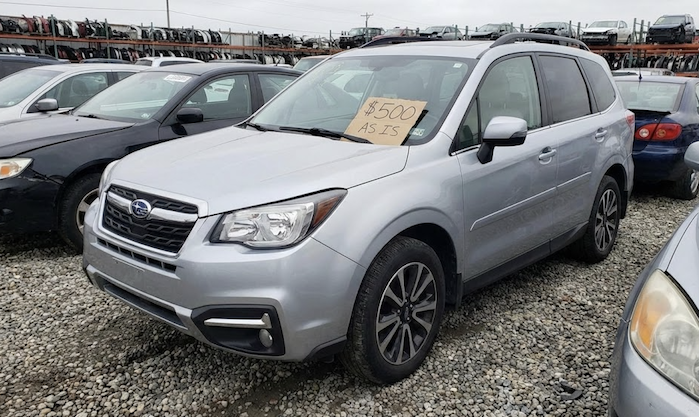
Faced with a $4,000 bill on a car with trade-in value dropping like a stone, Bob made a tough call. “Today I sold it to a junk yard for 500 bucks with 142,230 miles on it. The car was used 90% for a daily round-trip commute to my farm of 70 miles on good roads.”
Is Bob’s Experience Unique?
You might be asking if this is just bad luck. In my experience, while 142,000 miles is arguably a "decent" life for some cars, it is disappointing for a modern Subaru. Is the Subaru Forester reliable? Generally, yes, but the 2014-2018 generation has specific pain points.
I covered the specific vulnerability of the engine seals in my story, "The One Subaru Model Most Likely To Need An Expensive Head Gasket Repair," which explains why the horizontal layout makes this repair so labor-intensive and costly. It is not that the parts are expensive; it is that you often have to pull the engine to fix them.
Bob’s conclusion is one I hear from frustrated owners who feel let down by the brand's marketing. He says, “I’m NEVER BUYING A SUBARU AGAIN. Am I expecting too much?”
Key Takeaways for Used Subaru Shoppers
If you are looking at 2018 Subaru Forester reliability problems, or considering a used model, here is my expert advice:
- Budget for Wheel Bearings: Expect to replace them between 80,000 and 120,000 miles. It is a known weak point.
- Watch the AC: Check if the condenser and compressor have been replaced. If not, you might be footing that bill soon.
- Head Gasket Inspection: Before buying, have a mechanic check for external oil leaks or coolant consumption. Replacing the Subaru Forester head gasket can easily cost more than $2,500.
- Rust Belt Caution: Inspect the backing plates and control arms carefully if the car lived in the Northeast.
While I have reported on the high-mileage potential of these vehicles, such as in my article, "Forbes Says Subaru Forester Most Likely to Run For Over 250,000 Miles," Bob's story serves as a vital counterpoint. Longevity is not guaranteed, and maintenance costs can escalate quickly.
What Forester Owners Are Saying
Bob is not alone in his frustration. A quick look at other platforms reveals a pattern of similar complaints regarding the 2014-2018 Forester generation.
"CVT transmission failed at around 110k (I've heard this is common) -$4k. AC has fully gone out 3x (most recently yesterday), still can't figure out the issue, but around $1k invested so far. Multiple bearings replaced." - Reddit User Just-Cardiologist333.
"18 forester owner here... I hear wheel bearings and axles need to be replaced (I've done 2 of each by 90k). The 17-18 foresters have better motors and don't have the oil consumption issues that the 14-15 ones had." - Reddit User Global-Mango-4213.
"My 2017 Forester needs usually 2 quarts between oil changes. This is just not acceptable. And I baby the car, fully synthetic oil, changed every 4K." - Robby, Torque News Reader.
Conclusion
Bob’s story is a sobering reminder that even with "GOOD oil" and regular attention, parts fail. The combination of Subaru maintenance costs vs Toyota and the labor intensity of Boxer engine repairs can turn a loyal owner into a critic overnight. While the Forester offers excellent safety and AWD capability, owners must be prepared for the financial realities that set in once the odometer crosses 100,000 miles. For Bob, the $4,000 repair estimate was the end of the road, and his $500 junk yard sale is a cautionary tale for us all.
What Would You Do?: Was Bob right to junk his Forester, or should he have paid the $4,000 to keep it on the road? Let us know in the comments below.
Next Up: The Top-12 Cars That Go 200,000 Miles And Why It Doesn't Include Subaru. If Bob’s story has you questioning Subaru’s longevity, you aren’t the only one. A recent study lists the vehicles most likely to reach 200,000 miles, and you might be shocked to see which brand is missing from the list. Check out the full report here.
With over 30 years of industry experience, Denis Flierl brings an insider’s perspective to Torque News, where he has been a Senior Reporter since 2012. Before picking up the pen, Denis consulted for the automotive industry's biggest brands and honed his skills as a test driver. He cuts through the noise to deliver the latest auto news, compelling owner stories, and the expert analysis necessary to navigate today's changing automotive market.
Have a tip or question? Follow me on X @DenisFlierl and @WorldsCoolestRides, or connect with me on Facebook, Instagram, and LinkedIn.
Photo credit: Denis Flierl
Set Torque News as Preferred Source on Google
Follow us today...


Comments
Out the door pricing for an…
Permalink
Out the door pricing for an engine replacement (installed) with lightly used JDM for 2012 Forester was under 4k.
Wheel bearing assemblies are pretty inexpensive but if frozen (northeastern US) can be an expensive puzzle to remove.
Over 100k you can expect wearable parts to wear out.
My opinion is it's cheaper to maintain one of these older workhorses than to buy a new one. Even if it's $10k 'every' 100k miles, you've still got much more car for your money than refreshing with a new one. YMMV
I went down the same route…
Permalink
I went down the same route with an Outback. I was lucky enough that I possess the skills to do wheel bearings (many times), CV joint boots (several times) and a bunch of other miscellanous "stuff". Buying after market parts made that aspect inexpensive and doing the other repairs took me less time than it would have taken for me to drop my car off at a shop and return, not to mention their inflated prices. The problem with "cult" cars is that you get trapped into thinking they're great when they are not.
After reading this and some…
Permalink
After reading this and some other articles, I've concluded that 'torquenews' is the New Yok Post of aut-related 'news' sites and Denis Flierl picks whatever lane he's told to. This is my last time reading anything from torquenews.
Life expectancies of parts…
Permalink
Life expectancies of parts and subcomponents all have a service life, each with a bell curve distribution over time/miles. On a vehicle, with so many of those to line up, sometimes with bad luck not forecast, you get worse results than expected.
I annually update what the single service cost limit for any of my vehicles is. If a daily driver reaches that number, it's replaced. I don't need more hobbies. This scenario is why I off loaded my BMW 5-series; rear ball joint, a rear tire (excess wear due to worn nball joint), cooling fan relay which only sold as a piece of a pricey larger subassembly. Two issues at 100k miles that reached my limit, no emotion attached, just a "good-bye". Things happen.
I'm only on my second Subaru…
Permalink
I'm only on my second Subaru, but my total repair costs on the first 2010 Outback certainly came out to less than $400 not including tires and maintenance items. Of course, it only had 131,000 miles on it. Some cars are just not well made, even when the overall design and manufacture is exceptional, so maybe I just hit the jackpot. My 2018 is in the body shop right now because some idiot on her phone rear-ended me. Who'da thought that replacing a tailgate and a few other incidentals would cost over $5,000? (Insurance isn't arguing about it and will cover it all, including the rental I'm in now).
I got a brand new Forester…
Permalink
I got a brand new Forester in 2000 and rear end went out three times in the first year and it was considered a "lemon" under Colorado lemon law but Subaru refused to honor it so I got rid of it and got a Toyota Tacoma and have had Toyotas ever since. Will never have another Subaru again