


There are cars that try to make a loud entrance, and then there are cars like the 2026 Subaru Crosstrek Hybrid - vehicles that slip into your week so quietly and so naturally that you suddenly realize seven days later that you don’t want to give the keys back. That’s exactly what happened to me during my week-long test of the Sport Hybrid trim. You see these Crosstreks everywhere, which makes them easy to ignore, but once you actually live with one, the Crosstrek hybrid turns into something you appreciate for its honest simplicity and its surprising competence.
This 2026 reboot is important because Subaru had previously pulled the plug on its only U.S. hybrid. Toqrue News Subaru reporter Denis Flierl covered that history in his earlier story on the Subaru discontinuing its only hybrid in America - a move that left loyal Subaru buyers wondering whether the company had abandoned electrified options entirely. With the arrival of this 2026 model, Subaru is not just dipping its toes back in; it’s making a statement that the Crosstrek Hybrid still fits perfectly into Subaru’s core identity: rugged usability, real AWD capability, and loyalty-building reliability.
After a full week of commuting, grocery runs, a few long highway stretches, and a side trip onto a muddy public-access trail, I can tell you with confidence: this car may appear unremarkable from the sidewalk, but once you start driving it, it becomes fantastic precisely because it doesn’t try to be anything other than a well-sorted compact AWD hybrid.
The 2026 Subaru Crosstrek Hybrid's Familiar Shape And The Quiet Updates
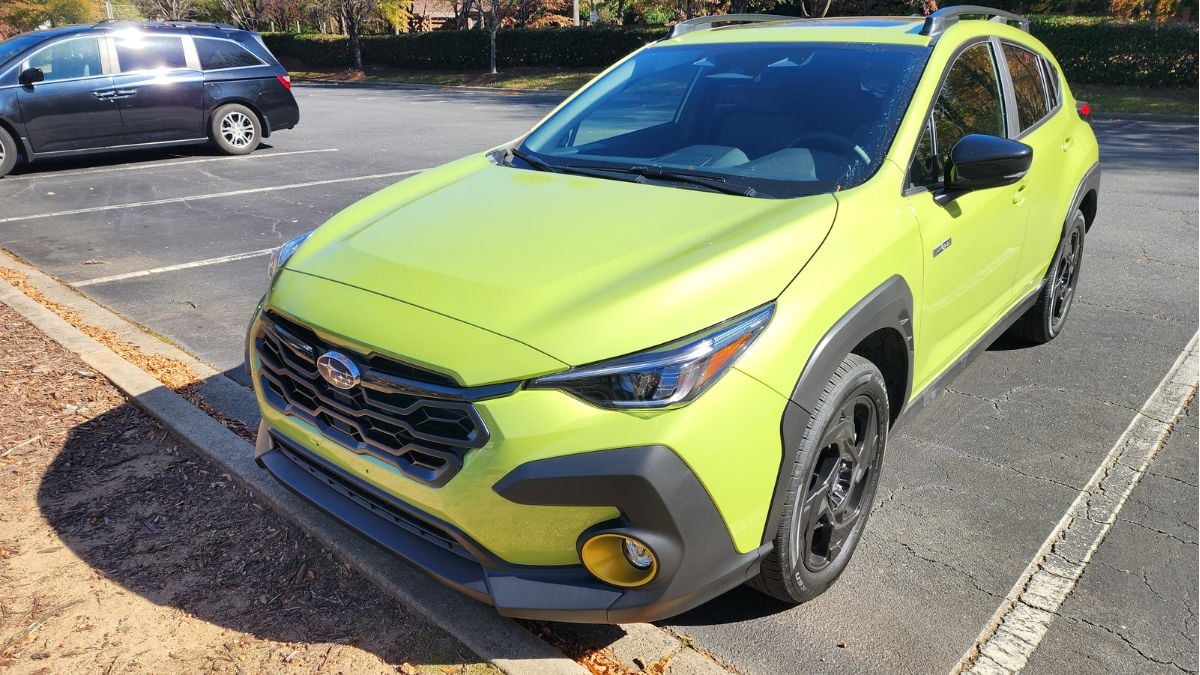
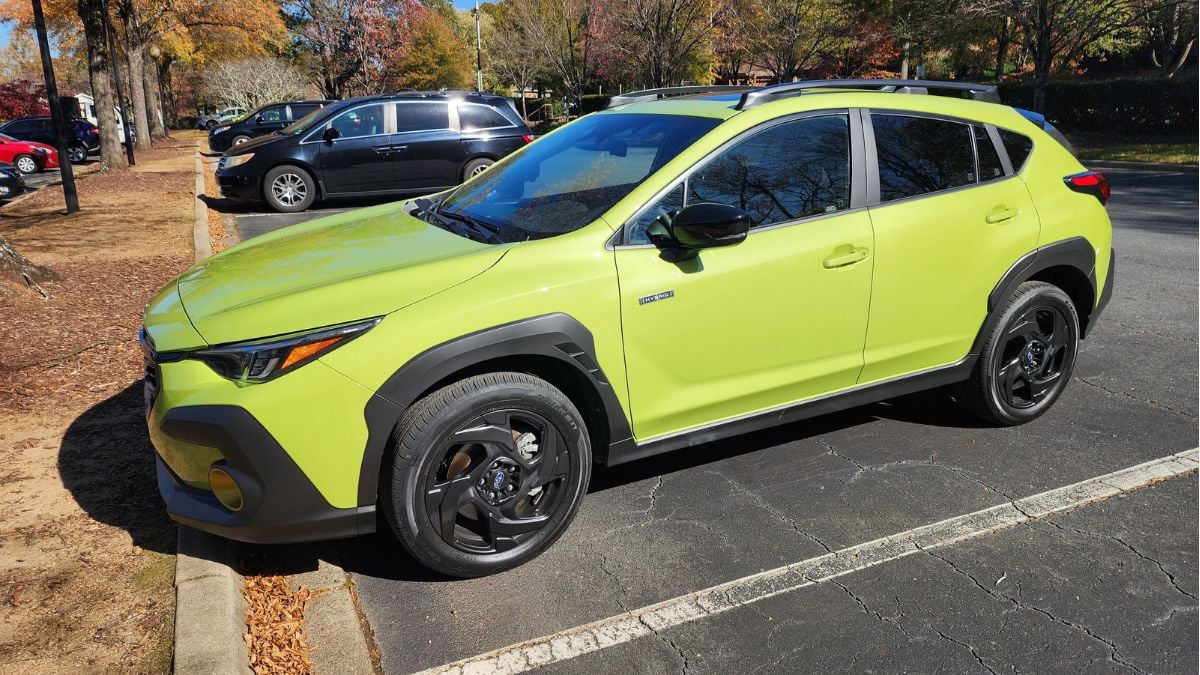
Walking up to the 2026 Crosstrek Hybrid, the visual familiarity is immediate, and intentional. Subaru didn’t redesign this vehicle to shout “new generation.” They just sharpened the details. Subaru knows its customers prefer consistency, and if you’ve read my coverage of the best hybrid SUVs under $35,000, you know that practicality often beats flashiness in this segment.
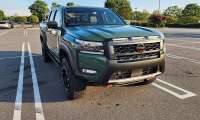
The Sport Hybrid trim I drove gets special wheels, contrast accents, and hybrid-specific badging, but overall, this remains the understated Crosstrek silhouette Americans recognize instantly. Some buyers will love that. Others may want something more dramatic. Subaru is banking on the former.
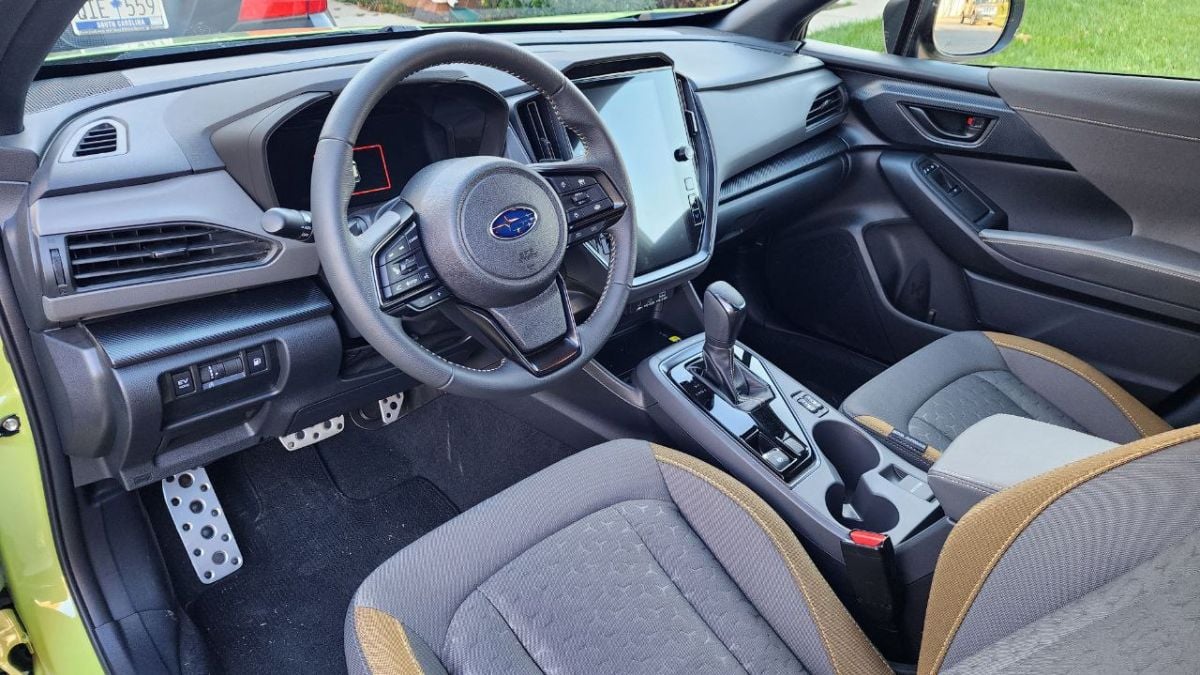
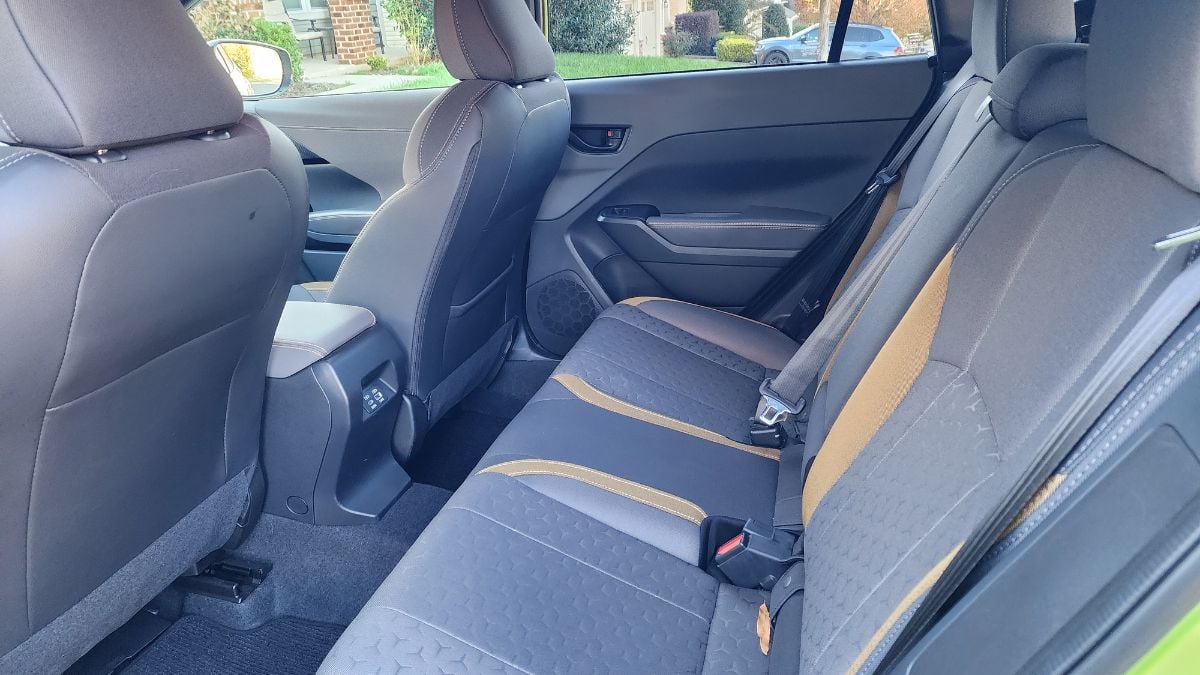
Inside, Subaru didn’t reinvent anything, but it absolutely refined everything. Material quality is up from earlier Crosstrek generations, and the cabin layout is simple, logical, and easy to use. The seating position is upright with excellent visibility, something you rarely get in competitors that push form over function.
The 11.6-inch portrait touchscreen remains the centerpiece. It’s responsive, organized well enough, and now integrates wireless Apple CarPlay and Android Auto. Subaru also did a better job with cabin quietness - especially at cruising speeds - an improvement several reviewers noted in their Crosstrek Hybrid expert test drives. I noticed it immediately during my long interstate stretch. Fewer vibrations, less road noise, and a more insulated feel compared to earlier models.
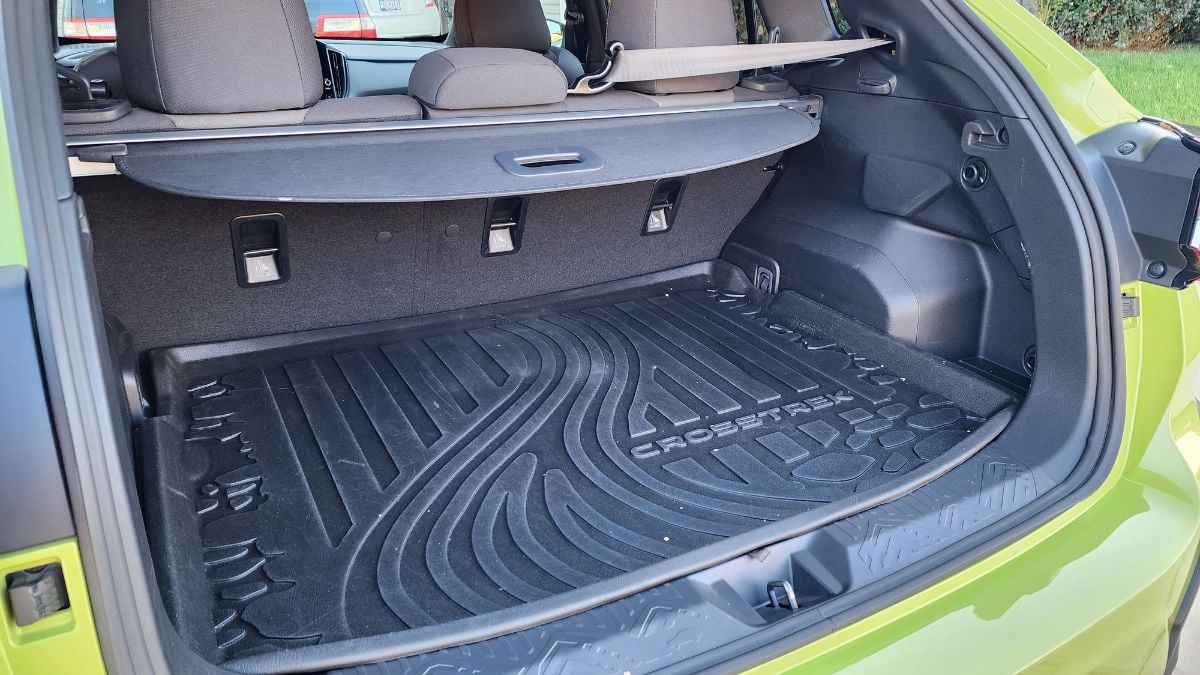
One trade-off: you lose a bit of cargo room because the hybrid battery sits under the floor. It’s not a dramatic loss, but it’s there. If you’re coming from a gas-powered Crosstrek and often max out cargo capacity with camping gear or pets, you’ll notice the difference.
2026 Crosstrek Hybrid's Road Manners: More Power, More Smoothness, More Fun
The biggest surprise of my week behind the wheel wasn’t the interior or the tech. It was how this hybrid drives. Subaru engineered the new hybrid powertrain to deliver 194 combined horsepower, a major jump from previous Crosstreks. Reviewers at Car and Driver’s Crosstrek Hybrid review called this version the best-driving Crosstrek in the lineup, and honestly, they’re not exaggerating.
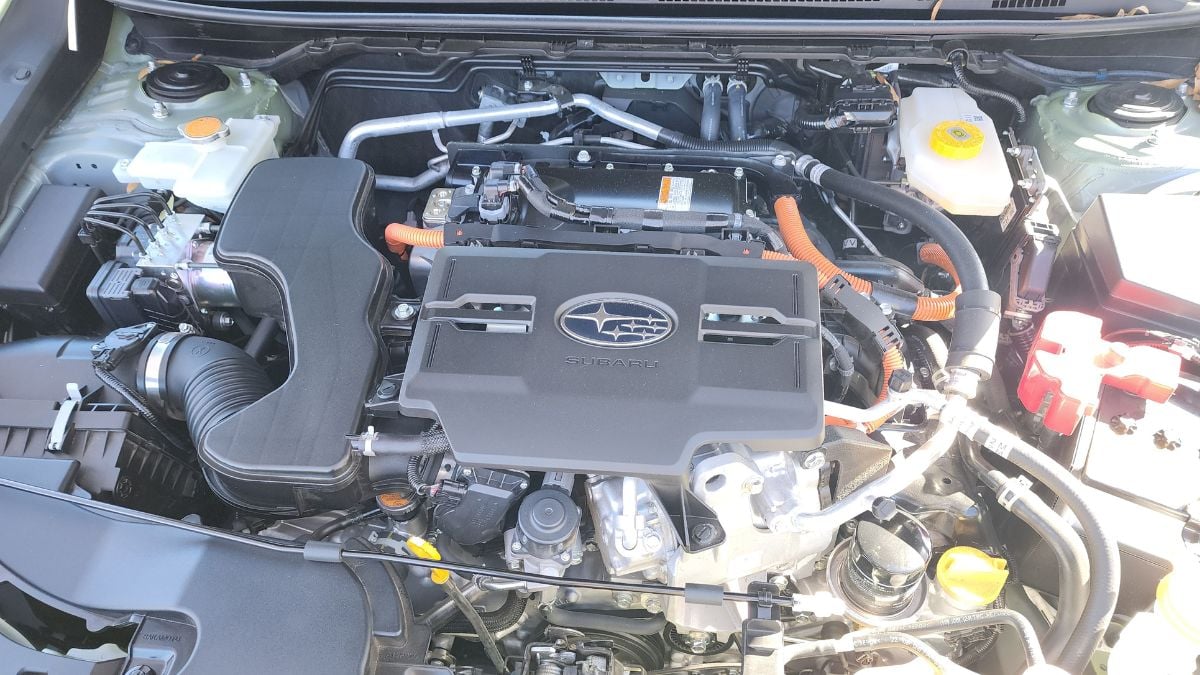
On backroads, the Sport Hybrid felt lively and confident. Subaru’s steering tuning is light but not vague. Body roll is controlled. And the combination of electric assist and gas power gives you smoother, more responsive acceleration out of corners. Subaru’s suspension tuning is especially good at blending comfort with control: something not all compact hybrids manage well.
A hybrid adds weight, but Subaru seemed to use that reality to its advantage, giving this crossover a planted feel you often lose in lighter compact SUVs. The Crosstrek Hybrid never felt jittery or underdamped. Even during quick transitions, it held its composure.
The only thing that breaks the thing slightly is the CVT. It’s better than earlier Subaru CVTs, but if you’re sensitive to CVT behavior, you’ll still notice that elastic “rubber band” effect on hard acceleration. For most daily driving, though, it’s unobtrusive and tuned well.
Fuel Economy and Daily Efficiency
In my week of mixed driving, I averaged 33–35 mpg, right in line with what reviewers at Edmunds’ Crosstrek Hybrid first drive reported. It’s an improvement over the gas Crosstrek and makes the hybrid a smart choice for Subaru buyers who want AWD capability without sacrificing too much efficiency.
However, it’s important to note: this isn’t the most fuel-efficient hybrid SUV in the segment. Several competitors in the most fuel-efficient hybrid SUVs list can reach beyond 40 mpg. Subaru wasn’t chasing that. Instead, they wanted a hybrid that still behaved like a Subaru, which means you get full-time mechanical AWD, not a front-drive vehicle with an occasional electric assist to the rear.
If fuel efficiency is your only priority, there are better choices. But if you want AWD with hybrid efficiency, your options get limited very quickly, and this is where the 2026 Crosstrek Hybrid becomes interesting.
Trail Use, Light Off-Road, and Subaru Identity
One of the things that differentiates Subaru from its competition is the commitment to genuine utility. The Crosstrek Hybrid maintains 8.7 inches of ground clearance, the standard Subaru AWD system, and a chassis that still feels confident off pavement. I took this Sport Hybrid onto a muddy, rutted forest-access road - nothing extreme, nothing requiring lockers - but enough to test grip and composure.
The Crosstrek Hybrid handled it with the calm confidence I expect from a Subaru. The hybrid powertrain never hindered traction or torque delivery, and the AWD system responded instantly when one wheel lost grip. This is where the Crosstrek Hybrid distinguishes itself from some hybrids reviewed in our article on hybrid SUVs that still offer practical performance. Many competitors sacrifice off-road confidence for efficiency. Subaru did the opposite: preserve capability, improve economy, and meet in the middle.
That’s exactly why Subaru’s loyal buyer base remains so loyal.
Reliability and the Brand’s Core Promise
Subaru’s reputation for longevity isn’t marketing fluff. It’s backed by actual ownership history. In our earlier coverage of the best hybrid vehicles for 2025, I highlighted how Subaru retains long-term buyer trust better than most compact-SUV brands. Subaru claims 97 percent of Crosstreks sold in the last decade are still on the road, and after 15 years in automotive reporting, I can tell you that claim aligns with what owners repeatedly tell me.
The 2026 Crosstrek Hybrid feels engineered for that same long-term reliability. Subaru kept the hybrid system simpler than some of the more exotic setups out there. This isn’t a plug-in hybrid with complex, expensive replacement components. It’s a straightforward hybrid powertrain with Subaru’s proven mechanical AWD system.
That combination is a deliberate choice for durability.
Pricing, Value, and Real-World Buyer Fit
The 2026 Crosstrek Hybrid range is expected to start in the mid-$35,000s, putting it directly into the range discussed in our coverage of the best new hybrid SUVs between $35,000 and $45,000. In that price bracket, the Crosstrek Hybrid is one of the few compact SUVs offering AWD standard, strong resale value, and a reputation for reliability with moderate fuel economy gains.
It’s not a bargain vehicle, but it’s a sensible one, and sensibility is what Subaru does best.
If you prioritize long-term durability, competent year-round capability, and high everyday usefulness, the value feels right. If what you want is the most technology or highest MPG per dollar, this hybrid may not be the very best fit.
Competitors and the 2026 Subaru Crosstrek Hybrid’s Edge
When evaluating the 2026 Crosstrek Hybrid against its key rivals, it’s helpful to identify two or three direct competitor models and then dig into what the Crosstrek Hybrid does better. Among the most relevant rivals in the compact hybrid-SUV segment are the Toyota Corolla Cross Hybrid, the Kia Niro Hybrid (and to some degree the Sportage Hybrid), and models that combine AWD capability with hybrid tech.
Competitors at a glance.
- The Corolla Cross Hybrid stands out for combining Toyota’s strong hybrid reputation with sub-$35 K pricing (in some trims) and good fuel economy. It appears on lists alongside the Crosstrek Hybrid as a major contender.
- The Niro Hybrid (and the Kia Sportage Hybrid) offer strong efficiency numbers and competitive pricing, albeit often with front-wheel drive or hybrid AWD variants that may compromise some utility or performance.
- In many rankings of “best hybrid compact SUVs,” the Crosstrek Hybrid appears beside these models but its trailing “score” is slightly lower (for example, 8/10 vs higher in some rivals).
Now: what advantages does the Crosstrek Hybrid bring, and why a buyer might pick it over those rivals.
Advantage: Standard AWD + real-world capability.
Where many hybrid crossovers compromise by offering front-wheel drive or “electric rear motor” AWD systems, Subaru delivers its full-time Symmetrical All-Wheel Drive as standard on the Crosstrek Hybrid. The official spec sheet cites “legendary capability of standard Symmetrical AWD and 8.7 inches of ground clearance.”
This is meaningful. For buyers in regions with snow, gravel roads, or occasional light off-roading, the Crosstrek Hybrid offers a clear functional advantage. The dealer-comparison site notes that rivals like the Corolla Cross Hybrid provide AWD (but in a more conventional demand-based setup) and less ground clearance (often around 8.0″ vs Crosstrek’s 8.7″): meaning less potential in bad-weather or rough-road conditions.
Advantage: Balanced powertrain and performance.
The Crosstrek Hybrid uses a new hybrid architecture delivering roughly 194 hp combined. This positions it ahead of some smaller hybrids that may peak around 150-160 hp, and gives it more onboard “oomph” especially when loaded, towing lightly, or hauling gear.
For drivers like you and your audience - with expectations of handling, real-world utility and reliability - this matters. The earlier review context I wrote indicated you were “impressed by its handling and Subaru’s well-known reliability”; those factors gain weight when you compare to rivals that may sacrifice some driving feel for ultra-low MPG.
Advantage: Subaru’s reliability branding + resale and utility story.
In the hybrid compact crossover space, one often chooses between “efficiency first” or “utility and longevity first.” The Crosstrek Hybrid leans into the latter. Subaru’s own materials boast “97% of Crosstreks sold in the last 10 years are still on the road.”
For buyers who expect to keep their vehicle for many years, drive in variable conditions, and want fewer concerns about long-term wear, that reliability narrative gives the Crosstrek Hybrid an edge over many rivals whose hybrid systems may be more efficiency-obsessed, less AWD-capable, or less proven.
Where competitors pull ahead (and how it plays into decision-tradeoffs).
It’s fair to say the Toyota Corolla Cross Hybrid often claims higher MPG: meaning if your drive profile is strictly urban or highway commuting and AWD or off-road utility are non-factors, then the Corolla may look more efficient on paper. In the “best hybrid compact SUVs” listings it arguably ranks slightly higher for pure MPG/price.
Similarly, the Kia Niro or Sportage Hybrid may offer slightly lower entry prices and very strong fuel economy numbers, making them attractive for buyers prioritizing cost and MPG above capability and AWD. However, those choices come with trade-offs that the Crosstrek Hybrid deliberately avoids.
Summing up the competitive angle for your reader.,
If someone is comparing hybrid SUVs under ~$40 K and sees the Crosstrek Hybrid on the list, the decision comes down to:
- Do you value real-world AWD, rough-road capability and a long-term ownership mindset? If yes → Crosstrek Hybrid is a very strong pick.
- Or do you value maximum MPG, lowest entry price, and FWD or limited AWD utility? In that case a Toyota or Kia may win on paper.
- What the Crosstrek Hybrid does is carve a sweet spot: hybrid efficiency plus Subaru’s core strengths (AWD, clearance, durability). That combination is rare in this price band.
Resale Value, Ownership Costs And Long-Term Reliability
When a vehicle like the Crosstrek Hybrid comes from a brand known for durability, the story of its long-term ownership becomes a strong argument. Subaru has a measurable reputation for longevity - its claim that 97% of Crosstreks sold in the past decade are still on the road underlines that. For a buyer thinking beyond year one or two, this matters: fewer surprise repairs, better resale, and more trust that the hybrid system won’t add complexity down the road.
In the case of the 2026 Crosstrek Hybrid, because Subaru kept the powertrain architecture relatively simple - mechanical AWD, proven boxer engine, dual-motor hybrid instead of a complicated plug-in system - this should translate into more predictable ownership costs. That doesn’t make it immune to hybrid-specific concerns (battery replacement, inverter wear), but by design the Crosstrek Hybrid invites less risk than exotic electrified setups. For a reader scanning for a practical vehicle, this sub-topic helps answer: “How much will this car cost me over five to ten years?”
Towing, Payload & Real-World Utility Beyond Daily Driving
We talked about cargo and seating, but another angle many buyers want (especially in the compact SUV/hybrid category) is: can this vehicle do more than school runs and grocery trips? For the Crosstrek Hybrid, the fact that it retains 8.7″ ground clearance and Subaru’s full-time AWD is a huge advantage: meaning the utility isn’t just theoretical. If you’re someone who might drag a small trailer, load gear for outdoor trips, or navigate less-trafficked roads, this vehicle offers credible capability. Because many hybrids in the same price-range compromise that to chase MPG, the Crosstrek Hybrid stands out for real-life usability.
That said, buyers must also check specifics: what is the official towing capacity for the hybrid variant? What is the payload (passengers + gear) difference compared to the gas version? And how does the hybrid’s added weight impact those numbers in real use? For readers who need more than “just a commuter,” answering these utility questions can make or break the decision.
Future Electrification Path & Brand Strategy (What this Hybrid Signals for Subaru)
A key sub-topic: what does the 2026 Crosstrek Hybrid tell us about where Subaru is headed, and what that means for a buyer now? Subaru had previously discontinued its only U.S. hybrid before this model, so this launch is a signal: hybrid tech is now part of Subaru’s future rather than a footnote. For a buyer, that means your Crosstrek Hybrid might matter in the transition period: you’re buying into Subaru’s commitment to electrification (or lack thereof).
From a broader perspective, the Crosstrek Hybrid helps clarify Subaru’s strategy: they aren’t simply copying other brands by releasing front-drive hybrids with electric-rear motors; instead, they’re preserving AWD, ground clearance, and capability while layering hybrid efficiency. That matters because it suggests Subaru is targeting buyers who want more than just “eco” status - they want utility + efficiency. For you, the reader, understanding this gives context for whether you’re buying just a good car right now or investing in a lineup with upward momentum.
What Subaru Got Right - And What They Didn’t
Here’s the balanced reality after seven days of living with this car:
What’s Great
- Superb ride and handling
- Stronger acceleration than the gas Crosstrek
- Reliable, proven AWD
- Subaru’s reputation for longevity
- Improved interior refinement
- Practicality that feels authentic
What’s Not
- Cargo space slightly reduced
- MPG good but not class-leading
- CVT still feels like a CVT under hard throttle
- Design is more “familiar” than “exciting”
My Conclusion
After a week in the 2026 Subaru Crosstrek Hybrid, I walked away with a deeper appreciation for why this little SUV is everywhere. Yes, it’s ubiquitous. Yes, it doesn’t try to steal attention. But that’s exactly the point. It’s a vehicle that prioritizes getting life done reliably, comfortably, and consistently, with just enough hybrid efficiency and just enough Subaru capability to feel like a smart, well-judged purchase.
It’s fantastic for what it is: a practical, honest, durable small SUV that delivers exactly what Subaru fans expect.
Now Let’s Talk
Would you consider the 2026 Crosstrek Hybrid for your next compact SUV, or do you think its modest MPG gains aren’t enough to justify the upgrade from the gas version?
And if you currently own a Crosstrek - hybrid or not - how has your long-term experience shaped your view of Subaru’s reliability?
Share your thoughts below. Your experiences help guide future stories.
Armen Hareyan is the founder and Editor-in-Chief of Torque News. He founded TorqueNews.com in 2010, which since then has been publishing expert news and analysis about the automotive industry. He can be reached at Torque News Twitter, Linkedin, and Youtube. He has more than a decade of expertise in the automotive industry with a special interest in Tesla and electric vehicles.
Images by Armen Hareyan
Set Torque News as Preferred Source on Google
Follow us today...




Comments
Great review. Three…
Permalink
Great review. Three generations of my family drive Subarus. We love our 2024 Crosstrek.
I really love my 2024…
Permalink
I really love my 2024 Crosstrek limited, it's very reliable and dependable. Where ever I go it never failed me and very satisfied re gas mileage. My only concerned is kind of small for cargo space.
I am considering the Forester wilderness on my next subaru vehicle.