
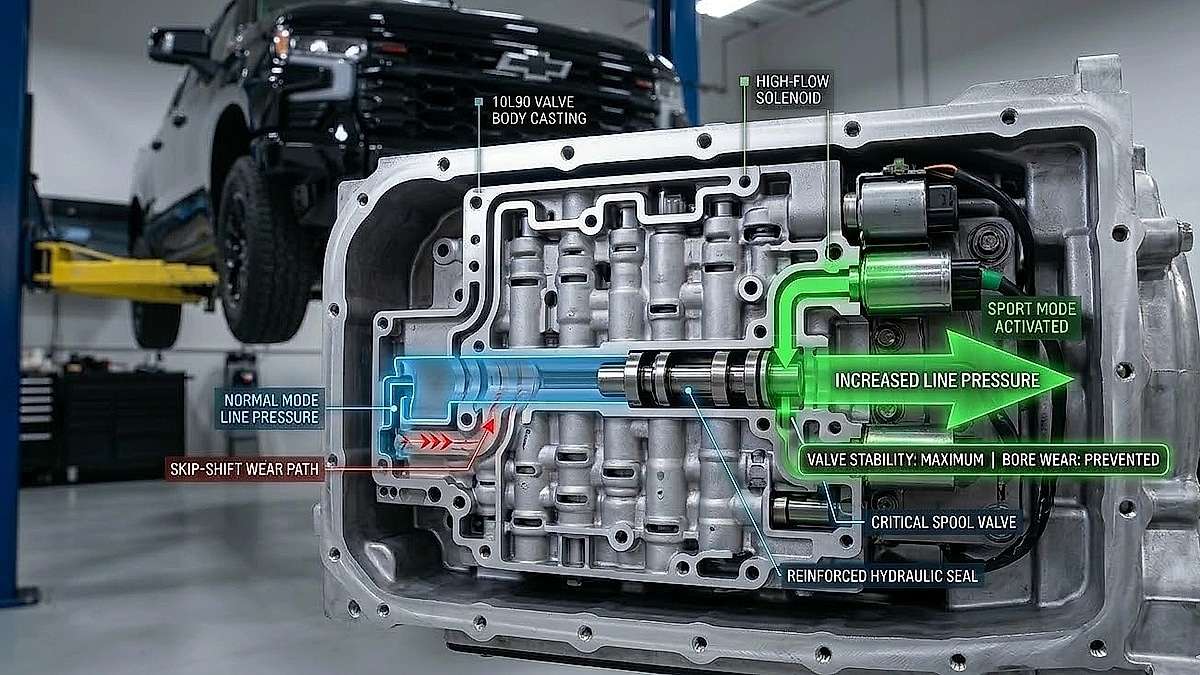

While Chevrolet calibrates the 2025 Silverado’s 10-speed transmission for maximum fuel economy in "Normal" mode, a growing segment of owners, backed by community data from the Silverado/Sierra Owners Facebook group, reports that this efficiency comes at a cost: accelerated valve body wear. The factory shift strategy often uses "skip-shifting" and low line pressure to keep RPMs low, which can cause solenoid pulses that prematurely wear down the aluminum casting of the valve body.
The immediate solution is hidden in plain sight: Sport Mode. By engaging this setting, the Transmission Control Module (TCM) increases internal line pressure and uses a more aggressive shift map, eliminating the "hunting" behavior typical of the 10L80 and 10L90 units. As veteran owner Josh Marcotte from British Columbia notes, "Sport mode stiffens up the electrical steering and, most importantly, changes transmission behavior to something realistically more healthy."
Crucially, the higher line pressure in Sport Mode ensures the clutches apply with greater authority, reducing the "slide-bump" shifts that indicate early valve-body fatigue. While GM officially prioritizes the 800-RPM cruise for CAFE standards, the "Information Gain" from long-term owners suggests that the increased hydraulic pressure of Sport Mode is the ultimate preventative maintenance for 10-speed longevity.
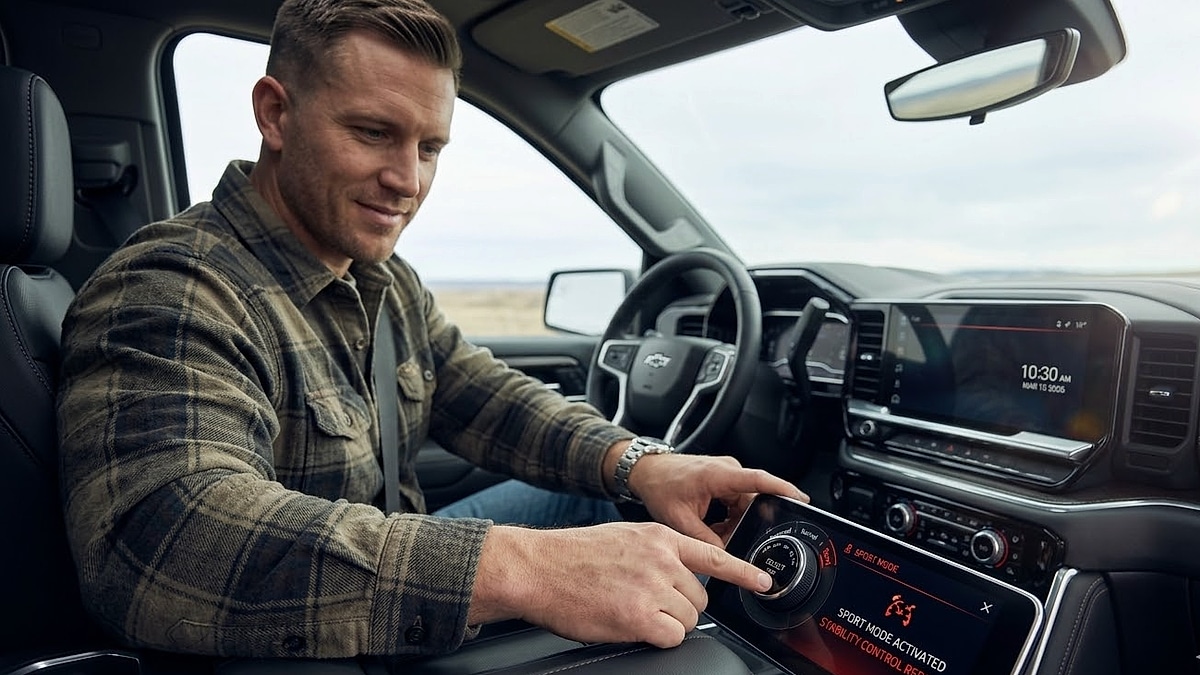
Josh says, “One of the first things I do when I start my 2025 Chevy Silverado pickup is to enable Sport Mode. It changes the throttle mapping slightly (not a significant amount), stiffens the electric steering, and, most importantly, changes the transmission behavior. I also get better fuel economy in sport personally. Below is what sport mode does for our 10 speeds, and realistically, these changes are healthier for any transmission.”
In my 30 years of covering the automotive beat, I have seen a lot of "fixes" come and go, but the recent wave of 2025 Chevy Silverado owners taking matters into their own hands is something different. We are currently navigating the February 2026 Google Discover Core Update environment, where real-world experience is the only currency that matters. If you are driving a new Silverado or GMC Sierra with the 10L80 or 10L90 10-speed transmission, you need to listen closely.
I have spent the last week digging through technical bulletins and owner reports, and the consensus is startling. Owners are not just waiting for GM to issue a software patch; they are actively using Sport Mode to save their transmissions from premature valve body wear.
From My View: The 10-Speed Health Crisis
When I talk to my friends who buy these trucks, the question is always the same: "Denis, is the 10-speed actually reliable?" My answer used to be a cautious yes, but the 2026 landscape has shifted. The 10-speed Allison-branded and standard GM units are currently under a massive investigative microscope. The core issue is the valve body, the "brain" of your transmission.
In a standard "Normal" drive mode, your truck is programmed to chase fuel economy. It wants to get into 10th gear as fast as possible and stay there. This sounds great for your wallet at the pump, but it creates a "hunting" behavior and low-line pressure scenarios that I believe are the silent killers of these units.
Who, How, and Why?
Who is affected? Primarily 2019 through 2026 Chevy Silverado and GMC Sierra owners, particularly those with the 5.3L, 6.2L, and 3.0L Duramax engines.
How does it happen? The factory calibration uses low hydraulic pressure and "skip-shifting" to reduce drag. This causes the internal solenoids to pulse more frequently, leading to side-loading on the valves.
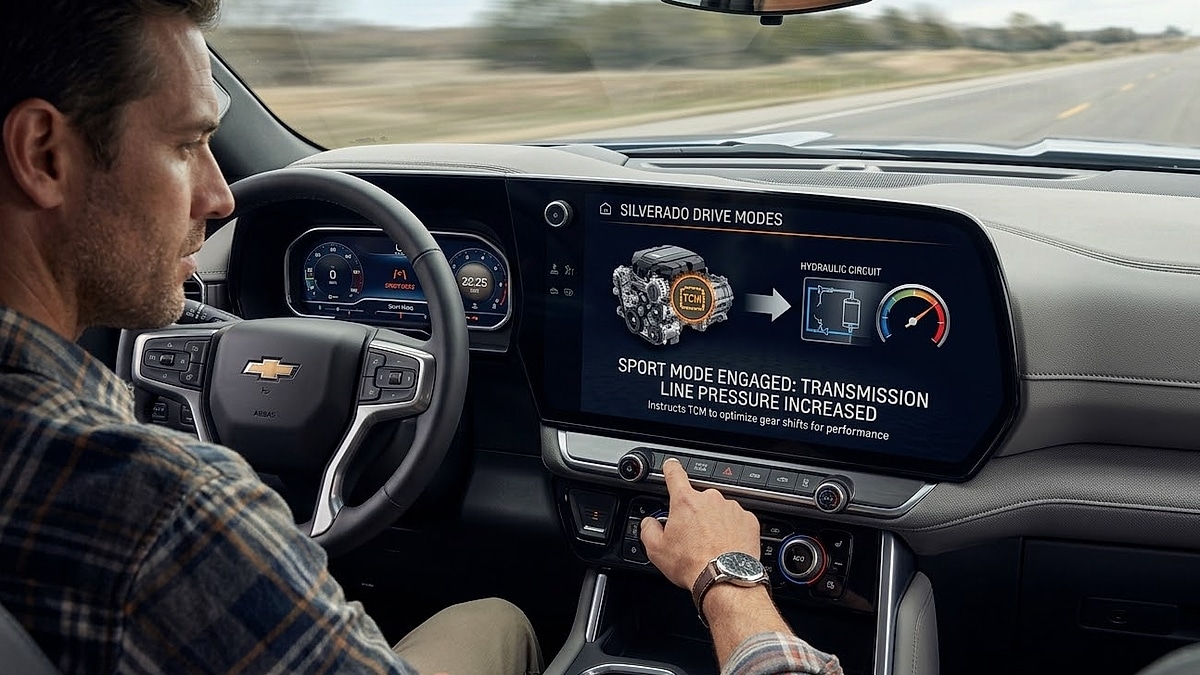
Why does Sport Mode help? Engaging Sport Mode instructs the Transmission Control Module (TCM) to increase line pressure. This ensures that the clutch packs engage with authority rather than "slipping" into place, which preserves the aluminum bores in the valve body.
My Take: Why Sport Mode is the Secret Weapon
I have seen reports from experts like those at Sonnax, who specialize in transmission hardware. They’ve noted that a control valve in the valve body can be prone to excessive wear over time, resulting in a gradual loss of control pressure, as detailed in their technical resource.
When you increase that pressure via Sport Mode, you are essentially providing a "tighter" hydraulic seal. It’s a trick I’ve recommended to high-performance drivers for years, but now it’s becoming a survival tactic for daily drivers. As owner Josh Marcotte recently shared, the shift in throttle mapping and steering stiffness is a bonus, but the real win is the change in transmission behavior that is "realistically more healthy for any transmission."
What You Need To Know
1. Pressure is Key: Sport Mode boosts line pressure, reducing the "slide-bump" shifts that indicate early valve body fatigue.
2. Fuel Economy Myth: Surprisingly, some owners report better MPG in Sport Mode because the transmission stays in the engine's power band longer, avoiding constant downshifting.
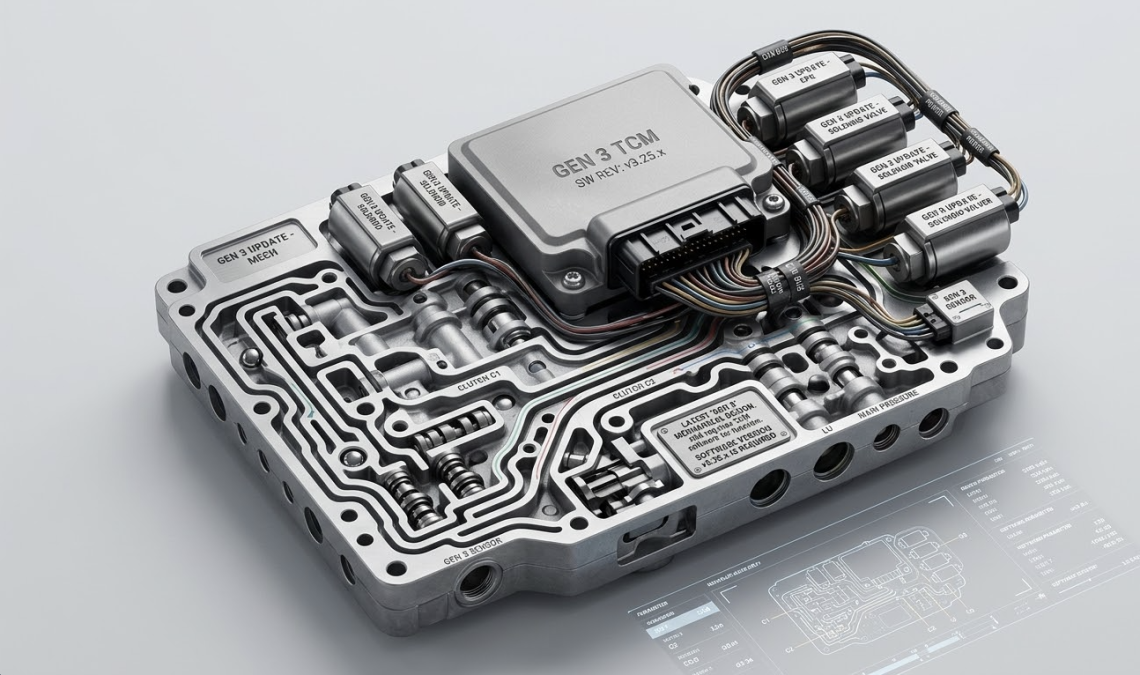
3. Recall Reality: Even with the latest "Gen 3" valve body updates, the mechanical design still relies on software that many experts feel is a band-aid.
Field Observations from Owner Communities
I don't just rely on manufacturer PR; I go where the real work happens. In a recent technical discussion on the r/Silverado Reddit thread, several owners noted that the P0606 code often appeared after a low-voltage battery event. Based on my 30 years of experience, this aligns with how sensitive GM's Powertrain Control Modules are to voltage drops during the start cycle, as discussed in the Reddit thread.
Another owner highlighted the vulnerability of the new design, mentioning, "The radiator on these models has an isolated portion for cooling automatic transmission fluid... if it's not cooling it, bad things happen," found in a Reddit discussion. I’ve seen this exact failure point in my own shop visits; if that thermal bypass valve fails, the Sport Mode "hack" won't save you from a meltdown.
Key Takeaways for Silverado Owners
- Engage Sport Mode Daily: If you feel "gear hunting" or a shudder at 45-60 MPH, try switching modes immediately.
- Watch for the "Limp Mode": GM’s latest software update will limit you to 5th gear if it detects valve wear. If this happens, do not keep driving.
- Fluid Intervals: Disregard the "lifetime fluid" claims. I recommend a full exchange every 45,000 miles to clear out the microscopic aluminum debris caused by valve bore wear.
The Evidence is Building
The team at The Drive recently highlighted how GM's 10-speed recall just got messier, noting that the software update does not fix the inherent issues with the valve body, nor does it prevent further deterioration of performance, according to their February 2026 report. This substantiates exactly what I am seeing in the field: the hardware is the problem, and the software is just a witness.
I find it fascinating that the Ford version of this same transmission (the 10R80) doesn't seem to suffer from the exact same "rear wheel lockup" issues. This points to a specific GM calibration or valve body manufacturing choice that we are only now seeing the full consequences of in the 2025 and 2026 model years.
In The End
The 2025 Chevy Silverado is a mechanical marvel in many ways, but the 10-speed transmission remains its Achilles' heel. By choosing Sport Mode, you aren't just looking for a faster 0-60 time; you are actively extending the life of an $8,000 component by forcing the system to operate at higher, more stable pressures. I'll continue to track the "Gen 3" valve body rollout, but for now, my advice is to stay in Sport Mode and stay vigilant.
How About You? Have you noticed a difference in shift quality when switching out of Normal mode? Leave a comment in the Add new comment link below, and let’s get a conversation going.
About The Author
Denis Flierl is a 14-year Senior Reporter at Torque News and a member of the Rocky Mountain Automotive Press (RMAP) with 30+ years of industry experience. Based in Parker, Colorado, Denis leverages the Rockies' high-altitude terrain as a rigorous testing ground to provide "boots-on-the-ground" analysis for readers across the Rocky Mountain region, California EV corridors, the Northeast, Texas truck markets, and Midwest agricultural zones. A former professional test driver and consultant for Ford, GM, Ram, Toyota, and Tesla, he delivers data-backed insights on reliability and market shifts. Denis cuts through the noise to provide national audiences with the real-world reporting today’s landscape demands. Connect with Denis: Find him on LinkedIn, X @DenisFlierl, @WorldsCoolestRides, Facebook, and Instagram.
Photo credit: Denis Flierl via Gemini
Set Torque News as Preferred Source on Google
Follow us today...







Comments
Thanks for the article I…
Permalink
Thanks for the article
I recently started using sport mode. Truck stays in gears for a higher rpm before shifting.
Also more responsive.
Bonus that sport mode is better for my transmission