
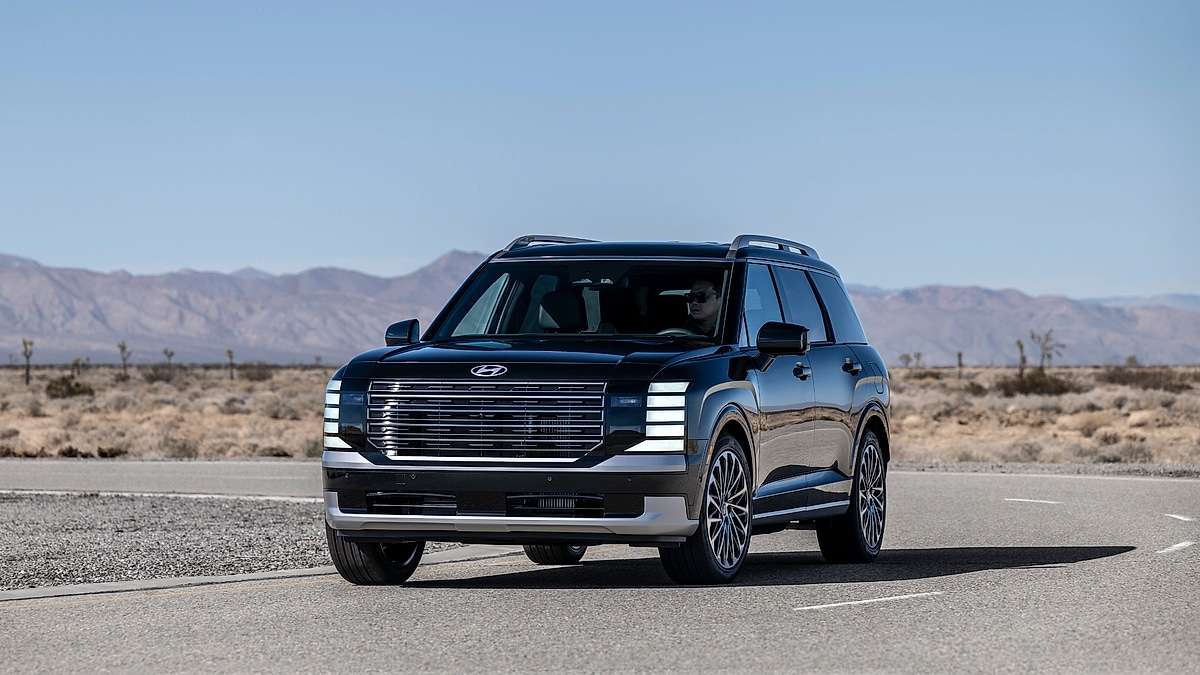

A brand-new 2026 Hyundai Palisade Calligraphy, delivered just two weeks prior, experienced a "total acceleration failure" at under 400 miles, leaving its owner stranded and unable to move after coming to a stop. The vehicle, carrying two young children, repeatedly failed to engage gears despite the accelerator being floored, presenting a severe and immediate safety hazard. This critical defect, later traced to a loose pin tension in a vital engine control wiring harness, resulted in the complete replacement of the component on a vehicle barely out of the showroom.
This incident is not merely one owner's bad luck; it shows a disturbing trend of significant manufacturing defects appearing in new vehicles, coupled with a manufacturer's dismissive response to safety concerns. When a vehicle's primary control system fails so catastrophically and so early in its life, it raises serious questions about Hyundai's quality control processes and its dedication to customer safety over corporate liability. The gap between a brand-new vehicle's promise and its immediate, dangerous failure is where trust erodes.
"I am writing this to warn other potential buyers about a terrifying safety issue I experienced with a brand-new 2026 Hyundai Palisade Calligraphy AWD.
The Incident: We took delivery on February 14, 2026. Within the first 500 miles, the car became a massive safety hazard. While driving with my two young children (aged 4 and 7), the vehicle repeatedly failed to accelerate after coming to a stop. Even with the accelerator floored, the car would not grab gears or move.
At the time, I had no idea what was wrong or if the car was going to leave us stranded in the middle of an intersection. There were no warning lights on the dashboard while we were driving, just a complete and dangerous loss of power.
Here are some videos of the acceleration issue:
Video1 Video2
The Diagnosis & Miscommunication: When I first reported the issue, the initial feedback from the service department suggested there was no detectable problem and that the behavior might be a "safety cut-off" feature. This was incredibly concerning, as it characterized a total loss of acceleration as "normal" behavior.
However, once the car was in for a formal inspection at South Point Hyundai on February 23, the technicians were finally able to replicate the concern during a test drive. At that point, the "Check Driver Assistance" warning appeared on the cluster. The diagnostic scan found active fault codes P0722 and U080186.
After consulting with Hyundai Techline, they identified loose pin tension in a critical connector (EC11) that was unrepairable. As a result, they had to remove and replace the entire engine control wiring harness on a vehicle that was only two weeks old.
The Response: Despite this being a major electrical failure affecting the primary control of the vehicle, the response from management and corporate has been dismissive:
Documentation Issues: While the repair was eventually performed, the dealership management has been unwilling to provide a written record of the initial diagnostic confusion where the defect was described as a "feature."
Advertising
HMA Denial: I filed a formal case for a buyback given the severity of the failure. On March 12, 2026, Hyundai Motor America officially denied the request, claiming a repurchase is "not warranted" despite the car requiring a full harness replacement almost immediately after purchase.
Conclusion: I no longer feel safe putting my family in this car. If you are looking at a 2026 Palisade, please be aware that a brand-new car can suffer a fundamental mechanical failure that the manufacturer may expect you to just "live with."
Has anyone else had "dead" accelerator issues or wiring harness replacements on the 2026 models? I am currently escalating to the BBB Auto Line as my next step."
The initial response from the service department, dismissing a "total loss of acceleration" as a "safety cut-off" or "normal behavior," is a textbook example of how dealerships attempt to deflect genuine safety issues.
2026 Hyundai Palisade: Initial Quality Concerns
- The 2026 Hyundai Palisade Calligraphy experienced a "total acceleration failure" at under 400 miles, attributed to a loose pin tension in its engine control wiring harness. This critical defect led to a complete loss of power and the vehicle's inability to move from a stop.
- Diagnostic codes P0722 and U080186 were recorded, indicating issues with the transmission output speed sensor circuit and communication errors within the body control module. These codes directly point to fundamental electrical and powertrain control problems.
- Hyundai Motor America officially denied the owner's request for a buyback, claiming it was "not warranted" despite the vehicle requiring a full engine harness replacement within two weeks of delivery. This decision forces the owner to pursue further action through channels like the BBB Auto Line. This 2026 Palisade incident shows that even a brand-new vehicle can harbor critical defects, and a manufacturer's response to such failures can be more frustrating than the problem itself.
This kind of gaslighting, where a critical failure is re-framed as an intended feature, undermines consumer trust and delays proper diagnosis, potentially putting lives at risk. It took a formal inspection and a test drive by technicians to finally replicate the issue and trigger the appropriate fault codes, P0722 and U080186, which point directly to transmission output speed sensor circuit malfunction and a communication error with the body control module, respectively.
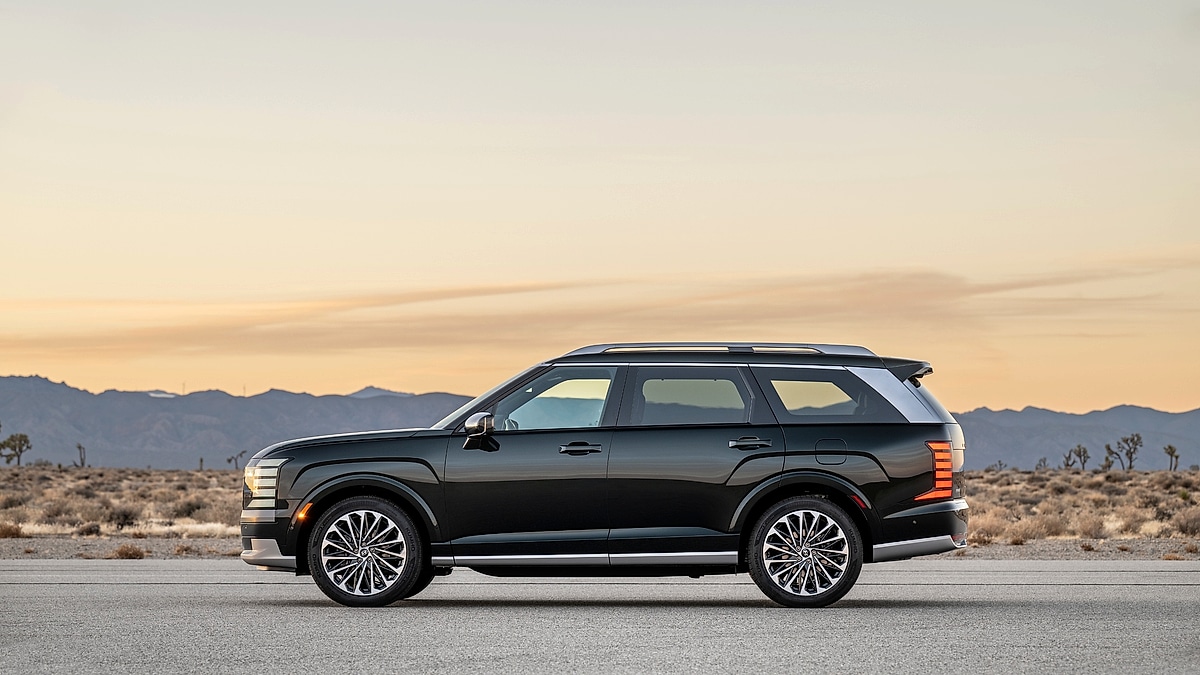
The industry's long-term health depends on foundational reliability, ensuring that innovation doesn't come at the expense of basic safety and operational integrity. This is a fundamental manufacturing defect. The fact that a brand-new vehicle required a complete engine control wiring harness replacement due to "loose pin tension" in a critical connector (EC11) indicates poor quality control at the assembly plant.
Reddit user u/Odd-Independent4640, seeking clarity on the repair, asked: "Is the issue completely resolved with the harness replacement?"
The owner's response, "I don't know tbh. I don't see the really bad acceleration issue with total loss of power, but at the same time, there are moments when the acceleration is really sluggish when starting from zero. Hence, my trust issues with this car," confirms the lingering uncertainty that often follows such invasive repairs. A complete engine harness replacement is a massive undertaking, requiring significant disassembly of the vehicle. The possibility of residual issues or new problems introduced during the repair process is high, and the owner's continued experience of "sluggish" acceleration suggests the underlying problem may not be fully resolved, or that the repair itself has introduced new, albeit less severe, drivability concerns. The component's failure at such low mileage suggests a problem with supplier parts, an assembly line oversight, or a design flaw that allows for inadequate connection integrity.
The most egregious aspect of this entire ordeal is Hyundai Motor America's official denial of a buyback request, claiming it is "not warranted." A vehicle that experiences a complete, dangerous loss of power due to a major electrical component failure at under 400 miles has demonstrably failed to meet its basic purpose of safe, reliable transportation. Denying a buyback in such a clear-cut case of a lemon-law eligible defect is a calculated corporate maneuver designed to minimize financial exposure, not to ensure customer satisfaction or safety. This decision forces the owner into a protracted legal battle, further penalizing them for a manufacturer's failure.
Reddit user u/Channel_Huge, reflecting on broader Hyundai quality concerns, commented: "Between this, the seat crushing issue, the flaps, the digital key… and every other complaint… Hyundai really made this vehicle look nice at the expense of quality and safety…
Back to their old ways? Cheaper, just nice to look at? Well, inside at least.
I don’t blame you for being scared. You may want to contact corporate Hyundai and report to the Better Business Bureau. My guess is that Hyundai knew of these issues and hid them from buyers. Enough of them were driven before reaching the outside of the Korean market. No way these things didn’t develop all of a sudden. Fear of lost revenue on investment? At the customer’s expense?
I know some will say they bought one and have had no issues. But, that’s “yet”… and there may be more we just don’t know about, right?"
This comment cuts to the core of Hyundai's recent quality narrative. While Hyundai and Kia have made significant strides in design and perceived value, persistent quality issues, from engine fires to digital key glitches and now critical wiring harness failures, recur. The idea that these issues are "known" internally but hidden from buyers is a common, and often accurate, suspicion among consumers who have been burned by manufacturers prioritizing launch schedules and profit margins over rigorous long-term testing and defect resolution. The issue is whether cumulative data points to a problem that Hyundai is failing to address proactively.
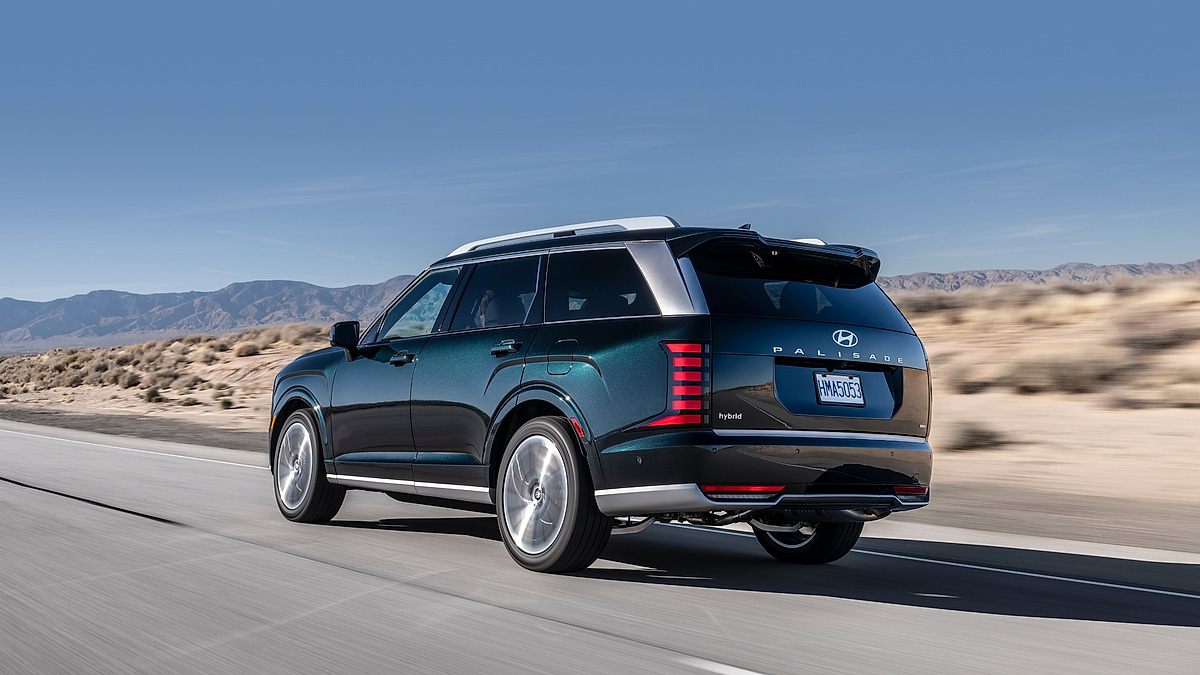
This is where the true cost of a manufacturing defect becomes apparent: it includes the repair, the loss of confidence, and the potential for ongoing issues. Hyundai's decision to deny a buyback, despite a documented, dangerous defect requiring a major repair at negligible mileage, is a betrayal of consumer trust. It signals that buyers of the 2026 Palisade, and potentially other new Hyundai models, should be acutely aware that they might be purchasing a vehicle with unaddressed quality issues and that the company may not stand behind its product when those issues manifest.
Image Sources: Hyundai Media Center
About The Author
Noah Washington is an automotive journalist based in Atlanta, Georgia, covering sports cars, luxury vehicles, and performance culture. His reporting focuses on explaining the engineering, design philosophy, and real-world ownership experience behind modern vehicles.
Noah has been immersed in the automotive world since his early teens, attending industry events and following the enthusiast communities that shape how cars are built and driven today. His work blends industry insight with enthusiastic storytelling, helping readers understand not just what a car is, but why it matters.
Noah is also a member of the Southeast Automotive Media Association (SAMA), a professional organization for automotive journalists and industry media in the Southeast.
His coverage regularly explores sports cars, luxury vehicles, and performance-driven segments of the automotive industry, including the evolving culture surrounding Formula Drift and enthusiast builds.
Read more of Noah's work on his author profile page.
You can also follow Noah here:
Set Torque News as Preferred Source on Google
Follow us today...





Comments
Hello, I wanted to share my…
Permalink
Hello,
I wanted to share my experience with my 2026 Hyundai Palisade in case it’s helpful for your content or something you’d be interested in covering.
I purchased the vehicle at the end of November, and it currently has under 6,000 miles. Unfortunately, I’ve already had to take it back to the dealership twice for what appears to be an engine misfire. The vehicle shakes noticeably while driving, which has been pretty concerning given how new it is.
It’s currently back at the dealership now, and communication has been pretty limited unless I reach out first. At this point, I’m starting to feel frustrated and disappointed, especially since I really liked the vehicle overall.
I’m not sure how this will ultimately be resolved, but I wanted to share what’s been going on in case it’s something you’d want to look into or include in your reviews.
If you need any additional details, I’d be happy to provide them.
Thank you for your time.
I also would like to comment…
Permalink
I also would like to comment as a new owner of my much desired pallisade calligraphy 2026. Before driving the car off the lot we had our photo taken with us and the car with a brand new ribbon on it!!! We notice later in the photo that one of the front vents was stuck open. We were told that a part had to be ordered and replace due to a corrosion problem from shipping. They had it a week. In addition, I have always smelled an odd smell coming from under the hood, not yet burning but something was too hot smelling. I am now at 4800 miles and the check engine light came on…. My blue link tells me it’s the power train. In addition, while driving the car initiated the anti collision feature when there was no possible collision . Severely braking, alarm and slight turn to the right…. Then later the same day (an hour or so) the car wouldn’t start. The brake was engaged and it wouldn’t do anything (may be due to software update at the time) but no indication of what was going on. In addition I have been more than frustrated with the incompetent and lying dealer. I hope the word gets out and the lemon law will
Be accepted or something. I want and need a reliable car.