
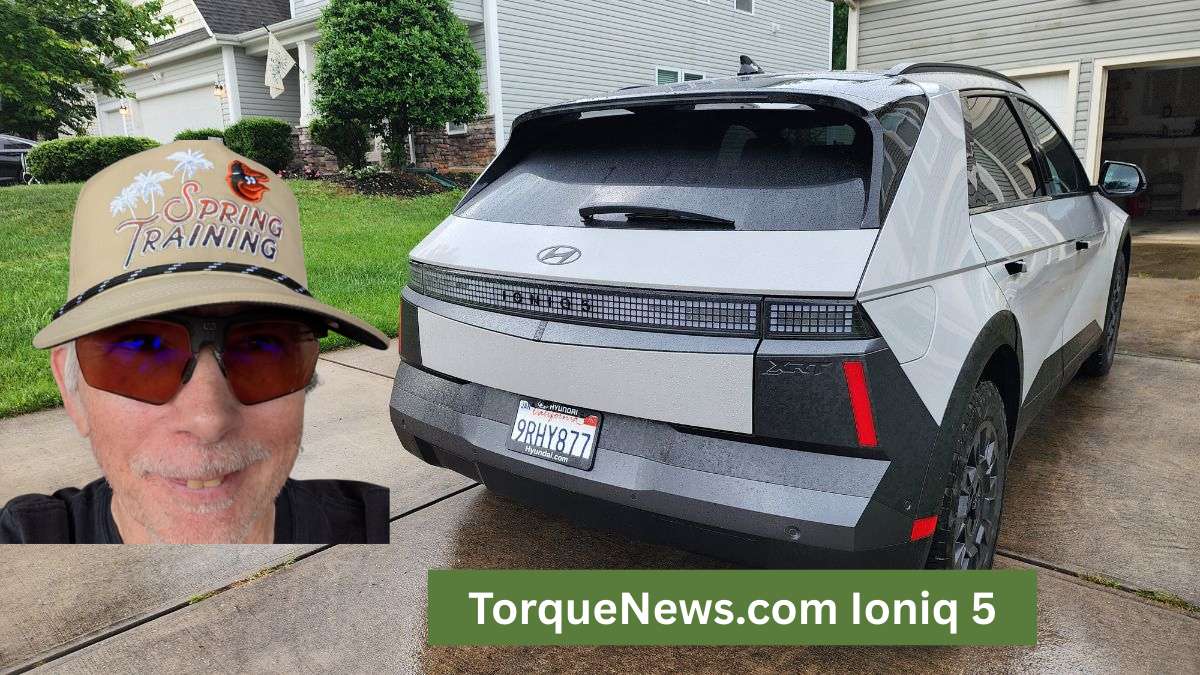

Terry Herrigan woke up this morning knowing he was finally getting his Hyundai Ioniq 5 back.
The retired software engineer from Maryland had been without his car since January 6th, the day his Integrated Charging Control Unit, the ICCU, quietly gave up the ghost and turned a futuristic electric vehicle into a very expensive paperweight. Today, he drives it home. And today, in what might sound like an unusual decision to some, he also starts shopping for a hybrid.
Wait. Did he just say he is buying a hybrid right after getting his EV fixed? Yes. And honestly, the more you think about it, the smarter it sounds.
This morning Terry wrote about his decision in the Ioniq Guy public group on Facebook, and he said the following:
"Picking up my Ioniq 5 from the dealer today. ICCU died on January 6th. I also plan to start shopping for a hybrid today. From here on out, I see the Ioniq 5 being the main squeeze but only for trips within 150 miles round trip. I will drive the new hybrid for anything further like my yearly snow bird trips to Florida. Also planning on replacing the 12V battery with DieHard EV Battery : H5 Group Size and installing ANCEL BM300 Pro to monitor and alert me of the 12V battery state."
The Moment Everything Changed
Terry did not panic when the ICCU died. He is an engineer. He thinks in systems. He knows that every technology has its strengths, and every technology has its limits. What the ICCU failure did was not shake his faith in the Ioniq 5 entirely. Instead, it clarified something for him that many EV owners discover only after a breakdown, often in the worst possible place at the worst possible time.
The ICCU is the part responsible for converting and directing electricity within the car. It is not a part you ever think about until it fails. And when it does, your Ioniq 5 becomes an immobile sculpture. That is exactly what one Virginia owner, William Jones, experienced when his ICCU failed during a brutal winter storm, 40 miles from home. You can read the full story of how William drove 81,352 miles on just $228 in charging before his ICCU failed in a blizzard, and it puts Terry's experience in sharp, relatable context.
Terry is not alone in feeling that anxiety.
What Allan Said Stopped Me Cold
After Terry posted about picking up his Ioniq 5 and shopping for a hybrid, a fellow group member named Allan Buck replied with something worth reading twice. Allan, who also owns a Hyundai Ioniq 5, wrote that he has driven to Florida before without major issues. But this year? He is afraid. "I'm afraid to drive mine this year for fear that ICCU will fail, and my car will be stranded hundreds of miles from where I want to be for weeks or months," Allan wrote. Then he added something that really lands: "It's really a shame that this situation just goes on year after year with no resolution."
Year after year. No resolution.
Hyundai Ioniq owners are now facing an indefinite wait for ICCU replacements, as corporate hints at a redesigned part that could prevent future failures. We covered this deeply on Torque News, and the pattern of how a call from Hyundai corporate about ICCU replacements left Ioniq owners waiting and wondering about an upcoming reliability improvement is something every Ioniq owner should read before planning a long trip.
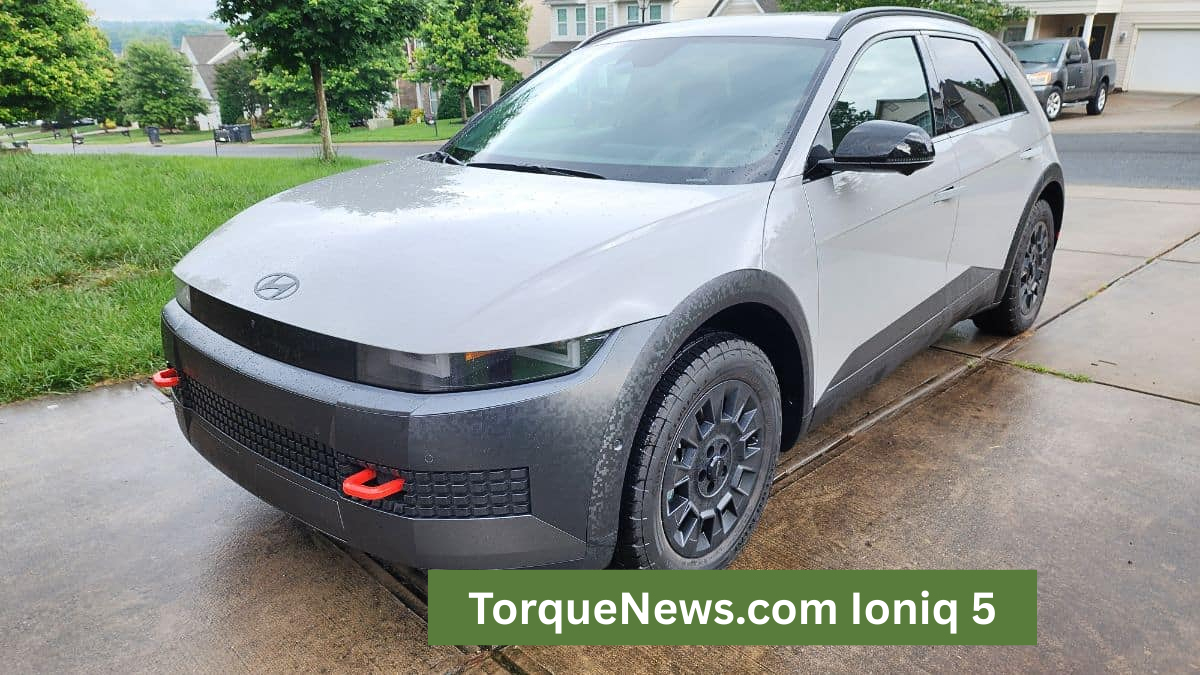
So what does a smart, experienced engineer do when he loves his EV but cannot fully trust it for a 1,000-mile snowbird trip to Florida? He engineers a solution.
Terry's Two-Car Strategy Is Actually Brilliant
Here is Terry's plan, laid out simply. The Ioniq 5 stays. It becomes what it was always best suited to be: the primary daily driver and the car for any trip within roughly 150 miles round trip. City errands. Commutes. Weekend drives to see family across the state. Short hops where the EV shines brightest and the risk of an unexpected roadside failure is manageable.
For anything longer, including the annual drive from Maryland down to Florida, Terry is buying a hybrid. No charging stops to plan. No anxiety about whether the ICCU will hold up somewhere on I-95 in South Carolina. Just fill the tank, press the accelerator, and go.
This is not a failure of faith in electric vehicles. It is wisdom.
Hybrids shine on long highway drives. Their combined powertrain ensures you won't be stranded due to a lack of charging infrastructure. That single sentence captures exactly what Terry understood after getting stranded. The Ioniq 5 is spectacular. It is just not the right tool for every single job.
When Should You Use an EV, and When Should You Use a Hybrid?
Let's break this down, because it matters, and it matters more than most people realize before they buy.
Your EV is perfect for daily commutes under 80 miles each way. It is perfect for grocery runs, school pickups, and weekend drives where you know the roads and you know where the chargers are. It is perfect when you charge at home overnight and wake up to a full battery every single morning. The Ioniq 5 in particular is a genuinely joyful car to drive. The performance, the ride quality, the interior, all of it is remarkable. There is no denying that the Ioniq 5 is wonderful to drive.
But the moment your round trip exceeds 150 miles, the calculus starts to shift. You start thinking about fast charger locations. You start thinking about wait times. You start thinking about whether you can make it if the first charger you planned on is occupied or broken. And if you are driving from Maryland to Florida, that thinking turns into a part-time job.
Battery-electric vehicles have multiple issues that make them harder to use on road trips than plug-in hybrids or hybrids, including the range between charges on long road trips. This is not anti-EV talk. This is just physics and infrastructure reality as it exists today. Our detailed breakdown of why EV road trip range creates real planning challenges for long distance drivers is worth bookmarking.
A hybrid like the Toyota Prius, the Toyota RAV4 Hybrid, the Hyundai Tucson Hybrid, or the Ford Escape Hybrid changes the equation entirely. You fill up in five minutes anywhere in America. You get 40 to 50 miles per gallon. You drive 500 miles on a single tank with zero anxiety. The engine helps charge the battery as you go, so there is no ICCU equivalent sitting in the car waiting to strand you in the Georgia summer heat.
What Hybrid Should Terry Buy?
Now here is where it gets interesting, because Terry has options, and the decision is worth thinking through carefully.
If Terry wants something fuel-efficient and proven for long highway miles, the Toyota Prius is still the gold standard. The latest generation is genuinely good-looking now, not the awkward machine it used to be, and it delivers around 57 miles per gallon combined. That is almost shocking value for a long snowbird trip.
If Terry wants something with a little more cargo room and an SUV feel for loading up for Florida, the Toyota RAV4 Hybrid at around 40 mpg combined is a strong pick. It has a reliability record that is practically unlikeable to criticize, even if you tried. Toyota has built that reputation over decades for a reason. The Ford Escape Hybrid is another solid choice, particularly if Terry wants to stay a little more domestic in his brand allegiance.
If he wants to go plug-in hybrid, a Toyota Prius Prime or Hyundai Tucson PHEV gives him some short electric range for around-town driving plus full hybrid capability for Florida trips. For someone who can cover around 90% of their annual miles on a battery that goes 30 to 60 miles, they may use less than a single tank of gasoline per year, and that is the point at which there is perhaps no appreciable difference in fueling costs between a PHEV and an EV. Our deep-dive article comparing the practical decision between fully electric vehicles versus plug-in hybrids for a one-car or two-car household walks through this reasoning in real-world detail.
Terry's Extra Steps: The 12V Battery and the ANCEL Monitor
Here is something else Terry mentioned that deserves attention, because it is genuinely smart and not something most owners think about until it is too late.
Terry plans to replace the 12V battery in his Ioniq 5 with a DieHard EV Battery H5 Group Size. He is also planning to install an ANCEL BM300 Pro to monitor and alert him of the 12V battery's state. Why does this matter so much?
The ICCU acts like an alternator in a gas car and ensures that the 12V battery gets charged from the traction battery whenever needed. A defective ICCU results in the 12V battery running down repeatedly and eventually becoming so dead that it doesn't even respond to a boost. The 12V battery is the overlooked weak link in many EV failures. Forum posts have become de facto technical manuals on this subject because so many Ioniq owners have learned about it the hard way. The ANCEL monitor gives Terry a real-time window into what is happening before something goes wrong, rather than after. That is the difference between a minor inconvenience and a multi-week repair ordeal.
Hyundai has known about the 12-volt charging and draining and ICCU problems for at least three years, from 2022 through 2025. The 2026 new ICCU on order has a different part number, is smaller, and has better cooling, so maybe it will work better. Maybe. But Terry is not waiting to find out while he is on I-95 somewhere. His approach of actively monitoring the 12V battery state is exactly the kind of proactive ownership that turns a potential disaster into a manageable inconvenience. Every Ioniq 5 owner should know that monitoring your Ioniq 5's 12V battery and understanding what happens when your car sits unplugged can reveal surprising data about your car's health.
The Broader Lesson That Nobody Wants to Say Out Loud
Here is the thing about Terry's story that matters beyond the ICCU, beyond the hybrid shopping, and beyond the 12V battery monitor.
Terry has thought clearly about what he needs from each vehicle. He is not letting pride, or sunk cost, or brand loyalty, or social media pressure drive his decision. He loves his Ioniq 5. He is keeping it. He is also being honest about what it cannot do reliably today, and he is filling that gap with a tool that can.
There is a moral worth sitting with here. Knowing your tools is not weakness. It is wisdom. A carpenter who insists on using a hammer when a drill is needed is not being loyal to the hammer. He is being stubborn. The best decision-makers in life, and in car ownership, are the ones who can set aside ego and ask honestly: what does this situation actually require? Sometimes the answer is the exciting new technology. Sometimes the answer is the reliable, proven, somewhat boring machine that gets you to Florida and back without drama.
Ownership of anything, a car, a business, a relationship, is better when you can see it clearly, without the fog of what you wish it were. Terry sees his Ioniq 5 clearly. He loves it for what it is, and he is supplementing it for what it is not. That is a genuinely mature and somewhat selfless approach to a problem that a lot of people are quietly struggling with right now in EV communities across the country.
What Happens Next
Terry picks up his Ioniq 5 today. He starts shopping for a hybrid today. He installs a battery monitor and a new 12V battery. He drives his EV for everything within 150 miles. He drives his hybrid to Florida this winter.
Allan Buck, meanwhile, is sitting with his anxiety about his own Ioniq 5, and he is not alone. The saga of the Ioniq 5 12V auxiliary battery and related Integrated Charging Control Unit continues, and is the hot topic on Ioniq 5 forums. Hyundai has been trying to solve these issues for as long as many owners have had their vehicles. The community watching and discussing what lessons Ioniq 5 owners have learned about Hyundai roadside assistance and ICCU failures in real road conditions continues to grow, and the conversations are getting more urgent, not less.
The question for every Ioniq 5 owner, and honestly for every EV owner planning long trips this spring and summer, is the same question Terry asked himself after January 6th: Am I using this vehicle for the right trips, or am I using it for every trip because I paid a lot for it and want to feel justified?
That is a question worth sitting with.
Now, I want to hear from you directly in the comments section below.
Have you ever changed your driving strategy after an unexpected breakdown or mechanical failure in your EV or hybrid? And if you own a Hyundai Ioniq 5, are you comfortable driving it on long trips over 300 miles right now, or has the ICCU situation changed how you use the car?
Tell me your personal experience in the comments below. Your story might help someone else make a better decision today.
Images by Torque News and Terry Harrigan's profile image.
About The Author
Armen Hareyan is the founder and Editor-in-Chief of Torque News and an automotive journalist with over 15 years of experience writing car reviews and industry news. Now based in the Charlotte region (Indian Land, SC, he founded Torque News in 2010, which since then has been publishing expert news and analysis about the automotive industry. He can be reached at Torque News on X, Linkedin, and Youtube. Armen holds three Masters Degrees, including an MBA, and has become one of the known voices in the industry, specializing in the landscape of electric vehicles and real-world stories of actual car owners. Armen focuses on providing readers with transparent, data-backed analysis bridging the gap of complex engineering and car buyer practicality. Armen frequently participates in automotive events throughout the United States, national and local car reveals and personally test-drives new vehicles every week. Armen has also been published as an automotive expert in publications like the Transit Tomorrow, discussing how will autonomous vehicles reshape the supply chain, and emerging technologies in vehicle maintenance.
Set Torque News as Preferred Source on Google
Follow us today...







Comments
Why on earth would you…
Permalink
Why on earth would you recommend a Hyundai Tucson PHEV? Doesn't it have the same exact ICCU?
We lease a 2024 Hyundai…
Permalink
We lease a 2024 Hyundai Ioniq 5 and own a 2017 Chevy Volt plug in hybrid. As Terry and the author suggested, this is a great combination for frugal commuting and the occasional long-distance drive to areas with poor charging infrastructure. The ICCU in our Ioniq 5 failed in January while driving on a busy road, a very scary situation. It took 7 weeks for a replacement unit to arrive at the dealer and have it installed. The dealer couldn't answer whether this is the redesigned unit, or if ours was replaced with the old design prone to failure. We initially thought buying the Ioniq 5 at the end of lease, however, with Hyundai consistently failing to address the issue, we will give it back at end of lease.