

Yesterday, while spending time in The Ioniq Guy public Facebook group, I came across a post that immediately stood out, not because ICCU problems are new, but because of how the information was delivered and what it quietly suggested. The post came from Richard Rodriguez of Denver, Colorado, and it described a direct conversation with a Hyundai Corporate case manager that may point to a deeper shift in how Hyundai is handling ICCU replacements for the Ioniq lineup.
I have covered automotive recalls, supplier failures, and manufacturer responses for more than 15 years, and moments like this tend to matter more than they first appear. When corporate communication changes tone or structure, it is rarely accidental.
In his post, Richard wrote, “For those with an ICCU failure pending repair I just got some interesting news from my Hyundai Corporate case manager. The dealer recently told me that they have no ETA on the replacement part, which was ordered on 01 09 26. Originally it was 01 27 26 at which point they changed it. Today, my case manager called to let me know that the reason for the removal of the ETA is that Hyundai is working to acquire and or distribute replacements that will not have the same failure in the future. I don't know if this means they are making it more reliable or getting a part with a different mechanism that won't fail in the same way. I finally received rental approval after almost 4 weeks of waiting. So at least I have something to drive for this indefinite wait.”
That explanation, especially the part about replacements that “will not have the same failure in the future,” deserves careful attention.
Why This ICCU Update Feels Unusual
Hyundai Ioniq owners have become painfully familiar with ICCU recalls, software updates, fuse replacements, and long service delays. What makes Richard’s update different is not just the delay, but the reason given for it.
This message did not come from a dealership service desk trying to manage expectations. It came directly from Hyundai Corporate, and it came with a justification for why ETAs were removed entirely. In my experience, automakers do not pull ETAs unless something upstream has fundamentally changed.
There are only a few realistic explanations when this happens. Either the supplier cannot deliver parts at scale, internal testing has identified a risk of repeat failure, or the manufacturer is preparing a revised component that is not yet ready for distribution. Richard’s case manager strongly hinted at the third possibility.
If Hyundai believed the existing ICCU replacement was a long-term solution, there would be little incentive to halt distribution and create a nationwide backlog.
The View From Other Owners Is Less Clear
What makes this situation even more complicated is that other owners in the same group reported very different experiences, sometimes within days of each other.
Chris replied to Richard’s post with his own update, writing, “Interesting I just picked up my car from iccu replacement Went to dealer 12 27 25 and just got it today. My case manager should be calling me within an hour to go over discount programs and buy back options. I did not hear that from Hyundai and from what I can see the new iccu is the same part # as before.”
That last detail matters. A matching part number typically suggests the same design. While manufacturers can revise internals without changing part numbers, they usually do not do that when addressing a widely publicized reliability issue. Chris’s experience suggests that at least some dealerships are still installing ICCUs that appear unchanged.
Carol raised the next logical question, one that many owners are likely asking privately. She wrote, “Hmmm, if they actually have a new improved part, I wonder if they'll eventually have a recall for cars that haven't had the ICCU replaced.”
That is not speculation for speculation’s sake. If Hyundai introduces a revised ICCU specifically designed to prevent known failures, it opens the door to future recall expansions or follow-up service campaigns.
John’s reply added a level of technical skepticism that I think is healthy. He wrote, “Thank you for this update. Since you have been given this information via HNA as opposed to from an independent dealer, and they specifically called you, I would imagine that it should be possible to get this news officially from corporate. Also, to halt an outstanding order like that I would expect if true, new units should be in the pipeline at some advanced stage, as it takes months to introduce new components like this from a design. Personally I will remain hopeful, but skeptical until I see actual results.”
John’s point reflects a reality I have seen many times. Automotive component redesigns do not happen overnight. If Hyundai is truly changing the ICCU in a meaningful way, that decision was likely made months ago.
Mike then chimed in with an update that closely mirrors Richard’s experience. He wrote, “I got a call from my local service rep this morning, what he said seems to agree with this national backlog on the ICCU and they have no ETA. He does have the fuse though. Keeping fingers crossed that they've come up with a permanent repair.”
The phrase “national backlog” is particularly revealing. It suggests centralized decision making rather than isolated dealer shortages.
ICCU Failures Are No Longer Edge Cases
At this point, ICCU failures cannot be dismissed as rare or isolated incidents. Over the past year, I have reported on enough owner stories to confidently say this issue has reached a scale that affects brand perception.
I have previously advised owners to act quickly when recall work becomes available, explaining why other Hyundai Ioniq drivers should get ICCU recall work done as soon as possible and why it should be smooth sailing, while also acknowledging that execution varies wildly from dealer to dealer.
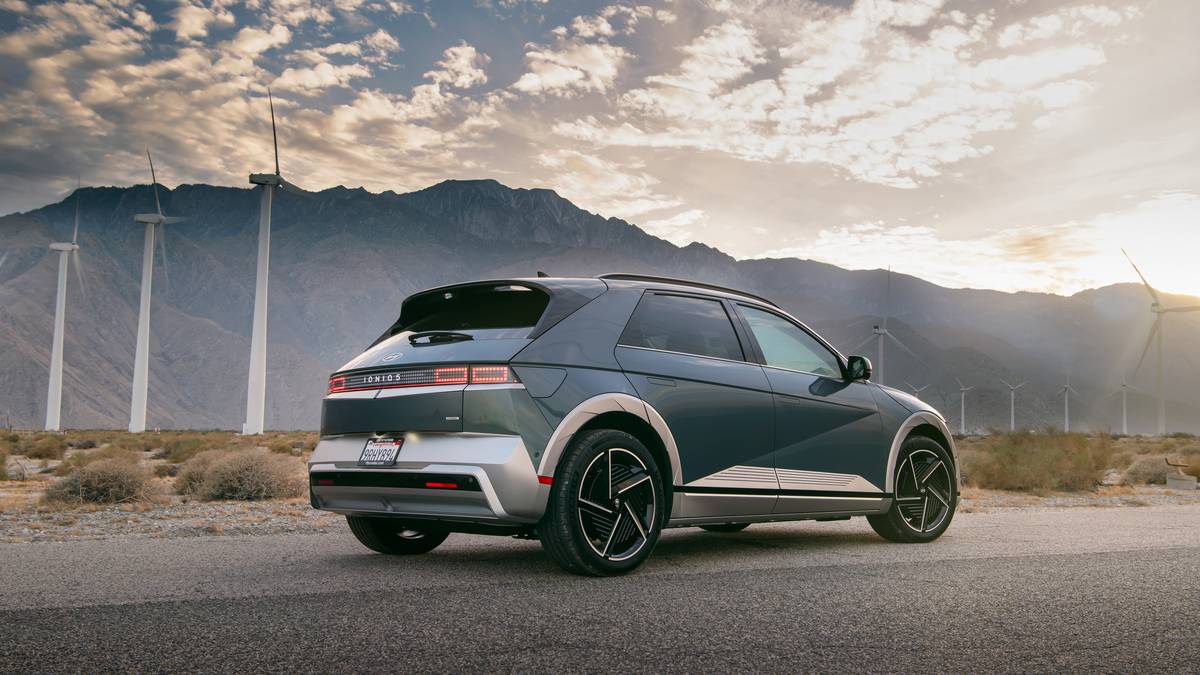
I have also shared long-term ownership context, including putting 81,352 miles on a 2022 Hyundai Ioniq 5 over 37 months and spending only 228 dollars on charging before the ICCU issue surfaced, to show just how disruptive this failure feels after otherwise strong EV ownership experiences.
And when things go wrong, owners often learn lessons the hard way. That is why I wrote very specific advice for fellow Ioniq 5 owners about how to approach Hyundai when problems escalate, because navigating corporate channels should not be a prerequisite for reliable transportation.
What Hyundai’s Communication Gap Is Costing Owners
Richard waited nearly four weeks just to receive rental approval. That detail alone matters. ICCU failures do not simply inconvenience owners. They disrupt work schedules, family logistics, and financial planning.
Hyundai deserves credit for building compelling EVs. The Ioniq 5 and Ioniq 6 are efficient, comfortable, and competitive in a crowded market. But goodwill fades quickly when communication breaks down.
If Hyundai is indeed working toward a revised ICCU, transparency would help stabilize owner confidence. Even a carefully worded acknowledgment would be better than silence. Right now, owners are piecing together information through Facebook posts, service advisor calls, and case manager hints.
What My Experience Tells Me to Watch Closely
After 15 years covering the auto industry, I have learned that disappearing ETAs combined with proactive corporate outreach usually signal internal concern. That does not automatically mean a better fix is coming, but it does suggest Hyundai understands the current approach is not sufficient.
The next developments to watch are straightforward. Will Hyundai introduce a revised ICCU quietly, or will it formally expand recall language. Will owners who already received replacements be called back again. And how long will this backlog realistically last.
We also cannot ignore post repair behavior. Owners have already reported unexpected symptoms after ICCU related work, similar to what I described in my experience with humming noises and random accelerations after getting my Hyundai Ioniq 6 back from service. That tells me the ripple effects of these repairs may not be fully understood yet.
Why Richard’s Post Matters
Richard’s update matters not because it confirms a solution, but because it confirms uncertainty at the corporate level. When Hyundai Corporate removes ETAs and speaks directly to owners about future reliability, it suggests active reevaluation.
For owners currently waiting, that uncertainty is exhausting. For Hyundai, it is a moment that will shape long-term trust with EV buyers who are paying close attention to how problems are handled, not just how cars drive.
If you own an Ioniq and are dealing with ICCU issues, your experience is part of a much larger picture that is still forming.
So I want to leave you with two questions.
Have you been told there is no ETA for your ICCU replacement, and did that message come from a dealer or from Hyundai Corporate. And if you already received an ICCU replacement, has your experience improved, stayed the same, or introduced new concerns.
Share your experience and your opinion, because right now, owner voices are filling in the gaps Hyundai has yet to address.
Armen Hareyan is the founder and Editor-in-Chief of Torque News. He founded TorqueNews.com in 2010, which since then has been publishing expert news and analysis about the automotive industry. He can be reached at Torque News Twitter, Linkedin, and Youtube. He has more than a decade of expertise in the automotive industry with a special interest in Tesla and electric vehicles.
Set Torque News as Preferred Source on Google
Follow us today...






Comments
My ICCU unit failed on 12/30…
Permalink
My ICCU unit failed on 12/30. Car has been at the dealer since, waiting for an ICCU for which there is no ETA. They provided a rental at a small cost, but I'm now at about six weeks, still no ETA.
Brought it in today....no ETA
Permalink
Brought it in today....no ETA
I had an ICCU failure on my…
Permalink
I had an ICCU failure on my 2023 Limited at 24,000 miles. I was given a gas loaner vehicle on Jan 7. Today Feb 10 2026 is EV lost day 37 for me. The ICCU remains on backorder with no ETA.
Once I read about this new ICCU coming, I pressed my case manager twice for further information on what ICCU part number is on order for my vehicle. Today he replied "This is the ICCU part for your vehicle: 36400-1XAA0-QQH." That is new and not in the list of 5 other ICCU numbers I have seen in Facebook posts on ICCU replacements over the past month.
It turns out 36400-1XAA0-QQH…
Permalink
In reply to I had an ICCU failure on my… by M Silverstein (not verified)
It turns out 36400-1XAA0-QQH is an old ICCU number. It comes from the November 2024 Recall 272 aka Technical Service Bulletin (TSB) 24-01-086H. So as far back as 15 months ago, it is the part number to replace failing ICCUs.
Further posts on ioniqforum and Facebook's IONIQ Guy Group, specifically on 2/11/26, have further indicated no new "magic bullet" ICCU is coming at this time.
I’ll add my voice to the…
Permalink
I’ll add my voice to the choir: my 2024 Ioniq 5 Limited has been at the dealer since 12.28.25. My case manager has no ETA. The end.
24 I6 AWD Ltd (bought new…
Permalink
24 I6 AWD Ltd (bought new Dec 24)
ICCU failed @ just under 15K miles last Sunday. Dealer got it Monday and reports that they cannot predict when they will get the part.
I experienced an ICCU…
Permalink
I experienced an ICCU Failure on 02/02/2026. I was informed that the the ICCU part had arrived last week but that the fuse was backordered. Today I received an inspection report which seemed to show that the ICCU had been replaced but it also showed that the 12V Battery needed to be replaced and that it was not covered under the Warranty. In my mind, the battery is fruit of the poisoned tree. It more than likely failed due to the ICCU not doing it's job.
2023 GV70e, ICCU failed 12…
Permalink
2023 GV70e, ICCU failed 12/23/25 @ 17500 miles. Dealer replaced fuse after the holidays but refused to replace the ($500) 12V battery that the ICCU let run down to zero- they state that the refusal is because the selling Genesis dealer installed an Ikon fleet management GPS tracker that was left on the vehicle & drained the battery.. total BS. Our head unit lost telematics connectivity after the ICCU fuse replacement and had to be replaced. Currently have a BBB autoline claim open for arbitration to have Genesis reimburse for the battery their ICCU killed. A bad tarnish to an amazing vehicle..
My 2025 Ioniq 5 had an iccu…
Permalink
In reply to 2023 GV70e, ICCU failed 12… by BB (not verified)
My 2025 Ioniq 5 had an iccu failure on 2/4/26. The dealer said there is currently no eta but they have been told the wait time for replacement could be 1-2 months and possibly longer. I was given a new Santa Fe as a loaner until the car is repaired. There are two other 2025 Ioniqs ahead of me but they dealer is hoping all the replacements will arrive at the same time.
The revised TSB for SC327 in…
Permalink
The revised TSB for SC327 in the case of the Kia ICCU recall, clearly states there is a revised part number for the ICCU. The old part number is 36400-1XFA0, the new one is 36400-1XFA0A.
This change in part number clearly indicates something has changed. Exactly what has changed is anyone's guess.
HMG already messed up with the 'wheel of fortune' noise in the electric Niros and Konas, but the ICCU thing is even worse, since it can leave you stranded in the middle of nowhere without any warning whatsoever.
The only right thing to do here would be to pre-emptively swap out existing ICCUs for the new version. Of course they won't do that, so this issue is not going away and will only get worse as people are piling up miles on their cars.
Shame on them.
I bought a 2023 Hyundai…
Permalink
I bought a 2023 Hyundai Ionic 5 Limited edition on 12/20/25 with about 10K miles. On 01/05/26 (maybe 500 miles later at most) the car completely died on me. The ICCU needs to be replaced. After two weeks, I was able to get a loaner car from the dealership. Hyundai corporate emailed me on 02/12/26 with this statement:
I am still working with the dealership and our parts resources to help expedite the part order. Currently no new ETA but I am staying connected with our parts resources for any new information. As soon as I receive further updates on the ETA I will advise you as well.
Thank you,
I was an early adopter,…
Permalink
I was an early adopter, bought a 2022 Ioniq 5. The ICCU was replaced twice. Fortunately I was driving the car. Its my wifes car. I bought it for her for convenience. Issue is when this thing dies it drops to 20 mph. prob OK on local roads. God help you if it fails at 70 mph and drops t 20 with limited time to get off the road. The replacements are new of the same design. Hyundai has not fixed the ICCU issue. In Korea they have upped the warranty to 250k miles, not here. Basiclly they are letting owners who have paid 50K hanging. So I cant trust the car and solved the problem. I sold it and bought a TESLA Model Y
I am about ready to do the…
Permalink
In reply to I was an early adopter,… by Martin (not verified)
I am about ready to do the same thing. I hate to lose 30K after 2 years but don't want to be stuck out in the Mohave Desert with this unreliable car.
Here is my timeline so far:…
Permalink
Here is my timeline so far:
11/26/2025 Week 0 Car dies. Towed to dealer who says they won't be able to diagnose it for 12 weeks. And they don't have any loaner vehicles available.
12/11/2025 Week 2 Hyundai agrees to pay for a rental
01/07/2026 Week 6 Dealer diagnoses a bad ICCU. They say they are backordered.
01/12/2026 Week 7 Hyundai says that ICCU is expected to arrive in 1.5 weeks.
02/03/2026 Week 10 Hyundai says the ICCU has shipped.
02/06/2026 Week 10 Hyundai says the ICCU will arrive on 2/10.
02/11/2026 Week 11 Hyundai says the dealer did not get the ICCU and they are investigating. The dealer says that Hyundai tells them that the ICCU won't ship until early March.
<strong>2025 Ioniq 5 SEL RWD…
Permalink
2025 Ioniq 5 SEL RWD. Had since mid-August '25. ICCU died on 2/7/26 at 3470mi. Been at dealer since; no ETA on repair.
Currently driving a base model ICE loaner (Elantra) which is better than nothing, but quite a downgrade from the car I'm paying a lease on, which I had also been able to charge every night for free.
Looking at the Kia EV6…
Permalink
Looking at the Kia EV6 subreddit, it seems like there was an "event" in mid-January that caused ICCU lead times to skyrocket.
At the end of the year, ICCU lead times for 2024s were next business day (Dropped mine off at the dealer at 3:30 PM 12/31/2025, repairs complete by 1:30 PM 1/2/26), but sometime in mid-late January everyone's lead time being reported on /r/kiaev6 skyrocketed along with hints of a new part number, at least for 2025+ vehicles.
2024 Ioniq 5 SEL. ICCU…
Permalink
2024 Ioniq 5 SEL. ICCU failed on Jan 10, 2026. No ETA given. Still waiting. I was provided a gas loaner vehicle by the dealership at no charge. They text me weekly to inform me there is still no ETA on replacement.
The ICCU failed on my 2022…
Permalink
The ICCU failed on my 2022 Ioniq 5 on 12/26/25 following the recall software update. I was given a loaner from the dealership and an initial estimated repair date of 3-5 days. The ETA is now non-existent, and my Hyundai case manager stated there is no allocation status or ETA in her last weekly update. I have been without my vehicle for almost 2 months now. It's interesting to think there might be a new ICCU repair option. Looking forward to hearing more.
After having both recalls…
Permalink
After having both recalls performed on my 2024 Ioniq 6, shortly after 20k miles the ICCU and fuse failed. I was lucky that the service dept had both in stock (unclear if they replaced the ICCU with a new part number. Also lucky that the parts failed in my driveway. However, confidence in reliability is now lost. I will watch closely for news on this topic. I also informed Hyundai and NHTSA.
2024 Ioniq 5 with 8500 miles…
Permalink
2024 Ioniq 5 with 8500 miles. Brought in for battery failure February 28, provided a loaner car, no ETA provided at all, nothing. Great car, but I have a 3 year lease, and losing 2 months of use is pretty bad.
Got brand new Ioniq 5 in mid…
Permalink
Got brand new Ioniq 5 in mid Feb 26, failed to charge in 2 days.
Now with dealer with no ETA. Talk about the speed of failure, it's getting better for Hyundai.
This was 2026 model year I…
Permalink
In reply to Got brand new Ioniq 5 in mid… by Ton (not verified)
This was 2026 model year I take it? What trim out of curiosity- though it seems that doesn’t matter.
I leased, then bought a 2025…
Permalink
I leased, then bought a 2025 Ioniq 5 in May 2025. The car died on Jan. 7, 2026. Diagnosed as ICCU failure on Jan. 9. Thus began an odyssey, or a variation of it, that many others have reported.
I waited about one month, then pushed really hard at Hyundai corporate, writing and emailing a strongly-worded letter, cc'ing high-up Hyundai corporate executives. That escalates it to a corporate case manager. My relationship with the first case manager was quite contentious. She stonewalled on info, perhaps because very little info was handed down to her. Eventually, I was transferred to another case manager. She had a much better bedside manner, and after a while a little info became available. I should also say that I opened a complaint with the NHTSA's Office of Defects Investigation and informed my case manager of this (including the complaint number). On a weekly basis I pressed hard to be a thorn that would not passively lay down like a little lamb and accept whatever corporate was dishing out. I was assertive. I backed it up with being well informed; I had conducted a few hours of research about the ICCU problem. In fact, I urged my Hyundai corporate case managers to read this very Torque News article and pressed them to comment on it, as it provided very good and, at that time, very up-to-date information. (Thank you, Armen.)
All this helped. I received a new ICCU (apparently a new version of it; new part number) on Feb. 25, even though the service advisor at my local Hyundai dealer told me that some customers experiencing ICCU failure had been waiting three or four times longer than I had been waiting! I mean, that's insane. (I'm no fan of dealerships, but in this case my dealer was genuinely in the dark about the delay in distribution of new and improved ICCU parts. My dealership seemed very frustrated with Hyundai corporate as well...)
Hyundai corporate really screwed up the ICCU. Otherwise, my Ioniq 5 has been terrific. Fingers crossed this will be the only time I have to deal with corporate Hyundai...
My 2023 Ioniq 5 has been at…
Permalink
My 2023 Ioniq 5 has been at the dealership since early February. I have had the ICCU replaced last year and then it failed again. I got a series of ETA's from Hyundai corporate for delivery of a new ICCU in late February and then when the date passed, new ones each delaying the date by 1-2 weeks. FInally, last week, the part was delivered. The dealership installed the new ICCU but can't get the car to work. I was told that it keeps blowing a fuse when they try to run it and they don't know what the problem is and are in touch with corporate for help. I have had no communication from the dealership but found this out from a service guy who happened to talk to the technician. Corporate has been incommunicado for the last few weeks. Not sure if I will ever trust the car again.
Long time Hyundai owner, and…
Permalink
Long time Hyundai owner, and for not the ICCU issue, I'd be the owner of an I5. No way of knowing, but I think they could have sold significant more units if this was addressed long ago.