
A dad and his daughter just drove nearly 5,000 miles across the country in a Tesla Model Y, slept in the car more than once, and never plugged into anything fancier than a regular wall outlet at night. He also says native navigation alone shaved 45 minutes off his longest driving days, and that changes how you should think about planning your own cross country Tesla road trip.
The Story Scott Shared In The Facebook Group
I saw this post pop up in the Tesla Model Y Facebook group and knew right away it was worth sharing with you. Scott and his daughter have been on the road for a month now, and he decided to write up what he learned so other families would not have to figure it out the hard way. Here is his post, word for word, because he earned it.
Scott wrote:
"Roadtrip update: My daughter and I have been on a month long cross country road trip. We've driven nearly 5k miles so far, and spent several nights in the car. I've learned a few things along the way to share with those considering their own road trip:
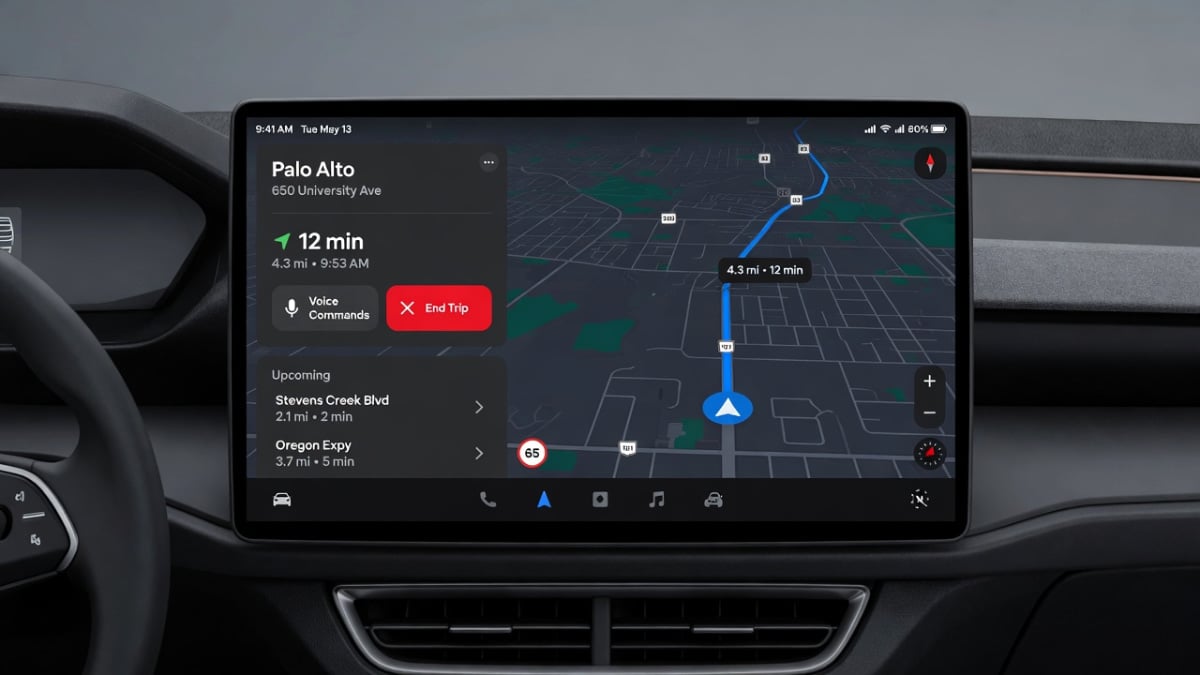
- I've tried using other apps (Google, A Better Route Planner), but the native navigation is truly the best option. I've learned I can fully trust the estimates of arrival energy and it will modify stops to update along the way. You can choose "Fastest" or "Fewest Stops" and on long road days (6-700 miles) it saves about 45 minutes total throughout the day. Our longest charging stop was 24 minutes on this setting.
- I had way too much charge anxiety when arriving at Airbnb or hotel or even a cabin in remote Northern MN. Plugged into a simple 110 outlet, given time, I've always been able to to charge to my charge limit without trouble. We've used Hilton hotels and they all have had level two chargers to use overnight. I didn't need to be anxious at all.
- A few well-curated accessories made travel easier/more comfortable. The drop down tray under the screen has been useful. Of course the retractable charging dock that goes into the center console, and the trash can that sits snugly under the console in back seat. I also bought a mattress and shades from Amazon, that made sleeping comfortable. I have a heavy tint on moonroof, so didn't get a shade for that. I am in love with my Witamats, comfortable and easy to maintain. I also got white liners for the door pockets - it helps me see what's in there, since the area isn't well lit."
That is a lived-in, real-world account, not a marketing pitch. And it lines up with what a lot of other owners have told Torque News over the years, including one driver who logged 10,000 miles solo and came home just as relaxed as when she left.
Why Native Navigation Beats Google Maps On A Road Trip
Scott's point about the built-in navigation is one I hear again and again. Third party apps like Google Maps or A Better Route Planner are great for everyday driving, but they do not talk directly to the car's battery computer the way Tesla's own system does. That means the car's own software knows exactly how much energy is in the pack, how the weather and elevation ahead will affect it, and it adjusts your charging stops on the fly instead of making you guess.
That trust in the estimates is a big deal. Torque News has covered plenty of stories where a Model Y owner's navigation system got the trip badly wrong, so Scott's experience of the system working exactly as promised, and even trimming 45 minutes off his day, stands out.
Does 110V Really Work For A Road Trip
This is the part that gets people fired up in the comments, so I asked Torque News senior automotive reporter John Goreham to weigh in on Scott's outlet charging.
Goreham told me:
"No. Charging a Tesla on 110V can take a day from empty to full. I don't know the context, but no road trip is completed with 110. Even L2 is a challenge. I think she means she stayed in places and charged overnight on 110."
That is the key distinction. Scott was not using the wall outlet to top up between driving stints. He was plugging in overnight while he and his daughter slept, using the eight or nine hours of downtime to slowly refill the battery so it was ready to go the next morning. That lines up with what one owner found after towing a boat 1,100 miles and relying on Superchargers for the actual driving miles, while saving slower charging for overnight stops. The outlet was never doing the heavy lifting. It was just filling in the gaps while nobody needed the car anyway.
According to Recharged, Level 1 charging has real physical limits once your daily driving climbs past 50 to 70 miles, and that longer trips are better served by public Level 2 or fast charging rather than leaning on a household outlet to bail you out overnight.
What About The Cost Side Of Long Trips
Charging speed is only half the story. Plenty of owners have also crunched the numbers on what a long trip actually costs, and the results vary a lot depending on how often you stop. One driver who put 23,000 miles on a Model Y Performance in eight months spent under a thousand dollars total on charging, while another owner who drove 1,600 miles from Nevada to Illinois said the frequent 30 minute Supercharging stops made the trip feel about as expensive as running a 20 mile per gallon gas car. Scott's overnight outlet strategy is one way to keep those Supercharger bills down on a long trip, since every mile added at a hotel is a mile you are not paying peak Supercharger rates for later.
Does Tesla's Full Self-Driving Actually Reduce Road Trip Fatigue
Scott credited Full Self-Driving with getting him and his daughter to every stop rested. That is a claim worth digging into, so I brought it to Torque News automotive reporter Noah Washington and asked whether fatigue reduction, not big city driving, is the real value of driver-assist tech.
Washington wrote:
"This 5,000-mile trip shows why drivers may value FSD before researchers or insurers are ready to call it safer. On an interstate, the system can absorb hours of lane-centering, speed adjustment, navigation, and traffic monitoring. That can leave the driver feeling less exhausted at the end of the day. IIHS and insurers are asking a different question: whether automated miles consistently produce fewer and less severe crashes across a much broader set of conditions."
Washington also addressed the charging side directly:
"The wall outlet worked because the car was parked long enough for slow charging to become useful. That does not make fast charging unnecessary. It shows that a good road-trip system should use every available source of energy and tell the driver exactly what each stop can contribute. Tesla's advantage is not the simplicity of the outlet by itself. It is the way navigation, charging estimates, and the vehicle work together without forcing the driver to calculate the trip manually."
That take echoes what Torque News found when one Cybertruck owner said FSD handled 30 to 40 percent of a family road trip and made the miles noticeably less draining, even with a fussy infant in the back seat. It is not a universal experience though. Other owners have reported FSD becoming nearly useless partway through a 2,000 mile trip, so your mileage, quite literally, may vary.
What The Safety Data Actually Says
Since fatigue reduction and safety often get lumped together, Torque News' Noah Washington also reached out to Joseph Young, director of media relations at the Insurance Institute for Highway Safety, on June 29.
Young told Torque News:
"Available research examining crash rates for highly automated vehicles is limited. Waymo is the only company that is currently making sufficient data available for analysis, and there is evidence that Waymo vehicles have lower crash rates than human drivers in their limited deployments. However, we can't necessarily draw broader conclusions about how they'll perform in other areas or how other developers' AVs will perform, so this will require ongoing analysis."
Young added:
"IIHS would like to see better and more standardized reporting of AV deployments that includes vehicle-miles-traveled data to allow future analyses of deployments beyond those of Waymo and future Waymo deployments."
Brett Odom, policy vice president for auto and alternative vehicles at the National Association of Mutual Insurance Companies, offered a similar note of caution in a written comment:
"Across the auto insurance industry, there are significant challenges in assessing the risk associated with automated vehicles. When comparing the level of risk presented by human-driven vehicles, there remains tremendous uncertainty on the true safety of automated vehicles, and consequently insurers' underwriting and ratemaking processes around them."
Odom continued:
"To draw any distinction in the rating between the two, insurers need credible claims data showing that the risk connected to automated driving is materially different from the risk associated with human driving. Insurers should look closely at variations in claim frequency and severity when evaluating the two."
So here is the honest line to draw. Scott's trip can absolutely support a claim about comfort, reduced workload, and a happier kid in the passenger seat. It cannot tell us whether FSD is statistically safer than a human driver across every road, weather pattern, and traffic situation out there.
The Gear That Made The Trip Comfortable
Scott's accessory list is worth repeating for anyone planning their own trip. The drop down tray under the screen, the retractable charging dock in the center console, a rear seat trash can, an Amazon mattress and shades, WeatherTech floor liners, and white door pocket liners so you can actually see what is in there in low light. None of it is expensive, and all of it points to the same idea that has come up in other long haul stories, including the owner who towed a vintage wooden boat 1,100 miles and found that a handful of small, well-chosen accessories made a much bigger difference than any single big-ticket upgrade.
The Moral Of Scott's Story
You do not need a perfect charging network or a garage full of gadgets to take a Tesla across the country. You need a car that tells you the truth about its own battery, a plan for using downtime wisely, and a little patience with a wall outlet when that is all you have got. The technology does the hard math. You just have to trust it enough to let it.
Have you ever relied on a regular wall outlet to save a road trip, and did Full Self-Driving actually make your long drives feel shorter? Drop your own story in the comments, we read every one of them.
Return tomorrow, or check our Torque News Home Page for more interesting automotive news articles.
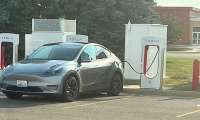
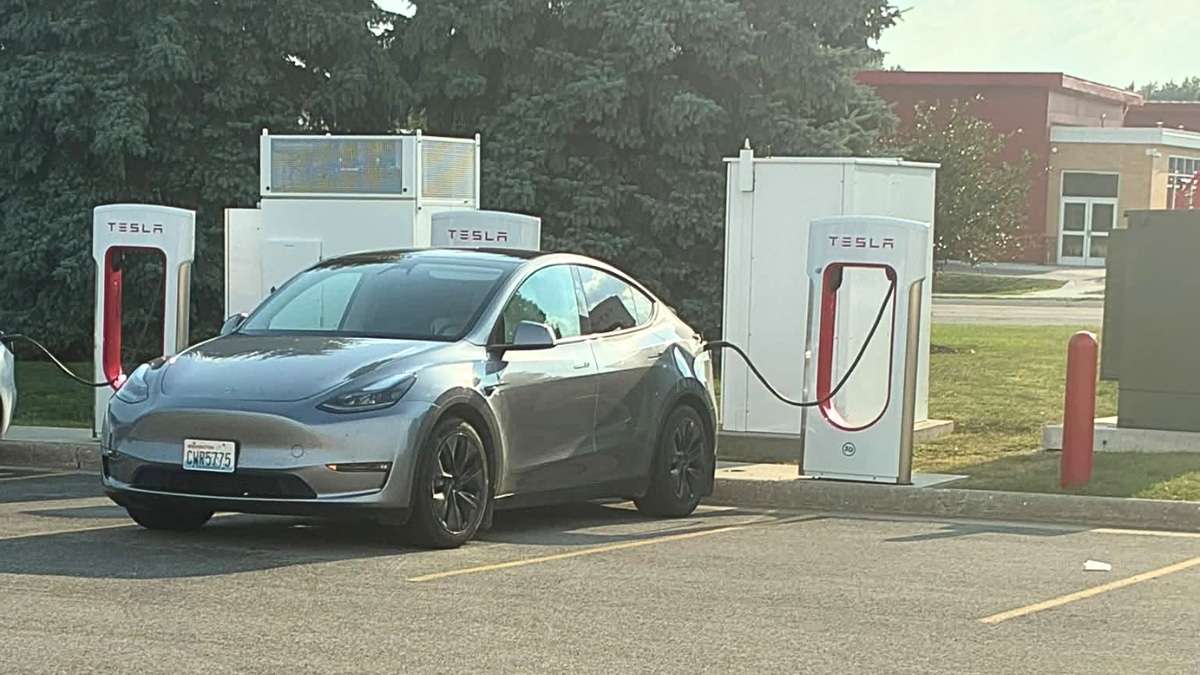
Image: Scott's Model Y charging what appears to be at a Tesla Supercharger. But he wrote in his post that he was using the 110v charger. So this image is probably from a different trip.
About The Author
Armen Hareyan is the founder and Editor-in-Chief of Torque News and an automotive journalist with over 15 years of experience writing car reviews and industry news. Now based in the Charlotte region (Indian Land, SC, he founded Torque News in 2010, which since then has been publishing expert news and analysis about the automotive industry. He can be reached at Torque News on X, Linkedin, Facebook, and Youtube. Armen holds three Masters Degrees, including an MBA, and has become one of the known voices in the industry, specializing in the landscape of electric vehicles and real-world stories of actual car owners. Armen focuses on providing readers with transparent, data-backed analysis bridging the gap of complex engineering and car buyer practicality. Armen frequently participates in automotive events throughout the United States, national and local car reveals and personally test-drives new vehicles every week. Armen has also been published as an automotive expert in publications like the Transit Tomorrow, discussing how will autonomous vehicles reshape the supply chain, and emerging technologies in vehicle maintenance.
Set Torque News as Preferred Source on Google
Follow us today...