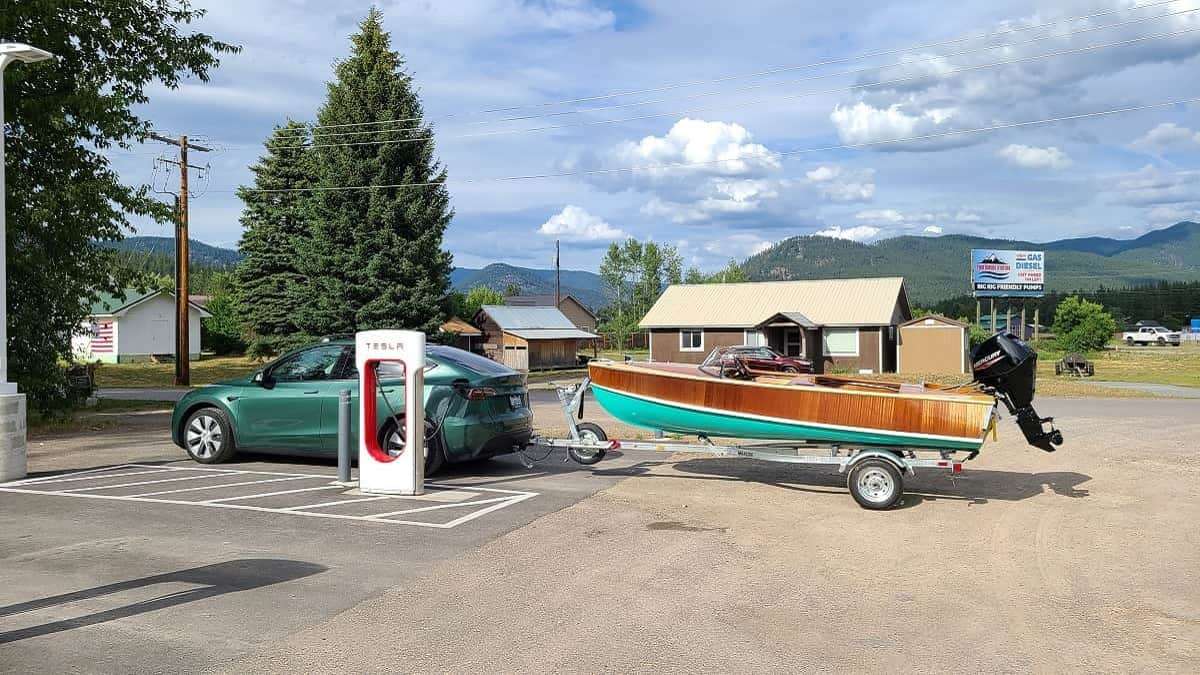

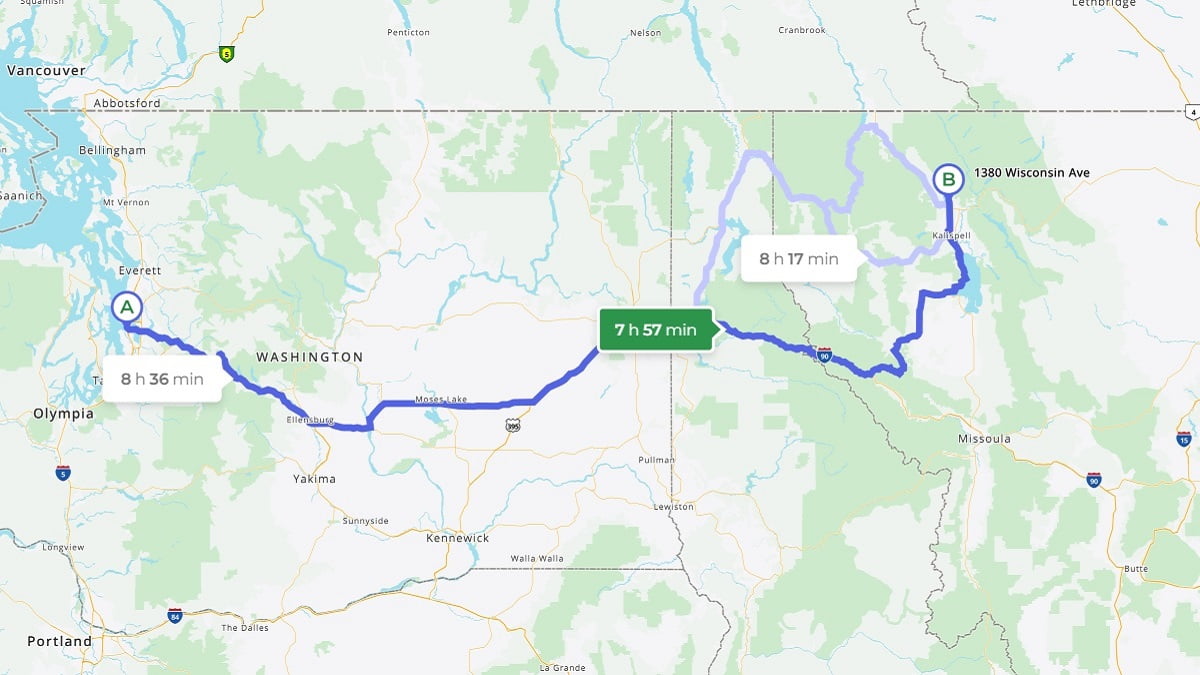
We’ve all heard about how you can’t tow anything with an electric vehicle because it will kill the range; you’ll have to charge every 100 miles; the trip will take twice as long, you’ll end up having to walk the last mile, etc. Having been a bit programmed by this, I pushed aside my apprehension and decided to tow my boat 550 miles across Washington State to a classic wooden boat show with my Tesla Model Y. Perhaps it’s because I’m a contrarian or maybe I like a personal challenge, who knows.
When I went looking though social media, I was surprised to see that I wasn’t alone in having success towing with an EV. I found a bunch of long threads. Here’s one on the Ford F150 Lightning Forum posted by TomB985:
“We’re about a third of the way through my first boating season with the Lightning, and I’ve been more than impressed. My usual run to the lake is 50-75 miles each way with my 5,500 lb Monterey 224 FS. I tow between 60-70 MPH with my Lightning XLT ER, and my efficiency has settled into about 1.2 mi/kWh. My longest run was 144 miles round-trip, and I ended the day at 9%. I’ve pulled the boat about 800 miles so far.
My truck pulls more confidently than every F150 or diesel Super Duty I’ve owned before, and I think much of that is the tight IRS setup that keeps the rear end solidly planted through every curve. It’s a hekuva lot of fun surprising people at stop lights who don’t expect this boat to accelerate anywhere near this fast. I can see Max Tow being useful for cooling if I were pulling this much on a trip with DCFC sessions, but the standard cooling seems more than adequate for what I’m doing. I haven’t seen any thermal throttling or sign that the truck was getting too warm, and I’m not conservative with the throttle.”
Nomoregas responded with:
“They are a lot more capable trucks than many give credit to them!”
Scorpio3d added:
Advertising
“AMEN! Unfortunately, like everything else nowadays it’s become political somehow? One thing I truly miss is being able to agree to disagree and not being hated/maligned/canceled /etc. because we disagree!”
There are a couple of surefire ways to increase your EV range. One is to drive at a lower speed. For example, drive around 60 MPH rather than up around 80 MPH. Driving a Tesla at 60 MPH instead of 80 can increase range by 20-30%, depending on conditions. This is a very big, real difference that is largely due to something called “parasitic drag.” Parasitic drag is the aerodynamic resistance a vehicle faces as it moves through the air. It increases with the square of speed, meaning that as speed doubles, the resistance nearly quadruples. Parasitic drag doesn’t have much effect at lower speeds (typically below 40 MPH). At higher speeds, a greater portion of the battery's energy is used to push against the air, reducing overall efficiency and range.
A second way to increase range is by using the aero rim hubcaps that come with most Tesla cars. Not all Tesla cars or EVs from other manufacturers come with hubcaps. There is a lot of reporting about how keeping the factory aero rims (Tesla hubcaps) on your wheels can increase your highway range by about 3-4%. I think the sport rims look great and I usually drive my Tesla without the aero rim hubcaps. When I go on a long road trip, I snap on the aero rims. Buy a 2-inch disassembly suction cup to easily remove wheel center cap before you reinstall your aero rims.
Overall, the experience towing my boat long distance with the Model Y was pretty nice. I ended up charging every couple of hours, or three times each way. It was enjoyable for us to stretch our legs or grab a bite for about 25 minutes each time. Four of the six Tesla Supercharger locations had “pull-through” stalls so I didn’t need to unhitch my trailer. Tesla software now allows drivers to filter on Superchargers that have pull-through stalls. There was no wait time at any of the Superchargers and they were, at most, half full with a variety of EVs, not just Teslas. I found the vacancy to be amazing, given that it was peak summer travel season and that Tesla has opened the Supercharger network to a variety of other EV brands. I estimate that pulling the boat reduced my range by about 20%. With my Model Y’s dual motor, the load of the boat was barely noticeable. The car responded very well and I was still able to brake using regenerative breaking.
One surprise was that the Tesla Autopilot only partially functioned. The Tesla Autopilot feature includes Autosteer and Traffic-Aware Cruise Control (TACC). Autosteer helps keep your Tesla within its lane on the road, and TACC is a feature that combines the functionality of traditional cruise control with the ability to automatically adjust speed based on the surrounding traffic. Because Autosteer relies on the rear camera, it is automatically disabled when towing. Fortunately, TACC functioned fine and my right knee thanked me. One interesting thing is that TACC seemed to follow at an increased distance.

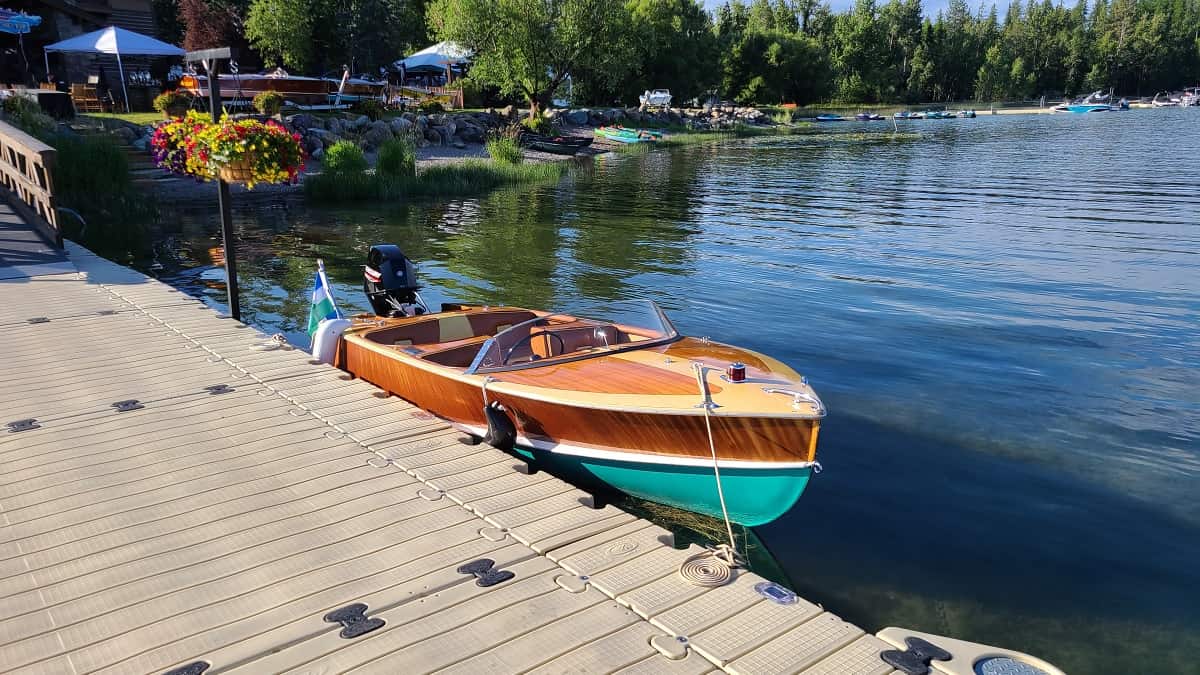
One of the most fun parts of the trip was hearing all the comments about a “futuristic” car towing a “classic” wooden boat. My boat was built in 1956 and sports a modern three-cylinder electronic fuel injected outboard. The whole experience including the classic wooden boat show was retrofuturistic.
Please Drop Your Thoughts in the Comments Below
Have you ever towed anything with your EV? What was your experience like?
Would charging every 100–150 miles on a road trip ruin the experience for you, or feel like a welcome break?
Chris Johnston is the author of SAE’s comprehensive book on electric vehicles, "The Arrival of The Electric Car." His coverage on Torque News focuses on electric vehicles. Chris has decades of product management experience in telematics, mobile computing, and wireless communications. Chris has a B.S. in electrical engineering from Purdue University and an MBA. He lives in Seattle. When not working, Chris enjoys restoring classic wooden boats, open water swimming, cycling and flying (as a private pilot). You can connect with Chris on LinkedIn and follow his work on X at ChrisJohnstonEV.
Image sources: The author
Set Torque News as Preferred Source on Google
Follow us today...